Stewed rhubarb was the first thing my grandmother ever taught me to make, and the moment that tart pink sauce hit a bowl of cold vanilla yogurt, I understood why she kept a pot of it in the fridge every single spring.
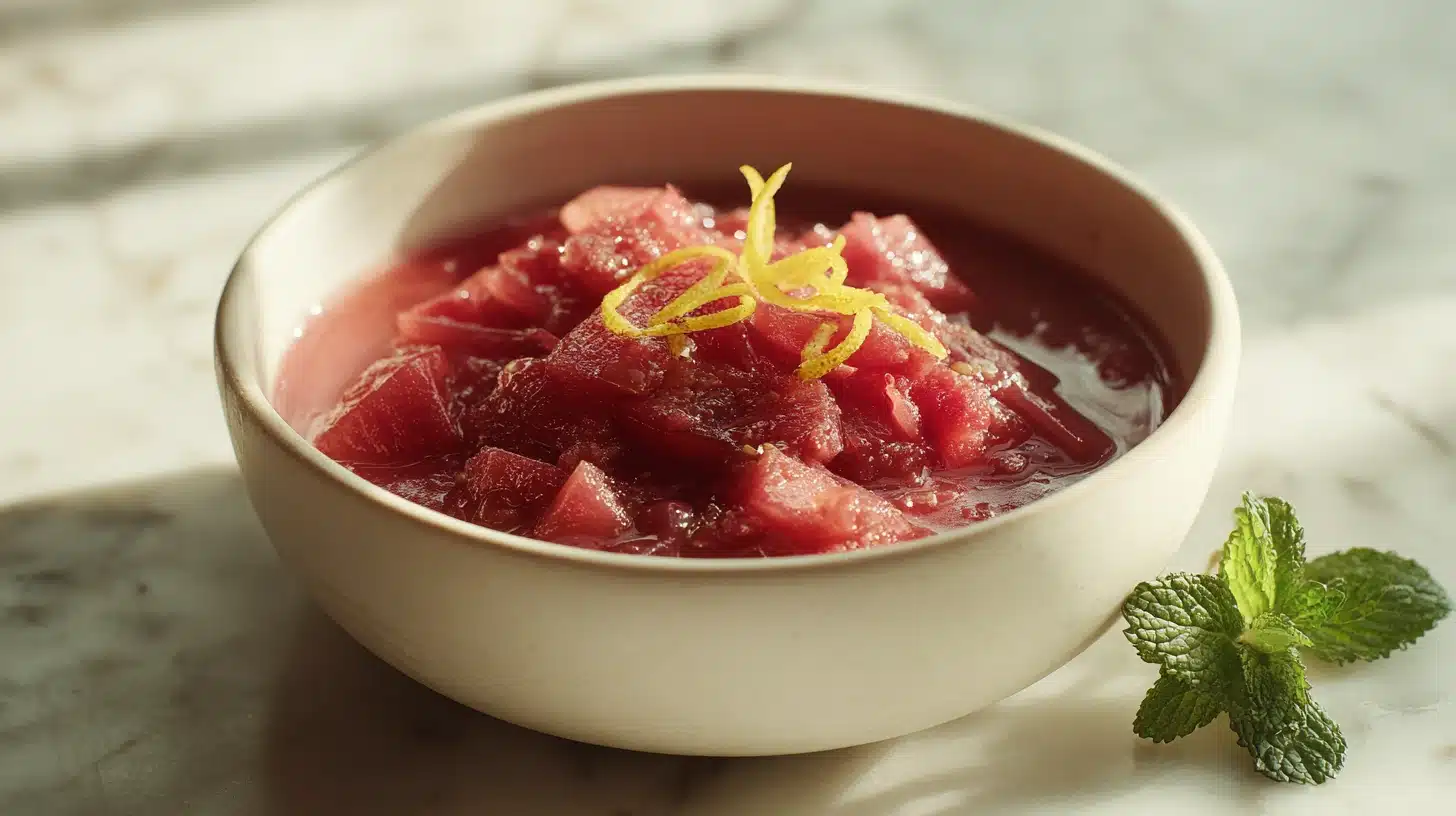
Most people oversweeten or overcook their rhubarb, ending up with a mushy, stringy mess that tastes more like candy syrup than fruit. This recipe gives you soft, spoonable pieces that hold their shape and keep that signature bright, tart edge.
Inside: the exact sugar ratio that balances sweet and tart, the one timing trick that prevents mush, and five ways to use your finished rhubarb compote.
Table of Contents
What Is Stewed Rhubarb and Why Should You Make It
Rhubarb has a reputation that is slightly unfair. People hear “tart” and assume they need to bury it under a mountain of sugar, pastry crust, or both. But stewed rhubarb, made simply on the stovetop with a handful of pantry staples, is one of the most versatile things you can keep in your refrigerator all spring and summer.
The Difference Between Stewed Rhubarb and Rhubarb Compote
You will often see these two terms used interchangeably, and honestly, the difference is mostly semantic. Rhubarb compote tends to refer to a slightly more refined preparation, sometimes involving spices or additional fruit. Stewed rhubarb is the plain, honest version: chopped stalks, sugar, and a splash of liquid cooked gently until the fruit softens into a thick, saucy consistency.
Both are cooked low and slow to release the natural pectin in the rhubarb stalks. That pectin thickens the sauce on its own without cornstarch or any other thickener. The result is jammy without being sticky, spoonable without being watery.
Why Rhubarb Is Worth Your Time Right Now
Rhubarb has a short season, typically running from April through June depending on where you live. Grocery store stalks are available a little longer, but if you have access to a farmers market, fresh rhubarb is noticeably better than the stuff that has traveled cross-country.
Look for stalks that are firm, deeply colored (anywhere from pale pink to deep red), and free of limp spots. Thinner stalks tend to be more tender and cook faster. Thicker stalks are fine too, just give them an extra minute or two on the heat.
Stewed rhubarb freezes beautifully, which means you can batch-cook it now and pull it out of the freezer in January when a gray afternoon calls for something bright and fruity. Pour it over oatmeal, stir it into Greek yogurt, spoon it onto pancakes, or use it as a filling for a quick rhubarb bread recipe that comes together in under an hour.
The point is this: once you have a jar of this in your fridge, you will find yourself reaching for it constantly.
Print
Stewed Rhubarb: The Simple Compote That Makes Everything Better
- Total Time: 30 min
- Yield: 6 servings 1x
- Diet: Vegan
Description
Stewed rhubarb is a simple stovetop compote made from fresh rhubarb stalks, sugar, and lemon juice. It cooks down into a thick, spoonable sauce with soft rhubarb pieces that keep their shape. Use it over yogurt, ice cream, pancakes, or as a filling in baked goods.
Ingredients
For the stewed rhubarb:
1.5 lbs fresh rhubarb stalks (trimmed, leaves discarded, cut into 1-inch pieces, about 5 cups)
1/2 cup granulated white sugar (adjust to taste)
3 tablespoons water
1 tablespoon fresh lemon juice
1 teaspoon pure vanilla extract (optional)
Instructions
1. Prep the rhubarb: Wash the rhubarb stalks under cold water and pat dry. Trim off any leaf remnants and the base of each stalk. Cut into uniform 1-inch pieces. If any stalks are very thick, halve them lengthwise before cutting across.
2. Combine ingredients: Add the chopped rhubarb, sugar, water, and lemon juice to a medium saucepan. Stir well so the sugar begins to coat the rhubarb pieces.
3. Start cooking: Place the saucepan over medium heat. After 3 to 4 minutes you will see the rhubarb begin to release its rosy liquid and the sugar will start to dissolve. Give everything a gentle stir.
4. Reduce and simmer: Lower the heat to medium-low so the mixture maintains a gentle simmer with small lazy bubbles at the surface. Do not let it reach a rolling boil.
5. Cook to texture: Simmer for 12 to 15 minutes, stirring gently every 3 minutes. At 12 minutes, check the texture. The pieces should be soft at the edges and sitting in a thick pink sauce but still recognizable as distinct chunks.
6. Finish and cool: Remove the pan from the heat and stir in the vanilla extract if using. Let the compote rest in the pan for 10 minutes. It will thicken further as it cools.
7. Store: Transfer to a clean glass jar or airtight container. Refrigerate for up to 10 days or freeze in portioned containers for up to 3 months.
Notes
Store in the refrigerator for up to 10 days or in the freezer for up to 3 months. Thaw overnight in the refrigerator before using.
To use frozen rhubarb: add it directly to the pan without thawing and skip the 3 tablespoons of water, as frozen rhubarb releases more liquid.
Adjust sweetness to taste: start with 1/2 cup sugar and add more 1 tablespoon at a time if you prefer a sweeter result.
For a savory version to serve with pork or salmon, reduce the sugar to 3 tablespoons and add a pinch of black pepper.
- Prep Time: 10 min
- Cook Time: 20 min
- Category: Dessert
- Method: Stovetop
- Cuisine: American
Nutrition
- Serving Size: 1/2 cup
- Calories: 72 kcal
- Sugar: 16 g
- Sodium: 4 mg
- Fat: 0 g
- Saturated Fat: 0 g
- Unsaturated Fat: 0 g
- Trans Fat: 0 g
- Carbohydrates: 18 g
- Fiber: 1 g
- Protein: 1 g
- Cholesterol: 0 mg
Ingredients for the Best Easy Stewed Rhubarb Recipe
One of the greatest things about this recipe is how short the ingredient list is. You do not need anything exotic. Here is what you will need for 6 servings:
| Ingredient | Amount | Notes |
|---|---|---|
| Fresh rhubarb stalks | 1.5 lbs (about 5 cups chopped) | Trimmed, leaves discarded |
| Granulated sugar | 1/2 cup | Adjust up or down by 2 tbsp to taste |
| Water | 3 tablespoons | Just enough to get things moving |
| Fresh lemon juice | 1 tablespoon | Brightens the whole sauce |
| Vanilla extract | 1 teaspoon | Optional but recommended |
Choosing Your Sugar
Granulated white sugar is the classic choice here because it dissolves cleanly and lets the rhubarb flavor stay front and center. That said, you have options:
- Light brown sugar adds a gentle caramel note that works beautifully if you plan to serve this over vanilla ice cream or rhubarb custard cake.
- Honey can replace up to half the sugar, though it adds its own flavor so use a mild variety.
- Coconut sugar works well and gives a slightly deeper color.
Start with 1/2 cup and taste as you go. The rhubarb will release quite a bit of liquid as it cooks and the sauce will concentrate, so the final sweetness will be more intense than the raw mixture tastes.
Optional add-ins worth trying
- 1/2 teaspoon ground ginger for warmth
- 1 cinnamon stick added to the pot and removed before serving
- 1/2 cup fresh or frozen strawberries for a classic pairing
- 1 tablespoon orange zest for a bright citrus lift
- A pinch of cardamom for something a little unexpected
How to Stew Rhubarb: Step-by-Step Instructions
Learning how to stew rhubarb is genuinely one of the easier cooking projects you can take on. The whole thing comes together in about 30 minutes, most of which is hands-off simmering time.
Step 1: Prep Your Rhubarb
Wash your stalks under cold running water and pat them dry. Trim off any leaf remnants from the tops and the very base of each stalk. Rhubarb leaves contain oxalic acid and should never be eaten, so make sure they are fully removed before you start chopping.
Cut the stalks into roughly 1-inch pieces. You want them uniform so they cook at the same rate. If your stalks are very thick (thicker than your thumb), you can halve them lengthwise first, then cut across.
Step 2: Combine and Start Cooking
Add the chopped rhubarb, sugar, water, and lemon juice to a medium saucepan. Stir everything together so the sugar starts to coat the rhubarb pieces. Set the pan over medium heat.
Within 3 to 4 minutes, you will hear the first soft sizzle and see the rhubarb beginning to weep its liquid into the pan. The color shifts from pale green-pink to a deeper rose as the heat draws out the pigment. At this point, give it a gentle stir and reduce the heat to medium-low.
Step 3: The Timing Trick That Prevents Mush
Here is the single most important technique in this entire recipe: do not walk away and let it boil hard. A rolling boil turns rhubarb into applesauce in under 5 minutes. Instead, keep the heat at a gentle simmer where small bubbles break lazily at the surface.
Cook the rhubarb for 12 to 15 minutes, stirring every 3 minutes or so. At the 12-minute mark, start checking the texture. The pieces should be soft and beginning to break down at the edges, but you should still see distinct chunks in the sauce. That is your sweet stewed rhubarb moment: saucy, thick, and still a little rustic.
Remove the pan from the heat and stir in the vanilla extract if using. The residual heat will continue to soften the rhubarb slightly, so pull it off the burner when it still looks just slightly underdone.
Step 4: Cool and Store
Let the compote cool in the pan for 10 minutes before transferring it to a clean jar or container. It will thicken noticeably as it cools. Store in the refrigerator for up to 10 days or freeze in portioned containers for up to 3 months.
How to Use Stewed Rhubarb: 5 Delicious Ideas
Once you have your rhubarb sauce ready, the real fun begins. This compote plays well with almost everything in your kitchen, from breakfast to dessert.
1. Spoon it over yogurt or porridge
The simplest and most satisfying use. A few spoonfuls of stewed rhubarb swirled into thick Greek yogurt gives you a breakfast that tastes like it took effort. Same goes for oatmeal or overnight oats. The tartness cuts through the creaminess in a way that wakes up your taste buds first thing in the morning.
2. Serve it as a dessert sauce
Warm the compote gently and pour it over vanilla bean ice cream, panna cotta, or a slice of cheesecake. The bright, fruity sauce pairs naturally with rich, creamy desserts. If you enjoy rhubarb in baked form, take a look at these rhubarb cream cheese bars for another way to pair those two flavors.
3. Use it as a layer in baked goods
Spread a thin layer of your rhubarb compote between cake layers, swirl it into muffin batter, or spoon it over the top of a no bake rhubarb cream pie filling before chilling. The slight acidity in the stewed fruit brightens buttery baked goods the same way a good lemon curd would.
4. Stir it into cocktails and mocktails
Two tablespoons of rhubarb sauce dissolved into sparkling water with a squeeze of lime makes a genuinely refreshing drink. Add a splash of gin or vodka if the occasion calls for it. The sauce also works beautifully stirred into iced tea.
5. Serve it alongside savory dishes
Rhubarb sauce is a classic condiment in Scandinavian cooking, often served alongside roasted pork, duck, or grilled salmon. The tartness acts like a chutney, cutting through rich fatty meats and adding brightness to the plate. Use a version made with slightly less sugar and a pinch of black pepper for a savory application.
A note on freezing for later
Pour cooled compote into silicone ice cube trays and freeze. Once solid, transfer the cubes to a zip-top freezer bag. This gives you perfectly portioned amounts to drop into smoothies, defrost for a single serving of yogurt, or stir into sauces throughout the year.
Frequently Asked Questions
How do I keep my stewed rhubarb from turning mushy?
The key is gentle heat and close attention near the end of cooking. Keep your simmer low, meaning small lazy bubbles rather than a rolling boil, and start checking the texture at the 12-minute mark. Pull the pan off the heat while the pieces still look slightly firm, because residual heat will finish the job as the compote cools.
Can I use frozen rhubarb to make stewed rhubarb?
Yes, frozen rhubarb works well. Add it directly to the pan from frozen without thawing first, and expect the cooking time to be 3 to 5 minutes longer. Frozen rhubarb tends to release more water than fresh, so you can skip the 3 tablespoons of water in the recipe and let the rhubarb’s own moisture do the work.
How much sugar should I use for stewed rhubarb?
The 1/2 cup called for in this recipe gives you a sauce that is pleasantly tart with a clean sweetness. If you plan to serve it over something already sweet, like cake or ice cream, you might even go down to 6 tablespoons. If you are serving it to kids or prefer a sweeter result, increase to 2/3 cup. Always taste and adjust before removing from the heat.
How long does stewed rhubarb last in the fridge?
Stored in a clean, sealed glass jar, stewed rhubarb keeps well in the refrigerator for up to 10 days. The flavor actually deepens after the first 24 hours as everything settles together. For longer storage, freeze in small portions for up to 3 months and defrost overnight in the refrigerator when needed.
Conclusion
There is something quietly rewarding about a recipe this simple producing results this good. Stewed rhubarb takes about 30 minutes, costs very little, and gives you a jar of something genuinely useful that transforms breakfast, dessert, and everything in between. The trick is always the same: gentle heat, good timing, and trusting the rhubarb to do most of the work on its own.
Give this a try over the coming weekend, and keep a jar ready in the fridge all week long.
For more recipes like stewed rhubarb, follow us on Facebook and Pinterest for fresh seasonal fruit recipe ideas all year round.
More recipes in this series: