
The first time I attempted a salmon and leek recipe, I ended up with seared fish resting on a watery, limp puddle of alliums. It was a textural disaster.
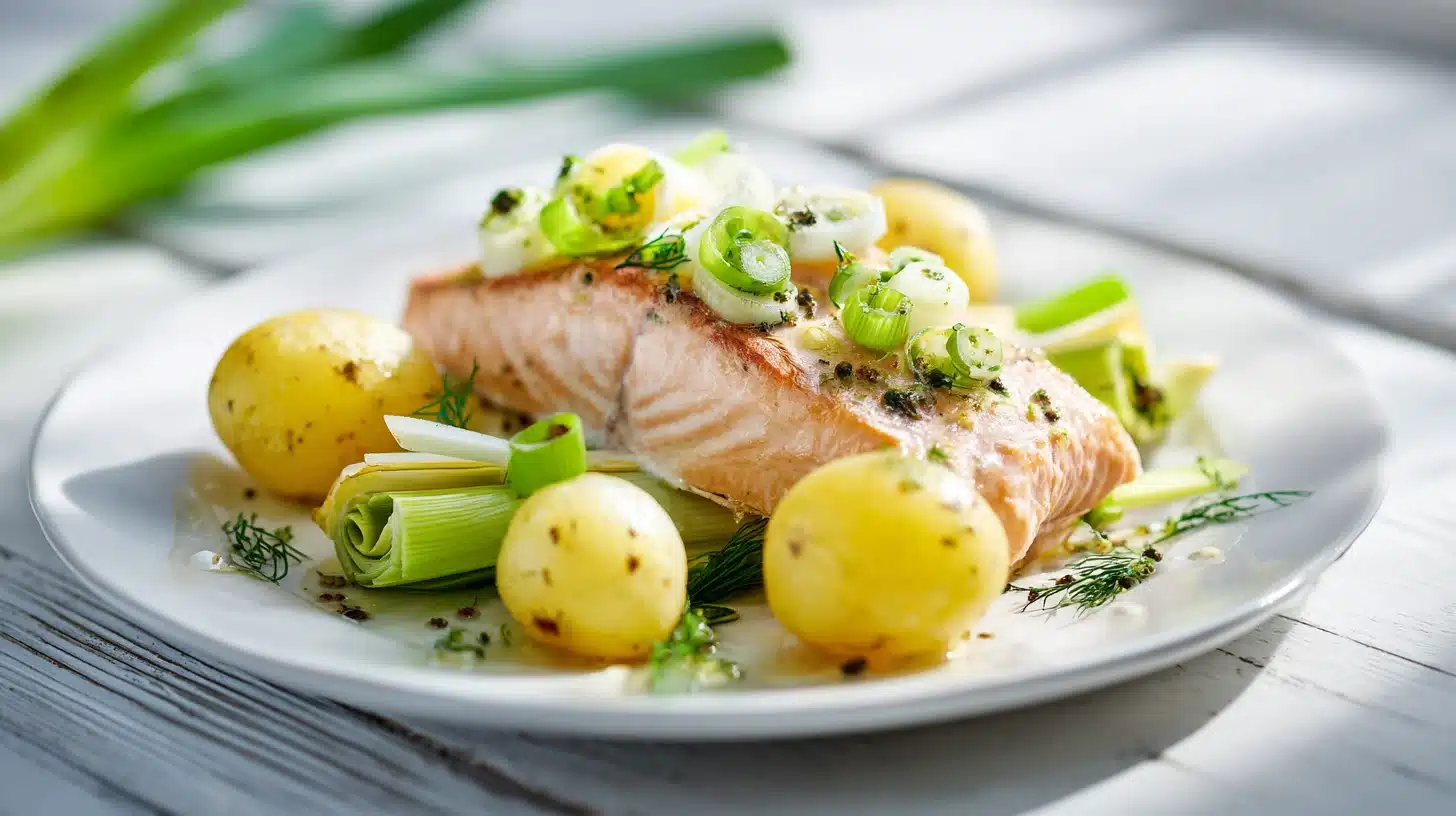
Most cooks struggle with leeks that turn into mushy strands and salmon that dries out before the sauce thickens. This baked version fixes both by building a rich potato base that absorbs the cream and protects the fish.
Coming up: the exact oven temperature for glassy, tender leeks, how to layer sliced potatoes for a sauce that never breaks, and the one ingredient that balances the richness.
Table of Contents
Why This Salmon and Leek Recipe Works
This salmon and leek recipe relies on a simple but counterintuitive technique: layering. Instead of searing the fish first and making a separate sauce on the stove, everything builds in one pan in the oven. The potatoes form a sturdy bottom layer that anchors the dish. They absorb the rich juices from the fish and the tangy sour cream sauce without dissolving into starch. On top of the potatoes, the leeks sweat and soften in a mixture of butter and olive oil, releasing their sweet aroma. The salmon fillets sit directly on this bed of alliums. As the fish bakes, its oils seep down, flavoring the leeks and potatoes below.
A common mistake is treating leeks like standard yellow onions. Leeks hold a massive amount of water between their many layers. If you pack them too tightly in the pan, they steam rather than roast. Steamed leeks become stringy and dull. By spreading them in an even, thin layer across the surface of the potatoes, the hot oven air circulates around them. You want them to turn glassy and soft with lightly caramelized edges. They should smell sweet, almost like roasted garlic.
The protein choice matters just as much. You can use fresh or even previously frozen salmon fillets for this salmon and leek dish. If you want to explore other flavor profiles after mastering this base technique, you might try our cajun shrimp and salmon with garlic cream next. The principles of layering and sauce building remain the same. Here, the sour cream and Dijon mustard mixture keeps the fish incredibly moist. It covers the salmon and keeps it from drying out in the oven. The capers punch through the richness with their briny, acidic pop. Every bite gives you a flake of buttery fish, a soft slice of leek, a firm potato, and a burst of salt. I love how hands-off this is. You do the prep, shove it in the oven, and go pour yourself a glass of wine.
Print
Creamy Baked Salmon and Leeks with Baby Potatoes
- Total Time: 48 min
- Yield: 4 servings 1x
Description
Baked salmon fillets rest on a bed of soft, sweet leeks and thinly sliced baby potatoes. A mixture of sour cream, Dijon mustard and lemon creates a tangy sauce that bakes into the fish, while capers add a briny finish.
Ingredients
1.5 pounds baby potatoes (sliced 1/4 inch thick)
2 large leeks (white and light green parts, sliced and washed)
2 tablespoons butter (cut into small pieces)
1 tablespoon olive oil
1/2 teaspoon salt
1/4 teaspoon black pepper
4 salmon fillets (6 ounces each)
1/2 cup sour cream
1 tablespoon Dijon mustard
1 lemon (juiced and zested)
2 tablespoons capers (drained)
1 tablespoon fresh dill (chopped)
1/2 teaspoon salt
1/4 teaspoon black pepper
1 tablespoon olive oil (for greasing the pan)
Instructions
1. Preheat the oven to 400 degrees Fahrenheit and grease a large baking dish with olive oil. Arrange the sliced baby potatoes in a single tight layer in the bottom of the dish.
2. Spread the washed leeks evenly over the potatoes. Dot the leeks with the small pieces of butter and season with salt and pepper.
3. Cover the baking dish tightly with foil and bake for 20 minutes until the potatoes are fork tender and the leeks are soft and sweet.
4. In a small bowl, whisk together the sour cream, Dijon mustard, lemon juice and lemon zest until smooth and creamy.
5. Pat the salmon fillets dry with paper towels and season them with the remaining salt and pepper.
6. Remove the baking dish from the oven and take off the foil. Lay the salmon fillets directly on top of the soft leeks.
7. Spread a generous spoonful of the sour cream mixture over the top of each salmon fillet. Scatter the drained capers over the entire dish.
8. Return the dish to the oven uncovered and bake for 18 minutes until the salmon flakes easily and the sauce is bubbling.
9. Let the dish rest for 5 minutes. Scatter the fresh dill over the top before serving so it releases its aroma.
- Prep Time: 10 min
- Cook Time: 38 min
- Category: Main Course
- Method: Baking
- Cuisine: Mediterranean
Nutrition
- Serving Size: 1 salmon fillet with potatoes and leeks
- Calories: 485 kcal
- Sugar: 4 g
- Sodium: 620 mg
- Fat: 28 g
- Saturated Fat: 9 g
- Unsaturated Fat: 16 g
- Trans Fat: 0 g
- Carbohydrates: 22 g
- Fiber: 3 g
- Protein: 34 g
- Cholesterol: 95 mg
Key Ingredients and Smart Swaps
Building a great salmon and leek recipe starts with picking the right ingredients. The leeks are the star of the base. Look for leeks with a long white and light green shaft. The dark green tops are too tough for this bake. Save those tops in your freezer bag for making homemade stock later. When you slice the leeks, aim for half-inch rounds. Wash them thoroughly in a bowl of cold water. Grit hides between the layers, and a crunchy bite of sand will ruin the texture of your creamy salmon and leeks.
The potatoes need to be thin-skinned and waxy. Baby potatoes hold their shape well during a long bake. Russet potatoes will fall apart and turn the sauce gummy. Slice the baby potatoes thinly, about a quarter inch thick. Toss them with olive oil, salt, and pepper before laying them flat in your baking dish. This helps them cook evenly and stay tender instead of turning into a dense mash.
For the cream sauce, this recipe uses a combination of sour cream and butter. The sour cream provides a welcome tang that cuts through the natural oils of the fish. If you only have heavy cream, you can use that, but the sauce will taste flatter. A spoonful of Dijon mustard sharpens the sauce and adds depth. If you are looking for another dish where a tangy sauce pairs beautifully with protein, our lemon butter garlic pasta uses a similar flavor balancing act.
Here are the ingredients you need for this baked salmon with leeks:
- 4 salmon fillets, 6 ounces each
- 2 large leeks, white and light green parts only
- 1.5 pounds baby potatoes, sliced thin
- 1/2 cup sour cream
- 2 tablespoons butter
- 1 tablespoon olive oil
- 1 lemon, juiced and zested
- 1 tablespoon Dijon mustard
- 2 tablespoons capers, drained
- 1 tablespoon fresh dill, chopped
- 1 teaspoon salt and 1/2 teaspoon black pepper
If you want to adapt this salmon and leek recipe for dairy-free needs, swap the butter for olive oil and the sour cream for a plain, unsweetened coconut yogurt. The coconut yogurt mimics the tang of sour cream well. You will still get a rich, creamy sauce without any dairy.
Step-by-Step: Baking Salmon and Leeks
The recipe is straightforward, but the order matters. Start by preheating your oven to 400 degrees Fahrenheit. You need a hot oven here. It helps the leeks soften and the potatoes cook through before the salmon dries out. Lightly grease a large baking dish or rimmed sheet pan with olive oil. Lay down your sliced baby potatoes in a single, tight layer. Overlap them slightly if needed. Season them with half of your salt and pepper.
Spread the sliced, washed leeks over the potatoes in an even layer. Dot the leeks with small pieces of the butter. Cover the dish tightly with foil. This foil tent traps steam. The steam cooks the potatoes quickly and sweats the leeks until they are soft. Bake this base layer for 20 minutes. When you remove the foil, the potatoes should yield easily when pierced with a fork. The leeks should look wilted and smell sweet.
While the base bakes, mix your sour cream, Dijon mustard, lemon juice, and lemon zest in a small bowl. This is the sauce that will coat the fish. Pat your salmon fillets dry with paper towels. Dry fish means the sour cream mixture will stick to the surface instead of sliding off. Season the salmon with the remaining salt and pepper. Lay the salmon fillets directly on top of the soft leeks. Spread a generous spoonful of the sour cream mixture over the top of each fillet. Scatter the drained capers over the entire dish.
Return the pan to the oven without the foil. Bake for another 18 minutes. The exact timing depends on the thickness of your salmon. A thick fillet might need 20 minutes. The sour cream mixture will turn a pale gold and bubble around the edges. The salmon should flake easily when you press a fork into the thickest part. If you prefer a different cooking method, our sheet pan salmon and veggies offers another hands-off approach. Once the salmon leek bake is out of the oven, let it sit for a few minutes. The sauce will thicken slightly as it cools. Scatter the fresh dill over the top before serving.
Troubleshooting Your Salmon and Leek Bake
Even a reliable salmon and leek recipe can go wrong. Here are the most common issues and how to fix them.
| Problem | Cause | Fix |
|---|---|---|
| Potatoes are hard | Sliced too thick or under-steamed | Slice potatoes 1/4 inch thick and keep foil on for the full 20 minutes of initial baking. |
| Leeks are watery and stringy | Packed too densely or not washed | Spread leeks in a single loose layer. Soak slices in cold water and drain thoroughly. |
| Salmon is dry and chalky | Baked too long without moisture | Do not skip the sour cream topping. Check fish at 16 minutes for thin fillets. |
| Sauce is broken and greasy | Baked at a temperature that is too high | Keep the oven at 400 degrees Fahrenheit. Let the dish rest for 5 minutes before serving so the sauce settles. |
| Gritty texture in the bite | Dirt trapped in the leek layers | Slice leeks, swish in a bowl of cold water, and lift them out with a slotted spoon to leave the sand behind. |
Storage, Reheating, and Dairy-Free Adaptations
Good storage keeps your salmon and leeks tasting fresh for days. Let the baked dish cool completely on the counter. Do not leave it out for more than two hours. Transfer the leftovers to an airtight glass container. Store it in the refrigerator for up to three days. The flavors actually deepen overnight. The sour cream sauce absorbs into the potatoes. The dill permeates the leeks. It makes for a fantastic next-day lunch, honestly maybe better than the first night.
To reheat, avoid the microwave if possible. Microwaves cook fish unevenly and heat the sour cream too aggressively, and the sauce separates. Instead, preheat your oven to 325 degrees Fahrenheit. Place the leftovers in an oven-safe dish. Cover the dish with foil to trap moisture. Heat it for 12 minutes or until the salmon is warm throughout. This gentle heat keeps the fish tender.
You might wonder if you can freeze this salmon and leek dish. Freezing is possible but not ideal. The texture of the sour cream sauce changes. It can become grainy when thawed. If you need to freeze it, portion it into individual airtight containers. Freeze for up to one month. Thaw it overnight in the refrigerator before gently reheating in the oven. For a freezer-friendly fish dish, try our salmon and stuffing recipe which holds up better to freezing.
Adapting this recipe for a dairy-free diet is easy and the results are solid. Replace the dairy components with plant-based alternatives. Use a high-quality vegan butter in place of the regular butter to sweat the leeks. Swap the sour cream for a plain almond or cashew-based yogurt. The tang of the cashew yogurt comes close to real sour cream. Add an extra squeeze of lemon juice to brighten the dairy-free version. The lemon helps replicate the acidic bite that sour cream provides. If you love bold flavors, our garlic brown sugar salmon is naturally dairy-free.
Frequently Asked Questions
Can I freeze this baked salmon with leeks?
Yes, but the sour cream sauce may become slightly grainy when thawed. Freeze individual portions in airtight containers for up to one month. Thaw the salmon and leek dish overnight in the refrigerator and reheat it gently in a 325 degree Fahrenheit oven.
How long can salmon with leeks be kept in the fridge?
Store the cooled leftovers in an airtight glass container in the refrigerator for up to three days. The flavor improves the next day. Reheat the salmon and leek recipe covered with foil in the oven to maintain texture.
How do you adapt this recipe into a dairy-free recipe?
Swap the butter for olive oil or vegan butter. Replace the sour cream with a plain, unsweetened cashew or almond yogurt. Add an extra squeeze of fresh lemon juice to maintain the acidic tang that the sour cream originally provides.
How do you bake salmon and leeks?
Layer sliced baby potatoes and leeks in a baking dish. Cover with foil and bake at 400 degrees Fahrenheit for 20 minutes. Remove the foil. Add the salmon, sour cream mixture, and capers. Bake uncovered for 18 minutes until the fish flakes easily.
Conclusion
You do not need a stovetop full of pots to get a rich, satisfying dinner on the table. By layering the ingredients and using the steam from the potatoes and leeks, you avoid the soggy bottoms and dry fish that plague many bakes. One pan, one oven, done.
Make it, then tell me how yours turned out. Did you use sour cream or try the dairy-free yogurt swap? Share your results with me.
For more recipes like salmon and leek recipe, follow us on Facebook and Pinterest for weeknight dinner ideas.
More recipes in this series: