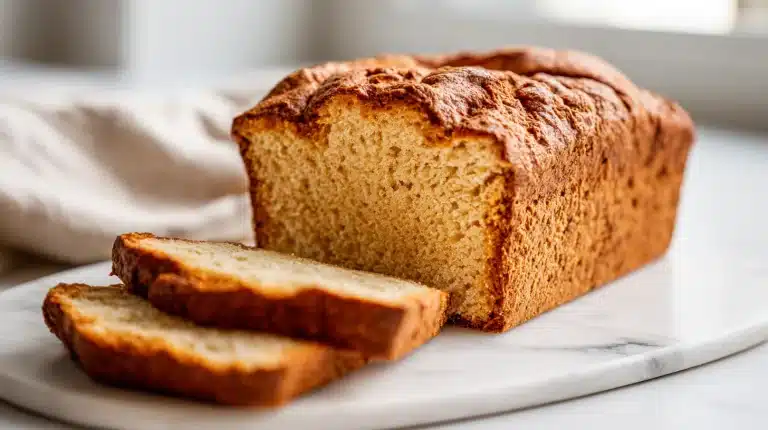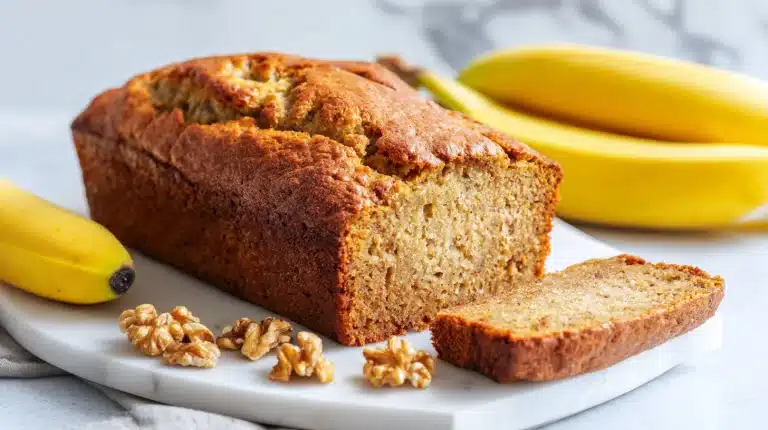
The step every baker skips in a rhubarb bread recipe is the reason it turns out dry or gummy. It’s not the rhubarb’s fault, it’s how you handle two simple things before mixing.
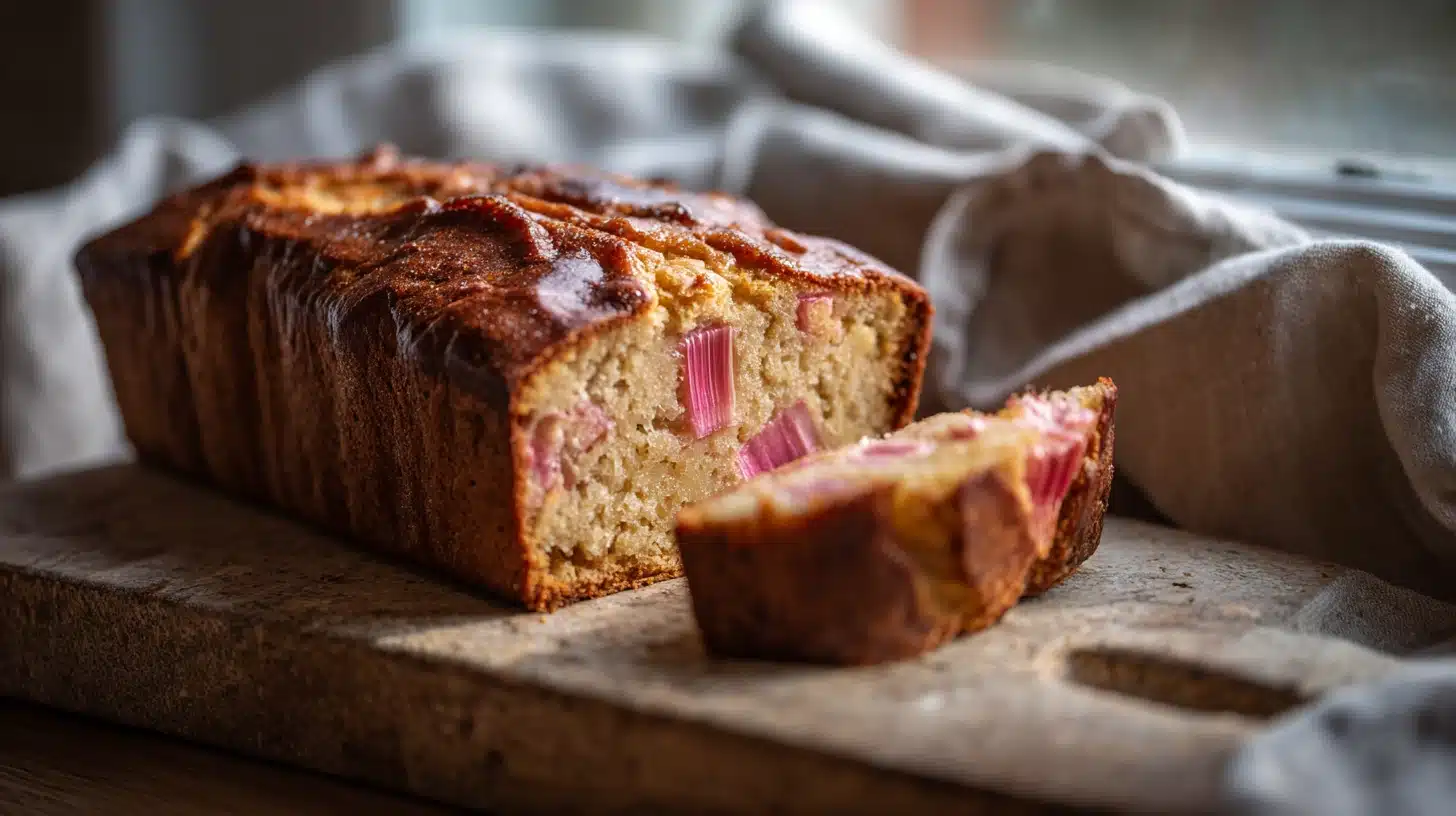
Rhubarb loaves often sink in the center or dry out by morning. This one stays tender for three days and bakes up with a thin, crackly sugar top that shatters when you slice.
Inside, you’ll learn the right way to prep rhubarb so it doesn’t bleed pink streaks, the ingredient swap that locks in moisture, and why that sugar crust isn’t optional. Got extra rhubarb? Try our apple rhubarb pie.
Table of Contents
Why You’ll Love This Rhubarb Bread Recipe
Perfectly moist and tender texture
Most rhubarb breads dry out by day two. This one doesn’t. The crumb stays soft for 3 days on the counter, and it’s all thanks to cultured buttermilk. The lactic acid breaks down gluten strands just enough to keep things tender without turning gummy.
I learned this the hard way. My first batch used regular milk. The loaf was dense, almost rubbery, and the rhubarb pieces wept pink liquid into the surrounding batter. Switching to full-fat buttermilk fixed both problems at once. Now the crumb has that velvety give you’d expect from a good coffee cake, not a dry quick bread.
What makes this loaf different:
- No oil pooled at the bottom of the pan, buttermilk and butter emulsify better together
- Rhubarb stays suspended throughout the loaf instead of sinking
- The texture lands between a vanilla cake and a tender scone
- You can substitute ¾ cup sour cream plus ¼ cup milk if you’re out of buttermilk
This quick bread also freezes beautifully. Wrap it whole and slice what you need.
Sweet-tart flavor balance with a candy-like crust
Rhubarb tastes like a cross between cranberries and lemon, sharp, a little grassy, and nothing like the celery it resembles.
That tartness is exactly why this bread works. The batter itself isn’t overly sweet, so every bite pushes back and forth between tangy fruit and mellow vanilla cake.
Then there’s the top. Sprinkling granulated sugar over the batter before it hits the oven isn’t decoration. It creates a crackly, golden crust that shatters when you slice. The science: sugar draws moisture to the surface, melts into syrup, then caramelizes as the loaf bakes. Don’t skip it. A loaf without that sugar lid tastes fine, but it’s missing the textural contrast that makes people reach for a second slice.
Print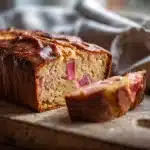
This Moist Rhubarb Bread Recipe Has a Crackly Sugar Top (and Stays Fresh for Days)
- Total Time: 75 min
- Yield: 10 servings 1x
- Diet: Vegetarian
Description
A moist rhubarb bread recipe with a crackly sugar top that stays fresh for days. Made with tangy buttermilk and fresh or frozen rhubarb, this easy loaf bakes in just 75 minutes.
Ingredients
2 cups (250g) all-purpose flour
1 teaspoon baking powder
½ teaspoon baking soda
½ teaspoon salt
½ teaspoon ground cinnamon (optional)
½ cup (113g) unsalted butter, melted and slightly cooled
¾ cup (150g) granulated sugar
2 large eggs, at room temperature
1 teaspoon pure vanilla extract
½ cup (120ml) cultured buttermilk, at room temperature
1½ cups (150g) chopped rhubarb, ½-inch pieces
1–2 tablespoons granulated sugar, for topping
Instructions
1. Preheat oven to 350°F. Line a 9×5-inch loaf pan with parchment paper, leaving a couple of inches overhang on the long sides.
2. In a medium bowl, whisk together the flour, baking powder, baking soda, salt, and cinnamon (if using).
3. In a large bowl, whisk the melted butter, ¾ cup sugar, eggs, vanilla, and buttermilk until smooth and no streaks of egg remain.
4. Add the dry ingredients to the wet and stir just until a few floury streaks remain. Toss the chopped rhubarb with a spoonful of the flour mixture first, then gently fold into the batter. Stop mixing as soon as combined.
5. Scrape the thick batter into the prepared pan and smooth the top. Sprinkle 1–2 tablespoons of sugar evenly over the surface.
6. Bake for 55–65 minutes, until deep golden brown and a toothpick inserted in the center comes out clean (an instant-read thermometer should register 200°F).
7. Cool the pan on a wire rack for exactly 10 minutes, then lift the loaf out using the parchment handles. Cool completely on the rack before slicing.
Notes
Store room temperature for up to 3 days or freezer for up to 3 months.
Do not thaw frozen rhubarb before mixing, toss frozen pieces straight into the flour coat.
A full 2 tablespoons of topping sugar creates the best crackly crust, especially if your rhubarb is very tart.
For the deepest caramel notes, use brown sugar in place of white in the batter.
If you don’t have buttermilk, substitute ¾ cup full-fat sour cream mixed with ¼ cup milk.
- Prep Time: 15 min
- Cook Time: 60 min
- Category: Breakfast, Dessert
- Method: Baking
- Cuisine: American
Nutrition
- Serving Size: 1 slice
- Calories: 265 kcal
- Sugar: 18 g
- Sodium: 220 mg
- Fat: 11 g
- Saturated Fat: 6 g
- Unsaturated Fat: 5 g
- Trans Fat: 0 g
- Carbohydrates: 37 g
- Fiber: 1 g
- Protein: 4 g
- Cholesterol: 61 mg
Rhubarb bread ingredients
Active Time: 15 minutes Total Time: 1 hour 15 minutes Yield: 10 slices (1 loaf)
- 2 cups (250g) all-purpose flour
- 1 teaspoon baking powder
- ½ teaspoon baking soda
- ½ teaspoon salt
- ½ teaspoon ground cinnamon (optional)
- ½ cup (113g) unsalted butter, melted and slightly cooled
- ¾ cup (150g) granulated sugar, plus 1–2 tablespoons for topping
- 2 large eggs, at room temperature
- 1 teaspoon pure vanilla extract (use up to 1 tablespoon for stronger flavor)
- ½ cup (120ml) cultured buttermilk, at room temperature
- 1½ cups (150g) chopped rhubarb, ½-inch pieces
No buttermilk? Use ¾ cup full-fat sour cream or Greek yogurt mixed with ¼ cup milk. Melted butter can swap for ⅓ cup vegetable oil (the crust softens a touch, but the crumb stays moist). Brown sugar in place of white deepens the caramel notes.
| Original | Substitute | Notes |
|---|---|---|
| Cultured buttermilk | ¾ cup sour cream + ¼ cup milk | Room temp; full-fat best |
| Unsalted butter | ⅓ cup neutral oil | Crispy top will be less crackly |
| Granulated sugar in batter | Light brown sugar | Adds moisture and a butterscotch hint |
Ingredient notes and swaps
Cultured buttermilk is what makes this loaf tender for days. Its lactic acid gently relaxes gluten, so you get a soft, cakey crumb instead of a tough one. Don’t reach for regular milk in a pinch, it lacks the acidity that balances the flour. Full-fat sour cream plus a splash of milk works nearly as well (see substitution table above).
All-purpose flour gives a light structure; bread flour would make the loaf chewy. Melted butter adds richness and helps create that shatter-y top when you sprinkle sugar over the batter before baking.
Vanilla rounds out the tartness. A teaspoon is enough, but a full tablespoon makes the flavor noticeably richer without tasting artificial. Eggs should be at room temperature so they whip air into the batter, keeping the loaf from sinking.
Best rhubarb for quick bread (fresh vs. frozen)
Thin, ruby-red stalks look pretty, but even thick green-tinged ones bake well. What matters is size, cut everything into ½-inch dice. Bigger chunks turn mushy and release too much liquid; smaller bits disappear.
Frozen rhubarb works beautifully here. Do not thaw it. Toss the frozen pieces straight from the bag with a little flour (just a spoonful from the measured amount) to prevent pink streaks bleeding into the batter. Fresh rhubarb gets the same flour coat before folding in. That trick also stops the pieces from sinking to the bottom.
If you’re using fresh rhubarb, choose firm stalks with no signs of softness or dried ends. Rinse, trim any leaves (they’re toxic), and dice right before mixing so they don’t dry out. Excess moisture is the enemy of a moist-but-not-gummy loaf.
How to make rhubarb bread
This loaf comes together in about 15 minutes of mixing, then bakes into a golden loaf with a crackly top.
Step-by-step instructions
- Preheat the oven to 350°F. Line a 9×5-inch loaf pan with parchment paper so the long sides overhang a couple of inches for easy lifting.
- Whisk the flour, baking powder, baking soda, salt, and cinnamon together in a medium bowl.
- In a large bowl, whisk the melted butter, sugar, eggs, vanilla, and buttermilk until smooth and no streaks of egg remain.
- Pour the dry ingredients into the wet and stir just until a few floury streaks remain. Toss the rhubarb with a spoonful of the measured flour first to keep the pieces suspended and stop pink streaks from bleeding into the batter. Gently fold them in, then stop mixing.
- Scrape the thick batter into the pan and smooth the top. Sprinkle 1–2 tablespoons of sugar evenly over the surface.
- Bake for 55–65 minutes, until the loaf is deep golden brown and a toothpick inserted in the center comes out clean. An instant-read thermometer should register 200°F in the middle.
- Cool the pan on a wire rack for exactly 10 minutes, then lift the loaf out using the parchment handles. Let it cool completely on the rack before slicing.
Pro tips for a crackly sugar topping
That shatter-y sugar crust isn’t garnish. Granulated sugar sprinkled over raw batter draws moisture to the surface, melts into a thin syrup, then caramelizes as the loaf bakes. You get a delicate, brittle lid that cracks when you slice.
The key is using regular granulated sugar, not coarse or powdered. Coarse crystals don’t melt evenly; powdered dissolves too fast and just disappears. Spread it right to the edges so every slice gets a bit of that candy-like snap.
The melted butter in the batter works with the sugar to create deeper caramel notes. If you swap in oil, the top will still crisp but won’t shatter quite as dramatically.
Cook’s Tip: Don’t skimp. Use the full 2 tablespoons of sugar if your rhubarb is especially sharp. The extra sweetness balances the tang and builds a thicker crust.
Storage, troubleshooting, and serving ideas
How to store for maximum freshness
This moist rhubarb loaf stays soft on the counter for up to 3 days when wrapped tightly in plastic wrap or foil. Tuck it into an airtight container once sliced to keep the edges from drying out. Skip the fridge, cold air pulls moisture from the crumb and makes it stale faster.
Freezing is your best bet for make-ahead slices. Wrap the cooled loaf whole in a layer of plastic, then a layer of foil, and freeze for up to 3 months. Thaw it right on the counter, still wrapped, for a few hours. No need to reheat; it’s fantastic served cold or at room temperature.
| Storage Method | Duration | Tips |
|---|---|---|
| Counter (wrapped) | Up to 3 days | Keep airtight after slicing. |
| Freezer | Up to 3 months | Double wrap; thaw in wrappings. |
Common problems and quick fixes
Most issues with this spring dessert come down to a few simple fixes. Here’s what I’ve learned from my own failed loaves and the solutions that work.
Troubleshooting
| Problem | Solution |
|---|---|
| Dense, rubbery crumb | Use cultured buttermilk. Don’t overmix the batter, stir just until floury streaks disappear. |
| Rhubarb sinks to the bottom | Toss diced rhubarb with a spoonful of the measured flour before folding in. |
| Soggy loaf (especially with frozen rhubarb) | Do not thaw frozen rhubarb. Toss it straight from the bag with flour, just like fresh. |
| Sugar topping breaks off | Lift the loaf out by parchment handles, never invert the pan. That keeps the crackly crust intact. |
| Top browning too fast | Loosely tent foil over the pan for the last 15 minutes of baking. |
| Bread sticks to the pan | Line the pan with overhanging parchment. Let the loaf cool exactly 10 minutes before lifting out. |
Slice the loaf only after it cools completely (at least 1 hour) or it’ll crumble. For serving, toast thick slices with butter, add a dollop of tangy yogurt, or serve alongside vanilla ice cream.
Rhubarb bread recipe FAQ
Can I use frozen rhubarb for this recipe?
Yes, and you should not thaw it. Toss the frozen pieces straight from the bag with a spoonful of flour to prevent excess moisture from turning the loaf soggy. Frozen rhubarb often yields a slightly moister crumb; if it seems wet, add 2 extra minutes to the bake.
Why did my rhubarb bread sink in the middle?
A sunken center usually means the loaf was underbaked or the oven door opened too early. Bake until a toothpick comes out clean and an instant-read thermometer hits 200°F in the center. Also, avoid overmixing, tough batter can’t hold the rise.
How can I stop the sugar topping from burning?
Loosely tent foil over the pan during the last 15 minutes of baking if the top browns too fast. Avoid dark metal pans, which absorb extra heat. Sprinkling the sugar all the way to the edges helps it melt evenly without scorching in the center.
What if I don’t have buttermilk?
Substitute ¾ cup full-fat sour cream (or plain Greek yogurt) mixed with ¼ cup milk. Let it come to room temperature before mixing. This swap provides the same acidity and moisture, so the crumb stays tender for days.
How do I keep the bread moist after baking?
Wrap the cooled loaf tightly in plastic wrap and store it at room temperature for up to 3 days. Never refrigerate, cold air pulls moisture from the crumb. For longer storage, freeze the whole loaf double-wrapped for up to 3 months and thaw in its wrapping.
Bake this rhubarb bread recipe this weekend
This loaf stays moist for three days because buttermilk tenderizes the crumb and a quick flour toss keeps the fruit suspended without pink streaks. That shatter-y sugar top is the final, essential piece.
I always bake two loaves at once; one for now, one for the freezer. Try it this weekend while stalks are still firm and bright.
Do you like a whisper of cinnamon in yours, or do you let the tangy fruit stand alone?
For more spring baking recipes, follow us on Facebook and Pinterest for easy quick bread recipes and spring baking inspiration.
Love rhubarb? Try our strawberry rhubarb dump cake and rhubarb custard cake.
More recipes in this series: