
The first time I made garlic brown sugar salmon, I stood over the baking sheet and just stared at it, because nothing that quick had any business smelling that good.
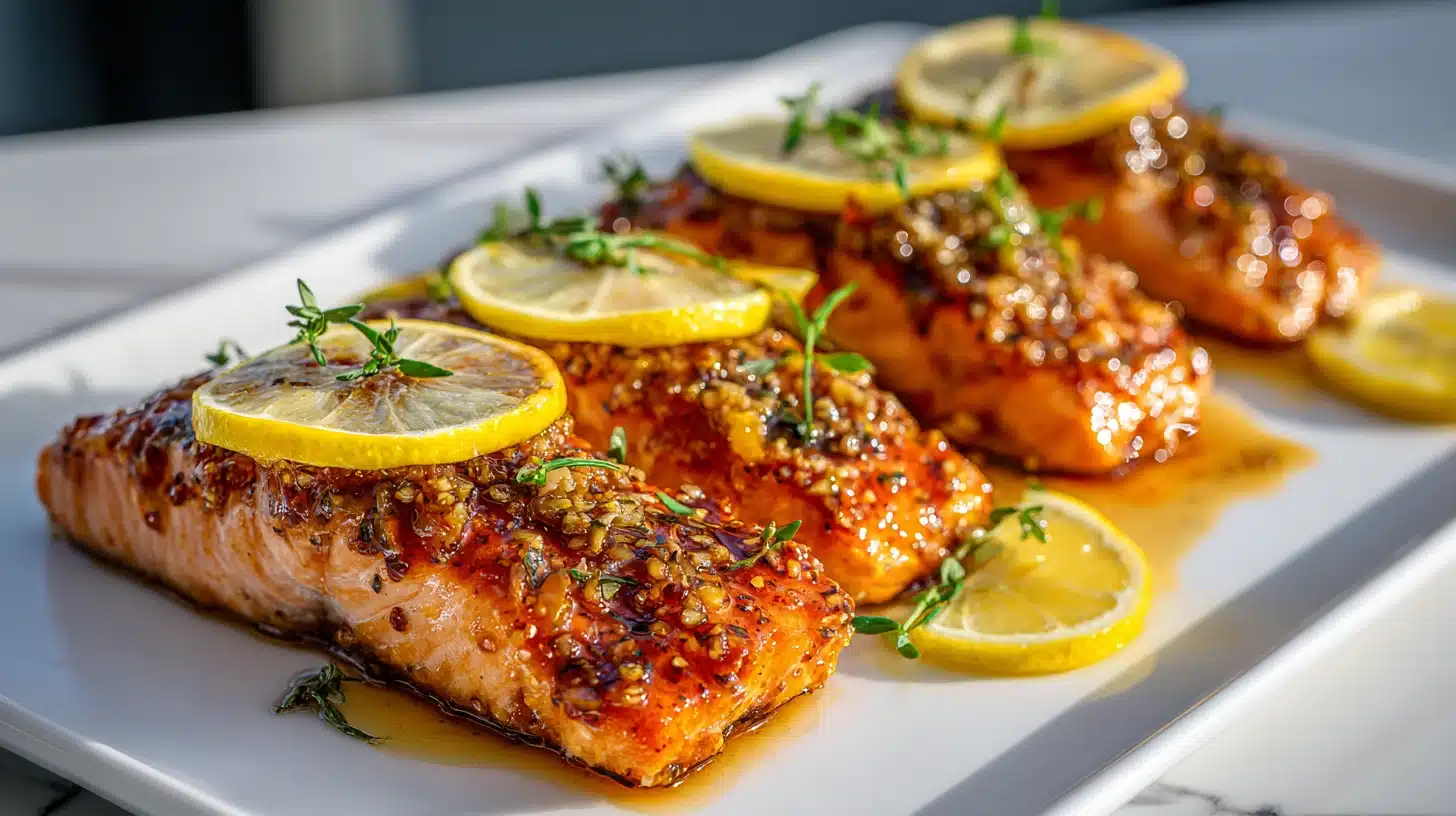
Most baked salmon ends up dry, pale, and under-seasoned before it even hits the table. This glaze fixes that: the brown sugar caramelizes into a lacquered, slightly sticky crust while the garlic and soy sauce keep it savory and deep.
Here’s what you’ll get: the exact glaze ratio that prevents burning, the single broiler trick that creates that gorgeous amber crust, and the visual cues that tell you the fish is perfectly cooked.
Table of Contents
Why This Garlic Brown Sugar Salmon Recipe Works
Brown sugar and garlic are genuinely great together on fish. This recipe works so consistently because of balance and heat.
The sweet and savory science
Brown sugar is not just sweetness. It contains molasses, which means it brings a faint bitterness and a sticky quality that plain white sugar simply does not have. When it hits the heat of a 400°F oven, it begins to caramelize and cling to the surface of the salmon, forming a glaze rather than a sauce. That stickiness is what gives you that gorgeous lacquered finish that looks like it came from a restaurant.
The garlic works against that sweetness in the best possible way. Raw minced garlic has a sharp, pungent edge that mellows in the oven, turning from aggressive to nutty and rounded. Combined with soy sauce, which adds salt and umami depth, and a touch of lemon juice, which cuts through the richness of the fish, you get a glaze that hits sweet, savory, tangy, and garlicky all at once.
A small amount of Dijon mustard acts as an emulsifier, helping the glaze coat the salmon evenly instead of pooling on the baking sheet. It also adds a subtle sharpness that you will not taste outright but will absolutely notice if you leave it out.
Why the broiler matters
Most baked salmon recipes stop at “bake at 400°F for 12 to 15 minutes.” That is fine, but it will not give you the caramelized, slightly charred edges that make this dish so visually striking and texturally satisfying. The last two minutes under the broiler are where the glaze transforms from sticky-wet to bronze and bubbling, with those beautiful darkened edges around the fillet.
The key is timing. You bake the salmon most of the way through first, so the fish is nearly cooked before it ever sees the broiler. Two minutes of high direct heat is enough to caramelize the surface without drying out the interior.
If you love this approach to sweet-savory glazed proteins, you might also enjoy this garlic brown sugar pork tenderloin juicy glazed easy dinner, which uses the same flavor logic on a different cut of meat.
The role of each ingredient
Here is what every ingredient brings to the glaze:
| Ingredient | Role |
|---|---|
| Brown sugar | Caramelization, stickiness, molasses depth |
| Garlic (minced) | Savory punch, aroma, flavor backbone |
| Soy sauce | Salt, umami, color |
| Lemon juice | Brightness, cuts richness |
| Honey | Additional gloss and floral sweetness |
| Butter or olive oil | Richness, helps glaze adhere |
| Dijon mustard | Emulsification, sharp contrast |
| Red pepper flakes | Gentle heat, balance |
| Black pepper | Earthy bite |

Garlic Brown Sugar Salmon: The Sweet and Savory Glaze You’ll Make on Repeat
- Total Time: 25 min
- Yield: 4 servings 1x
Description
Garlic brown sugar salmon is a quick baked fish dinner with a sticky, caramelized glaze made from brown sugar, minced garlic, soy sauce, lemon juice, and honey. The fillets bake at 400 degrees F and finish under the broiler for a deeply amber, lacquered crust. Ready in 25 minutes on one baking sheet.
Ingredients
For the salmon:
4 salmon fillets (about 6 oz each, skin-on)
1 tablespoon olive oil or melted butter
1/4 teaspoon salt
1/4 teaspoon black pepper
For the brown sugar garlic glaze:
3 tablespoons brown sugar (packed)
3 cloves garlic (finely minced)
2 tablespoons low-sodium soy sauce
1 tablespoon lemon juice (freshly squeezed)
1 tablespoon honey
1 teaspoon Dijon mustard
1/4 teaspoon red pepper flakes
1/4 teaspoon ground ginger (optional)
Instructions
1. Preheat and prep the pan: Preheat your oven to 400 degrees F. Line a rimmed baking sheet with aluminum foil and lightly coat with cooking spray or olive oil. Pat the salmon fillets completely dry with paper towels so the glaze can adhere properly.
2. Season the fillets: Drizzle or brush each fillet with olive oil or melted butter, then season lightly with salt and black pepper on all sides.
3. Make the glaze: In a small bowl, whisk together the brown sugar, minced garlic, soy sauce, lemon juice, honey, Dijon mustard, red pepper flakes, and ground ginger if using. The mixture should be thick and glossy. Taste and adjust with a squeeze more lemon if it tastes flat.
4. Glaze the salmon: Place the fillets skin-side down on the prepared baking sheet. Spoon the brown sugar garlic glaze generously over each fillet, spreading it all the way to the edges so the entire top surface is coated.
5. Bake: Bake at 400 degrees F for 12 to 14 minutes, until the salmon is mostly set and the glaze is bubbling at the edges. The very center of each fillet may still look slightly translucent, which is correct.
6. Broil for the crust: Switch the oven to broil on high and position the rack so the salmon is about 6 inches from the heating element. Broil for 1 to 2 minutes, watching constantly, until the glaze turns deep amber and caramelized with slightly darkened edges.
7. Rest and serve: Remove the pan from the oven and let the fillets rest for 2 minutes before serving. The glaze will set into a sticky, lacquered coating. Serve immediately with rice, roasted vegetables, or a green salad.
Notes
Store leftover salmon in an airtight container in the refrigerator for up to 3 days or freeze for up to 2 months. Reheat in a 275 degree F oven on a foil-lined pan for 10 to 12 minutes.
Use low-sodium soy sauce: the glaze concentrates as it cooks, and full-sodium soy sauce can make the finished dish too salty.
Garlic powder swap: if you are out of fresh garlic, use 1 teaspoon garlic powder. It will not burn as quickly under the broiler, which is a bonus.
Do not skip the foil: the brown sugar glaze will bond to an unlined pan and is very difficult to clean. Foil is essential here.
- Prep Time: 5 min
- Cook Time: 20 min
- Category: Dinner, Main Course
- Method: Baking
- Cuisine: American
Nutrition
- Serving Size: 1 salmon fillet
- Calories: 320 kcal
- Sugar: 12 g
- Sodium: 480 mg
- Fat: 14 g
- Saturated Fat: 3 g
- Unsaturated Fat: 11 g
- Trans Fat: 0 g
- Carbohydrates: 14 g
- Fiber: 0 g
- Protein: 34 g
- Cholesterol: 85 mg
Ingredients for Garlic Brown Sugar Glazed Salmon
Getting the right ingredients matters more than technique here. The glaze is simple, but each element plays a specific role. Here is everything you need to make garlic brown sugar salmon for four people.
For the salmon
- 4 salmon fillets (about 6 ounces each, skin-on or skinless)
- 1 tablespoon olive oil or melted butter
- 1/4 teaspoon salt
- 1/4 teaspoon black pepper
For the brown sugar garlic glaze
- 3 tablespoons brown sugar (packed, light or dark)
- 3 cloves garlic (finely minced, or 1 teaspoon garlic powder if you prefer)
- 2 tablespoons low-sodium soy sauce
- 1 tablespoon lemon juice (freshly squeezed)
- 1 tablespoon honey
- 1 teaspoon Dijon mustard
- 1/4 teaspoon red pepper flakes (optional, but recommended)
- 1/4 teaspoon ground ginger (optional, adds warmth)
Ingredient notes
Salmon fillets: Center-cut fillets are the most even in thickness, which means they cook at the same rate. Avoid very thin tail pieces, which will overcook before the glaze has time to caramelize. Skin-on fillets are great here because the skin acts as a natural barrier against the baking sheet, protecting the bottom of the fish from drying out.
Brown sugar: Dark brown sugar has more molasses and gives a deeper, slightly more complex glaze. Light brown sugar is more delicate and slightly sweeter. Both work well, so use what you have.
Soy sauce: Low-sodium is the better choice here because the glaze reduces in the oven and concentrates its saltiness. Full-sodium soy sauce can make the finished dish too salty.
Garlic: Freshly minced garlic will give you more flavor than garlic powder. However, if you are in a rush or out of fresh cloves, garlic powder works and will not burn as quickly under the broiler.
For another great weeknight salmon option, this honey glazed salmon bowl is a natural next recipe to try.
How to Make Baked Salmon with Brown Sugar Glaze (Step by Step)
This recipe comes together in 25 minutes from start to finish, and most of that time is hands-off oven time. Here is exactly how to do it.
Step 1: Preheat and prep
Preheat your oven to 400°F. Line a rimmed baking sheet with aluminum foil and lightly coat it with cooking spray or a thin film of olive oil. The foil is not optional here. The brown sugar glaze will bond to an unlined pan and turn into a burnt, sticky mess that takes forever to scrub off.
Pat the salmon fillets dry with paper towels. This step is small but important. Moisture on the surface of the fish will steam the salmon instead of allowing the glaze to adhere and caramelize. Dry the surface completely before seasoning.
Drizzle or brush each fillet with olive oil or melted butter, then season lightly with salt and black pepper.
Step 2: Make the glaze
In a small bowl, whisk together the brown sugar, minced garlic, soy sauce, lemon juice, honey, Dijon mustard, red pepper flakes, and ground ginger if using. The mixture should be thick, glossy, and smell absolutely incredible. Taste it: you want a balance of sweet, savory, and tangy. Adjust with a tiny extra squeeze of lemon if it tastes flat or a pinch more brown sugar if it tastes too sharp.
Step 3: Glaze and bake
Place the seasoned salmon fillets on the prepared baking sheet, skin-side down if using skin-on fillets. Spoon the glaze generously over each fillet, spreading it all the way to the edges. Do not be shy. You want a thick, even coating.
Bake at 400°F for 12 to 14 minutes. The salmon will look mostly set and the glaze will be bubbling gently at the edges. The center of each fillet should be slightly translucent still. That is correct, because the broiler step finishes it.
Step 4: Broil for the crust
Switch your oven to broil (high) and position the rack so the salmon is about 6 inches from the heating element. Broil for 1 to 2 minutes, watching constantly. You are looking for the glaze to turn deep amber and bubble vigorously, with slightly darkened edges on the salmon and a caramelized, almost-crackling surface. This happens fast. Do not walk away.
Step 5: Rest and serve
Remove the pan from the oven and let the fillets rest on the pan for 2 minutes before serving. The residual heat continues to cook the very center of the fish gently, and the glaze sets into a beautiful sticky coating. Serve immediately with your choice of sides.
Tips, Variations, and Serving Ideas for This Sweet and Savory Salmon
Once you have the base recipe down, there is a lot of room to make this dish your own. Here are some of the most useful variations and serving suggestions I have come across over the years.
Make it spicier
If you want real heat rather than just warmth, double the red pepper flakes and add a teaspoon of sriracha or gochujang to the glaze. The sweetness of the brown sugar absorbs and rounds out the heat, giving you a sweet-spicy finish rather than a straight burn.
Make it more citrusy
Swap the lemon juice for orange juice and add a teaspoon of orange zest to the glaze. This gives you a slightly fruitier, more fragrant sauce that pairs beautifully with jasmine rice or roasted sweet potatoes.
Add fresh ginger
If you are using ground ginger, consider upgrading to half a teaspoon of freshly grated ginger instead. Fresh ginger has a brighter, more floral heat than the dried version, and it pairs exceptionally well with the soy and brown sugar combination.
Stovetop version
You can make garlic brown sugar salmon entirely on the stovetop in a cast iron or nonstick skillet. Heat a tablespoon of butter or oil over medium-high heat until shimmering, add the fillets flesh-side down, and cook for 3 minutes until golden. Flip, add the glaze directly to the pan, and cook for another 4 to 5 minutes, spooning the glaze over the top continuously until it thickens and coats the fish.
What to serve with it
This glaze is bold and rich, so you want sides that are simple and clean. Here are my go-to pairings:
- Steamed jasmine rice or brown rice
- Roasted asparagus or broccolini
- Simple cucumber salad with rice vinegar
- Garlic mashed potatoes
- A crisp green salad with a lemon vinaigrette
If you want to build this into a full bowl-style dinner, the blackened salmon bowl is another great template to reference for bowl assembly ideas.
Storage and reheating
Leftover salmon keeps well in an airtight container in the refrigerator for up to 3 days. To reheat, place the fillets on a foil-lined baking sheet and warm in a 275°F oven for 10 to 12 minutes. Low and slow reheating prevents the fish from drying out and helps the glaze re-soften without burning. You can also flake cold leftover salmon over a salad or into a grain bowl, where the glaze becomes a built-in dressing.
Frequently Asked Questions
How do you make salmon with garlic and brown sugar?
Mix brown sugar, minced garlic, soy sauce, lemon juice, honey, and Dijon mustard into a thick glaze. Pat the salmon fillets dry, season with salt and pepper, then spoon the glaze generously over each piece. Bake at 400°F for 12 to 14 minutes, then broil for 1 to 2 minutes until the surface is caramelized and deep amber. The whole process takes about 25 minutes.
How do you tell when salmon is fully cooked?
The clearest visual cue is opacity: raw salmon is translucent and deep pink, while fully cooked salmon turns opaque and lighter in color. The flesh should flake easily when pressed gently with a fork. If you use an instant-read thermometer, the thickest part of the fillet should read 125°F to 130°F for medium (slightly silky center) or 145°F for well-done. For this recipe, pulling it at 130°F and letting it rest gives the best texture.
Does brown sugar go with salmon?
Absolutely. Salmon has a rich, fatty flavor that balances beautifully against the caramel sweetness of brown sugar. The molasses notes in brown sugar give the glaze depth rather than one-note sweetness, and when it caramelizes in the oven, it creates a savory-sweet crust that complements the fish rather than overpowering it. The key is pairing the sugar with salty and acidic elements like soy sauce and lemon juice to keep the glaze balanced.
How do you store and reheat leftover salmon?
Store leftover salmon in an airtight container in the refrigerator for up to 3 days. For reheating, the oven method works best: place the fillets on a foil-lined baking sheet and warm at 275°F for 10 to 12 minutes. Avoid the microwave if possible, as it tends to create a rubbery texture and can make the glaze taste bitter. Cold leftover salmon is also excellent flaked over salads, rice bowls, or pasta.
—
Conclusion
Garlic brown sugar salmon is one of those rare recipes that looks and tastes far more impressive than the effort it takes to make. That sticky, caramelized glaze, the nutty garlic aroma, the way the fish stays tender and flaky underneath: it all comes together in 25 minutes on a single baking sheet.
Give this one a try on a weeknight when you want something that feels special without hours of work. It is just as good for a quiet Tuesday dinner as it is for a casual dinner with friends.
For more recipes like garlic brown sugar salmon, follow us on Facebook and Pinterest for easy weeknight dinner ideas.



I like this blog so much, saved to favorites.