The first time I encountered a blue salt trick recipe, I watched a chef dust indigo crystals over a dark chocolate tart and transform the entire dessert. The color alone was enough to make the room pause.
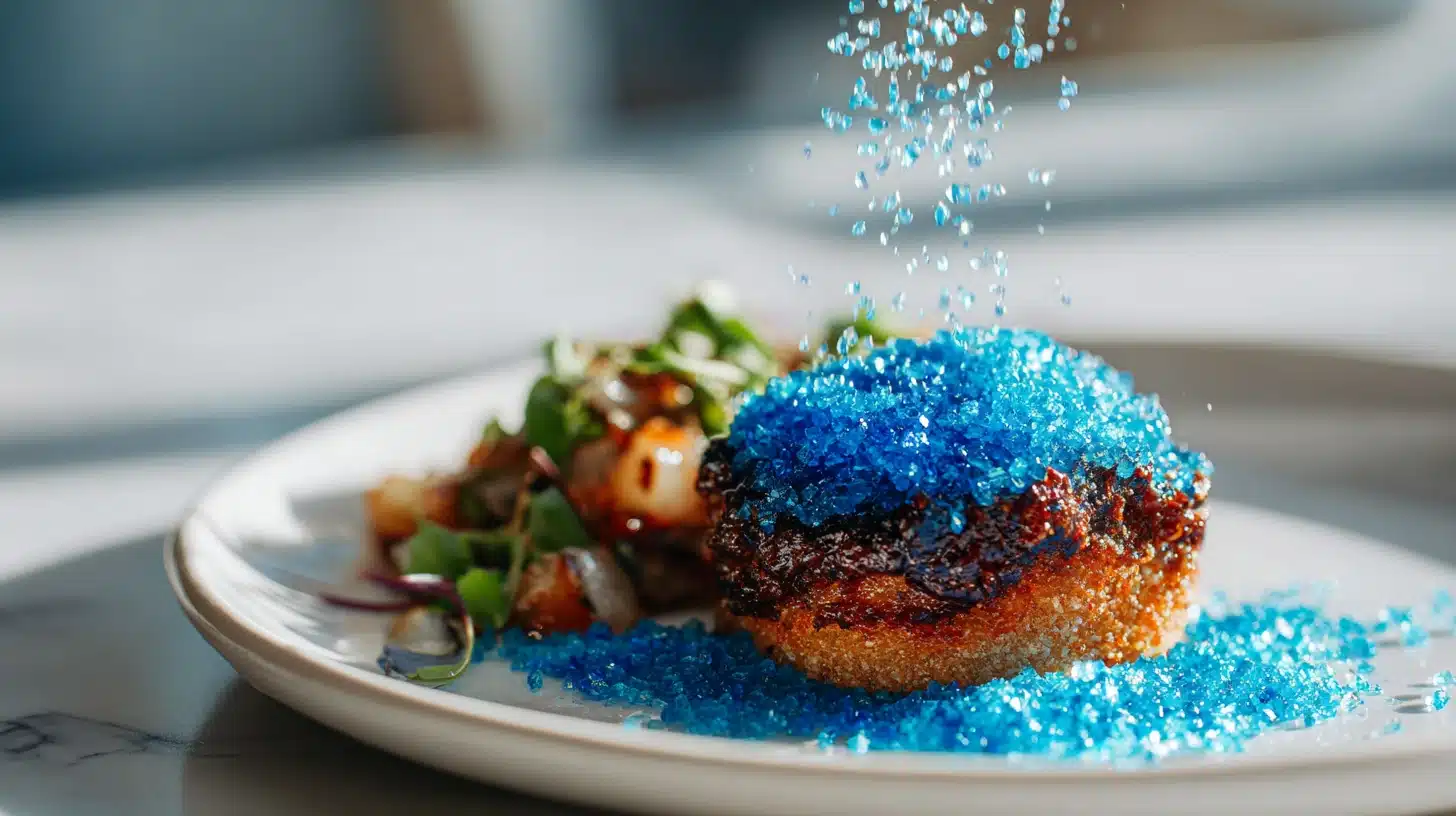
Too often, home cooks finish their dishes with standard kosher salt. The result is flat flavors and no real crunch. This finishing method fixes that with a visual pop and a crisp mineral bite.
Here’s what you’ll get: the science behind Persian blue salt, the exact sprinkling technique for maximum crunch, and the best flavor pairings to try.
Table of Contents
What Is the Blue Salt Trick?
The blue salt trick recipe is not about dying regular table salt with food coloring. It is a mineral-rich finishing technique that relies on Persian blue salt, a rare halite mined from salt deposits in Iran. Unlike everyday sodium chloride, this mineral contains sylvite, a potassium chloride compound that gives the crystals their natural, icy blue hue. When you look closely at the jagged, geometric crystals, the color shifts depending on the light. It ranges from a pale frosted blue to a deep indigo.
The trick itself is simple. You apply this salt as a finishing touch right before serving. You never cook with it. Heat dulls the color and melts the crystals into the dish. Instead, you sprinkle it over the surface of a completed plate. The large, flaky crystals stay intact, offering a sudden, satisfying crunch when your teeth break through them. This texture is what makes the technique work. It provides a sharp textural contrast against smooth foods like chocolate ganache, soft butter, or roasted vegetables.
Potassium is the real secret here. Because Persian blue salt contains higher levels of potassium compared to standard sea salt, it delivers a sharp, clean salinity that does not linger on the tongue. It strikes the palate fast, brightens the underlying flavors, and then vanishes. You reach for another bite. If you have experimented with a pink salt trick recipe, you will find this blue variety operates on a similar principle of texture and visual appeal, but with a more aggressive, electric crunch.
The blue salt trick for men has gained traction recently as a way to add bold flavor to hearty, protein-heavy meals without relying on heavy sauces. A light dusting over a rested ribeye steak brings out the deep, savory notes of the beef. It also makes the dish look like it came straight out of a professional kitchen. The vivid blue crystals scattered across a dark, caramelized crust create a visual contrast that signals luxury.
Print
The Blue Salt Trick Recipe: A Mineral Finish for Bold Eats
- Total Time: 1 min
- Yield: 1 servings 1x
Description
A simple finishing technique using Persian blue salt to add color, crunch, and mineral depth to desserts and savory dishes.
Ingredients
For the finish:
1 pinch Persian blue salt (coarse crystals)
1 prepared dessert or savory dish (such as chocolate tart or seared steak)
Instructions
1. Inspect the Persian blue salt crystals to ensure they are large and chunky. If they are too large, place them in a mortar and gently crush them into irregular flakes.
2. Prepare your dish fully and plate it. Make sure the surface of the food is relatively dry to prevent the salt from dissolving too quickly.
3. Take a pinch of the blue salt crystals between your thumb and index finger.
4. Hold your hand about ten inches above the plated food.
5. Rub your fingers together gently to scatter the crystals evenly across the surface of the dish.
6. Serve immediately to preserve the blue color and the signature crunch of the salt.
Notes
Store the Persian blue salt in an airtight jar in a dark cupboard to protect the blue color from fading.
This salt is potent, so use less than you think you need. You can always add more.
Try this on caramel ice cream, dark chocolate brownies, or roasted carrots.
- Prep Time: 1 min
- Cook Time: 0 min
- Category: Dessert
- Method: No-Cook
- Cuisine: Persian
Nutrition
- Serving Size: 1 pinch
- Calories: 0 kcal
- Sugar: 0 g
- Sodium: 480 mg
- Fat: 0 g
- Saturated Fat: 0 g
- Unsaturated Fat: 0 g
- Trans Fat: 0 g
- Carbohydrates: 0 g
- Fiber: 0 g
- Protein: 0 g
- Cholesterol: 0 mg
Mastering the Blue Salt Sprinkling Technique
This blue salt trick recipe requires almost no time, but it does demand attention to detail. The goal is to distribute the crystals evenly so every bite gets a touch of crunch and mineral bite. You want to avoid clumping, which creates pockets of overwhelming saltiness.
First, consider the size of your crystals. Persian blue salt is often sold in coarse, chunky pieces. If your crystals are larger than a peppercorn, place them in a small mortar and gently crush them with a pestle. You want irregular flakes of varying sizes, not a fine powder. A fine powder will dissolve instantly and defeat the purpose of the finishing trick.
When you are ready to serve your dish, take a generous pinch of the salt between your thumb and index finger. Hold your hand about ten inches above the food. This distance allows the crystals to separate and fall naturally across a wide surface area. Rub your fingers together gently as you move your hand across the plate. This motion ensures even distribution, much like you would use when finishing avocado bacon toast with lime and sea salt. The sound of the dry crystals hitting the crispy surface of the food should be light and crisp.
Timing is everything with this Persian blue salt recipe. If you salt the dish and let it sit, the moisture from the food will begin to dissolve the crystals. Within minutes, the blue color will fade, and the crunch will disappear. Wait until the very last second before the plate hits the table. If you are serving something wet, like a soup or a sauce, apply the salt to a dry garnish first. For example, press the blue salt into a piece of crispy fried sage or a crouton, then float it on top of the liquid. This keeps the texture intact and preserves the color contrast.
Best Pairings for Your Blue Salt Trick Recipe
Because Persian blue salt has a distinct mineral profile, it works best with specific flavors. The sharp salinity cuts through richness, while the visual pop enhances the presentation. You need to match the strong flavor of the salt with ingredients that can stand up to it.
Dark chocolate is the ultimate pairing. The bitterness of high-percentage cacao balances the electric salinity of the blue salt. Try sprinkling the crystals over a warm chocolate molten cake or a cold chocolate tart. The heat or coldness of the dessert will not immediately melt the salt, giving your guests a burst of crunch alongside the smooth, melted chocolate. The deep brown of the chocolate also makes the blue crystals stand out beautifully. This is where the technique truly excels.
Caramel and butter are two other ingredients that beg for this finishing salt. A simple caramel sauce drizzled over vanilla bean ice cream becomes a gourmet experience when finished with a few flakes of Persian blue salt. The salt enhances the toasted sugar notes of the caramel and cuts the heavy sweetness of the dessert. You can also press the crystals into the top of freshly baked shortbread cookies or brown butter blondies before they cool. The residual heat will secure the salt to the surface without dissolving it completely.
For savory applications, use this blue salt trick recipe on roasted root vegetables. Carrots, parsnips, and potatoes develop a caramelized, starchy exterior in the oven. A pinch of blue salt right out of the pan adds a bright, mineral contrast to the earthy flavors. It also works on fresh tomatoes with a drizzle of olive oil. The juicy, acidic tomato bursts against the hard, salty crystal. You can explore similar bold flavor combinations when making a sea salt matcha latte, where the salt tames the bitter matcha powder.
Common Mistakes and How to Avoid Them
Even though this blue salt trick recipe is straightforward, a few common errors can ruin the effect. The salt is rare and expensive, so you want to use it correctly to get the most out of every pinch.
- Cooking with Persian blue salt instead of finishing with it. Heat destroys the natural blue color and melts the crystals, so always sprinkle it on after the food is plated and ready to serve.
- Using fine table salt as a substitute. Table salt lacks the large crystal structure needed for the crunch, resulting in a harsh, metallic taste that ruins the dish.
- Applying the salt too early on wet dishes. Moisture dissolves the crystals and washes away the color, so always add the salt at the very last second before serving.
- Crushing the crystals into a powder. Over-grinding the salt destroys the texture, so aim for irregular flakes that provide a sudden crunch when bitten.
- Using too much salt at once. The high potassium content can taste bitter in large amounts, so start with a tiny pinch and add more only if needed.
- Storing the salt in a clear jar in direct sunlight. UV rays fade the blue color over time, so keep it in a dark, airtight container to preserve its vivid hue.
Frequently Asked Questions
What is the blue salt trick?
The blue salt trick is a culinary finishing technique where Persian blue salt is sprinkled over a dish right before serving. The large, blue crystals add a visual pop of color and a sharp textural crunch without melting into the food.
What are the ingredients in the blue salt trick?
The only ingredient you need for the trick itself is Persian blue salt. You then apply it to a finished dish of your choice, such as dark chocolate tarts, roasted meats, or caramel desserts.
What does Persian blue salt taste like?
Persian blue salt tastes intensely salty at first, followed by a clean, slightly bitter mineral note. This comes from the high potassium chloride content, which makes the salinity feel sharp and bright rather than heavy.
Where can I buy Persian blue salt?
You can buy Persian blue salt from specialty spice shops, gourmet grocery stores, and online retailers. Look for vendors that specify the salt is mined in Iran to ensure you get the authentic mineral.
Can I use the blue salt trick for savory dishes?
Yes, you can use this trick for savory dishes. It pairs well with seared steaks, roasted root vegetables, and fresh tomatoes, adding a bright crunch that cuts through rich flavors.
Does Persian blue salt dissolve when cooking?
Yes, Persian blue salt dissolves when exposed to moisture and heat. This is why the trick requires you to sprinkle it on after the food is fully cooked and plated, preserving the blue color and the hard texture.
Conclusion
Mastering this blue salt trick recipe takes your cooking from ordinary to extraordinary with almost no effort. By understanding how the potassium-rich crystals interact with heat and moisture, you can deliver a professional finish every time. The vivid blue color and sharp crunch will make your dishes memorable.
Make it, then tell me how yours turned out. Did you go for the dark chocolate pairing or try it on a savory steak?
For more recipes like the blue salt trick recipe, follow us on Facebook and Pinterest for weeknight dinner ideas.
More recipes in this series: