The first time I made a slow cooker beef joint, I expected a dense, sliceable roast. Instead I got something so tender it fell apart with a spoon. That surprise became my favorite way to cook budget cuts.
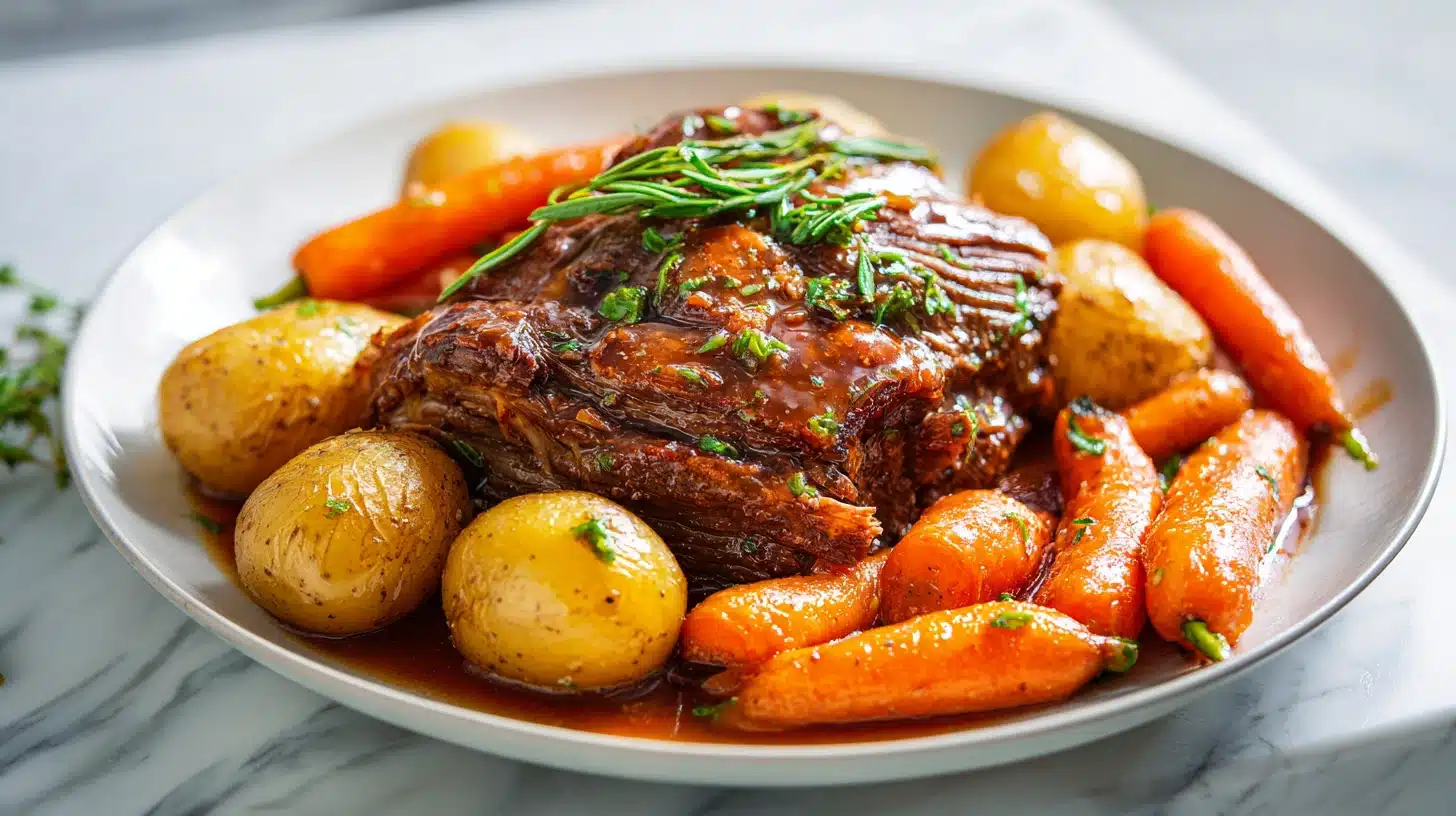
Roasting a tough cut in the oven often leaves you with dry, stringy meat and a watery, flavorless pool at the bottom of the pan. This method traps the moisture and converts tough connective tissue into rich, melt-in-your-mouth gelatin. I still remember lifting the lid that first time and the smell that hit me. Deep, savory, almost like a restaurant kitchen.
Read on for the cuts that work best, how to layer your vegetables so nothing turns to mush, and how to end up with thick gravy straight from the pot.
Table of Contents
Choosing the right cut for your slow cooker beef joint
The cut of meat you choose dictates your final result. Eight hours of low, steady heat does not treat all beef the same way. Lean cuts like topside or sirloin lack the intramuscular fat and connective tissue to stay moist under a long braise. They dry out and turn stringy. You want cuts with rich marbling and dense collagen. Chuck roast is the classic choice because the fat renders down and keeps the meat succulent. It is hard to beat. Arm roast and shank roast are also excellent. Both have deep beefy flavor and a texture that shreds beautifully once fully cooked.
If you want a sliceable roast rather than a shredded one, topside can work, but it needs careful monitoring. Pull it from the heat the moment it probes tender, usually around the six hour mark, to prevent drying. For most home cooks, a well marbled chuck roast is the safest bet. The fat cap melts slowly into the braising liquid and enriches the base for your gravy. If you are exploring other slow cooked proteins, our slow cooker pork loin with mushroom sauce uses a similar low and slow philosophy.
Marbling matters more than weight
When shopping, pick a joint that weighs around three to four pounds. This size fits nicely in a standard six quart slow cooker and leaves enough room for vegetables. Look at the cross-section of the meat and find the white streaks running through the muscle. Those are the fat deposits that will melt. A completely lean piece of beef will not give you the unctuous, velvety texture you want. You can always trim excess surface fat before cooking, but leave the internal marbling intact.
Bone in versus boneless
Boneless roasts are easier to handle and slice, which makes them ideal for a weeknight dinner. A bone-in shank roast, on the other hand, gives you a richer, more gelatinous broth. The marrow seeps into the cooking liquid as it simmers. If you want gravy that spoons like silk over your mashed potatoes, seek out a shank. I always go bone-in when I can find one. The difference in the broth is noticeable. Just be prepared to navigate around the bone when serving. Whichever cut you choose, pat the raw meat dry with paper towels before seasoning. A dry surface helps you get a better sear if you brown it first, and that sear adds a massive boost of flavor.
Print
The Ultimate Slow Cooker Beef Joint for Sunday Dinner
- Total Time: 505 min
- Yield: 6 servings 1x
Description
A deeply flavorful slow cooker beef joint made with a marbled chuck roast, root vegetables, red wine, and beef broth. The meat cooks low and slow until it falls apart and yields a rich, glossy gravy.
Ingredients
For the beef and vegetables:
1 chuck roast (3 to 4 pounds), patted dry
2 tablespoons olive oil
1 teaspoon coarse kosher salt
1 teaspoon black pepper
2 large onions, roughly chopped
4 large carrots, cut into 2 inch chunks
1 pound Yukon Gold potatoes, halved
4 cloves garlic, smashed
3 sprigs fresh thyme
For the braising liquid:
1 cup beef broth
1/2 cup dry red wine
1 tablespoon tomato paste
1 tablespoon cornstarch
2 tablespoons cold water
Instructions
1. Pat the beef joint dry with paper towels and rub it all over with salt and pepper.
2. Heat the olive oil in a large skillet over medium high heat and sear the beef until a deep brown crust forms on all sides, about 3 minutes per side.
3. Scatter the chopped onions, carrots, potatoes, garlic, and thyme sprigs across the bottom of a 6 quart slow cooker.
4. Place the seared beef joint on top of the vegetable bed.
5. Whisk the beef broth, red wine, and tomato paste together in a bowl and pour the liquid around the sides of the meat, avoiding pouring it directly over the beef.
6. Cover the slow cooker and cook on the low setting for 8 hours until the meat probes tender and shreds easily with a fork.
7. Transfer the cooked beef to a cutting board and let it rest for 10 minutes before slicing or shredding.
8. Strain the cooking liquid into a saucepan and bring it to a simmer over medium heat.
9. Whisk the cornstarch and cold water together in a small bowl to make a slurry and stir it into the simmering broth until the gravy thickens into a glossy sauce.
10. Serve the beef joint hot with the vegetables and spoon the gravy generously over the top.
Notes
Store the beef and gravy in an airtight container in the refrigerator for up to 4 days or freeze for up to 3 months. Reheat gently on the stove over low heat.
If you prefer a sliceable roast, cook for 6 hours instead of 8 and check the internal temperature with a meat thermometer.
Substitute the red wine with an equal amount of additional beef broth and a splash of balsamic vinegar if you prefer not to use alcohol.
- Prep Time: 15 min
- Rest Time: 10 min
- Cook Time: 480 min
- Category: Main Course
- Method: Slow Cooker, Stovetop
- Cuisine: American
Nutrition
- Serving Size: 1 cup beef with vegetables and gravy
- Calories: 485 kcal
- Sugar: 6 g
- Sodium: 720 mg
- Fat: 28 g
- Saturated Fat: 10 g
- Unsaturated Fat: 15 g
- Trans Fat: 0 g
- Carbohydrates: 18 g
- Fiber: 3 g
- Protein: 38 g
- Cholesterol: 145 mg
Preparing and layering ingredients for crockpot beef roast
A great slow cooker beef joint comes down to how you stack the components inside the pot. The slow cooker creates a humid environment where steam cannot escape. Ingredients at the bottom sit submerged in liquid and cook the fastest. Vegetables on top steam. Once you understand this, you can time everything so you end up with tender meat and vegetables that still hold their shape.
The root vegetable bed
Start by chopping onions, carrots, and celery into large, uniform chunks. If you cut them too small, they disintegrate into paste after eight hours. Rough cut pieces of onion add a sweet aromatic base that permeates the whole pot. Scatter these vegetables across the bottom of your crockpot to create a makeshift roasting rack. This bed lifts the beef slightly above the direct heat and prevents the bottom from scorching. As the beef releases its juices, they drip down onto the vegetables and form a rich foundation for your gravy.
You can also tuck potatoes into this layer. Choose waxy potatoes like Yukon Gold rather than starchy russets, as they hold their shape better during long cooking. Cut them in half if they are small, or quarters if they are larger. The vegetables underneath the meat will become soft and jammy, almost melting into the broth. If you prefer vegetables with more bite, reserve half your carrots and add them during the last three hours. This same layering approach works in our lentil stew slow cooker recipe.
Aromatics and flavor builders
Tuck a few smashed garlic cloves and sprigs of fresh thyme or rosemary around the vegetables. The gentle heat coaxes out their essential oils without burning them. Avoid whole peppercorns at the start if you dislike biting into harsh spice. They rehydrate and become unpleasantly sharp. Use coarse black pepper on the meat itself before cooking instead.
Common mistakes when making a slow cooker beef joint
- Opening the lid repeatedly to check the meat. Each time you lift the lid, you let out trapped steam and drop the temperature, which adds thirty minutes to your cooking time. Leave it alone until the final hour.
- Using too much cooking liquid. The meat and vegetables release a surprising amount of moisture. Adding broth past the halfway mark of the pot leaves you with a watery, diluted gravy.
- Skipping the sear on the beef. A quick sear in a hot skillet before placing the joint in the slow cooker builds a deep brown crust through the Maillard reaction. That translates into a much richer tasting broth.
- Tossing tough herbs directly into the liquid. Thyme and rosemary stems become woody and unpleasant to chew. Bundle them in cheesecloth or tie them with kitchen twine so you can remove them before serving.
- Adding dairy too early. If your recipe calls for heavy cream or sour cream, wait until the cooking cycle finishes. High heat causes dairy to curdle and separate, which ruins the texture of your sauce.
Mastering the liquid ratio for slow cooker roast beef
A frequent question about making a slow cooker beef joint is how much liquid you actually need. The answer surprises most people. A slow cooker is a sealed environment, so very little moisture escapes during cooking. As the beef cooks, it releases a significant amount of water. Combined with the juices from onions and carrots, a pot that started with half a cup of liquid can end with three cups of broth. If you submerge your beef joint entirely in stock, you are boiling it rather than roasting it. Boiling meat gives you a stringy, washed-out texture instead of a concentrated, savory bite.
The halfway rule
For a standard three to four pound slow cooker beef roast, you only need one cup of beef broth and half a cup of red wine. Pour the liquid around the edges of the meat rather than directly over the top, so you do not wash away your seasoning. The liquid should reach about halfway up the sides of the joint. This ratio means the lower half of the meat braises in liquid while the upper half steams in the humid air. The result is a uniform texture that mimics both a braise and a traditional oven roast. The red wine adds acidity that helps break down tough muscle fibers and gives you a complex flavor base. If you prefer not to use alcohol, replace the wine with an equal amount of additional broth and a splash of balsamic vinegar. For more on braising with wine, our french onion beef stew recipe shows how well beef handles a rich, wine based broth.
Building the gravy base
As the slow cooker beef joint cooks, the liquid darkens and thickens slightly. The collagen from the connective tissue melts into the broth and gives it body. If you want a velvety gravy without any fuss at the end, stir a tablespoon of tomato paste into the broth before cooking begins. Tomato paste provides umami and helps emulsify the fat that renders out of the meat. You can also sprinkle a packet of dry gravy mix over the beef joint right after searing it. The dried powder hydrates slowly during cooking and naturally thickens the surrounding liquid, so you have a ready-made sauce by dinner time.
Cooking and resting your slow cooker beef joint
Timing is the final piece of a perfect slow cooked beef joint. Cook the meat on the low setting for eight hours. Cooking on high for four hours will technically cook the meat through, but it will not give the collagen enough time to convert into gelatin. High heat causes the muscle fibers to seize up and squeeze out their moisture, and you end up with a dry, tough roast. Low and slow is the only way to get that falling apart texture. You will know your slow cooker beef joint is ready when it yields easily to a twist of a fork. The internal temperature should register around 200 degrees Fahrenheit for a shredded texture or 145 degrees Fahrenheit for a sliceable joint.
The resting phase
I know it is tempting to dig in right away. Do not slice the meat immediately. Transfer the beef joint to a cutting board and let it rest for ten minutes. Resting allows the muscle fibers to relax and reabsorb some of the juices that were forced toward the center during cooking. If you slice it right away, all that liquid spills out onto the board and the meat goes dry. After ten minutes, slice the beef against the grain. Or use two forks to pull it apart if it got soft enough.
While the meat rests, strain the cooking liquid to remove the spent vegetables. Pour the strained liquid into a saucepan and bring it to a simmer on the stove. If it needs thickening, whisk a slurry of cornstarch and cold water into the simmering broth. In a few minutes, it turns into a glossy gravy. If you want to add vegetables back into the gravy, keep the carrots you rescued from the strainer. This is the same approach we use in our high protein beef stroganoff, where the braising liquid does most of the heavy lifting.
Serving suggestions and leftover transformations
A perfectly cooked slow cooker beef joint pairs well with starchy sides that soak up the rich gravy. Creamy mashed potatoes are the classic choice. They make a bed that catches every drop of sauce. If you roasted potatoes in the slow cooker, mash a few of them on your plate and let the gravy pool in the crevices. Buttered egg noodles or crusty bread also work. Add a bright, acidic side dish like tangy vinegar slaw or quick pickled red onions to cut through the heavy richness. The sharp contrast wakes up your palate between bites of the savory meat.
Storing and reheating leftovers
Leftovers from a slow cooker beef roast store well. Keep the meat submerged in its gravy in an airtight container in the refrigerator for up to four days. Reheat it gently on the stove over low heat so it does not dry out. You can also freeze the shredded beef in its sauce for up to three months. This makes for an incredibly fast weeknight dinner when you are short on time.
Repurposing the beef
Do not let leftover pot roast beef sit in the back of the fridge. Honestly, the leftovers might be my favorite part. Shred the remaining meat and toss it with barbecue sauce for quick sandwiches. You can also chop the beef and fold it into a cheesy quesadilla or use it as a filling for pot pie. The tender texture means it works in any dish that calls for shredded meat. Our cheesy ground beef melt is a good example of turning simple beef into a comforting, melted cheese dinner. If you have lots of leftover broth, use it as a base for a quick soup, similar to our high protein chicken pot pie soup, substituting your beef and its gravy for the chicken base.
Frequently asked questions
What cut is best for a slow cooker beef joint? (Silverside vs bottom round)
Silverside is the classic choice in the UK and Australia — in the US, the same cut is sold as bottom round. Both come from the hard-working rear leg, which is exactly why they shine in the slow cooker: hours of low, moist heat melt the connective tissue into fork-tender slices. Topside (top round), brisket, and chuck all work with the same method.
How long does silverside take in the slow cooker?
A 1.5–2 kg (3–4 lb) silverside or bottom round joint needs 7–8 hours on LOW or 4–5 on HIGH. Low and slow always wins for this cut — rushing it on HIGH is the most common cause of chewy slices.
Do I need to put liquid in the slow cooker with beef?
Yes, but only a small amount. You need about one cup of liquid to create steam and prevent the bottom of the meat from scorching. The beef and vegetables will release plenty of their own juices during cooking, so you never want to submerge the joint completely.
What can I do with a joint of beef in the slow cooker?
You can braise it with broth, wine, and root vegetables for a classic Sunday dinner. You can also shred the cooked beef and use it for tacos, sandwiches, or pot pie filling. The slow cooker turns a tough joint into versatile, tender meat.
How to slow cook beef so it is tender?
Cook the beef on the low setting for eight hours rather than on high for four hours. Low heat gently dissolves the tough connective tissues and collagen into gelatin without forcing the muscle fibers to seize up and squeeze out their moisture.
What are common mistakes when slow cooking beef?
Adding too much liquid, opening the lid during cooking, and skipping the sear are the most frequent errors. Too much liquid boils the meat. Opening the lid extends cooking time. Skipping the sear means you miss out on a deep, browned flavor base.
Can I cook potatoes in the slow cooker with the beef?
Yes, waxy potatoes like Yukon Gold hold their shape well. Place them at the bottom of the slow cooker under the beef joint so they absorb the braising liquid and stay tender without turning to mush during the long cooking process.
Conclusion
Making a slow cooker beef joint transforms an economical cut of meat into a tender, flavorful dinner with very little active effort. Choose a well marbled roast, layer your vegetables correctly, and keep the liquid ratio low. You get meat that falls apart and a gravy that tastes like it simmered all day. This method takes the guesswork out of Sunday dinner.
Make it, then tell me how yours turned out in the comments below. Did your joint slice cleanly or fall apart into savory shreds?
For more recipes like slow cooker beef joint, follow us on Facebook and Pinterest for cozy casserole inspiration.
More recipes in this series: