The first time I attempted shrimp linguine, I ended up with a pot of gummy pasta and rubbery seafood. It is a common kitchen tragedy that a dish so elegant in restaurants falls apart at home.
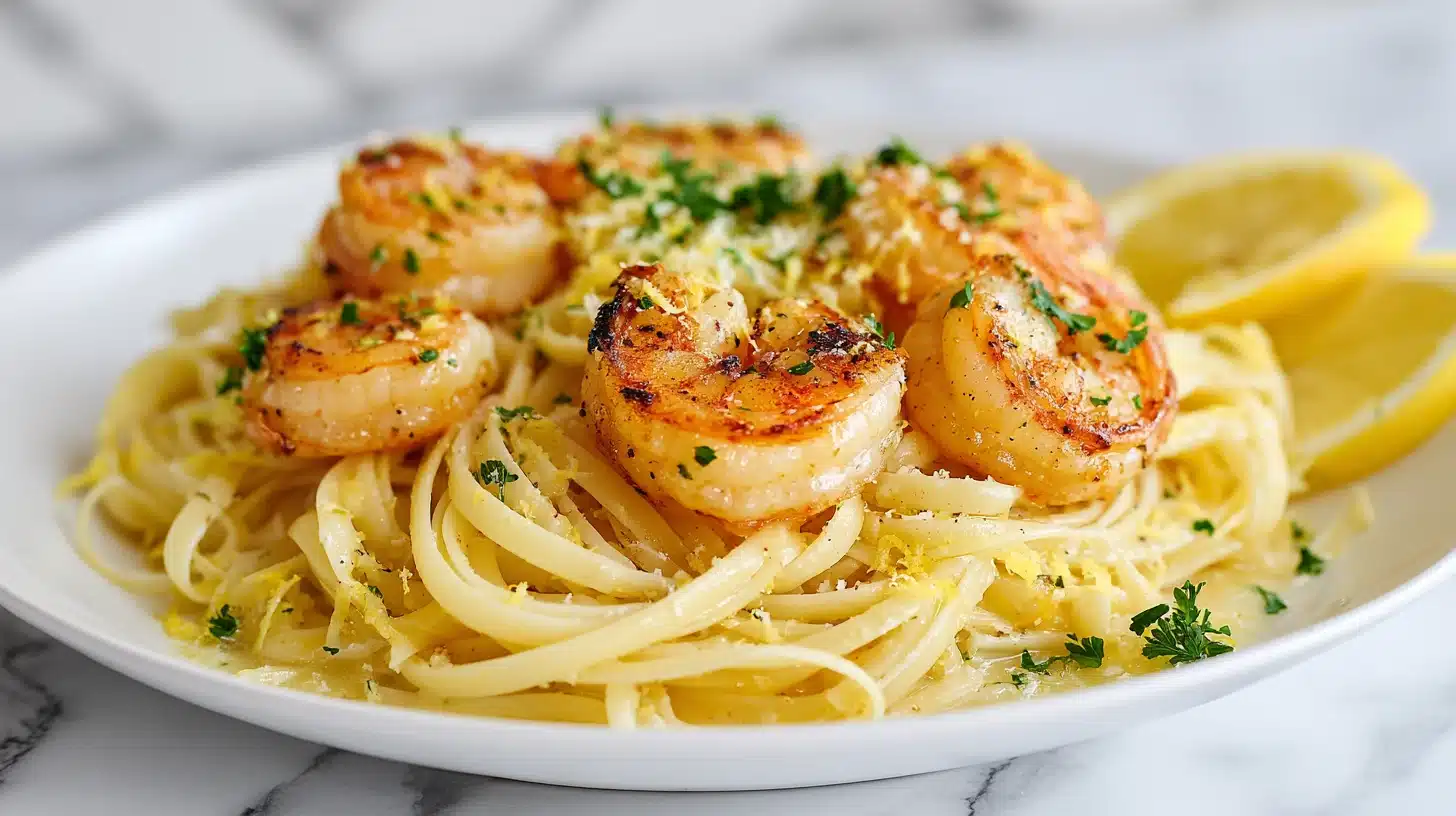
Most recipes leave you with dry, overcooked shrimp and a sauce that slips right off the noodles, pooling sadly at the bottom of the bowl. This method fixes both problems by using a starchy pasta water emulsion that clings to every strand.
By the end, you’ll know how to get a golden sear on your shrimp, build a glossy garlic butter sauce from scratch, and time your pasta so everything finishes together.
Table of Contents
Why This Shrimp Linguine Works
There is a specific science to making a restaurant quality shrimp linguine at home, and it comes down to understanding how starches and fats interact. When you boil pasta, the water fills with loose starch. Most home cooks dump this liquid down the drain, but it is the most useful ingredient in your kitchen. By whisking starchy pasta water into a base of melted butter and olive oil, you create an emulsion. This is a suspension of fat and water that thickens naturally, coating the long strands of linguine so the garlic and lemon flavors stick to the noodle rather than sliding off onto the plate. If you love a simple garlic butter pasta, this starchy water technique will change your kitchen routine forever. You can read more about the foundation of this technique in our garlic butter pasta guide.
Another reason this shrimp linguine recipe works is the specific layering of acidity and fat. We use both lemon zest and lemon juice. The zest contains the essential oils, which add a bright, fragrant note that survives high heat. The juice, added right at the end, brings a sharp, fresh acidic kick that wakes up the heavy cream and butter. White wine deglazes the pan, lifting the deeply browned fond left behind by the searing shrimp. This fond is pure umami flavor.
Timing is the final puzzle piece. Seafood overcooks in seconds, turning from tender to tough. We sear the shrimp quickly, remove them from the pan, build the sauce, and only return them to the pan at the very last second. This guarantees they stay plump and juicy.
The Pan Sauce Secret
The secret to a glossy pan sauce is temperature control. If the pan is too hot when you add the butter and cream, the dairy will separate and break, leaving you with an oily slick on top of a watery base. Keep the heat at a medium simmer. Whisk the pasta water in gradually. You will see the liquid transform from a thin, watery broth into a thick, luxurious coating. The starch molecules swell and bind the fat and liquid together. This is exactly how you get the creamy texture without needing to use pounds of heavy cheese.
Print
The Last Shrimp Linguine Recipe You Will Ever Need
- Total Time: 31 min
- Yield: 6 servings 1x
Description
This shrimp linguine combines perfectly seared jumbo shrimp with flat pasta in a glossy garlic butter and white wine sauce. Using starchy pasta water creates a rich emulsion that coats every noodle without heavy cheese.
Ingredients
1 lb extra large shrimp (uncooked, tail-on, patted dry)
12 oz linguine pasta
1 tsp kosher salt (for seasoning shrimp)
1/2 tsp black pepper (for seasoning shrimp)
2 tbsp olive oil
3 tbsp unsalted butter (divided)
6 cloves garlic (minced)
2/3 cup dry white wine (like Pinot Grigio)
1 lemon (zested and juiced, divided)
1/2 cup starchy pasta water (reserved from boiling)
1/4 cup heavy cream
1/4 tsp chili flakes (optional)
1/4 cup fresh parsley (chopped)
Instructions
1. Bring a large pot of salted water to a boil. Add the linguine and cook until al dente. Reserve half a cup of the starchy pasta water before draining.
2. Pat the shrimp dry and season with salt and pepper. Heat olive oil in a large skillet over medium high heat. Sear the shrimp for one minute per side until pink. Remove to a plate.
3. Lower the heat to medium and add two tablespoons of butter to the skillet. Add the minced garlic and chili flakes. Cook for thirty seconds until fragrant and golden.
4. Pour in the white wine and lemon zest. Scrape the browned bits from the bottom of the pan. Let the liquid reduce by half.
5. Add the drained linguine to the skillet. Pour in the pasta water and toss vigorously with tongs until a glossy sauce forms and coats the noodles.
6. Stir in the heavy cream, lemon juice, and the remaining butter. Return the shrimp to the pan and toss for thirty seconds to warm through.
7. Remove from heat, sprinkle with fresh parsley, and serve immediately.
Notes
Store in an airtight container in the refrigerator for up to 2 days. Reheat gently in a skillet with a splash of water.
For a gluten free version, swap the linguine for your favorite gluten free pasta.
Do not overcook the shrimp during the initial sear, as they will continue to warm in the sauce.
- Prep Time: 12 min
- Cook Time: 19 min
- Category: Main Course
- Method: Stovetop
- Cuisine: Italian
Nutrition
- Serving Size: 1 cup
- Calories: 420 kcal
- Sugar: 2 g
- Sodium: 580 mg
- Fat: 18 g
- Saturated Fat: 8 g
- Unsaturated Fat: 8 g
- Trans Fat: 0 g
- Carbohydrates: 38 g
- Fiber: 2 g
- Protein: 24 g
- Cholesterol: 180 mg
Ingredient Breakdown for the Best Shrimp Pasta
Selecting the right ingredients is essential for a quick cooking dish. With only a handful of components, every single one needs to pull its weight.
- Shrimp: Use extra large or jumbo shrimp. Leave the tails on during cooking, as they protect the delicate meat and add flavor to the pan sauce. You can remove them before eating if you prefer.
- Linguine: This flat pasta is wider than spaghetti, giving it a broader surface area to catch the emulsified sauce. Cook it to al dente so it retains a slight chew.
- Garlic: Use fresh cloves only. Minced garlic from a jar lacks the sharp, spicy bite that balances the rich butter. Mince it finely so it melts into the sauce.
- Lemon: You need the zest and the juice. A microplane is the best tool for zesting, as it catches only the yellow oils and avoids the bitter white pith underneath.
- White Wine: A dry, crisp white wine like Pinot Grigio or Sauvignon Blanc cuts through the fat. The alcohol cooks off, leaving a bright acidity.
- Fats: A combination of olive oil and butter gives you the best of both worlds. Olive oil raises the smoke point for searing the shrimp, while butter provides a rich, nutty flavor for the sauce.
- Heavy Cream: This is optional but highly recommended. Just a splash smooths out the sauce and turns it into a creamy shrimp linguine.
When you are shopping, look for shrimp that smell clean, like the ocean. Avoid any with a strong, ammonia like odor. For a variation on the protein, you might enjoy our lemon garlic butter shrimp which focuses purely on the seafood preparation.
How to Make Shrimp Linguine Perfectly
Cooking shrimp linguine is a fast process. Have all your ingredients chopped, measured, and ready before you turn on the stove. This technique is called mise en place, and it prevents the garlic from burning while you are searching for a measuring spoon.
First, bring a large pot of salted water to a rolling boil. The water should taste like the sea. Drop in the linguine and stir it well to prevent the strands from sticking together.
While the pasta boils, pat the shrimp completely dry with paper towels. Moisture is the enemy of a good sear. Season them generously with salt and black pepper. Heat a large skillet over medium high heat and add the olive oil. When the oil shimmers, add the shrimp in a single layer. Do not crowd the pan. Sear them for one minute per side, just until they turn pink and form a golden crust. Remove the shrimp to a plate immediately.
In the same skillet, lower the heat to medium. Add the butter and minced garlic. Sauté the garlic for thirty seconds until it smells fragrant and sweet. Pour in the white wine and lemon zest, scraping the bottom of the pan with a wooden spoon to release the browned bits. Let the liquid reduce by half.
By now, your linguine should be al dente. Before you drain it, scoop out one cup of the starchy pasta water. Add the drained linguine directly to the skillet with the garlic sauce. Pour in half a cup of the pasta water and toss the noodles vigorously with tongs. Keep tossing until the sauce thickens and coats the linguine. If the pan gets too dry, add more pasta water.
Stir in the heavy cream and lemon juice. Return the shrimp to the pan, tossing everything together for thirty seconds just to warm them through. Take the pan off the heat. This entire process feels like a choreographed dance, but it takes under twenty minutes. If you are looking for another quick option, check out our collection of easy pasta for dinner.
AT-A-GLANCE COMPARISON
When planning your dinner, it helps to know exactly what kind of dish you are making. Here is how this shrimp linguine recipe compares to other common variations you might consider.
| Variation | Time | Texture | Effort | Dietary Fit |
|---|---|---|---|---|
| This Shrimp Linguine | 31 min | Glossy, emulsified sauce | Medium | Dairy, Gluten |
| Shrimp Scampi over Rice | 20 min | Brothy, liquid sauce | Low | Gluten Free |
| Creamy Tomato Shrimp Pasta | 45 min | Thick, heavy sauce | High | Dairy, Gluten |
Our method hits the sweet spot for a weeknight meal. It takes slightly longer than a basic scampi, but the texture of the emulsified sauce clinging to the flat linguine is vastly superior to a brothy sauce soaking into rice. It also avoids the heaviness of a long simmered tomato cream sauce, letting the shrimp be the bright, shining star.
Common Mistakes and Pro Tips
Even a simple recipe can go wrong if you overlook a few details. Here are the most common pitfalls and how to avoid them.
Overcooking the shrimp is the number one error. Shrimp cook incredibly fast. They go from perfectly done to rubbery in a matter of seconds. Watch the color change closely. When the flesh turns from translucent gray to opaque pink and forms a C shape, they are done. If they curl into a tight O shape, they are overcooked.
Burning the garlic is another frequent issue. Garlic cooks much faster than you think. If your pan is too hot, the minced garlic will turn dark brown and bitter in ten seconds. Keep the heat at medium when cooking the garlic, and have your white wine poured and ready to pour into the pan to stop the browning process instantly.
Forgetting to salt the pasta water is a tragic mistake. The linguine only has one chance to absorb flavor from the inside out. If you boil it in plain water, the noodle itself will taste bland, and no amount of sauce can fix it. The water should taste distinctly salty, like seawater.
One of my favorite pro tips is to use a large straight sided skillet instead of a traditional pot for the final toss. A wide pan gives you room to maneuver the long linguine strands and helps the sauce distribute evenly. It also helps the liquid reduce faster. You can see a similar technique in action with our cowboy butter chicken linguine, where the wide pan makes tossing effortless.
Finally, always garnish at the end. Fresh parsley is not just a pretty garnish. It adds a fresh, herbaceous note that cuts through the richness of the butter and cream. Add it right before serving so the leaves do not wilt in the heat of the pan. A sprinkle of chili flakes also adds a nice contrast of color and a subtle background heat.
Variations and Serving Suggestions
Once you master the base recipe, this shrimp linguine is easy to adapt based on what you have in your kitchen. The garlic and lemon base is highly receptive to other flavors.
For a spicy kick, increase the chili flakes or add a splash of hot sauce right at the end. Calabrian chili paste is a fantastic addition if you want a complex, fruity heat rather than a simple burn. Stir a teaspoon of it into the garlic butter before adding the wine.
If you want to add vegetables, spinach is the easiest choice. Toss two handfuls of fresh baby spinach into the pan right after you add the pasta water. The residual heat will wilt the spinach in seconds, adding color and nutrients without extra cooking time. Asparagus spears cut into two inch pieces are another great spring addition. You can cook them quickly in the boiling pasta water during the last two minutes of the linguine cooking time, then drain them together.
For a different flavor profile entirely, you can lean into sweeter notes. Our garlic brown sugar shrimp uses a similar searing technique but adds brown sugar for a caramelized glaze. You could adapt that concept here by adding a teaspoon of brown sugar to the garlic butter, creating a sweet and savory pan sauce that pairs beautifully with the lemon juice.
When it comes to serving, keep the sides simple. A crisp green salad with a light vinaigrette provides a refreshing contrast to the rich pasta. Crusty bread is essential for soaking up any extra sauce left in the bowl. If you want a beverage pairing, the dry white wine you used in the sauce is the perfect glass to serve alongside the meal. The acidity of the wine matches the acidity of the lemon, and the two together just work.
If you have leftovers, store them in an airtight container in the refrigerator. The pasta will absorb the sauce as it sits, so add a splash of water or broth when you reheat it in a skillet over low heat.
Frequently Asked Questions
What goes in Shrimp Linguine?
Shrimp linguine typically contains extra large or jumbo shrimp, linguine pasta, garlic, lemon juice, lemon zest, butter, olive oil, and white wine. Many recipes also include heavy cream for richness and fresh parsley for a bright finish. Starchy pasta water is the secret ingredient that binds the sauce together.
What sauce goes best with shrimp pasta?
A garlic butter and white wine sauce is the classic choice for shrimp pasta. The acidity of the wine and lemon cuts through the richness of the butter, while the starchy pasta water creates a glossy emulsion that clings to the noodles. A light tomato sauce or a creamy Cajun sauce also works well.
What is the difference between shrimp scampi and shrimp linguine?
Shrimp scampi refers to the preparation of the shrimp itself, typically cooked in a garlic butter and white wine sauce. Shrimp linguine refers to the complete dish where that scampi preparation is served over linguine pasta. Scampi can be served on its own or over rice, while linguine specifies the pasta.
Can I use frozen shrimp for shrimp linguine?
Yes, you can use frozen shrimp. Thaw them safely by placing them in a colander under cold running water for about ten minutes. Once thawed, pat the shrimp completely dry with paper towels before seasoning and searing. Removing excess moisture is critical for achieving a golden crust in the hot pan.
How do I prevent the shrimp from getting rubbery?
To prevent rubbery shrimp, sear them quickly over medium high heat for just one minute per side. Remove them from the pan immediately after searing. Only return the shrimp to the pan at the very end to toss with the sauce, taking the pan off the heat so the residual warmth does the rest.
Can I make this dish without wine?
Yes, you can substitute the white wine with an equal amount of chicken broth or seafood stock. To mimic the acidity of the wine, add an extra squeeze of lemon juice or a teaspoon of white wine vinegar to the broth before adding it to the pan to deglaze.
Is shrimp linguine the same as prawn linguine?
Yes, prawn linguine is simply what this dish is called in the UK and Australia, where large shrimp are sold as prawns. Same garlic, same butter, same 30-minute method; use whichever your fishmonger stocks, and size up to king prawns or jumbo shrimp for the most dramatic plate.
Conclusion
Making a restaurant quality shrimp linguine at home is entirely possible when you respect the timing and the technique. The secret is the starchy pasta water emulsion and treating your shrimp with care. Trust the process of searing, removing, and returning the seafood at the last moment.
For more recipes like shrimp linguine, follow us on Facebook and Pinterest for weeknight dinner ideas.
More recipes in this series: