Rhubarb butter might just be the most underrated jar in my refrigerator right now, and the moment you taste that deep pink, glossy spread on a warm biscuit, you’ll wonder why you ever let rhubarb season pass you by without making it.
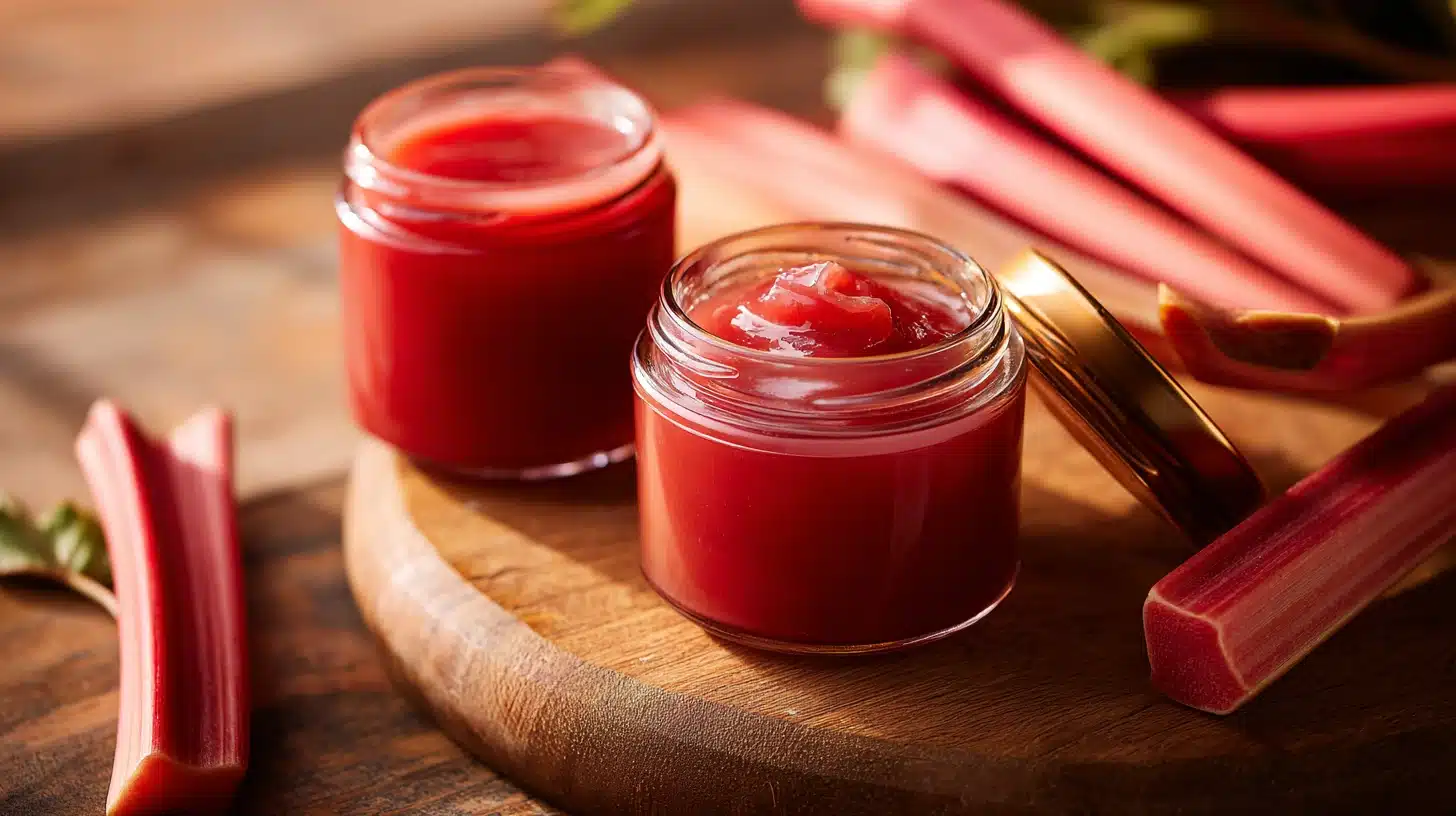
Most people wrestle with rhubarb and end up with something watery, cloyingly sweet, or so stiff it could double as concrete. This recipe solves that by cooking the rhubarb down low and slow until it thickens naturally into a smooth, spoonable spread without a single gram of pectin.
Inside: exactly how to prep rhubarb for the silkiest texture, which spices pull the flavor from tart to complex, and the simple visual cues that tell you the batch is perfectly done.
Table of Contents
What Is Rhubarb Butter and Why Is It Worth Making?
If you have only ever used rhubarb in a crumble or a pie, the concept of a fruit butter might feel unfamiliar. Think of it less like dairy butter and more like apple butter, which is a concentrated, slow-cooked fruit spread with a smooth, almost velvety consistency. Rhubarb butter follows the same principle: stalks are cooked down with sugar and spices until the water evaporates and the natural fruit sugars concentrate into a deeply flavored, spreadable preserve.
How It Differs from Rhubarb Jam
Jam relies on pectin, either natural or added, to set into a firm, sliceable gel. Rhubarb butter skips that entirely. Instead of a gel, you get a thick, creamy consistency that holds its shape on a spoon but spreads easily. The texture is closer to smooth peanut butter than wobbly jelly, and that difference makes it incredibly versatile.
Because there is no pectin involved, this is a no-pectin rhubarb butter through and through. The thickening comes purely from time and patience, letting moisture cook off gradually over medium-low heat. That slow reduction also concentrates the color, turning pale pink stalks into a rich, jewel-toned spread.
Why Rhubarb Works So Well Here
Rhubarb is almost entirely water, which sounds like a problem but is actually an advantage. All that liquid gives the spread plenty of cooking time to develop deep, rounded flavor. The natural tartness also means you don’t need much added sugar to balance things out; the fruit does most of the work. A small amount of vanilla and a whisper of cinnamon round out the sharp edges without masking the rhubarb’s distinctive personality.
This stovetop rhubarb butter is also wonderfully low-maintenance once it gets going. You don’t need to stir constantly, just check in every few minutes and pull the spoon through the pot. The result is a small-batch rhubarb butter that fills about two half-pint jars, perfect for keeping one in the fridge and gifting the other.
For a broader look at how rhubarb plays in baked goods, the rhubarb coffee cake on Forkful Daily is a great companion recipe that uses the same seasonal stalks in a completely different direction.
Print
Rhubarb Butter: A Silky, Tangy Spread You’ll Put on Everything
- Total Time: 60 min
- Yield: 2 cups 1x
- Diet: Vegan
Description
Rhubarb butter is a smooth, slow-cooked fruit spread made from fresh rhubarb stalks, sugar, and warm spices. It has a thick, creamy texture and a bright tangy flavor with no pectin needed. This small-batch recipe makes about 2 cups and keeps in the refrigerator for up to 3 weeks.
Ingredients
For the rhubarb butter:
4 cups fresh rhubarb stalks (about 1.25 lbs, chopped into 1/2-inch pieces)
3/4 cup granulated white sugar (up to 1 cup if rhubarb is very tart)
2 tablespoons fresh lemon juice
1/4 teaspoon ground cinnamon
1 pinch fine sea salt
1/2 teaspoon pure vanilla extract (added off heat)
Instructions
1. Prep the rhubarb: Wash and trim the rhubarb stalks, discarding all leaves. Chop into 1/2-inch pieces and add them to a medium heavy-bottomed saucepan with the granulated sugar. Stir to combine.
2. Start cooking: Set the pan over medium heat. Stir occasionally and cook for about 8 to 10 minutes until the rhubarb releases its liquid, the sugar dissolves, and the mixture is bubbling steadily with soft, broken-down fruit.
3. Reduce and simmer: Lower the heat to medium-low. Stir in the lemon juice, cinnamon, and sea salt. Cook uncovered for 35 to 40 minutes, stirring every 4 to 5 minutes, until the mixture thickens and the bubbles become slow, thick, and volcanic-looking on the surface.
4. Blend until smooth: Remove the pot from heat and let it cool for 5 minutes. Use an immersion blender to puree the mixture directly in the pot until completely smooth, or transfer to a blender in batches with the lid slightly open to release steam.
5. Finish cooking: Return the blended spread to the pan over medium-low heat. Stir constantly for 5 to 8 more minutes until it thickens back to a spreadable consistency. To test doneness, drop a small spoonful onto a chilled plate: it should hold its shape with only a slow, lazy spread.
6. Add vanilla and jar: Remove from heat and stir in the vanilla extract. Spoon the hot rhubarb butter into clean glass jars and let it cool completely at room temperature before sealing. Refrigerate for up to 3 weeks.
Notes
Store in the refrigerator for up to 3 weeks in a sealed jar, or freeze in airtight containers for up to 4 months. Thaw overnight in the refrigerator and stir well before serving.
To reduce sugar: You can use as little as 1/2 cup sugar for a tangier spread, but the texture may be slightly thinner and the shelf life will be shorter, about 1 to 2 weeks refrigerated.
Color tip: Use granulated white sugar and a stainless steel or enameled cast iron pot to keep the spread a bright coral-pink color. Brown sugar or reactive pans can cause browning.
Doubling the batch: This recipe doubles easily. Add about 15 to 20 extra minutes of cooking time when doubling, and stir more frequently near the end to prevent sticking.
- Prep Time: 10 min
- Cook Time: 50 min
- Category: Breakfast
- Method: Stovetop
- Cuisine: American
Nutrition
- Serving Size: 2 tablespoons
- Calories: 45 kcal
- Sugar: 10 g
- Sodium: 12 mg
- Fat: 0 g
- Saturated Fat: 0 g
- Unsaturated Fat: 0 g
- Trans Fat: 0 g
- Carbohydrates: 11 g
- Fiber: 1 g
- Protein: 0 g
- Cholesterol: 0 mg
Ingredients for Homemade Rhubarb Butter
Getting the ingredient ratios right is what separates a bright, balanced spread from something that tastes like sweet pink mush. Here is what you need and why each component matters.
The Core Ingredients
- 4 cups fresh rhubarb stalks (about 1.25 lbs, chopped into 1/2-inch pieces)
- 3/4 cup granulated sugar (adjust up to 1 cup if your rhubarb is very tart)
- 2 tablespoons fresh lemon juice
- 1/2 teaspoon pure vanilla extract
- 1/4 teaspoon ground cinnamon
- 1 pinch of fine sea salt
Rhubarb: Always choose firm, deeply colored stalks. Bright red stalks will give you a richer color in the final spread, but the greenish ones taste just as good. Avoid stalks that feel limp or rubbery; they have already lost a lot of their moisture and won’t break down as smoothly.
Sugar: Granulated white sugar keeps the color clean and bright. Brown sugar will work but adds a molasses undertone that can compete with the rhubarb’s natural tang. If you prefer a less sweet spread, start with 1/2 cup and taste as you go toward the end of cooking.
Lemon juice: This is your preservation insurance. The acid helps extend the shelf life, brightens the flavor, and keeps the spread from tasting flat or one-dimensional.
Cinnamon and vanilla: Use a light hand here. The goal is complexity, not a spiced apple-butter situation. Half a teaspoon of vanilla and a quarter teaspoon of cinnamon is enough to make you notice something warm and interesting without being able to name exactly what it is.
What You Don’t Need
No pectin. No butter (the name is a texture descriptor, not an ingredient list). No water added at the start; the rhubarb releases more than enough liquid on its own. This easy rhubarb preserve has a genuinely short shopping list, which is part of what makes it so satisfying to put together.
If you love fruit butters in general, the homemade pumpkin butter recipe on Forkful Daily uses the same slow-cook technique and is worth bookmarking for fall.
How to Make Rhubarb Butter Step by Step
The process is simple, but paying attention to a few key moments will make the difference between a spread that is silky and one that scorches or stays thin. Here is the full walkthrough.
Step 1: Prep the Rhubarb (5 minutes)
Wash the stalks thoroughly and trim off any leaves. Rhubarb leaves are toxic and must be discarded. Chop the stalks into pieces roughly 1/2 inch long. They don’t need to be uniform because everything will cook down to a puree, but smaller pieces speed up the softening stage.
Step 2: Start the Cook (10 minutes)
Add the chopped rhubarb and sugar to a medium, heavy-bottomed saucepan. Stir to combine and set over medium heat. Within a few minutes you will hear a gentle sizzle and see the rhubarb beginning to release its liquid. The sugar will dissolve into a syrupy, rosy pool around the fruit. Stir occasionally and let it bubble at a steady but not aggressive pace.
Step 3: Simmer Down Low (35 to 40 minutes)
Once the rhubarb is completely soft and falling apart, about 10 minutes in, reduce the heat to medium-low. Now stir in the lemon juice, cinnamon, and sea salt. From here, the job is slow evaporation. Let the mixture bubble gently, stirring every 4 or 5 minutes to prevent sticking on the bottom.
You will notice the color deepening from pale pink to a rich, salmon-coral hue. The bubbles will change too, going from thin, watery pops to thick, slow, volcanic-style bubbles that leave craters in the surface. That change in bubble texture is one of your best visual cues that the spread is approaching the right consistency.
Step 4: Blend for Silkiness (2 minutes)
When the mixture has thickened to the consistency of a loose applesauce, remove the pot from the heat and let it cool for about 5 minutes. Then use an immersion blender directly in the pot to puree until completely smooth. Alternatively, transfer to a blender in batches, leaving the lid slightly ajar to let steam escape.
Return the blended mixture to the pan and cook over medium-low for another 5 to 8 minutes, stirring constantly, until it thickens back up to a spreadable consistency. To test doneness, spoon a small amount onto a chilled plate. It should hold its shape with only a slow, lazy spread. If it runs like water, keep cooking.
Step 5: Add Vanilla and Jar It Up (3 minutes)
Remove the pan from the heat and stir in the vanilla extract. Adding it off the heat preserves the delicate flavor instead of cooking it away. Spoon the hot rhubarb butter into clean jars and let it cool to room temperature before sealing and refrigerating.
Serving Ideas, Storage, and Make-Ahead Tips
One of the best things about this small-batch rhubarb butter is how many ways you can use it once the jar is in your refrigerator. The flavor is bright and tart with a warm, slightly floral finish, and it pairs with both sweet and savory foods with surprising ease.
Ways to Use Your Rhubarb Butter
- Spread it thickly on toasted sourdough with a smear of ricotta underneath.
- Swirl it into plain yogurt or oatmeal for an instant upgrade on a weekday morning.
- Use it as a filling for thumbprint cookies or a topping for a simple vanilla cheesecake.
- Serve a small bowl alongside a cheese board. It’s especially good with aged cheddar or brie.
- Stir a spoonful into a vinaigrette for a fruit-forward salad dressing with real depth.
- Dollop onto pancakes, waffles, or crepes instead of syrup.
The tartness makes it useful in savory contexts too. Try it as a glaze on roasted pork tenderloin during the last 10 minutes of cooking, or thin it with a little apple cider vinegar for a quick dipping sauce for grilled chicken.
Storage Guidelines
This homemade rhubarb spread keeps well in the refrigerator for up to 3 weeks in a sealed jar. For longer storage, you can freeze it in small freezer-safe containers for up to 4 months. Thaw overnight in the refrigerator and give it a good stir before using.
If you want to water-bath can this for shelf-stable storage, make sure to follow USDA canning guidelines, use sterilized jars, and process in boiling water for 10 minutes. Properly canned jars will keep in a cool, dark pantry for up to 12 months.
Make-Ahead Notes
This recipe doubles beautifully. If you have a bumper crop of rhubarb from the garden or found a good deal at the farmers market, go ahead and make a double batch. The cooking time extends by about 15 to 20 minutes when you double the volume, but the process is identical.
The spread actually tastes better after 24 hours in the refrigerator. The spices mellow and integrate, and the overall flavor rounds out significantly. Make it on Saturday and it will be at its absolute best by Sunday morning on your toast.
If you love baking with rhubarb during the season, the brown butter rhubarb pie is another deeply flavored recipe worth trying alongside this spread.
Frequently Asked Questions
Can I use frozen rhubarb to make rhubarb butter?
Yes, frozen rhubarb works very well here. Thaw it completely and drain off any excess liquid before adding it to the pot, otherwise you will add significant extra water that lengthens the cooking time. The finished spread will taste just as good as one made with fresh stalks.
My rhubarb butter turned brown instead of pink. What happened?
Brown sugar or an overly high heat setting are the most common culprits. Using granulated white sugar and keeping the heat at medium-low through most of the cook will preserve that pretty pink-to-coral color. Also, make sure your pot is not reactive. Stainless steel or enameled cast iron are the best choices.
How do I know when the rhubarb butter is thick enough?
Do the chilled plate test: spoon a small amount onto a plate you have kept in the freezer for a few minutes. If it holds its shape without running, it is ready. The surface should look glossy and the texture should feel similar to smooth peanut butter when you drag a spoon through it.
Can I reduce the sugar in this recipe?
You can drop the sugar to 1/2 cup for a tangier, more assertive spread. Keep in mind that the sugar does more than sweeten. It also helps with preservation and contributes to the thick, glossy texture. Going below 1/2 cup may result in a thinner consistency and a shorter refrigerator shelf life of about 1 to 2 weeks.
Conclusion
There is something genuinely satisfying about turning a few pounds of tart, knobby rhubarb stalks into a smooth, jewel-toned jar of rhubarb butter that earns its place on every table from breakfast through dinner. It takes patience but not skill, and the reward is a spread with real depth and personality.
Give it a try this weekend while rhubarb is at its peak. Two jars from one simple batch means one for your kitchen and one to share.
For more recipes like rhubarb butter, follow us on Facebook and Pinterest for seasonal preserving ideas and fresh fruit recipe inspiration.
More recipes in this series: