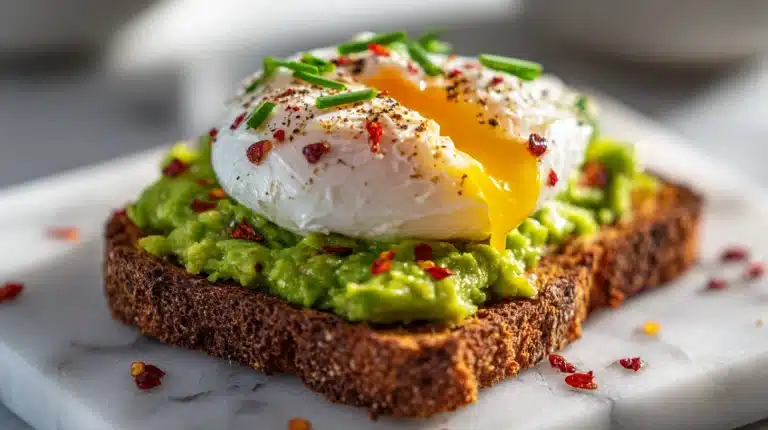
My very first restaurant brunch shifts taught me one truth: a great avocado toast with poached egg is entirely about temperature and timing contrasts. Cold, smooth avocado meeting steaming, runny yolk creates a sensation that plain toast simply cannot replicate.
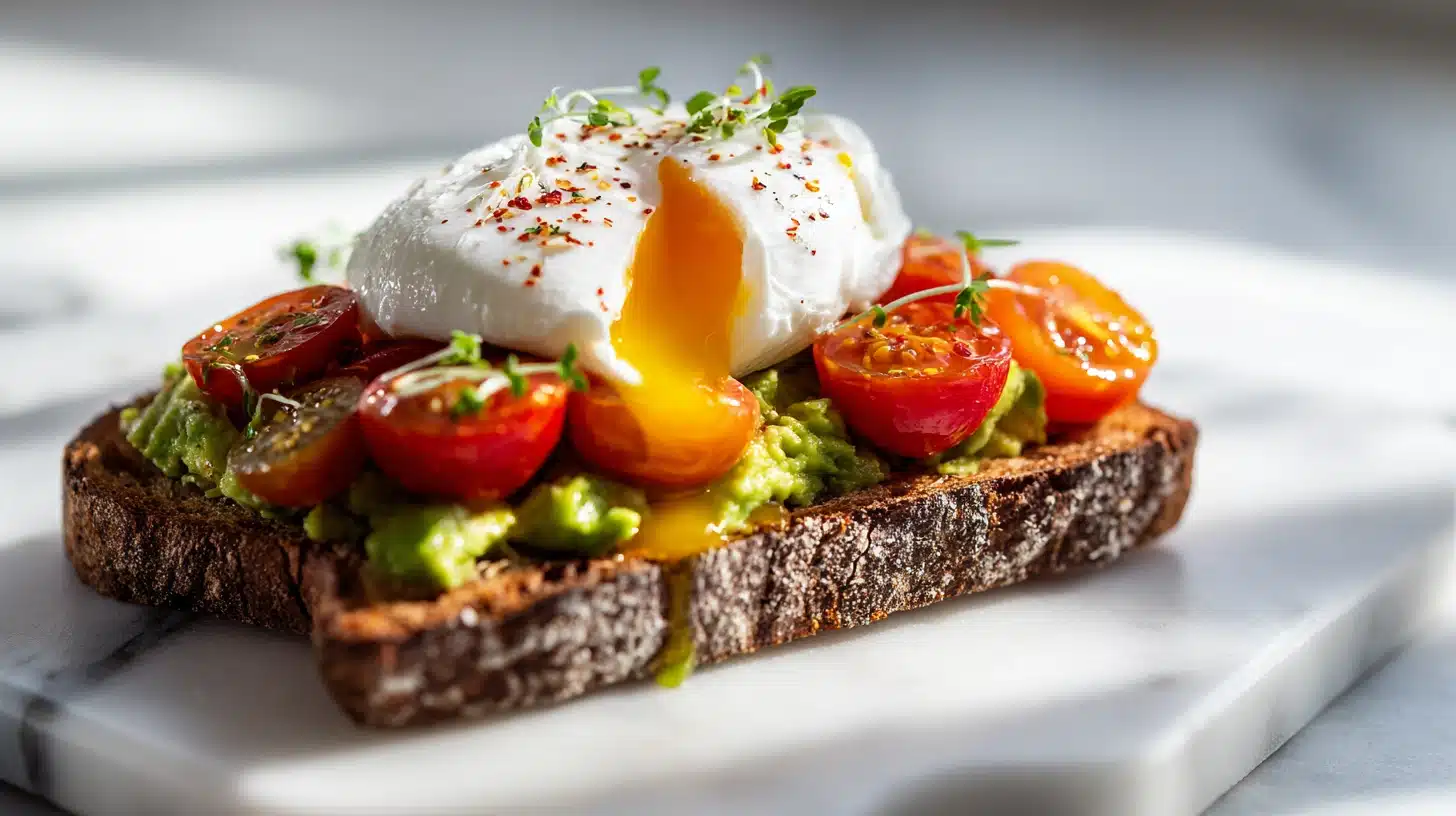
Too often, home cooks end up with soggy bread, gray egg whites, or avocado that turns brown before the plate even hits the table. This recipe fixes all three issues by focusing on bread structure, water temperature, and acid balance.
Coming up: how to select and store avocados for peak mashability, the exact water temperature for soft egg whites, and a simple formula for seasoning the perfect green layer.
Table of Contents
Selecting and Preparing the Perfect Avocado Base
The avocado is the make-or-break component of this dish. You can cook the most beautiful poached egg in the world, but if your avocado is brown, stringy, or lacking acid, the whole thing falls apart. The goal here is a bright, chunky mash that tastes fresh and holds up under the weight of a poached egg and a piece of toast.
How to Choose the Right Avocado
When you are at the grocery store, look for Hass avocados with a dark, nearly black skin that yields to gentle pressure when you squeeze it in the palm of your hand. Avoid avocados with soft, sunken spots or ones that feel mushy at the stem end. If you only find rock-hard, bright green avocados, place them in a brown paper bag on your counter for two to three days to speed up the ripening process. To keep a ripe avocado from over-softening before your breakfast, pop it into the refrigerator. The cold halts the ripening, and the flesh stays green and ready to use for up to three days.
The Secret to a Non-Brown Mash
Oxidation is the enemy of a beautiful breakfast. When you cut an avocado, exposure to air begins turning that lush green flesh into an unappetizing brown mush within minutes. The fix relies on acid and proper mashing technique. Scoop the flesh into a bowl and immediately add a squeeze of fresh lime juice or lemon juice. White wine vinegar also works in a pinch if you are already using it for your poaching liquid.
Use a fork to mash the avocado, leaving it quite chunky rather than whipping it into a smooth, watery paste. A chunky texture gives the mash enough structure to stay put on the bread when you bite into it. The acid from the citrus prevents browning, but it also cuts through the natural richness of the avocado and wakes up your palate before the heavy, buttery yolk hits. If you want to prep this mash ahead of time, press a sheet of plastic wrap directly against the surface of the avocado in an airtight container and refrigerate it overnight.
Seasoning the Green Layer
Salt is non-negotiable. I prefer flaky sea salt folded into the avocado mash itself, rather than just sprinkled on top at the end. That way every single bite is seasoned from the bottom up. Add a few cracks of fresh black pepper and a pinch of garlic powder if you want a savory undertone. Some people enjoy a dash of everything seasoning mixed right into the mash. You can explore our avocado toast with chili flakes for a spicy variation that brings a completely different flavor profile to the table.
Print
The Last Avocado Toast with Poached Egg Recipe You Will Ever Need
- Total Time: 15 min
- Yield: 2 servings 1x
- Diet: Vegetarian
Description
A classic breakfast featuring thick toasted sourdough topped with a bright, lime-juice mashed avocado and a perfectly poached egg with a runny yolk. Ready in 15 minutes.
Ingredients
1 large ripe Hass avocado
1 tsp fresh lime juice
1/4 tsp flaky sea salt (plus more for serving)
1/8 tsp freshly cracked black pepper
2 large fresh eggs (cold)
1 tbsp white wine vinegar
3 cups water
2 slices thick-cut rustic sourdough bread
1 tsp unsalted butter (optional, for the skillet)
1/4 cup cherry tomatoes (halved)
1 tbsp grated Parmesan cheese
1 tsp everything seasoning
Instructions
1. Mash the avocado flesh with lime juice, sea salt, and black pepper in a bowl until chunky but spreadable.
2. Toast the sourdough slices in a toaster or buttered skillet until deeply golden brown and very crunchy.
3. Heat the water and white wine vinegar in a shallow pan until it reaches a gentle simmer with tiny bubbles at the bottom.
4. Stir the simmering water in a circular motion to create a whirlpool and gently slide a cold egg into the center.
5. Cook the egg for exactly 3 minutes until the whites are set but the yolk remains liquid, then remove with a slotted spoon.
6. Blot the bottom of the poached egg on a paper towel to remove excess water.
7. Spread a thick layer of the chunky avocado mash onto each slice of toasted bread.
8. Place the poached egg directly on top of the avocado mash.
9. Finish with flaky sea salt, black pepper, cherry tomatoes, and Parmesan cheese if desired.
Notes
Store leftover avocado mash in an airtight container with plastic wrap pressed directly against the surface in the refrigerator for up to 24 hours.
Use very fresh eggs for poaching, as the whites hold their shape much better than older eggs.
If the avocado is too firm, let it ripen in a brown paper bag on the counter for 1 to 2 days.
- Prep Time: 10 min
- Cook Time: 5 min
- Category: Breakfast
- Method: Stovetop
- Cuisine: American
Nutrition
- Serving Size: 1 slice
- Calories: 320 kcal
- Sugar: 2 g
- Sodium: 410 mg
- Fat: 19 g
- Saturated Fat: 4 g
- Unsaturated Fat: 13 g
- Trans Fat: 0 g
- Carbohydrates: 28 g
- Fiber: 6 g
- Protein: 12 g
- Cholesterol: 185 mg
The Bread: Building a Structural Masterpiece
The bread you choose is the literal foundation of the dish. If you use a thin, flimsy slice of sandwich bread, the moisture from the avocado and the poached egg will turn your breakfast into a soggy, disappointing mess before you even sit down. You need a bread that works as a dam, holding back the moisture while giving you a loud, crunching contrast to the soft toppings.
Choosing the Right Slice
Rustic, thick-sliced bread is the only way to go. A dense sourdough loaf or a hearty whole grain bread works best because the open crumb structure traps the avocado mash, while the sturdy crust supports the weight of the poached egg. You want a slice that is at least three-quarters of an inch thick. When you press down on the center of the toast with your finger, it should not collapse or bend under the pressure. This is exactly what makes a simple avocado toast with poached egg stand out from a mediocre diner breakfast.
Toasting for Maximum Crunch
Toast the bread until it is deeply golden brown. Do not settle for pale, warm bread. You want a hard, audible crunch when the knife tears through the crust. If you are using a toaster, run it on a medium-high setting. If you prefer a skillet, melt a small knob of butter in a cast iron pan over medium heat and toast the bread for two minutes per side until it develops a crackling, golden crust. The butter adds a rich, nutty flavor that complements the fresh avocado beautifully.
Protecting the Crumb
One of the biggest mistakes people make is spreading the cold mash directly onto hot toast. The steam from the hot bread gets trapped under the avocado layer, creating condensation that makes the bottom of your toppings slick and wet. To prevent this, let the toast rest for thirty seconds before you build your dish. This brief pause allows the bread to cool just enough to stop steaming, so your avocado layer stays firmly in place. The bread should remain crunchy right up until the moment you take your last bite. For another great bread-based breakfast idea, try our turkey and avocado breakfast wrap which uses a similar structural approach to keep fillings secure.
Poaching the Perfect Egg: Temperature and Timing
The poached egg is the crown jewel of this dish. Getting it right can feel intimidating, but the process comes down to two simple factors: water temperature and white wine vinegar. A perfectly poached egg should have a fully set, tender egg white that holds its shape, wrapped around a warm, thick, runny yolk that spills out when you cut it.
Water Temperature and Vinegar
Fill a wide, shallow pan with about three inches of water. You want the water to be at a gentle simmer, not a rolling boil. Look for tiny bubbles forming at the bottom of the pan and rising gently to the surface. If the water is boiling too rapidly, the violent movement of the liquid will tear your delicate egg white apart, leaving you with wispy, stringy threads instead of a neat, round package.
Add one tablespoon of white wine vinegar to the water. The acid in the vinegar speeds up the protein coagulation in the egg white, which helps it wrap tightly around the yolk. White wine vinegar is ideal because it has a mild flavor that will not aggressively permeate the egg. Regular distilled white vinegar works well too, but avoid apple cider vinegar or darker vinegars, as their flavors and colors can alter the final taste of your poached egg avocado toast. You can read more about the science of egg coagulation in our comprehensive poached eggs guide.
The Swirl and Drop Method
Before you crack the egg, stir the simmering water in a circular motion to create a gentle whirlpool. This centrifugal force helps wrap the egg white tightly around the yolk as it enters the water, and you get that classic, neat teardrop shape. Crack a very fresh, cold egg into a small ramekin or measuring cup first. If you drop the egg straight into the water from the shell, it will sink and immediately stick to the bottom of the pan.
Gently slide the egg into the center of the whirlpool. The white should immediately start to coil around the yolk. Turn the heat down slightly to maintain a gentle simmer. Cook the egg for exactly three minutes for a runny yolk, or three and a half minutes if you prefer a slightly thicker, jammy yolk. Use a slotted spoon to carefully lift the egg out of the water and blot the bottom gently on a clean paper towel to remove excess water before placing it on your toast. If you want a completely different take on breakfast eggs, check out our egg white frittata recipe.
Assembly and Flavor Pairings
Building the final plate is where the magic happens. You have your crunchy, golden toast, your bright, acid-balanced avocado mash, and your perfectly round, steaming poached egg. The way you stack these components dictates the final texture and eating experience.
Layering for Structural Integrity
Start with your toasted bread. Use the back of a spoon to spread a thick, even layer of the chunky avocado mash across the surface of the toast. You want enough avocado to create a soft cushion, but not so much that it slides off the edges. Next, take your drained poached egg and place it directly in the center of the avocado layer. The slight give of the mashed avocado helps stabilize the egg, so it stays put when you try to slice through it.
Topping Variations and Additions
From here, the dish is a blank canvas. A simple avocado toast with poached egg benefits enormously from a finishing sprinkle of flaky sea salt and freshly cracked black pepper right on top of the egg. If you want to add a bit of freshness, halve a handful of cherry tomatoes and scatter them around the plate. The acidity of the tomatoes works beautifully with the rich yolk.
For a savory, salty punch, a light dusting of grated Parmesan cheese over the hot egg melts slightly and adds a wonderful umami note. Everything seasoning is another fantastic addition. It gives you a nutty, crunchy texture that contrasts with the soft yolk. If you love bold flavors, you might also enjoy our avocado bacon toast with lime and sea salt which adds a smoky crunch to the classic formula.
Cutting Technique
To serve, use a sharp serrated knife to gently cut through the poached egg and the toast. A serrated blade cuts through the delicate egg white without tearing it, so the runny yolk spills beautifully over the avocado layer. Serve immediately while the toast is still crackling and the egg is steaming hot.
Tested Ingredient Substitutions
Part of developing recipes for Forkful Daily means testing every possible swap so you do not have to guess. Life happens, and sometimes you open the fridge to find you are missing an ingredient right in the middle of making breakfast. Below is a tested substitutions table detailing exactly what happens to the flavor, texture, and timing of the dish when you make common ingredient swaps.
| Swap | Use Instead | What Changes |
|---|---|---|
| Hass Avocado | Frozen Avocado Chunks | Thawed chunks mash slightly wetter and softer, requiring extra lime juice to maintain structure and prevent a slippery texture on the toast. |
| Sourdough Bread | Thick-Sliced Multigrain | Adds a nutty, earthy flavor and a denser crumb structure, making the toast slightly heavier and more filling than the sourdough version. |
| White Wine Vinegar | Apple Cider Vinegar | Functions the same for protein coagulation but adds a faintly sweet, fruity flavor to the egg white that changes the overall tang of the dish. |
| Lime Juice | Lemon Juice | Provides the exact same browning prevention but offers a sharper, brighter citrus note that cuts through the avocado fat more aggressively. |
| Poached Egg | Soft Boiled Egg (Halved) | Eliminates the need for a water bath and vinegar, but the firmer white prevents the yolk from spilling naturally over the avocado layer. |
| Flaky Sea Salt | Soy Sauce Drizzle | Adds a liquid umami hit instead of a dry crunch, resulting in a saltier, savory base that turns the mash slightly looser at the edges. |
Frequently Asked Questions
Is avocado toast with a poached egg healthy?
Yes, this dish provides an excellent balance of healthy monounsaturated fats from the avocado and high-quality protein from the egg. When built on whole grain or sourdough bread, the meal gives you sustained energy and dietary fiber that keeps you full through the morning without a heavy sugar crash.
Can you eat avocado toast if you have high cholesterol?
Avocados are rich in monounsaturated fats, which can help manage cholesterol levels by lowering LDL while maintaining HDL. Eggs are also safe for most people regarding dietary cholesterol, according to current nutrition research. Using a poached egg instead of fried eliminates extra butter or oil, so this is a heart-friendly option when enjoyed as part of a balanced diet.
What kind of egg is best on avocado toast?
A poached egg with a soft, runny yolk is the best choice because the liquid yolk acts as a rich sauce that coats the avocado mash. However, a soft-boiled egg with a jammy yolk, or a sunny-side-up egg with crisp edges, are also excellent options if you want to avoid the poaching process entirely. Freshness is the most important factor for any egg style you choose.
Conclusion
A great avocado toast with poached egg relies on a few simple but specific principles: choosing the right avocado, toasting the bread until it crunches, and poaching the egg in gently simmering, vinegar-spiked water. Master these steps, and you will never look at a mediocre diner breakfast the same way again.
Make it, then tell me how yours turned out. Did you go for the classic sea salt finish, or did you add cherry tomatoes and Parmesan?
For more recipes like avocado toast with poached egg, follow us on Facebook and Pinterest for cozy weekend brunch inspiration.
More recipes in this series: