Gluten-free jam filled donuts used to be the one bakery treat I walked right past, convinced that a wheat-free dough could never puff up soft and pillowy the way the originals do. I grew up watching my grandmother lower rings of yeast dough into a wide cast-iron skillet, turning them with a slotted spoon until they cracked golden and hissing on every side.
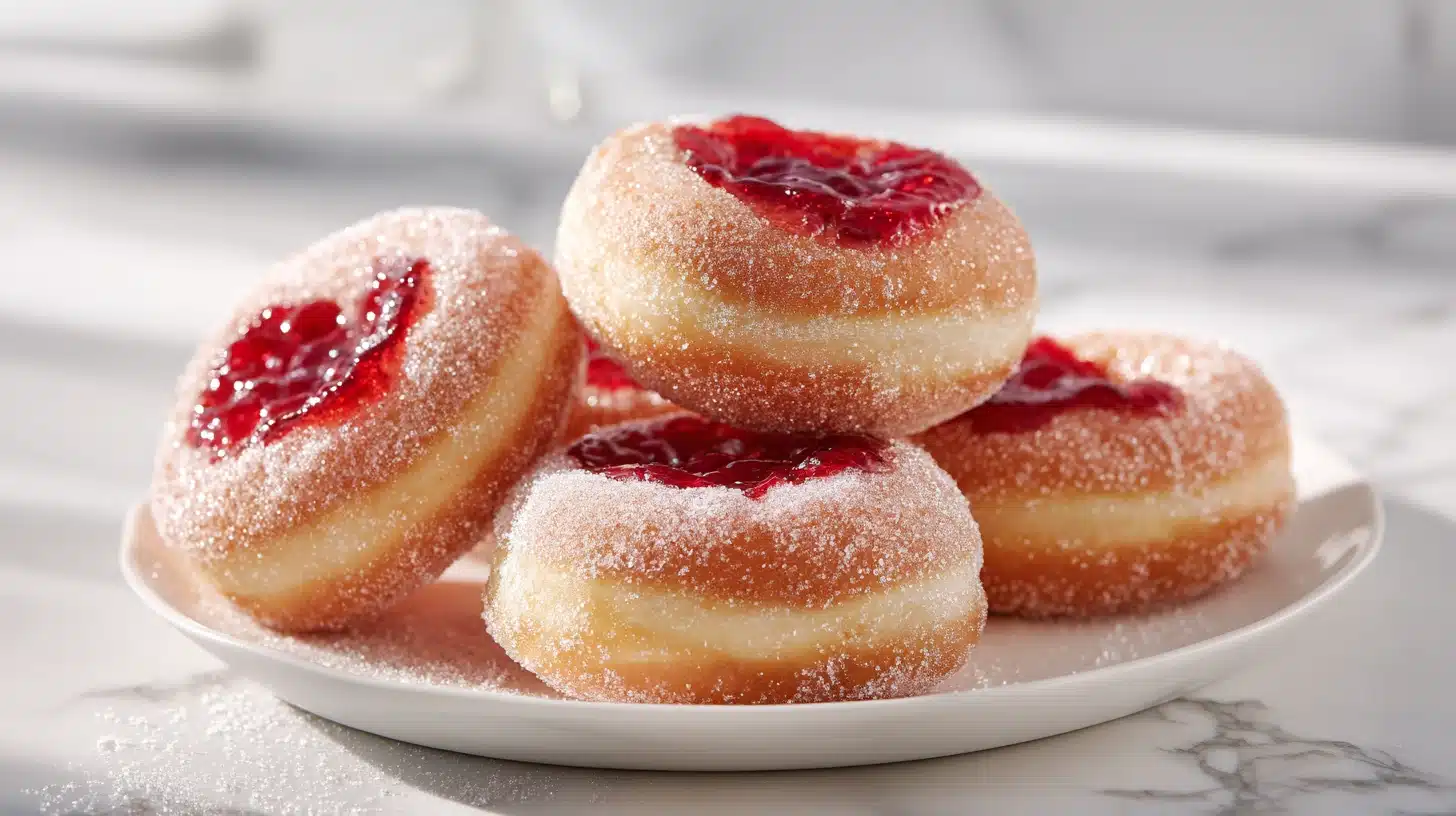
Too many homemade versions fall flat. They turn out dense, gummy, or they crack open at the seams the second they hit the hot oil. This enriched dough fixes those problems. It uses a carefully balanced flour blend and a double-rest method that builds real structure so your donuts stay tender.
By the end, you’ll know how to hydrate your gluten-free flour properly, which proofing temperature yields the highest rise, and the cleanest way to pipe jam into the center without tearing the crust.
Table of Contents
The Secret to a Tender Gluten-Free Donut Dough
Working with gluten-free flour means you have to forget almost everything you know about traditional bread making. When you strip away the gluten, you lose the natural elasticity that traps air bubbles and lets the dough stretch without tearing. To compensate, we rely on a precise combination of a high-quality 1-to-1 gluten-free flour blend, a touch of xanthan gum for structure, and an enriched dough base that keeps the final crumb soft and moist.
Start by warming your milk to about 100°F. It should feel like a warm bath, not hot coffee, because anything hotter will kill your yeast. If you are using active dry yeast, you need to proof it in the warm milk with a pinch of sugar for five minutes until it turns frothy. Instant yeast skips this step, but I prefer the active dry route for the distinct yeasty aroma it builds in the bowl. Once the yeast is alive and bubbling, whisk in melted butter, eggs, and sugar. This fat and sugar enrich the dough, coating the starches in the flour blend so they don’t turn tough.
When you add the gluten-free flour, mix it thoroughly but do not knead it like wheat dough. Gluten-free dough looks more like a thick, sticky batter than a smooth ball. You want to beat it hard for two minutes to hydrate every grain of starch fully. Unhydrated starch is the main culprit behind that gritty, sandy texture in bad gluten-free baking. I’ve bitten into too many gritty donuts at bakeries that should know better. Cover the bowl tightly with plastic wrap and let it sit in a warm spot. The dough will not double in size the way traditional dough does, but it will puff slightly and take on a domed top.
During this first rest, the starches absorb the liquid and the xanthan gum relaxes. If you want to understand more about how different fats and hydrations affect tender crumb structures, our cottage cheese donuts use a completely different approach that yields a similarly soft bite. Once your dough has rested for an hour, it will feel noticeably softer and look slightly swollen. That is your signal that the starches are fully saturated and ready to hold their shape in the hot oil.
Print
How to Make Perfect Gluten-free jam filled donuts at Home
- Total Time: 163 min
- Yield: 10 servings 1x
- Diet: Gluten Free
Description
These soft and pillowy gluten-free jam filled donuts are fried to a deep golden brown and piped full of thick, sweet fruit preserves. The enriched dough rests twice to build structure without wheat, resulting in a tender crumb that holds its shape and flavors perfectly.
Ingredients
For the dough:
2 cups gluten-free 1-to-1 flour blend (containing xanthan gum)
2 1/4 tsp active dry yeast (1 packet)
1/4 cup granulated sugar (divided)
1/2 cup warm milk (100°F)
1/4 cup unsalted butter (melted and cooled)
2 large eggs (room temperature)
1/2 tsp salt
Neutral oil (for frying, like canola or grapeseed)
For filling and coating:
3/4 cup thick strawberry jam (or your preferred flavor)
1/2 cup granulated sugar (for rolling)
Instructions
1. In a small bowl, combine the warm milk, yeast, and a pinch of the sugar. Let it sit for five minutes until the mixture becomes frothy and smells distinctly of bread.
2. In a large mixing bowl, whisk the remaining sugar, melted butter, eggs, and salt until smooth. Pour in the frothy yeast mixture and stir to combine.
3. Add the gluten-free flour blend to the wet ingredients and beat vigorously with a wooden spoon or hand mixer for two minutes until the dough is thick, sticky, and completely smooth with no dry pockets of flour.
4. Cover the bowl tightly with plastic wrap and let it rest in a warm spot for 60 minutes until the dough looks slightly puffy and domed.
5. Scrape the dough onto a surface dusted with gluten-free flour and pat it gently to a half-inch thickness. Cut out ten circles using a 2.5-inch biscuit cutter.
6. Heat two inches of oil in a heavy-bottomed pot to 350°F. Carefully lower the dough circles into the oil in batches of three and fry for 90 seconds per side until deep golden brown.
7. Remove the donuts with a slotted spoon and let them cool on a wire rack for 10 minutes. Roll the warm donuts in granulated sugar to coat the exterior.
8. Use a wooden skewer to poke a hole in the side of each donut and wiggle it to create a pocket inside. Pipe the jam into the pocket until the donut feels heavy.
Notes
Store in an refrigerator for up to 2 days. Reheat in a 300°F oven for 5 minutes to restore the crust.
For dairy-free donuts, substitute the milk with oat milk and the butter with a vegan baking stick.
If your jam is too runny, stir in a teaspoon of cornstarch and heat it gently in a saucepan until it thickens, then cool completely before piping.
Do not skip the dough resting time, as this allows the gluten-free starches to fully hydrate and prevents a gritty texture.
- Prep Time: 33 min
- Rest Time: 122 min
- Cook Time: 8 min
- Category: Breakfast
- Method: Frying
- Cuisine: American
Nutrition
- Serving Size: 1 donut
- Calories: 285 kcal
- Sugar: 18 g
- Sodium: 120 mg
- Fat: 14 g
- Saturated Fat: 5 g
- Unsaturated Fat: 8 g
- Trans Fat: 0 g
- Carbohydrates: 36 g
- Fiber: 1 g
- Protein: 4 g
- Cholesterol: 45 mg
Frying for the Perfect Golden Crust
Frying strikes fear into many home bakers, but it is the only way to achieve the classic shatter and tender interior of a true donut. Baking gluten-free dough yields a product closer to a bun. Deep frying sets the exterior instantly while steaming the inside, so you get an airy pocket that holds the jam.
Fill a heavy-bottomed Dutch oven with two inches of neutral oil, like canola or grapeseed. Attach a deep-fry thermometer to the side of the pot. You want the oil to hover steadily at 350°F. If the oil is too cold, the dough absorbs grease and turns heavy. If it is too hot, the outside burns before the interior cooks through. While the oil heats, scrape your rested dough onto a well-floured surface. Pat it out gently to a half-inch thickness. Cut out your circles using a biscuit cutter, and if you want traditional filled spheres, do not cut a center hole.
Slide the cut dough circles carefully into the oil, working in batches of three or four to avoid dropping the temperature. They will sink for a moment before bobbing to the surface. Listen for a steady, gentle sizzle. After about ninety seconds, use a slotted spoon to flip them. The bottoms should be a deep mahogany brown. Give the second side another ninety seconds, then lift them out onto a wire rack set over a baking sheet.
Do not place them on paper towels. The steam trapped underneath will make the crust soggy. The donuts should sound hollow when tapped. Let them cool for at least ten minutes before handling. If you are looking for other fried dough techniques, our guide on how to make funnel cake recipe goes deep on oil temperature management for different batter consistencies. Cooling matters because the interior structure keeps setting as the temperature drops, so the walls stay strong enough to hold your jam.
Choosing and Piping Your Jam
The filling is the heart of these donuts, and the type of fruit preserve you choose dictates the final flavor. You need a jam with a thick consistency. Runny fruit syrups will leak out and soak through the crust, making the donut wet and heavy. Strawberry jam is the traditional choice. It has a bright sweetness that cuts through the rich dough.
If you want something with a bit more tartness to balance the sugar, a homemade rhubarb jam works beautifully. For a darker, more complex fruit flavor, consider a seedless blackberry jam that pipes smoothly without clogging your pastry tip. Whatever you choose, stir the jam vigorously before using it. If it has set too hard in the jar, microwave it for ten seconds to loosen it, then let it cool to room temperature.
To fill your donuts, use a wooden skewer to poke a hole in the side of each cooled donut, wiggling it around to create a small pocket inside the center. Fit a piping bag with a round piping tip. Fill the bag with your chosen jam, twist the top to secure it, and insert the tip into the hole you just made. Gently squeeze the bag until you feel the donut grow heavy and you see a small dot of jam peeking out of the opening.
Wipe away any excess with a damp paper towel. Finally, roll the warm, filled donuts in a bowl of granulated sugar. The slight residual heat helps the sugar adhere. The sugar gives a crunchy contrast to the soft dough and sticky fruit center. If you love experimenting with unique fruit preserves, a batch of jalapeno peach jam adds a spicy, unexpected kick that pairs surprisingly well with the rich fried dough.
Troubleshooting Common GF Donut Problems
Even with a great recipe, gluten-free baking requires attention to detail. If your donuts spread flat in the oil, your dough was too wet. Add an extra tablespoon of flour blend next time. The dough should be sticky but hold a shape when patted. If the donuts cracked open along the seams while frying, the oil temperature dropped too low. A cracked seam means the dough absorbed oil instead of frying quickly. The interior expands and bursts through the weak spots.
A gummy interior is another frequent complaint. This happens when the donuts are undercooked or the oil was too hot, so the outside browns before the inside sets. Use your thermometer and trust the timing. The internal temperature of a finished donut should read 190°F on an instant-read thermometer. If your dough tasted gritty even after frying, your flour blend needed more hydration time. Letting the dough rest for a full hour lets the rice and tapioca starches soften completely.
For those who cannot tolerate dairy, you can swap the milk for oat milk and the butter for a vegan baking stick. Just make sure your vegan butter is melted and cooled, not boiling hot. If you want to prepare these ahead, you can cut the dough and freeze the circles on a parchment-lined tray. Fry them straight from the freezer, adding thirty seconds to the cooking time. For a baked alternative when you want to avoid frying entirely, our baked peach hand pie recipe demonstrates how to use a similar enriched dough in the oven, and our popular gluten free chocolate cake shows how to bake without wheat perfectly.
Frequently Asked Questions
Do Krispy Kreme do gluten-free doughnuts?
Krispy Kreme does offer gluten-free original glazed doughnuts in select locations, but they are produced in environments that handle wheat, so they are not safe for those with severe celiac disease. Making your own gluten-free jam filled donuts at home guarantees zero cross-contamination and gives you complete control over the filling and frosting.
Does Dunkin Donuts make any gluten-free donuts?
Dunkin does not currently offer gluten-free donuts on their menu, though they have gluten-free muffins in some markets. Because their kitchens fry traditional wheat dough in the same oil, even a certified gluten-free donut would risk cross-contamination. Homemade GF jam filled donuts are the safest and tastiest alternative for a morning treat.
What is a jam-filled donut called?
Jam-filled donuts go by many names depending on the region. In the United States, they are often called jelly donuts or Bismarcks. In the United Kingdom and Australia, they are known as jam doughnuts. In Israel, the fried, jam-filled treats enjoyed during Hanukkah are called sufganiyot.
Why do Jews eat jelly donuts at Hanukkah?
Jews eat jelly donuts, or sufganiyot, during Hanukkah because the holiday commemorates the miracle of oil burning for eight days. Foods fried in oil, like sufganiyot and latkes, celebrate this miracle. The round, sweet treats are a festive way to honor tradition, and making a gluten-free version allows everyone to join.
Conclusion
I spent years thinking gluten-free jam filled donuts were beyond reach at home. They are not. Get the hydration right, keep your oil steady at 350°F, and use a jam thick enough to stay put. The crust comes out golden and shattery. The inside stays soft. The jam sits right where it should.
Give this recipe a try this weekend when you have a slow morning to let the dough rest and the oil heat properly. Your family will gather around the kitchen the moment that sweet yeast aroma hits the air.
For more recipes like Gluten-free jam filled donuts, follow us on Facebook and Pinterest for sweet breakfast inspiration.
More recipes in this series: