Most gluten-free roti recipes fail because they ignore the single most important variable: moisture. My Gluten Free Purple Sweet Potato Roti fixes that with a specific technique for handling the dough.
Traditional roti cracks and falls apart without gluten. This version stays soft and pliable, rolling out smoothly and puffing perfectly on the pan every single time.
You’ll learn the exact dough consistency to aim for, my two-ingredient trick for flexibility, and the simple cooking method that guarantees a golden, slightly charred flatbread.
Table of Contents
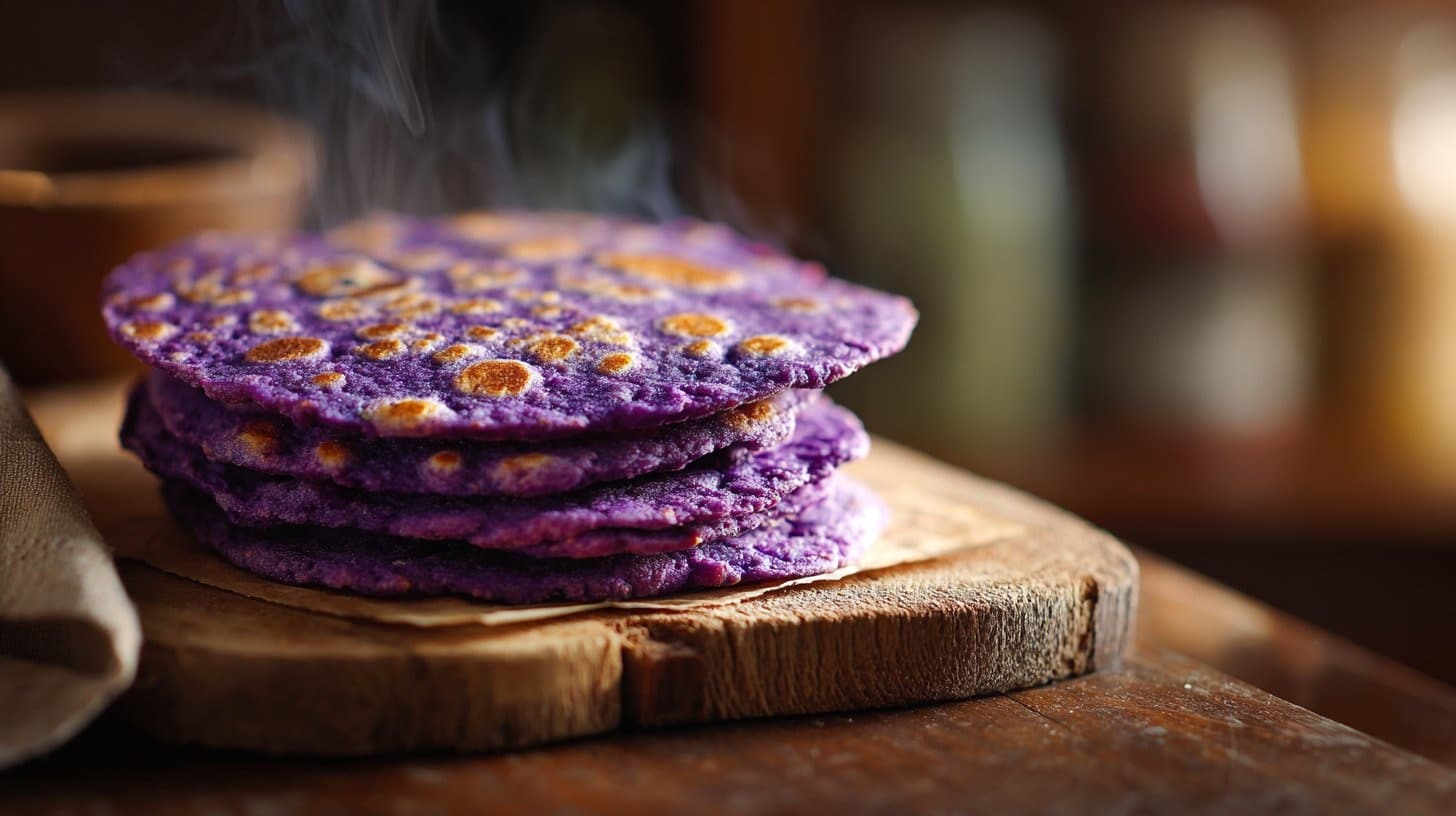
Table of Contents
Why You’ll Love This Purple Sweet Potato Roti
Vibrant Color and Nutritional Benefits
The first time I made this gluten-free purple sweet potato roti, my daughter called it “magic bread.” That deep purple hue comes straight from the mashed sweet potato, no food coloring needed. It’s a visual upgrade from your standard flatbread that makes any meal feel special.
Purple sweet potatoes are packed with anthocyanins, the same antioxidants found in blueberries. They also deliver more fiber than their orange cousins. You get a nutritional boost in every single bite of this roti. I often make a big batch of mashed sweet potato just to have it ready for this recipe, or even for sides like air fryer sweet potato fries.
The color isn’t just pretty. It signals a different flavor profile, slightly earthy and less sugary. This pairs wonderfully with savory curries or a simple smear of oil and salt. You’re not just making a gluten-free purple sweet potato flatbread; you’re adding a powerhouse ingredient to your plate.
Print
The Easiest Gluten-Free Purple Sweet Potato Roti (Vibrant, Egg-Free & Ready in 45 Minutes)
- Total Time: 45 min
- Yield: 6 servings 1x
- Diet: Gluten-Free, Vegan
Description
This gluten-free purple sweet potato roti is an egg-free, allergy-friendly flatbread. The soft, colorful dough is made with mashed sweet potato and a gluten-free flour blend. It cooks quickly on a hot tawa or griddle.
Ingredients
For the roti:
200g (1 cup) mashed purple sweet potato
150g (1 cup) gluten-free flour blend
2 tablespoons oil (olive, coconut, or ghee)
1/2 teaspoon salt
60–80ml (1/4-1/3 cup) water
Optional:
1 tablespoon almond flour or flax meal
Instructions
1. Combine mashed sweet potato, gluten-free flour blend, oil, and salt in a large bowl. Mix until a shaggy mass forms.
2. Gradually add water (start with 60ml) and mix with hands until the dough feels like soft playdough. Add more water only if needed.
3. Knead the dough in the bowl for 1-2 minutes until it’s mostly smooth. Do not overwork it.
4. Cover the bowl with a damp towel. Let the dough rest for 15 minutes.
5. Divide the rested dough into 6 equal balls. Keep them covered.
6. Lightly flour your surface. Roll one ball into a 6-inch circle with a rolling pin.
7. Heat a tawa or cast iron pan over medium-high heat for 2 minutes.
8. Cook the roti for 60-90 seconds on the first side until bubbles form and the bottom gets golden brown spots.
9. Flip it. Cook for another 45-60 seconds. Press gently with a spatula; it should puff up.
10. Brush lightly with oil and stack in a towel to keep warm. Repeat with remaining dough balls.
Notes
If the dough sticks to your hands, it’s too wet. Sprinkle in a teaspoon of gluten-free flour at a time until it’s manageable.
For a sweet twist, brush the finished roti with a little ghee and a sprinkle of cinnamon sugar.
Store in the refrigerator for up to 3 days or freezer for up to 2 months. Reheat at 350°F for 5 minutes.
Use a kitchen scale for the most accurate measurements with gluten-free flours.
The dough should feel like soft playdough, not sticky, before resting.
- Prep Time: 15 min
- Cook Time: 15 min
- Category: Breakfast, Side Dish, Snack
- Method: Stovetop
- Cuisine: Indian
Nutrition
- Serving Size: 1 roti
- Calories: 155 kcal
- Sugar: 2 g
- Sodium: 192 mg
- Fat: 5 g
- Saturated Fat: 1 g
- Unsaturated Fat: 4 g
- Trans Fat: 0 g
- Carbohydrates: 26 g
- Fiber: 2 g
- Protein: 2 g
- Cholesterol: 0 mg
Gluten-Free and Allergy-Friendly
Most gluten-free dough is a crumbly nightmare. This one stays soft because of the moisture from the purple sweet potato. The right gluten-free flour blend is non-negotiable here. I use a mix of buckwheat flour for structure and tapioca flour for chew.
This recipe is completely egg-free, which is a huge win for households with multiple allergies. The binding comes from the starch in the potato and the careful hydration of the dough. You can even add a tablespoon of almond flour or flax meal for extra nutrition without compromising texture.
Here’s what makes it work:
- A specific resting time lets the flours fully hydrate.
- The dough should feel like soft playdough, not sticky.
- Cooking on a hot tawa or griddle creates steam that helps it puff.
I’ve served this homemade gluten-free roti to friends who can’t eat gluten, and they’re always shocked it’s not “regular” bread. It’s a safe, delicious option that doesn’t feel like a compromise. If you’re building a bowl, this vegan sweet potato roti is perfect alongside a cottage cheese beef sweet potato bowl for a hearty meal.
Ingredients and Preparation
Active Time: 15 minutes, Total Time: 45 minutes, Yield: 6 rotis
Key Ingredients for Purple Sweet Potato Roti
This gluten-free purple sweet potato flatbread uses a short, simple list. Every item has a job to do. Start with about 200g (1 cup) mashed purple sweet potato, cooled completely. This is your moisture source and binder. For the flour, a 150g (1 cup) gluten-free flour blend is key. I use a mix of buckwheat flour for structure and tapioca flour for elasticity. You can use a store-bought blend, but avoid any with xanthan gum if you can; it can make the dough gummy.
You’ll need 2 tablespoons of oil (olive, coconut, or ghee works) and 1/2 teaspoon salt. The oil adds richness and helps the roti stay soft. Salt is non-negotiable for flavor. Add 60-80ml (1/4-1/3 cup) water, but hold some back. The dough’s consistency is everything. For extra nutrition, a tablespoon of almond flour or flax meal is a great optional add-in. If you have leftover sweet potato, it’s perfect for a sweet potato creme brulee recipe later.
| Buckwheat flour | Oat flour (certified GF) | Use same amount, flavor will be milder |
| Tapioca flour | Arrowroot powder | Works 1:1 for chewiness |
| Ghee/Olive oil | Coconut oil | Use same amount, may add slight coconut flavor |
Equipment You’ll Need
You don’t need fancy gear for this easy purple sweet potato roti. A medium mixing bowl and a sturdy spoon or spatula are your starting point. For rolling, a rolling pin is essential. I prefer a tapered one for better control over the dough. If you don’t have one, a smooth drinking glass can work in a pinch.
Cooking requires a hot, flat surface. A cast-iron tawa or griddle is ideal. A regular non-stick pan works too, but it won’t get that same perfect char. You’ll also want a small bowl of oil and a pastry brush or your fingers to lightly grease the pan and the roti. Keep a clean kitchen towel nearby to stack and steam the cooked flatbreads, keeping them soft.
A potato masher or fork is needed for the sweet potato. If you’re starting from a whole potato, you’ll need a pot to boil it in first. For weighing ingredients, a kitchen scale is my top tip; it’s more accurate than cups for gluten-free baking and makes the homemade gluten-free roti process foolproof. If you’re planning a dessert night, this same scale is perfect for measuring ingredients for a sugar free lemon blueberry pudding cake from scratch no guilt dessert.
Step-by-Step Instructions
Making the Dough
This is where the magic of Gluten Free Purple Sweet Potato Roti begins. The dough comes together quickly, but patience with the resting time is non-negotiable.
- In a large bowl, combine the 200g mashed sweet potato, 150g gluten-free flour blend, 2 tablespoons oil, and 1/2 teaspoon salt. Mix with a spoon until a shaggy mass forms.
- Gradually add 60ml of water, mixing with your hands. The dough should feel like soft playdough, not sticky. Add the remaining water only if needed.
- Knead the dough in the bowl for 1-2 minutes until it’s mostly smooth. Don’t overwork it.
- Cover the bowl with a damp towel. Let the dough rest for 15 minutes. This lets the flours fully hydrate, making it easier to roll.
Watch Out: If the dough sticks to your hands, it’s too wet. Sprinkle in a teaspoon of gluten-free flour at a time until it’s manageable.
Rolling and Cooking the Roti
Now for the fun part, turning that dough into soft, puffy flatbread. A hot pan and quick hands are key.
- Divide the rested dough into 6 equal balls. Keep them covered.
- Lightly flour your surface. Roll one ball into a 6-inch circle with a rolling pin. If the edges crack, the dough needs another minute of kneading.
- Heat a tawa or cast-iron pan over medium-high heat for 2 minutes. It should be hot enough that a drop of water sizzles and vanishes.
- Cook the roti for 60-90 seconds on the first side. You’ll see bubbles form, and the bottom gets golden brown spots.
- Flip it. Cook for another 45-60 seconds. Press gently with a spatula; it should puff up. The total cooking time is under 3 minutes per roti.
- Brush lightly with oil and stack in a towel to keep warm. Serve this vegan sweet potato roti with a savory dip or alongside a fresh labne crispy potato salad.
Chef’s Note: For a sweet twist, brush the finished roti with a little ghee and a sprinkle of cinnamon sugar. It’s a fantastic base for keto sweet stuff on toast.
Storage, Troubleshooting, and Serving Ideas
How to Store Purple Sweet Potato Roti
These rotis stay soft for days if you store them right. Let them cool completely on a wire rack first. Stack them with a tiny piece of parchment paper between each one to prevent sticking. Wrap the stack tightly in foil or place it in an airtight container.
For longer storage, freeze the cooked rotis. Wrap the stack in plastic wrap, then foil. They’ll keep their flavor and texture beautifully. You can also freeze the raw dough balls. Place them on a baking sheet to freeze solid, then transfer to a freezer bag. Thaw overnight in the fridge before rolling and cooking.
| Counter | Up to 4 days | Wrapped well in a towel or container |
| Fridge | Up to 3 days | Airtight container, reheat before serving |
| Freezer | Up to 2 months | Wrapped tightly, thaw in fridge overnight |
| Reheat | 5 minutes | 350°F oven or hot pan until warm and pliable |
Troubleshooting
Even a simple purple sweet potato flatbread recipe can have hiccups. Here’s how to fix the most common ones.
| Dough is too sticky | Add more gluten-free flour, one tablespoon at a time, until it’s manageable. |
| Dough is dry or cracking | Knead in a little extra oil or water, a teaspoon at a time. |
| Roti cooks unevenly | Ensure your tawa or pan is properly preheated to medium-high heat. |
| Roti tears when rolling | Let the dough rest for the full 15 minutes and roll gently. |
| Rotis dry out after storing | Reheat in a 350°F oven for 5 minutes, wrapped in foil. |
Delicious Serving Suggestions
This vegan sweet potato roti is incredibly versatile. Its slight earthiness pairs perfectly with rich, saucy dishes. Use it to scoop up a hearty potato soup with vegetables recipe or a spicy chickpea curry.
For a sweet application, treat it like a dessert flatbread. Brush with a little ghee and serve alongside this candied sweet potatoes recipefor a stunning sweet potato duo. It also makes a fantastic wrap.
- As a base for breakfast tacos with scrambled eggs and avocado.
- Torn into pieces for dipping into hummus or labneh.
- As a side for grilled meats or roasted vegetables.
- Used as a gluten-free pizza crust for personal pies.
Your Gluten-Free Purple Sweet Potato Roti Questions, Answered
Does purple sweet potato have gluten?
No, purple sweet potato is naturally gluten-free. It’s a root vegetable. The gluten in this roti recipe comes from cross-contamination risks or added flours. My Gluten Free Purple Sweet Potato Roti uses a certified gluten-free flour blend to ensure the final dough and flatbread are safe.
Are purple sweet potato noodles gluten-free?
Not always. Pure purple sweet potato noodles made only from the vegetable and water are gluten-free. However, many commercial brands add wheat flour for texture. Always check the label for “wheat” or “gluten.” For a guaranteed gluten-free option, make them at home or use this roti instead.
What is a gluten-free alternative to roti?
This gluten-free purple sweet potato roti is the perfect alternative. It uses mashed sweet potato and a gluten-free flour blend (like buckwheat and tapioca) to create a soft, pliable dough. It rolls out and cooks on a tawa just like traditional roti, but without the gluten.
Can gluten-free people eat roti?
Traditional wheat roti is not safe for a gluten-free diet. However, gluten-free people can absolutely enjoy this specific Gluten Free Purple Sweet Potato Roti. It’s made with a gluten-free flour blend and contains no wheat, barley, or rye. I’ve tested the dough and method extensively for safety and texture.
This gluten-free purple sweet potato roti solves the moisture problem that makes most gluten-free flatbreads crumble. The mashed sweet potato provides both the stunning color and the flexibility, creating a soft, pliable dough that puffs beautifully on the pan.
I always make a double batch and freeze half for busy weeknights. Try it this weekend as a wrap or with your favorite curry.
Do you prefer serving your roti with a savory curry or as a sweet snack with a little ghee and honey?
For more recipes like Gluten Free Purple Sweet Potato Roti, follow us on Facebook and Pinterest for colorful gluten-free baking ideas and allergy-friendly meal inspiration.