My grandmother kept a jar of rhubarb sauce in the fridge from May through July every single year, and I never once saw her measure a single thing.
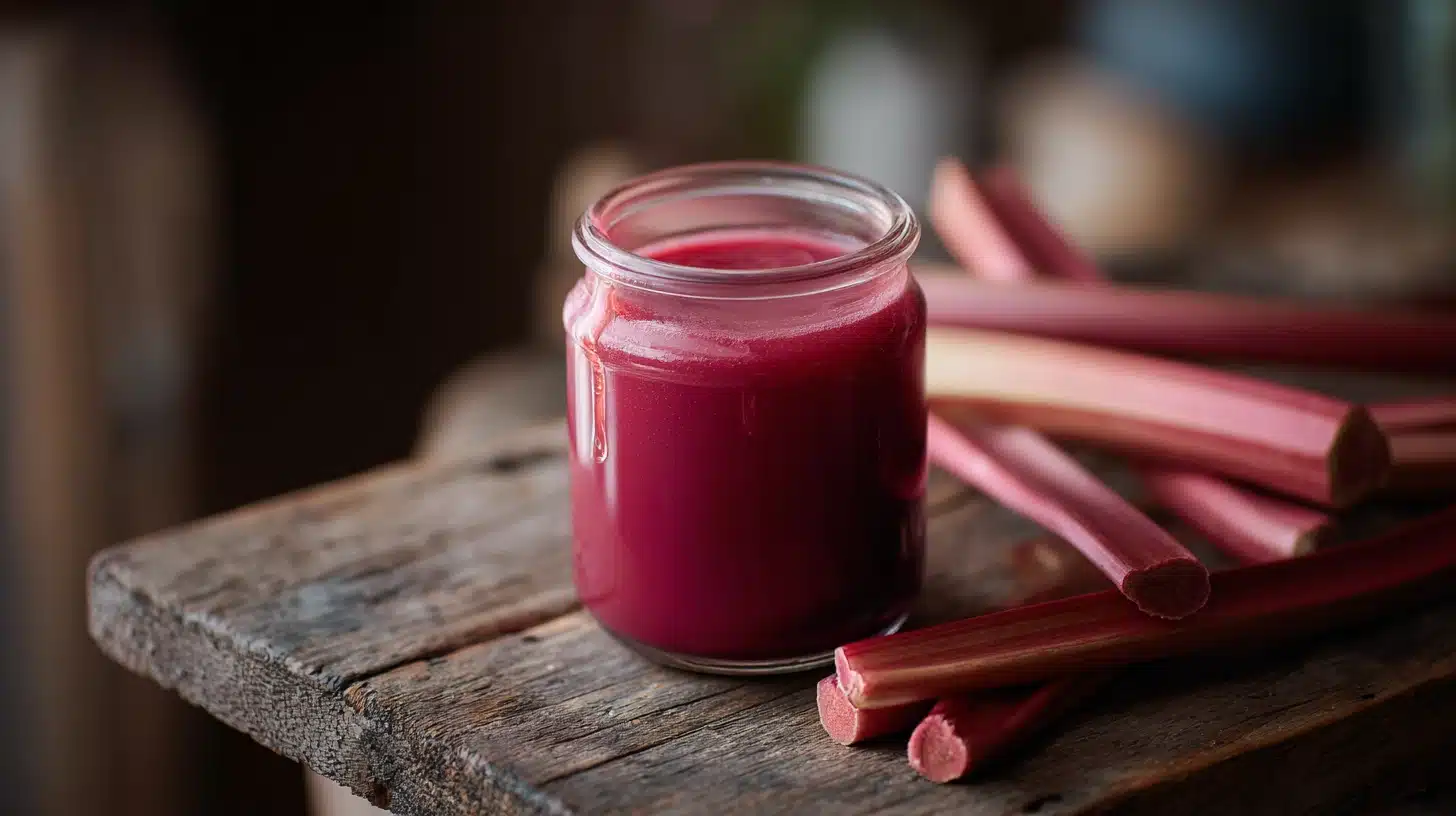
Most people assume rhubarb is strictly a pie ingredient, and that getting it saucy means hours of stirring and a candy thermometer on standby. This recipe proves otherwise: ten minutes on the stove, one saucepan, and you have something genuinely special.
Inside: the exact sugar ratio that keeps the sauce tart without puckering, the one technique that prevents watery results, and three surprising ways to use your batch beyond dessert.
Table of Contents
What Makes a Great Rhubarb Sauce (And What Goes Wrong)
Before you slice a single stalk, it helps to understand what you’re actually working with. Rhubarb is almost entirely water and tart organic acids, mainly malic and oxalic acid. That sharp, almost shocking sourness is the whole point, but it also means that a careless approach gives you either a watery puddle or an aggressively sour mash that nobody wants to spoon over anything.
The Sugar Balance Problem
The most common complaint about homemade rhubarb sauce is that it tastes flat or weirdly one-dimensional. That happens when cooks add too little sugar and the acid dominates, or too much sugar and the brightness disappears entirely. The sweet spot is roughly 1/3 cup of granulated sugar per pound of rhubarb (about 3 to 4 cups chopped). That ratio lets the natural tartness stay front and center while the sugar rounds the edges into something you actually want to eat by the spoonful.
A small splash of vanilla extract added off the heat softens the acidic edge without adding sweetness. Orange zest does the same job with a citrusy lift.
The Watery Texture Trap
Rhubarb releases a remarkable amount of liquid as it cooks. If you add water right at the start and then cook on high heat, you end up chasing off steam for twenty minutes and the sauce never thickens properly. The fix is simple: start with just 2 tablespoons of water and cook the rhubarb over medium heat, covered, for the first 5 minutes. The stalks steam in their own moisture, collapse quickly, and then you remove the lid and let the sauce reduce for another 4 to 5 minutes until it coats a spoon.
That two-stage approach, covered then uncovered, is the difference between a glossy, silky sauce and a thin, sad soup.
Choosing Your Rhubarb
Fresh rhubarb and frozen rhubarb both work beautifully here. Fresh stalks should feel firm and snap cleanly rather than bend. The color ranges from pale green to deep red depending on the variety, and despite what you might have heard, color does not determine flavor intensity. A green-stalked variety can be just as tart and flavorful as a crimson one.
If you’re using frozen rhubarb, skip the 2 tablespoons of water entirely. Frozen rhubarb releases enough liquid during thawing and cooking to take care of itself.
Print
Easy Homemade Rhubarb Sauce You’ll Want on Everything
- Total Time: 15 min
- Yield: 8 servings 1x
- Diet: Vegan
Description
A quick, tart, and silky sauce made from fresh or frozen rhubarb, sugar, and vanilla. It comes together in one saucepan in about 15 minutes and works beautifully over ice cream, pancakes, yogurt, or roasted pork. The covered-then-uncovered cooking method gives it a thick, glossy texture without any added thickeners.
Ingredients
For the rhubarb sauce:
1 lb fresh or frozen rhubarb (about 3 to 4 cups, chopped into 1/2-inch pieces)
1/3 cup granulated sugar
2 tablespoons water (omit if using frozen rhubarb)
1/2 teaspoon pure vanilla extract
1 pinch kosher salt
Optional add-ins:
1 teaspoon fresh orange zest
1/4 teaspoon ground cinnamon
1 cup fresh strawberries (sliced, added in the last 2 minutes of cooking)
Instructions
1. Wash and trim the rhubarb stalks, removing and discarding all leaf material. Chop the stalks into uniform 1/2-inch pieces so they cook evenly.
2. Add the chopped rhubarb, sugar, water, and salt to a medium saucepan. Stir briefly to coat the rhubarb in sugar.
3. Place the saucepan over medium heat and cover with a lid. Cook covered for 5 minutes without lifting the lid. The rhubarb will steam in its own moisture and begin to collapse, releasing a bright pink liquid.
4. Remove the lid and stir well. You will see the rhubarb has softened and is swimming in tart pink juice.
5. Raise the heat to medium-high and cook uncovered for 4 to 5 more minutes, stirring every minute, until the sauce thickens and coats the back of a spoon. It should look glossy and have a consistency similar to a slightly loose applesauce.
6. Remove the pan from the heat and stir in the vanilla extract. If you prefer a smoother texture, mash remaining chunks with the back of a spoon or use an immersion blender.
7. Taste and add more sugar if needed. Let the sauce cool for 10 minutes before serving. It will thicken further as it cools.
Notes
Store in a sealed jar in the refrigerator for up to 2 weeks, or freeze in airtight containers for up to 6 months. Thaw overnight in the refrigerator and stir before serving.
To make this with honey or maple syrup, use the same 1/3 cup volume and adjust sweetness after tasting.
If using frozen rhubarb, skip the 2 tablespoons of water entirely. Frozen rhubarb releases plenty of liquid on its own.
For a spiced version, add 1/4 teaspoon cinnamon and a pinch of nutmeg with the sugar at the start.
- Prep Time: 5 min
- Cook Time: 10 min
- Category: Side Dish
- Method: Stovetop
- Cuisine: American
Nutrition
- Serving Size: 2 tablespoons
- Calories: 45 kcal
- Sugar: 9 g
- Sodium: 20 mg
- Fat: 0 g
- Saturated Fat: 0 g
- Unsaturated Fat: 0 g
- Trans Fat: 0 g
- Carbohydrates: 11 g
- Fiber: 1 g
- Protein: 0 g
- Cholesterol: 0 mg
Ingredients and Easy Substitutions
This simple rhubarb sauce uses only a handful of pantry staples, which is exactly why it comes together so fast.
What you will need:
- 1 pound fresh or frozen rhubarb (about 3 to 4 cups, chopped into 1/2-inch pieces)
- 1/3 cup granulated sugar (see substitution notes below)
- 2 tablespoons water (skip if using frozen rhubarb)
- 1/2 teaspoon pure vanilla extract
- Pinch of kosher salt
Optional additions:
- 1 teaspoon fresh orange zest for a bright, citrusy note
- 1/4 teaspoon ground cinnamon for a warmer, spiced profile
- 1 cup sliced fresh strawberries added in the last 2 minutes of cooking for a classic pairing
Sugar Substitutions
Honey works in place of granulated sugar at the same volume, though it adds its own floral undertone. Maple syrup is another solid swap and plays especially well when you plan to serve the sauce over pancakes or waffles. For a lower-sugar version, start with 3 tablespoons of your sweetener of choice and taste as you go, since rhubarb sweetness levels vary by variety and season.
Brown sugar is a personal favorite here. It adds a subtle molasses depth that makes the finished sauce taste almost caramel-edged, which is genuinely unexpected when you spoon it over roasted pork loin.
If you love rhubarb as much as I do, the rhubarb crisp with crumble topping on Forkful Daily uses a similar flavor approach and is worth bookmarking for your next baking day.
How to Make Rhubarb Sauce Step by Step
This is a quick recipe, and it moves fast once you start. Have everything measured and ready before you turn on the heat.
Step 1: Prep the rhubarb. Wash and trim the stalks, discarding the leaves (they are toxic and must not be eaten). Chop into 1/2-inch pieces. Uniformity matters here because smaller pieces cook faster and you want everything to collapse at roughly the same time.
Step 2: Combine in the saucepan. Add the chopped rhubarb, sugar, water, and salt to a medium saucepan. Stir briefly to distribute the sugar.
Step 3: Cook covered. Set the heat to medium and cover the pan. Cook for 5 minutes without lifting the lid. You will hear a gentle bubbling and hissing as the rhubarb releases its juice. When you pull the lid off, the stalks should look partially collapsed and swimming in their own bright-pink liquid. The smell at this point is sharp and fruity, almost like a tart candy.
Step 4: Reduce uncovered. Remove the lid and stir well. Raise the heat slightly to medium-high and cook for another 4 to 5 minutes, stirring every minute or so, until the sauce thickens and coats the back of a spoon. You’re looking for a consistency similar to a slightly loose applesauce.
Step 5: Finish and cool. Remove the pan from the heat and stir in the vanilla extract. If you want a smoother texture, use the back of your spoon to mash any remaining large chunks, or run an immersion blender through it for a fully silky finish. Taste and adjust sugar if needed.
Step 6: Store or serve. Transfer to a clean jar or container. The sauce thickens further as it cools, so don’t panic if it looks a little thin while still warm. Serve warm or chilled.
For anyone who enjoys baking with this kind of filling, the rhubarb cream cheese bars recipe uses a similar cooked rhubarb base and is a fantastic way to use up any leftover sauce.
How to Use Your Rhubarb Sauce (Beyond Dessert)
Most people think of rhubarb compote as something that goes on ice cream, and yes, a spoonful over good vanilla bean ice cream is genuinely excellent. But the savory applications are where things get interesting.
With breakfast
Spoon it over thick Greek yogurt with a handful of granola for a tart, satisfying breakfast. Try it on buttermilk pancakes or waffles instead of maple syrup. Layer it over ricotta toast with a drizzle of honey underneath. The tartness cuts through rich, fatty textures beautifully, which is why it works so well anywhere you would normally reach for jam.
With savory dishes
Rhubarb’s acidity functions almost like a fruit-based pan sauce reduction. Try spooning it over roasted pork tenderloin or pan-seared pork chops. Serve it with grilled chicken thighs with fresh thyme. Add it to a cheese board alongside aged cheddar and a sharp blue. The contrast of tart fruit against salty, savory proteins is the same principle behind cranberry sauce with turkey, and it works just as elegantly here.
As a baking component
A jar of easy rhubarb sauce in the fridge opens up a whole range of baking possibilities. Swirl it into muffin batter, layer it into a loaf cake, or use it as a filling for a quick tart. The rhubarb bread recipe is a great starting point if you want to bake your way through a double batch.
Storage and shelf life
Homemade rhubarb sauce keeps in a sealed jar in the refrigerator for up to 2 weeks. For longer storage, ladle it into freezer-safe containers or zip-lock bags, removing as much air as possible, and freeze for up to 6 months. Thaw overnight in the refrigerator and give it a good stir before serving. The texture holds up well after freezing, making it a smart move to cook a large batch in late spring when rhubarb is at peak season.
Frequently Asked Questions
Can I make rhubarb sauce without sugar?
You can reduce the sugar significantly, but eliminating it entirely results in a very sharp, almost unpalatable sauce for most palates. Try starting with 2 tablespoons of a natural sweetener like honey or maple syrup and adjusting from there. A ripe banana mashed in at the end can add gentle sweetness without refined sugar.
Why is my rhubarb sauce too thin?
This almost always comes down to not reducing long enough. After removing the lid, give the sauce a full 5 minutes over medium-high heat, stirring regularly. The sauce will also thicken noticeably as it cools, so let it sit for 10 minutes before deciding it needs more time on the stove.
Can I use rhubarb leaves in the sauce?
No, and this is important: rhubarb leaves contain oxalic acid at toxic levels and should never be eaten. Only the stalks are safe to cook and consume. Trim all leaf material completely before chopping and discard it in the compost or trash, not in cooking water.
How is rhubarb sauce different from rhubarb compote?
The terms are used almost interchangeably in most recipes, including this one. Technically, a compote tends to have more visible fruit pieces in a syrupy base, while a sauce is cooked down a bit further and has a smoother, more uniform consistency. Both are made with the same core method and ingredients.
Conclusion
There’s a reason rhubarb sauce has shown up in spring kitchens for generations: it’s fast, it’s made from almost nothing, and it transforms an ordinary bowl of yogurt or a simple pork chop into something you actually look forward to eating. The covered-then-uncovered cooking method solves the watery texture problem that trips up most first attempts, and the sugar ratio keeps the tartness honest without flattening it.
Give this a try over the next week and keep a jar in the fridge. You’ll find yourself reaching for it more than you expect.
For more recipes like rhubarb sauce, follow us on Facebook and Pinterest for seasonal fruit recipe ideas and easy homemade condiment inspiration.
More recipes in this series: