Rhubarb compote was the first thing my grandmother ever let me stir on the stove, and I still remember the way the kitchen filled with that sharp, almost floral steam before the sugar softened everything into something brilliant.
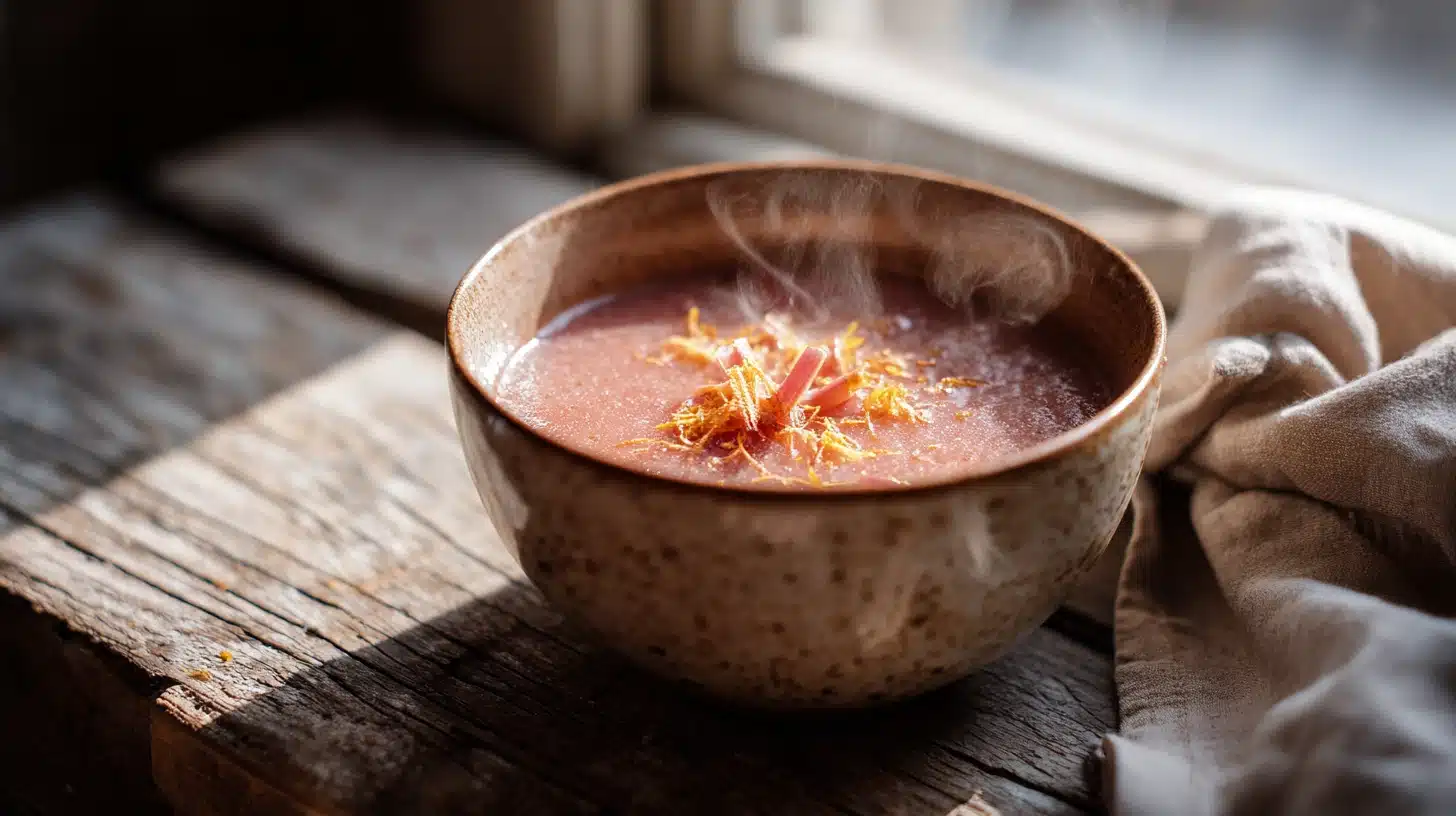
Most homemade fruit sauces end up either too watery and thin or cooked so long the fruit turns to mush with no texture left. This recipe fixes that with a short, high-attention cook time and just the right ratio of sugar to citrus.
Inside: the exact technique that keeps your rhubarb pieces soft but intact, the best sweetener choices for balancing that famous tartness, and a full list of ways to use every last spoonful.
Table of Contents
What Makes a Great Rhubarb Compote (And What Ruins It)
A great rhubarb compote walks a very specific line. It should taste tart and bright, not cloying. It should pour easily but coat a spoon, not slosh around like juice. And the rhubarb pieces should hold a gentle shape, not dissolve into a stringy, textureless paste.
The most common mistake people make is treating it like jam, cooking it too long and at too high a heat. Rhubarb stalks are mostly water, and that water releases fast once heat hits the cells. If you walk away or crank the burner, you end up with something closer to a thin syrup with occasional mush. The fix is simple: medium heat, a watchful eye, and pulling the pan off the stove the moment the fruit is just tender.
Choosing Your Rhubarb
Fresh rhubarb is the gold standard for this recipe. Look for firm, crisp stalks with a deep red or pink color. Paler green stalks are perfectly edible and taste nearly identical, but they will produce a more olive-toned compote rather than that gorgeous rosy pink. If the stalks are limp or the cut ends are dried out, the cellular water has already started to escape and you will end up with less liquid in the pan.
A quick note on frozen rhubarb: it works, and it works well, but you need to account for the extra moisture it releases. Skip the optional water entirely and expect a slightly longer cook time, about 3 to 4 additional minutes, as the excess liquid cooks off.
Sizing Your Chop
Cut your rhubarb stalks into pieces that are roughly 3/4 inch to 1 inch long. Smaller than that and they will dissolve before the sauce has a chance to thicken. Larger than that and the outside will be falling apart while the center is still fibrous and tough. The consistency of your chop matters more than people realize in this recipe, because all the pieces cook at the same rate once they hit the sugar and heat.
If you enjoy a chunkier texture in your rhubarb sauce, err on the larger side and keep the heat a touch lower. If you prefer a smoother, more spreadable consistency closer to jam, go smaller and give it an extra two minutes on the stove.
Print
Simple Rhubarb Compote That Goes With Absolutely Everything
- Total Time: 21 min
- Yield: 8 servings 1x
- Diet: Vegan
Description
A quick, tart rhubarb compote made with fresh rhubarb stalks, sugar, lemon juice, and a hint of vanilla. Ready in about 21 minutes, it works as a topping for yogurt, ice cream, oatmeal, or a cheese board. Makes about 2 cups and keeps in the refrigerator for up to two weeks.
Ingredients
For the compote:
4 cups fresh rhubarb stalks (about 1 lb, cut into 3/4-inch pieces)
1/2 cup granulated sugar (adjust to taste)
1 tablespoon fresh lemon juice (or orange juice)
1 teaspoon lemon zest or orange zest
1/2 teaspoon vanilla extract
2 tablespoons water (skip if using frozen rhubarb)
Instructions
1. Prep the rhubarb: Wash and dry the rhubarb stalks and trim off any leaves. Cut the stalks into pieces about 3/4 inch long. You should have about 4 cups.
2. Combine in the saucepan: Add the chopped rhubarb, sugar, lemon juice, lemon zest, and water to a medium saucepan. Stir to coat the rhubarb evenly in sugar and let it sit for 2 minutes before turning on the heat.
3. Start cooking: Set the burner to medium heat. Stir the mixture every minute. Within 3 to 4 minutes you will see the rhubarb begin to release its liquid and the sauce will turn a rosy pink color.
4. Simmer until tender: Continue cooking for a total of 10 to 13 minutes from when you turned on the heat. The rhubarb pieces should be tender when pressed with a spoon but still hold a rough shape. The sauce should coat the back of a spoon.
5. Adjust texture if needed: For a smoother sauce, press some rhubarb pieces against the side of the pan with a wooden spoon during the last minute of cooking.
6. Add vanilla and remove from heat: Stir in the vanilla extract in the final 30 seconds, then pull the pan off the burner immediately. The compote will thicken a little more as it cools.
7. Cool and store: Transfer to a clean glass jar or airtight container. Serve warm right away or let it cool to room temperature before refrigerating.
Notes
Store in the refrigerator for up to 14 days or freeze for up to 3 months. Reheat gently in a small saucepan over low heat, stirring until warmed through.
For a strawberry rhubarb version, stir in 1/2 cup of sliced fresh strawberries during the last 2 minutes of cooking.
To reduce sugar, swap granulated sugar for honey or maple syrup using 1/3 cup in place of 1/2 cup, or use a 1:1 granulated monk fruit sweetener.
If using frozen rhubarb, skip the water entirely and add 3 to 4 minutes to the cook time to allow extra moisture to evaporate.
- Prep Time: 8 min
- Cook Time: 13 min
- Category: Side Dishes
- Method: Stovetop
- Cuisine: American
Nutrition
- Serving Size: 1/4 cup
- Calories: 52 kcal
- Sugar: 11 g
- Sodium: 2 mg
- Fat: 0 g
- Saturated Fat: 0 g
- Unsaturated Fat: 0 g
- Trans Fat: 0 g
- Carbohydrates: 13 g
- Fiber: 1 g
- Protein: 1 g
- Cholesterol: 0 mg
Ingredients and Smart Substitutions
This rhubarb compote recipe uses just five core ingredients, and most of them are already in your pantry.
| Ingredient | Amount | Notes |
|---|---|---|
| Fresh rhubarb stalks | 4 cups (about 1 lb), chopped | Frozen works, see notes above |
| Granulated sugar | 1/2 cup | Adjust to taste |
| Lemon juice | 1 tablespoon | Or use orange juice |
| Lemon zest or orange zest | 1 teaspoon | Optional but recommended |
| Vanilla extract | 1/2 teaspoon | Optional, adds warmth |
| Water | 2 tablespoons | Only if using fresh rhubarb |
Sugar and Sweetener Options
The sugar does two things here: it draws out the rhubarb’s natural moisture to form the base of your sauce, and it balances the sharp oxalic acid that gives rhubarb its trademark pucker. Standard granulated sugar does both jobs cleanly and lets the rhubarb flavor stay front and center.
That said, you have real options:
- Honey gives a floral, slightly herbal note that pairs beautifully with vanilla and orange zest. Use 1/3 cup in place of 1/2 cup sugar since honey is sweeter by volume.
- Brown sugar adds a gentle molasses warmth that works especially well if you are spooning the compote over oatmeal or pancakes.
- Maple syrup behaves similarly to honey. Use the same reduced amount and expect a richer, earthier flavor.
- Coconut sugar is a 1:1 swap and gives a light caramel undertone without the molasses intensity of brown sugar.
For a lower-sugar version, you can use a granulated monk fruit sweetener as a 1:1 swap. The texture and set time stay nearly the same.
The Role of Citrus
Lemon juice is not just a flavor addition here. The acidity brightens the entire sauce and keeps the rhubarb color vivid during cooking. Orange juice works just as well and softens the tartness a little more, which is a nice choice if you are serving this to people who find rhubarb too sharp. The zest, whether lemon or orange, adds an aromatic layer that you can smell before you even taste the sauce. It’s one of those small additions that makes people ask what your secret ingredient is.
If you love the combination of strawberry and rhubarb, stir in 1/2 cup of sliced fresh strawberries during the last 2 minutes of cooking. The result is a gorgeous, jewel-toned sauce that would be perfect for a no bake rhubarb cream pie filling or just spooned straight over vanilla ice cream.
How to Make Rhubarb Compote Step by Step
This stewed rhubarb comes together in about 21 minutes from start to finish, and most of that time is just watching the pot.
Step 1: Prep Your Rhubarb
Wash and dry your rhubarb stalks, then trim off any leaves (rhubarb leaves are toxic and should never be eaten). Chop into 3/4-inch to 1-inch pieces. You need about 4 cups, which is roughly one pound of trimmed stalks.
Step 2: Combine Everything in the Saucepan
Add the chopped rhubarb, sugar, lemon juice, zest, and water (if using fresh rhubarb) to a medium saucepan. Stir briefly to coat the rhubarb in sugar. Let it sit for about 2 minutes before turning on the heat. This short rest gives the sugar a head start pulling moisture from the fruit, so the liquid base forms faster once cooking begins.
Step 3: Cook Over Medium Heat
Set the burner to medium and stir the mixture every minute or so. Within 3 to 4 minutes, you will hear a gentle simmer start and see the rhubarb begin to release its liquid. The color shifts from pale pink or green to a deeper rosy hue as the natural pigments release. At this point, the kitchen starts to smell like spring, tart and sweet all at once.
Step 4: Watch for the Texture Window
Continue cooking for a total of 10 to 13 minutes from when you turned on the heat. The rhubarb pieces will begin to soften visibly around the 8-minute mark. Test a piece with a spoon. It should give easily with gentle pressure but not fall apart completely. The sauce around it should look slightly thickened and coat the back of the spoon.
If you prefer a smoother rhubarb sauce, use the back of a wooden spoon to press some of the pieces against the side of the pan during the last minute of cooking.
Step 5: Add Vanilla and Remove from Heat
Stir in the vanilla extract in the final 30 seconds of cooking, then pull the pan off the burner. The compote will continue to thicken slightly as it cools, so do not overcook it trying to achieve the final consistency in the pan.
Step 6: Cool and Store
Transfer to a clean glass jar or airtight container. The homemade rhubarb topping can be served warm immediately, or cooled to room temperature and refrigerated for up to two weeks.
Every Way to Use Rhubarb Compote
Once you have a jar of this tart rhubarb compote in the refrigerator, you will find yourself reaching for it constantly. The uses are genuinely surprising in their range.
Sweet Applications
The obvious pairings are the best ones. Spoon it warm over a bowl of vanilla ice cream and watch the cold and hot contrast work its magic, the sharp rhubarb cutting through the richness of the cream. Swirl it through plain Greek yogurt for a breakfast that tastes like it took much more effort than it did. Stir it into oatmeal instead of brown sugar for a fruity, more complex sweetness that keeps you full.
For baked good pairings, the options are nearly endless. A thick spoonful over a slice of rhubarb custard cake doubles down on the rhubarb flavor in a way that fans of tart desserts will absolutely love. It also makes a quick filling or sauce for crepes, Dutch baby pancakes, or French toast.
Savory Pairings
This is where rhubarb compote surprises most people. The tartness functions almost like a fruit chutney, and it is genuinely excellent alongside savory foods. Try it on a cheese board next to aged cheddar, brie, or creamy goat cheese. The acidity cuts through the fat of the cheese in a way that is truly satisfying.
Rhubarb compote also works as a glaze or finishing sauce for pork tenderloin or pan-seared duck breast. The tartness balances the richness of the meat, and the sugar caramelizes at the edges when spooned over something warm. Even a simple grilled chicken thigh gets a significant upgrade with a spoonful of this sauce stirred into the pan juices.
Breakfast and Drinks
Beyond yogurt and oatmeal, consider stirring a spoonful into sparkling water with a squeeze of lemon for a quick shrub-style drink. Mix it with a little cream cheese and use it as a spread on morning toast. Or blend it with cold milk and a scoop of vanilla ice cream for a rhubarb milkshake that is as pretty as it is delicious.
If you are in a baking mood, the compote works as a filling for rhubarb hand pies or as a swirl-in for muffin batter. The concentrated flavor holds up well through baking without becoming watery or disappearing into the crumb.
Frequently Asked Questions
How do you make a rhubarb compote?
Combine chopped rhubarb stalks with sugar, lemon juice, and a splash of water in a medium saucepan. Cook over medium heat for 10 to 13 minutes, stirring regularly, until the rhubarb is tender and the sauce has thickened slightly. Stir in vanilla extract at the end, then cool before serving or storing.
What is the best sweetener for rhubarb compote?
Granulated white sugar is the most reliable choice because it dissolves cleanly and lets the rhubarb flavor lead. Honey and maple syrup both work well and add their own character. For a lower-glycemic option, granulated monk fruit sweetener is a clean 1:1 swap that behaves similarly in the pan.
What can you do with rhubarb compote?
The list is longer than most people expect. Use it as a topping for ice cream, yogurt, oatmeal, or pancakes. Serve it alongside cheese on a board, or use it as a sauce for pork or duck. It also works beautifully as a filling or swirl for muffins, cakes, and pastries.
Is rhubarb compote good for you?
Rhubarb itself is low in calories and contains fiber, vitamin K, and calcium. The main consideration is the added sugar, which you can reduce or swap for lower-glycemic alternatives depending on your needs. Rhubarb also contains oxalic acid, which is the same compound found in spinach, so people with kidney issues should enjoy it in moderation.
Conclusion
There is a reason this simple rhubarb compote has been on repeat in my kitchen every spring for as long as I can remember. It asks for very little, a handful of cheap ingredients and about 20 minutes, and gives back something that genuinely improves everything it touches.
Give this recipe a try this week while rhubarb is at peak season. Make a full batch, tuck the jar into the fridge, and see how many ways you find to use it before the week is out.
For more recipes like rhubarb compote, follow us on Facebook and Pinterest for fresh spring fruit recipe ideas and seasonal kitchen inspiration.
More recipes in this series: