The first time I made peach jam, the jar cracked, the kitchen smelled like a county fair, and I ate the whole batch with a spoon before it ever saw a piece of toast.
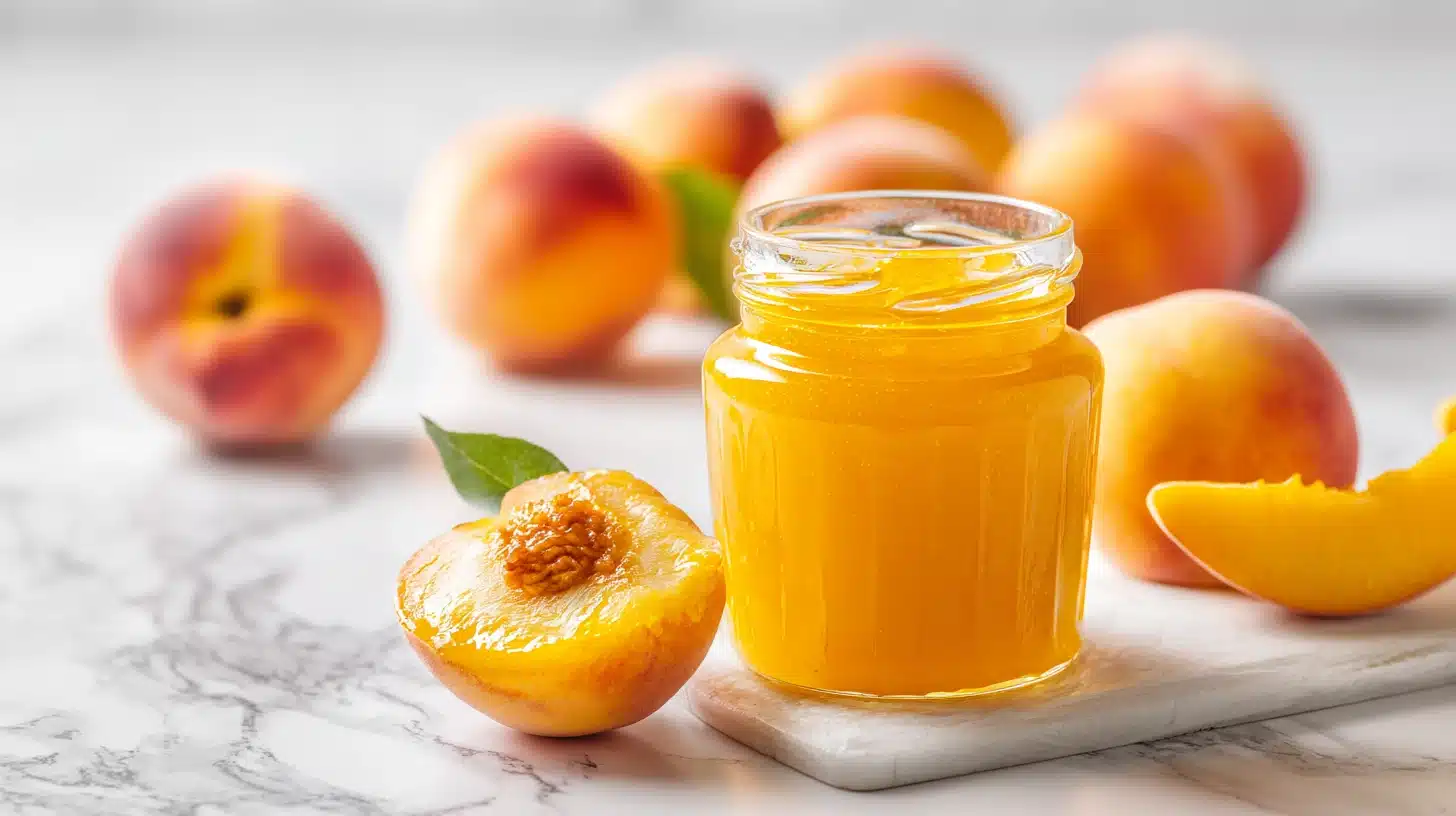
Most jam recipes skip the part where your batch turns out runny, foamy, or oddly bitter. This recipe tackles all three problems with two simple techniques.
Here’s what you’ll get: the exact gel-stage test that takes all the guesswork out of set, a natural pectin trick using a single apple, and three flavor variations including a bourbon option worth making twice.
Table of Contents
Everything You Need to Know Before You Start
Making a great batch of peach jam starts well before you turn on the burner. The prep work, the choice of peaches, how you handle the sugar and lemon juice, all of it shapes the final result. Skip this section at your own risk.
Picking the Right Peaches
Ripe but still slightly firm peaches give you the best jam. Overripe fruit has too much water and not enough natural pectin, which means your jam will struggle to set without help. Underripe fruit tastes flat and sharp no matter how much sugar you add.
For this recipe, you need about three pounds of fresh peaches, which works out to roughly eight medium freestone peaches. Freestone varieties (think Reliance, Red Haven, or Contender) are ideal because the pit releases cleanly, saving you ten minutes of frustration with a paring knife.
Frozen peaches work well too. Thaw them completely in a fine-mesh strainer over a bowl, discard the excess liquid, and measure the thawed fruit. The flavor is slightly less bright but perfectly good in the dead of winter when fresh peaches feel like a memory.
To Peel or Not to Peel
Blanching makes peeling quick and almost meditative. Score a shallow X on the bottom of each peach, lower them into boiling water for 30 seconds, then straight into an ice bath. The skins slip off in one pull.
You can leave the skins on. They soften completely during cooking and add a deeper, slightly rosy color to the finished jam. The texture will be more rustic and the color will lean orange-pink rather than golden. Personal preference rules here.
Sugar Ratios and Why They Matter
The classic ratio for a no-pectin jam is roughly equal parts fruit and sugar by weight. This recipe uses a slightly lower sugar ratio (about 3/4 cup sugar per cup of crushed fruit) so the peach flavor stays front and center. Lower sugar means a slightly softer set, which is a trade-off most people happily accept once they taste the difference.
Lemon juice is non-negotiable. It lowers the pH of the mixture, which is what allows pectin (natural or added) to form a proper gel. It also brightens the flavor and keeps the color from going dull.
If you enjoy canning other fruits and want to branch out, the rhubarb strawberry jam on Forkful Daily uses a similar low-sugar method and is a great companion project for summer canning weekends.
Print
Homemade Peach Jam: Sunshine in a Jar All Year Long
- Total Time: 45 min
- Yield: 5 half-pint jars 1x
- Diet: Vegetarian
Description
A simple homemade peach jam made with fresh or frozen peaches, lemon juice, and a grated apple for natural pectin. No commercial pectin required. The jam sets to a soft, spreadable consistency with a bright, true peach flavor. Makes about 5 to 6 half-pint jars.
Ingredients
For the Peach Jam:
3 lbs fresh or frozen peaches (about 8 medium peaches, peeled and crushed, approximately 4 cups crushed fruit)
2 cups granulated sugar
3 tablespoons fresh lemon juice
1 small Granny Smith apple (peeled and finely grated)
1/2 teaspoon unsalted butter (to reduce foam)
Optional Flavor Add-Ins (choose one or leave plain):
1/4 teaspoon ground cinnamon
1 tablespoon bourbon or dark rum
1 vanilla bean (split and scraped, seeds only)
Instructions
1. Prepare your jars and water bath. Place 5 to 6 half-pint jars in a large pot of water and bring to a simmer. Keep jars hot until ready to fill. Place 2 small plates in the freezer for gel testing. Set lids in a small bowl of hot water.
2. Peel and crush the peaches. Score a shallow X on the bottom of each peach, blanch in boiling water for 30 seconds, then transfer to an ice bath. Slip off the skins. Remove pits and crush the peach flesh with a potato masher until you have about 4 cups of chunky crushed fruit.
3. Combine fruit and sugar. Add the crushed peaches, lemon juice, grated apple, and sugar to a wide, heavy-bottomed pot. Stir over medium heat until the sugar fully dissolves, about 3 to 4 minutes. The mixture will smell sweet and floral.
4. Cook at a full rolling boil. Add the butter, raise heat to high, and bring the mixture to a full rolling boil that cannot be stirred down. Stir frequently to prevent scorching. The jam will begin to deepen from pale orange to a warm amber-gold.
5. Test for gel stage. After 10 minutes of boiling, drop a small spoonful onto a frozen plate. Wait 60 seconds and push the jam with your fingertip. If it wrinkles and holds its shape, it is set. If it runs, continue cooking for 2 to 3 more minutes and test again. The jam should read 220 degrees F on a candy thermometer.
6. Add flavor add-ins. Remove the pot from heat. Stir in cinnamon, bourbon, or vanilla seeds if using. Skim any remaining foam from the surface with a flat spoon.
7. Fill the jars. Ladle the hot jam into hot sterilized half-pint jars, leaving 1/4 inch of headspace. Wipe the jar rims clean with a damp cloth. Apply lids fingertip-tight.
8. Process in a water bath. Lower jars into the boiling water bath, ensuring they are covered by at least 1 inch of water. Process for 10 minutes. Remove and let cool undisturbed on a towel for 12 hours. Listen for the lids to pop as they seal.
Notes
Store sealed processed jars in a cool, dark pantry for up to 1 year. Once opened, refrigerate and use within 3 to 4 weeks. Unprocessed jars keep in the refrigerator for 3 to 4 weeks or in the freezer for up to 1 year.
For frozen peaches: thaw completely in a strainer, discard the excess liquid, and measure 4 cups of thawed crushed fruit before starting.
If your jam does not set after processing, do not re-can. Instead, refrigerate and use as a sauce or syrup over ice cream, yogurt, or pancakes. A failed set is usually caused by undercooking or skipping the lemon juice.
For a smoother jam, blend the crushed peaches briefly with an immersion blender before cooking. For a chunkier result, mash lightly by hand and skip the blender entirely.
- Prep Time: 20 min
- Cook Time: 25 min
- Category: Breakfast
- Method: Stovetop
- Cuisine: American
Nutrition
- Serving Size: 2 tablespoons
- Calories: 48 kcal
- Sugar: 11 g
- Sodium: 1 mg
- Fat: 0 g
- Saturated Fat: 0 g
- Unsaturated Fat: 0 g
- Trans Fat: 0 g
- Carbohydrates: 12 g
- Fiber: 0 g
- Protein: 0 g
- Cholesterol: 0 mg
The Natural Pectin Trick (and When to Skip It)
Peaches are low in natural pectin, which is why so many old-fashioned peach jam recipes either use commercial pectin or require very long cooking times. Long cooking destroys some of the fresh fruit flavor, and commercial pectin can make the texture feel stiff and gummy. There is a better way.
The Apple Method
One small peeled and grated apple added to your pot gives you a meaningful dose of natural pectin with zero flavor interference. Apples, especially tart green varieties, are packed with pectin in their flesh and especially in their cores. A single small Granny Smith grated on a box grater melts completely into the jam as it cooks. You will not taste it. You will notice the set.
If you want the benefit without any extra texture at all, simmer the apple pieces in a small amount of water separately, strain the liquid, and add that liquid to your jam pot. This is essentially a DIY apple pectin extract, and it works beautifully.
Using Commercial Pectin
If you prefer a more predictable, firmer set, liquid or powder pectin both work with peaches. Follow the pectin manufacturer’s instructions carefully because the timing and sugar order differ between liquid and powdered versions. Adding them in the wrong order is one of the most common reasons homemade jam fails to set.
One important note: if you use commercial pectin, the sugar quantity in this recipe will need to increase significantly to match the pectin manufacturer’s formula. Reducing sugar with commercial pectin leads to a weak or failed gel.
The Foam Problem
Peach jam foams significantly during the boil. There are two fixes. The first is adding a small pat of butter (about half a teaspoon) to the pot before you start cooking. The butter breaks surface tension and dramatically reduces foam as the jam boils. The second is skimming the foam from the surface during cooking with a wide, flat spoon. Do both for the cleanest result.
A quarter teaspoon of cinnamon, a pinch of allspice, a split vanilla bean, or a tablespoon of bourbon or dark rum all make wonderful additions. Add them during the last five minutes of cooking. If you go the vanilla route, you might also enjoy learning how to make your own vanilla bean paste recipe to keep on hand for baking projects all year.
How to Cook and Test Your Jam
This is the step where most first-time jam makers either overcook or undercook their batch. The gel stage is specific: 220°F at sea level. At higher altitudes, subtract one degree for every 500 feet above sea level. A candy thermometer is helpful but not required, because the cold plate test is equally reliable and needs only a freezer and a small plate.
The Cold Plate Test
Before you start cooking, put two or three small ceramic or glass plates in the freezer. When your jam has been at a rolling boil for about 10 minutes and looks thickened, drop a small spoonful onto a frozen plate. Wait 60 seconds, then push the edge of the jam with your fingertip. If it wrinkles and holds the wrinkle rather than flooding back, your jam is set. If it runs like syrup, cook for another two to three minutes and test again.
The rolling boil stage matters. A full rolling boil is one that cannot be stirred down. If you stir the pot and the boiling stops, your heat is too low. Keep the heat high enough to maintain that vigorous, spattering boil. Stir frequently to prevent scorching on the bottom, especially as the jam thickens.
Step-by-Step Cooking Process
- Combine crushed peaches, lemon juice, grated apple, and sugar in a wide, heavy-bottomed pot. A wider pot means more surface area and faster evaporation, which shortens cooking time and preserves flavor.
- Stir over medium heat until the sugar dissolves completely. The mixture will smell intensely of ripe peaches at this stage, almost caramel-like.
- Add the butter and raise the heat to high. Bring to a full rolling boil, stirring constantly.
- Cook at a rolling boil, stirring frequently, for 10 to 15 minutes. The jam will deepen in color from bright orange to a warm amber-gold.
- Begin cold plate testing at the 10-minute mark.
- Once set is confirmed, remove from heat, skim any remaining foam, and add any spices or bourbon now.
If you want to use an immersion blender for a completely smooth result, blend the jam briefly directly in the pot right after crushing the fruit and before cooking. For a chunkier jam, just crush the peaches by hand with a potato masher.
Canning, Storing, and Using Your Peach Jam
Once your jam passes the set test, you have two options: refrigerator storage or hot water bath canning for shelf-stable jars. Both are straightforward and produce jam you can feel proud of.
Hot Water Bath Canning
For shelf-stable peach jam, you need sterilized half-pint jars (8-ounce jars are standard for this recipe), new lids, and a large pot deep enough to cover the jars by at least one inch of water.
Sterilize the jars by running them through the dishwasher on the hot cycle or simmering them in the water bath pot for 10 minutes before filling. Keep them hot until you are ready to fill. Cold jars crack when they hit hot jam.
Fill the hot jars to 1/4 inch from the rim, run a clean damp cloth around the rim to remove any sticky residue, and apply the lids fingertip-tight. Process the sealed jars in a boiling water bath for 10 minutes (adjust for altitude). You will hear the satisfying pop of lids sealing as the jars cool on a towel. A sealed lid should not flex or spring when pressed.
This recipe yields approximately five to six half-pint jars, enough to give a few away and still have plenty for yourself through the winter months.
Refrigerator and Freezer Storage
If you are not canning, simply ladle the hot jam into clean jars, let them cool to room temperature, and refrigerate. Refrigerator peach jam keeps for three to four weeks. For longer storage, freeze it in freezer-safe containers with a half inch of headspace for expansion. Frozen jam keeps well for up to a year and thaws overnight in the refrigerator.
Ways to Use Peach Jam
This is honestly the most joyful part. The obvious choices (toast, biscuits, plain yogurt) are excellent, but peach jam has a surprising range. Spread it inside a grilled cheese alongside sharp white cheddar. Swirl a spoonful into oatmeal with a pinch of cardamom. Use it as a glaze for grilled pork chops or chicken thighs. It is wonderful stirred into salad dressing with a splash of apple cider vinegar.
For a complete summer-inspired brunch spread, try serving this jam alongside lemon ricotta pancakes recipe for a breakfast that feels genuinely special without much extra effort.
The versatility of homemade peach jam is one of its great appeals. It moves from sweet to savory with ease, and a single batch can transform weeks of ordinary meals into something that feels intentional.
Frequently Asked Questions
What is the difference between peach jam and peach preserves?
Peach jam is made from crushed or finely chopped fruit cooked down to a smooth, spreadable consistency. Peach preserves contain larger, more intact pieces of fruit suspended in a looser gel. The flavor is similar, but preserves have a chunkier texture and a slightly less uniform spread. Both use the same basic ingredients: fruit, sugar, and lemon juice.
Can I leave peach skin on for jam?
Yes, you can skip peeling entirely. The skins soften completely during cooking and blend into the jam without any noticeable toughness. Leaving the skins on adds a slightly deeper color (a rosy amber rather than clear gold) and a touch more fiber. If you prefer a very smooth jam, blend the cooked mixture briefly with an immersion blender after cooking.
Is pectin necessary for peach jam?
Pectin is not required. Peaches contain some natural pectin, and adding a grated apple or cooking the jam slightly longer can produce a good set without commercial pectin. The trade-off is a longer cook time, which can soften the fresh fruit flavor a little. Commercial pectin gives a more reliable, firmer set, but it works best when the sugar quantity matches the pectin manufacturer’s recipe.
How do you make peach jam?
To make peach jam, crush or chop peeled peaches and combine them with sugar and lemon juice in a heavy pot. Cook over high heat at a full rolling boil for 10 to 15 minutes, stirring frequently, until the jam reaches the gel stage (220°F or passes the cold plate test). Ladle into sterilized jars and either refrigerate, freeze, or process in a hot water bath for 10 minutes for shelf-stable storage.
—
Conclusion
There is something quietly satisfying about making peach jam from scratch: the way the kitchen fills with that warm, honeyed scent, the color deepening from pale orange to burnished gold, and the eventual pop of a sealing lid. This recipe keeps the process honest and approachable, from the natural pectin trick to the cold plate set test, so your first batch has every reason to succeed.
Give it a try this weekend while summer peaches are still at their peak, or bookmark it for winter when frozen peaches and a little patience are all you need.
For more recipes like peach jam, follow us on Facebook and Pinterest for seasonal preserving ideas and easy summer recipes.