Finding a gluten free pizza crust recipe that does not taste like cardboard used to feel impossible. I spent years throwing away dense, crumbly hockey pucks that shattered the moment I tried to take a bite.
Most gluten free pizza dough either sinks into a gummy, undercooked puddle in the middle or crumbles into a thousand dry fragments the second it cools. This recipe uses a specific hydration ratio and a dual-leavening trick to get a chewy, crisp foundation every single time.
Here is the science behind using psyllium husk for that classic foldable slice, plus how to get a perfectly browned bottom without a burnt top.
Table of Contents
Why This Gluten Free Pizza Crust Recipe Works
To build a decent gluten free pizza crust, you first have to understand what wheat actually does. Gluten provides two things in traditional pizza dough: elasticity and structure. Without it, your dough behaves more like a thick cake batter than a stretchy, kneadable bread. The fix is hydrocolloids, specifically psyllium husk powder and xanthan gum. When mixed with water, psyllium husk forms a gel that mimics the stretchy network of gluten. It traps the gases from your yeast so the crust can rise and develop air pockets instead of staying a dense brick.
Unlike standard wheat dough, this gluten free pizza dough relies heavily on precise measurements. You cannot just add flour until it feels right. I developed this formula using a blend of gluten free all-purpose flour and a touch of almond flour. The all-purpose blend gives you a neutral base, while the almond flour adds richness and tenderizes the crumb so it does not turn tough. You will also notice a small amount of apple cider vinegar in the ingredients. This is not for flavor. The acid interacts with the proteins in the flours. It tenderizes the dough and creates an environment where the yeast can thrive and produce complex flavors.
The dual-leavening approach matters too. We use both active dry yeast and baking powder. The yeast provides the traditional fermented bread flavor we all expect from a good pizza, but gluten free flours can be stubborn when it comes to rising. The baking powder acts as an insurance policy. It gives the crust a guaranteed lift in the oven even if your yeast is sluggish. The result is a light, airy interior.
If you are looking for other ways to enjoy bread alternatives, you might explore our gluten free purple sweet potato roti. It uses a completely different technique, but I love how it turns out.
Print
The Gluten Free Pizza Crust Recipe That Actually Tastes Like Pizza
- Total Time: 48 min
- Yield: 2 pizza crusts 1x
- Diet: Gluten Free
Description
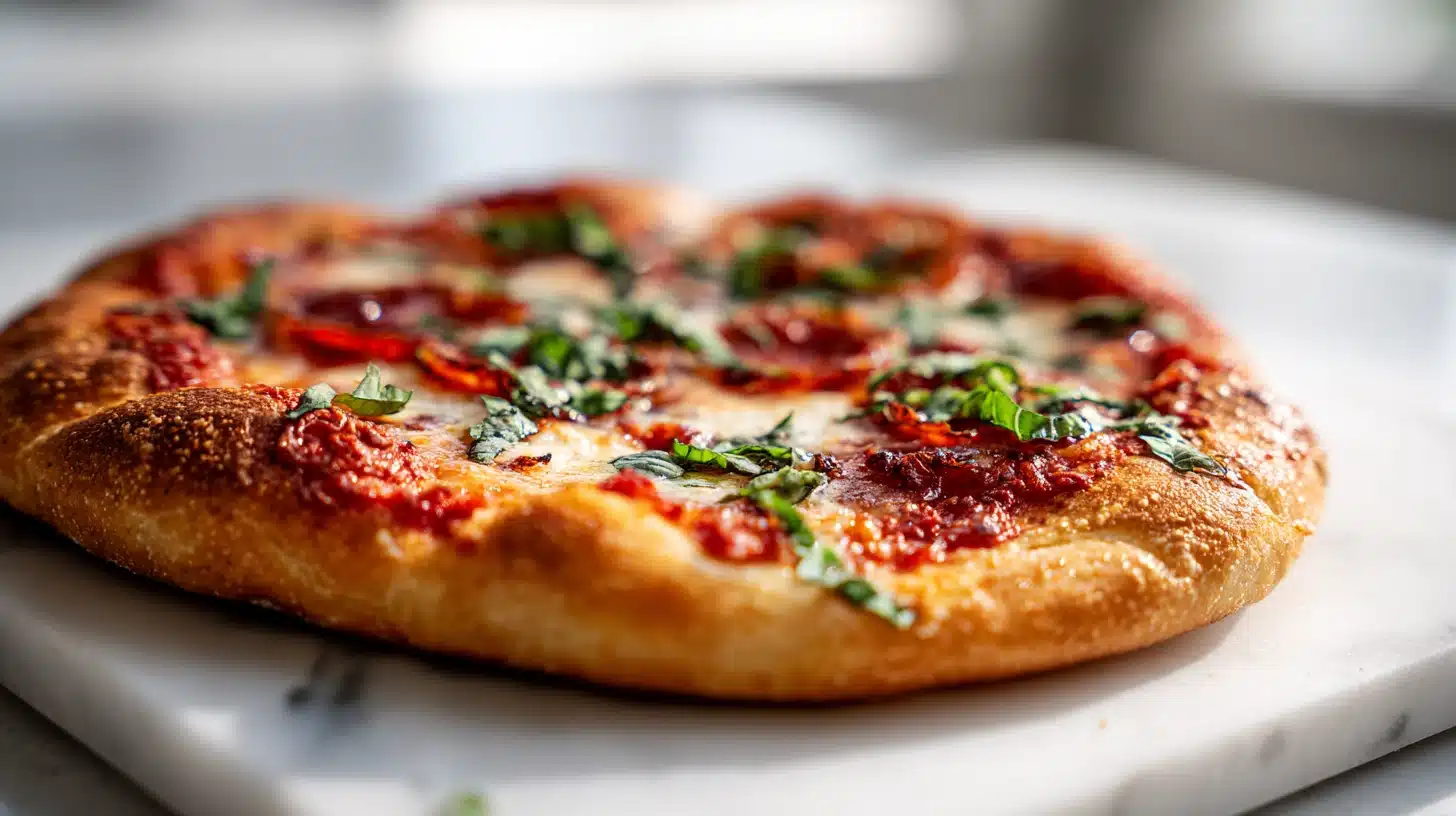
This gluten free pizza crust recipe yields a chewy, crisp base using a blend of gluten free flour, almond flour, and psyllium husk. The dough is par-baked to prevent sogginess and holds up perfectly under your favorite toppings.
Ingredients
3 cups gluten free all-purpose flour blend (contains xanthan gum)
1/2 cup almond flour (blanched, finely ground)
2 tablespoons psyllium husk powder
1 tablespoon active dry yeast
1 teaspoon honey or granulated sugar
1 1/2 cups warm water (110 to 115 degrees F)
2 tablespoons olive oil
1 tablespoon apple cider vinegar
1 teaspoon baking powder
1 teaspoon sea salt
1 tablespoon olive oil (for shaping and brushing)
Instructions
1. Combine the warm water, honey, and active dry yeast in a large bowl. Stir gently and let it sit for 5 minutes until the mixture becomes frothy and smells like fresh bread.
2. Add the olive oil and apple cider vinegar to the yeast mixture, stirring to combine.
3. In a separate large bowl, whisk together the gluten free flour blend, almond flour, psyllium husk powder, baking powder, and sea salt until evenly distributed.
4. Pour the dry ingredients into the wet ingredients. Mix with a stand mixer on low speed for 3 minutes until a thick, sticky dough forms. If mixing by hand, use a sturdy wooden spoon.
5. Cover the bowl with a damp towel and let the dough rest for 15 minutes so the psyllium husk can absorb the liquid and create a pliable texture.
6. Preheat your oven to 425 degrees Fahrenheit. Place a pizza stone or heavy baking sheet in the oven to preheat.
7. Place a piece of parchment paper on your counter. Lightly oil your hands and scoop the dough onto the paper. Use your fingertips to press the dough outward into a 12-inch circle.
8. Slide the parchment paper with the shaped dough directly onto the preheated pizza stone. Bake for 8 minutes until the crust is dry and slightly golden.
9. Remove the par-baked crust from the oven. Brush the edges with olive oil and add your desired sauce, cheese, and toppings.
10. Return the pizza to the oven and bake for 12 to 15 minutes until the cheese is bubbling and the crust is a deep golden brown.
Notes
Store baked pizza in an airtight container in the refrigerator for up to 3 days. Reheat in a hot skillet on the stove to crisp the bottom.
You can freeze the raw, par-baked crust for up to 3 months. Wrap it tightly in plastic wrap and bake directly from frozen, adding 3 extra minutes to the final bake time.
If your dough tears while shaping, let it rest for 5 more minutes to allow the psyllium husk to relax the starches.
- Prep Time: 10 min
- Rest Time: 15 min
- Cook Time: 23 min
- Category: Main Course
- Method: Baking
- Cuisine: Italian
Nutrition
- Serving Size: 1 slice
- Calories: 220 kcal
- Sugar: 1 g
- Sodium: 310 mg
- Fat: 8 g
- Saturated Fat: 1 g
- Unsaturated Fat: 7 g
- Trans Fat: 0 g
- Carbohydrates: 34 g
- Fiber: 4 g
- Protein: 5 g
- Cholesterol: 0 mg
The Essential Ingredients for Gluten Free Pizza Dough
A good gluten free pizza crust starts with the right ingredients. Not all gluten free flours are created equal, and the blend you choose will make or break your final pie. I strongly recommend using a high-quality, measure-for-measure gluten free all-purpose flour blend that already contains xanthan gum. Look for one made primarily of white rice flour and tapioca starch. These starches provide the crispy snap you want on the outside of your crust.
For the best texture, we also incorporate almond flour. This adds fat and moisture, which prevents the crust from drying out and crumbling. You will also need psyllium husk powder. Make sure you purchase the fine powder, not whole husks. If you only have whole husks, grind them in a spice grinder until they resemble a fine dust. That way the gel forms evenly throughout your gluten free pizza dough. You will need warm water, around 110 to 115 degrees Fahrenheit. If the water is too hot, it will kill the yeast. Too cold, and the yeast will remain dormant.
Olive oil plays a massive role in this recipe. It coats the starches, which keeps the interior tender and helps the exterior crisp up in the oven. A touch of honey or sugar feeds the yeast, and the apple cider vinegar does its tenderizing work. Sea salt is non-negotiable. Without it, your crust will taste flat and lifeless, regardless of how perfectly you bake it.
When gathering your ingredients, check that your yeast is fresh. If you open a packet and it smells sour or chemically, toss it. Fresh yeast smells slightly sweet and nutty. If you want to branch out from standard pizza dough, our souplantation focaccia pizza recipe offers a thicker, pan-style alternative. But for a classic thin crust, this combination of flours, psyllium, and yeast is what I trust for celiac safe pizza dough.
Step-by-Step: Shaping and Par-Baking Your GF Pizza Crust
The mixing and shaping process for this gluten free pizza crust recipe is completely different from traditional wheat dough. Because there is no gluten to develop through kneading, you do not need to spend ten minutes working the dough. In fact, overworking it can make it tough. Start by combining your warm water, honey, and yeast in a large bowl or the bowl of a stand mixer. Let it sit for five minutes until it becomes frothy and smells distinctly of bread. This step, called proofing, proves your yeast is alive and ready to work.
Next, add the olive oil and apple cider vinegar. In a separate bowl, whisk together your gluten free flour blend, almond flour, psyllium husk powder, baking powder, and salt. Pour the dry ingredients into the wet mixture. If using a stand mixer, mix on low speed with a paddle attachment for about three minutes. The dough will look sticky and thick, much thicker than traditional pizza dough. If mixing by hand, use a sturdy wooden spoon and some elbow grease.
This is where psyllium husk does its thing. After mixing, cover the bowl with a damp towel and let it rest for fifteen minutes. During this time, the psyllium husk absorbs the water and turns that sticky paste into a smooth, pliable dough that you can actually touch without it gluing itself permanently to your fingers.
Shaping and Par-Baking
Preheat your oven to 425 degrees Fahrenheit. If you have a pizza stone, place it in the oven while it preheats. If not, a heavy baking sheet works fine. Place a sheet of parchment paper on your counter. Lightly oil your hands and scoop the dough onto the parchment. Using your oiled fingertips, press the dough outward from the center into a circle about twelve inches in diameter. If the dough springs back or tears, let it rest for another five minutes to allow the psyllium to relax.
To avoid a soggy bottom, you must par-bake the crust before adding toppings. Slide the parchment paper with your shaped dough directly onto the hot pizza stone or baking sheet. Bake for exactly eight minutes. The crust will look dry on top and slightly golden on the edges. Remove it from the oven, add your sauce and cheese, and bake for another twelve to fifteen minutes until the cheese is bubbling and the crust is a deep golden brown. Our sourdough discard pizza dough uses a similar shaping technique if you want to compare methods.
Troubleshooting Your Gluten Free Pizza Crust
Even with a perfect recipe, gluten free baking can throw curveballs. Environment, humidity, and specific flour brands all play a role in how your gluten free pizza crust recipe turns out. If your crust does not look right at any stage, do not panic. Here is a table of the most common issues and exactly how to fix them.
| Problem | Cause | Fix |
|---|---|---|
| Crust is gummy in the center | Underbaked or too much sauce | Par-bake for 2 extra minutes. Use less sauce. |
| Dough tears when shaping | Psyllium did not fully hydrate | Let dough rest for 10 more minutes before shaping. |
| Crust crumbles when sliced | Dough lacked moisture or fat | Add 1 tbsp olive oil and 1 tbsp water to the mix. |
| Bottom is pale and soft | Baked on a cold pan | Preheat a pizza stone for 45 minutes before baking. |
| Dough tastes gritty | Coarse rice flour in the blend | Let raw dough rest for 30 minutes so starches soften. |
| Crust spreads flat in oven | Yeast was over-proofed | Mix and shape immediately after the 15 min rest. |
Perfecting Your Technique
To get the absolute best results from your gluten free homemade pizza, pay close attention to your oven temperature. A hot oven is your best friend. If your oven runs cold, your crust will slowly dry out instead of baking into a crisp exterior. Use an oven thermometer to verify the actual temperature.
One more tip for a crispier base: brush the shaped dough with a thin layer of olive oil before par-baking. This creates a waterproof barrier so the sauce never seeps into the crust. If you are adding wet toppings like fresh mozzarella or mushrooms, pat them dry with a paper towel first. Excess moisture is the enemy of a crispy gluten free pizza crust.
If you want to explore other yeast-based gluten free baking, try our gluten free jam filled donuts. The dough handling skills transfer perfectly. For a savory change of pace, the slow cooker sauerkraut and pork recipe makes a great pizza topping when you have leftovers. And if you are meal prepping, this dough freezes well. Just shape it, par-bake it, wrap it tightly in plastic wrap, and freeze for up to three months. You can bake it straight from frozen with a few extra minutes added to the final bake.
Frequently Asked Questions
What is the best flour for gluten free pizza dough?
The best flour is a high-quality gluten free all-purpose blend containing white rice flour, tapioca starch, and xanthan gum. Brands like Bob’s Red Mill 1-to-1 or King Arthur Measure for Measure work exceptionally well. Always avoid blends that rely heavily on bean flours, as they impart a bitter taste to the crust.
What is the best gluten-free pizza crust recipe?
The best gluten free pizza crust recipe relies on a combination of psyllium husk powder for stretch and a dual-leavening system of yeast and baking powder for lift. This specific recipe produces a chewy interior and a crisp exterior, avoiding the common pitfalls of gummy centers or crumbly slices.
What are the common mistakes when baking gluten-free pizza?
The most common mistakes include skipping the par-bake step, loading the crust with wet toppings, and not letting the dough rest after mixing. Not preheating the baking surface is also a frequent error. A cold pan guarantees a pale, soft bottom. Always preheat your pizza stone or baking sheet.
What are some tips for making gluten-free pizza crust?
Always use oiled hands or wet hands when shaping the dough, as it is incredibly sticky. Weigh your ingredients using a digital kitchen scale for accuracy. Do not skip the apple cider vinegar, as it tenderizes the starches. Finally, brush the par-baked crust with olive oil before adding sauce to keep it crispy.
Can I make this gluten free pizza dough without yeast?
Yes, you can make a yeast-free version by omitting the yeast, warm water, and honey. Instead, increase the baking powder to one tablespoon and use warm milk or water. The flavor will be less bread-like and more akin to a baking powder biscuit, but it will still be a delicious, fast pizza base.
How do I store leftover gluten free pizza crust?
Store baked pizza in an airtight container in the refrigerator for up to three days. To reheat, place the slices in a hot skillet on the stove for a few minutes to crisp the bottom. You can also freeze the raw, shaped dough after par-baking for up to three months.
Conclusion
I won’t lie, the first few times I tried making gluten free pizza, I wanted to give up. The crusts were either gummy or they fell apart. But once I figured out the psyllium husk and almond flour combination, everything clicked. You can pull a chewy, crispy pizza from your own oven, and it actually tastes like pizza.
Bookmark this for your next Sunday dinner or family movie night. Once you taste that foldable slice, you will make it again.
For more recipes like Gluten free pizza crust recipe, follow us on Facebook and Pinterest for weeknight dinner ideas.
More recipes in this series: