Stop calling it “discard.” That sourdough starter in your fridge is a secret weapon for the best pizza crust you’ll bake this week.
Most sourdough discard pizza dough recipes demand hours of waiting. This one gives you a chewy, flavorful base in about 90 minutes of resting and rise time, with a clear baker’s timeline so nothing goes wrong.
You’ll get the exact flour blend for a crisp-yet-chewy crust, learn the semolina trick for launching pizzas without sticking, and see how to test your dough’s gluten with the windowpane test.
Table of Contents

Table of Contents
Why You’ll Love This Sourdough Discard Pizza Dough
Quick, same-day recipe
Most sourdough recipes feel like a part-time job. You feed your starter, wait for it to peak, then plan a 24-hour baking schedule. This sourdough discard pizza dough breaks that cycle. It uses your unfed starter purely for its tangy flavor, not for leavening. We add a small amount of commercial yeast to guarantee a reliable, fast rise.
Your total time commitment is 125 minutes, with only about 20 minutes of hands-on work. The dough rises for just 90 minutes before it’s ready to shape and bake. You can decide to make pizza after lunch and have it on the table for dinner. No overnight ferment, no complicated timeline. If you’re looking for more ways to use your starter quickly, browse our collection of sourdough recipes.
Zero-waste baking
That jar of sourdough discard in your fridge isn’t waste, it’s free flavor. Every time you feed your starter, you have three choices: toss it, hoard it, or bake with it. This recipe solves the hoarding problem. You can use discard that’s been in the fridge for a week. Its acidity is a bonus, adding a subtle tang that makes this crust taste artisan.
I started making this dough because I hated pouring starter down the drain. Now I plan my pizza nights around my feeding schedule. It turns a chore into the best part of your week. For another fantastic no-waste project, try this sourdough discard sandwich bread.
Pizzeria-style texture at home
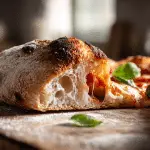
The magic of a great pizza is in the crust. It should be crisp on the bottom, chewy inside, and have those signature airy bubbles. This recipe builds that structure with a specific flour blend and a simple technique. We use mostly bread flour for strong gluten, with a bit of all-purpose flour to keep it tender.
Here’s what sets this crust apart:
- A dusting of semolina flour on your peel or pan. It acts like tiny ball bearings, letting the dough slide off effortlessly onto your hot stone.
- The windowpane test. This is how you know you’ve kneaded the dough enough. Stretch a small piece; if you can see light through it without it tearing, your gluten is perfect.
- A very hot oven. You’ll preheat your stone or skillet to 500°F. This creates those beautiful bubbles and a crisp base instantly. The result is a sourdough discard pizza crust that holds its shape under toppings and has a professional chew.
The Easiest Sourdough Discard Pizza Dough (Ready in About 90 Minutes)
- Total Time: 125 min
- Yield: 2 pizzas (8 slices each) 1x
- Diet: Vegetarian
Description
This sourdough discard pizza dough uses your unfed starter for tangy flavor and a small amount of yeast for a quick, reliable rise. It yields a chewy, crisp-bottomed crust ready in about 90 minutes of resting time. You’ll get enough dough for two 12-inch pizzas.
Ingredients
For the dough:
1 cup (240g) sourdough discard, unfed
1 ½ cups (180g) bread flour
½ cup (60g) all-purpose flour
½ cup (120g) warm water (105-115°F)
1 teaspoon instant yeast
1 teaspoon honey or sugar
1 ½ teaspoons fine sea salt
1 tablespoon olive oil, plus more for the bowl
Instructions
1. In a large bowl, combine the warm water, honey, and instant yeast. Let it sit for 1 minute.
2. Add the sourdough discard, olive oil, bread flour, all-purpose flour, and salt. Stir with a wooden spoon until a shaggy dough forms.
3. Turn the dough out onto a floured surface and knead by hand for 8-10 minutes, until smooth and elastic. It should pass the windowpane test.
4. Place the dough in a lightly oiled bowl, turn to coat, and cover. Let rise in a warm spot for 90 minutes, or until roughly doubled in size.
5. Gently deflate the dough and divide it into two equal pieces. Shape each into a tight ball, cover, and let rest for 10 minutes.
6. Preheat your oven with a pizza stone or steel on the middle rack to 500°F for at least 45 minutes.
7. On a floured surface, gently stretch one dough ball into a 12-inch round. Transfer to a semolina-dusted pizza peel.
8. Add your desired toppings. Slide the pizza onto the preheated stone and bake for 12-15 minutes, until the crust is golden brown and crisp.
9. Let the pizza cool on a wire rack for 2-3 minutes before slicing. Repeat with the second dough ball.
Notes
Store leftover pizza in an airtight container in the refrigerator for up to 3 days or freeze for up to 3 months. Reheat gently in a skillet over medium-low heat with a splash of water, or microwave in 30-second intervals.
If you don’t have a pizza stone, preheat a heavy, upside-down baking sheet or cast iron skillet for the same amount of time.
For a slower, deeper flavor, let the dough rise in the refrigerator for up to 24 hours instead of at room temperature.
The windowpane test is key: stretch a small piece of dough. If you can see light through it without tearing, you’ve kneaded enough.
If your dough feels dry and won’t come together, add water one tablespoon at a time. If it’s too sticky, add a sprinkle of flour.
- Prep Time: 20 min
- Rest Time: 90 min
- Cook Time: 15 min
- Category: Dinner, Main Course
- Method: Baking
- Cuisine: American
Nutrition
- Serving Size: 1 slice
- Calories: 153 kcal
- Sugar: 1 g
- Sodium: 293 mg
- Fat: 2 g
- Saturated Fat: 0 g
- Unsaturated Fat: 2 g
- Trans Fat: 0 g
- Carbohydrates: 29 g
- Fiber: 1 g
- Protein: 5 g
- Cholesterol: 0 mg
Sourdough discard pizza dough ingredients & equipment
Active Time: 20 minutes Total Time: 2 hours 5 minutes Yield: 2 pizzas (8 slices each)
- 1 cup (240g) sourdough discard, unfed
- 1 ½ cups (180g) bread flour
- ½ cup (60g) all-purpose flour
- ½ cup (120g) warm water (about 105-115°F)
- 1 teaspoon instant yeast (or active dry)
- 1 teaspoon honey or sugar
- 1 ½ teaspoons fine sea salt
- 1 tablespoon olive oil, plus more for the bowl
Substitutions: Use all bread flour for a chewier crust, or all all-purpose for a more tender one. Maple syrup works instead of honey.
Key ingredients explained
The sourdough discard is your flavor booster. It doesn’t need to be active or bubbly. Straight from the fridge is perfect. Its acidity gives the crust a subtle tang that plain dough lacks.
Bread flour and all-purpose flour work as a team. Bread flour has more protein, which builds strong gluten for a chewy, structured crust. All-purpose flour softens it just enough so it’s not tough. If you’re new to this, our sourdough starter recipe explains how to get that discard in the first place.
Instant yeast is our speed guarantee. It works fast alongside the discard. Make sure your water is warm, not hot, around 110°F is ideal. Too hot will kill it. The honey feeds the yeast for a quicker, more reliable rise.
Essential equipment
You don’t need fancy gear. A large mixing bowl, a wooden spoon, and your hands are the main tools. I strongly recommend a digital kitchen scale. Measuring flour by weight (grams) is foolproof and guarantees consistent dough hydration every time.
For baking, a pizza stone or steel is the best investment for a crisp bottom. Preheat it for a full hour at 500°F. No stone? A heavy, upside-down baking sheet or cast iron skillet works well. You’ll also want a bench scraper for dividing dough and a rolling pin if you don’t hand-stretch.
For launching the pizza, have semolina or cornmeal on hand. Dusting your peel or pan with it prevents sticking. If you love this hands-on baking, you’ll enjoy shaping sourdough bagels next.
Ingredient substitutions & variations
No bread flour? Use all-purpose. Your crust will be slightly less chewy but still great. Out of instant yeast? Active dry yeast works. Just proof it in the warm water with the honey for 5 minutes until foamy before adding other ingredients.
For a whole wheat version, swap up to half of the all-purpose flour with whole wheat. The dough will be denser and thirstier, so you may need an extra tablespoon of water. For extra flavor, mix a teaspoon of dried Italian herbs into the dry ingredients.
| Original | Substitute | Notes |
|---|---|---|
| Honey | White sugar | Same amount; feeds the yeast. |
| Olive Oil | Any neutral oil | Avocado or vegetable oil works fine. |
| Instant Yeast | Active Dry Yeast | Proof in warm water first. Use same amount. |
How to make sourdough discard pizza dough: step-by-step
Mixing & kneading the dough
- In a large bowl, combine the warm water, honey, and instant yeast. Let it sit for a minute.
- Add the sourdough discard, olive oil, bread flour, all-purpose flour, and salt.
- Stir with a wooden spoon until a shaggy dough forms and no dry flour remains.
- Turn the dough out onto a clean, lightly floured surface. Knead by hand for 8-10 minutes. The dough will start sticky but become smooth and elastic.
Watch Out: If the dough sticks to your hands, add a sprinkle of flour. If it feels dry or won’t come together, add water, one tablespoon at a time.
- To test if you’ve kneaded enough, perform the windowpane test. Stretch a small piece of dough. If you can see light through it without it tearing, your gluten is perfect. This guarantees a chewy sourdough discard pizza dough.
First rise & dough development
- Place the kneaded dough in a lightly oiled bowl. Turn it once to coat it in oil.
- Cover the bowl with a damp towel or plastic wrap.
- Let the dough rise in a warm spot for 90 minutes. It should roughly double in size and feel soft and puffy. This fermentation builds flavor and airiness.
Chef’s Note: The sourdough discard adds tang, but the yeast drives this quick rise. A warm spot (like an oven with the light on) helps it move along. For a slower, deeper flavor, you can let it rise in the fridge for up to 24 hours, similar to a classic sourdough bread recipe.
- Once risen, gently deflate the dough and turn it out onto your surface.
Shaping & topping your pizza
- Divide the dough into two equal pieces for standard 12-inch pizzas.
- Shape each piece into a tight ball by tucking the edges underneath. Cover and let them rest for 10 minutes. This relaxes the gluten for easier stretching.
- Generously dust your work surface and hands with flour or semolina. Press one ball into a disc, then gently stretch it from the center outwards. Use your knuckles to carefully stretch it into a 12-inch round.
- Transfer the shaped crust to a semolina-dusted pizza peel or inverted baking sheet. This prevents sticking.
- Add your toppings quickly. Spread sauce thinly, leaving a border. Use a light hand with cheese and toppings so the crust can still crisp. A heavy load makes a soggy center.
Baking for perfect crust
- While the dough rises, preheat your oven with a pizza stone or steel on the middle rack to 500°F for at least 45 minutes.
- Just before baking, give your peel a quick shake to ensure the pizza moves freely. Slide it onto the hot stone in one confident motion.
- Bake for 12-15 minutes. The crust is done when the edges are deeply golden brown and the bottom is crisp. The cheese should be bubbly and spotted.
- Let the pizza cool on a wire rack for 2-3 minutes before slicing. This lets the cheese set so your slices stay neat.
Pro Tip: No pizza stone? Use a preheated cast-iron skillet or an upside-down heavy baking sheet. Bake it for the last 2-3 minutes directly on the oven rack for extra bottom crisp.
Storage, troubleshooting & serving ideas
Make-ahead & freezing instructions
You can make this dough ahead and store it in the fridge or freezer. It’s perfect for meal prep.
Wrap the shaped dough balls tightly in plastic wrap. For the fridge, they’ll keep for 3 days. Let them sit at room temperature for an hour before stretching to warm up. For longer storage, freeze them on a sheet pan, then transfer to a freezer bag. They’ll last 3 months.
Thaw frozen dough in the fridge overnight, then let it come to room temperature. Reheat leftover slices in a skillet over medium-low heat with a splash of water under the lid. The steam revives the crust while the skillet re-crisps the bottom.
Common problems & solutions
| Storage Method | Duration | Best For |
|---|---|---|
| Refrigerator | Up to 3 days | Planning pizza night a day or two ahead. |
| Freezer | Up to 3 months | Stocking your freezer for instant pizza. |
| Counter (wrapped) | Not recommended | – |
Even with a quick recipe, things can happen. Here’s how to fix common issues.
Creative topping combinations
| Problem | Solution |
|---|---|
| Dough is too sticky or dry during kneading. | Adjust with flour or water, one tablespoon at a time, until it’s just tacky. |
| Dough shrinks back when you try to shape it. | Cover it and let it rest for 15 minutes. The gluten needs to relax. |
| The rise is very slow. | Your starter might be very cold or weak. Place the bowl in a warm spot (see Chef’s Note in the First Rise section). |
| The baked crust is soggy in the middle. | Don’t let the topped pizza sit before baking. Slide it onto the hot stone immediately after adding toppings. |
| The crust sticks when you try to launch it. | Ensure your peel or pan is generously dusted with semolina or cornmeal before placing the shaped dough on it. |
| Cheese isn’t melting well. | Avoid pre-shredded cheese; it has anti-caking agents. Shred your own mozzarella or provolone for better melt. |
This crust is a blank canvas. Go beyond basic pepperoni.
For a white pizza, skip the tomato sauce. Brush the dough with olive oil and minced garlic. Top with ricotta, mozzarella, and sautéed spinach. Finish with lemon zest and red pepper flakes after baking.
Try a sweet and savory combo like fig and prosciutto. Spread a thin layer of mascarpone cheese, then add fresh fig slices and torn prosciutto. Drizzle with honey after it comes out of the oven.
For a fun twist, you could use a chocolate sourdough starter recipe for a dessert pizza on this same crust.
If you love unique flavor twists from your starter, you’ll enjoy our blueberry orange sourdough bread. For a thicker, focaccia-style base loaded with toppings, try our souplantation focaccia pizza recipe next.
Keep sauces thin and toppings light. A heavy load steams the crust instead of letting it get crisp. Less is more for that perfect bake.
Sourdough discard pizza dough FAQ
What is sourdough discard?
It’s the portion of sourdough starter you remove and typically discard before feeding the main jar. For this recipe, it’s pure flavor. Use it straight from the fridge; it doesn’t need to be active or bubbly. Its acidity gives the crust a subtle tang you can’t get from flour and yeast alone.
Can I make this pizza dough in advance?
Yes. After the first rise, shape the dough into balls, wrap them tightly in plastic, and refrigerate for up to 3 days. The cold fermentation will deepen the flavor. Let a chilled dough ball sit at room temperature for about an hour before you stretch it to warm up and become pliable.
Can I freeze sourdough pizza dough?
Absolutely. After dividing and shaping into balls, freeze them on a parchment-lined sheet pan. Once solid, transfer to a freezer bag. They’ll keep for 3 months. Thaw overnight in the refrigerator, then let them come to room temperature for an hour before shaping and baking.
Can I make this without a pizza stone?
You can. Preheat a heavy cast-iron skillet or an upside-down baking sheet in your 500°F oven for 30 minutes. Build your pizza on parchment paper dusted with semolina, then slide the parchment onto the hot surface. For extra crispness, bake the last 2 minutes directly on the oven rack.
Why is my dough sticky or bouncing back?
If it’s sticky, knead in a tablespoon of flour. If it’s snapping back when you try to shape it, that means the gluten is too tight. Cover the dough and let it rest for 15 minutes; this relaxes the gluten so you can stretch it into a thin crust without a fight.
Can I use sourdough starter instead of discard?
You can use 1 cup of active, bubbly starter, but reduce the water in the recipe by 2 tablespoons. The dough may rise faster because the active yeast in your starter will work alongside the commercial yeast. Keep a close eye on it during the 90-minute bulk fermentation.
How long is sourdough discard good for?
Stored in a sealed container in the refrigerator, sourdough discard is good for about 2 weeks. You’ll know it’s gone bad if it develops pink or orange streaks or an off smell. For this recipe, even week-old discard that has separated is perfect, just stir it back together before using.
Your next sourdough discard pizza night starts here
This sourdough discard pizza dough turns a kitchen staple into dinner in about 90 minutes. You get the tangy flavor of a long ferment with the speed of commercial yeast, and that semolina trick guarantees your pizza launches without sticking.
I always make a double batch to freeze one ball for an even quicker meal later. Give it a try this weekend, your starter deserves to become pizza.
What’s your go-to topping combo for a quick homemade pie?
For more recipes like sourdough discard pizza dough, follow us on Facebook and Pinterest for clever baking projects and no-waste kitchen inspiration.
More recipes you’ll love: