The mistake lurking in nearly every failed fermented carrots recipe isn’t forgetting the salt. It’s using the wrong kind, table salt wrecks the crisp texture and stalls good bacteria before they start.
If your first attempt turned out limp or weirdly bland, the fix is simpler than you think. This small-batch method gives you tangy, snappy carrots every time, no guesswork, no mushy disappointment.
Here you’ll get the exact brine ratio that works every time, why a Mason jar and a cabbage leaf beat expensive gear, and the optional but highly recommended trio of garlic, ginger, and dill that makes these irresistible.
Table of Contents
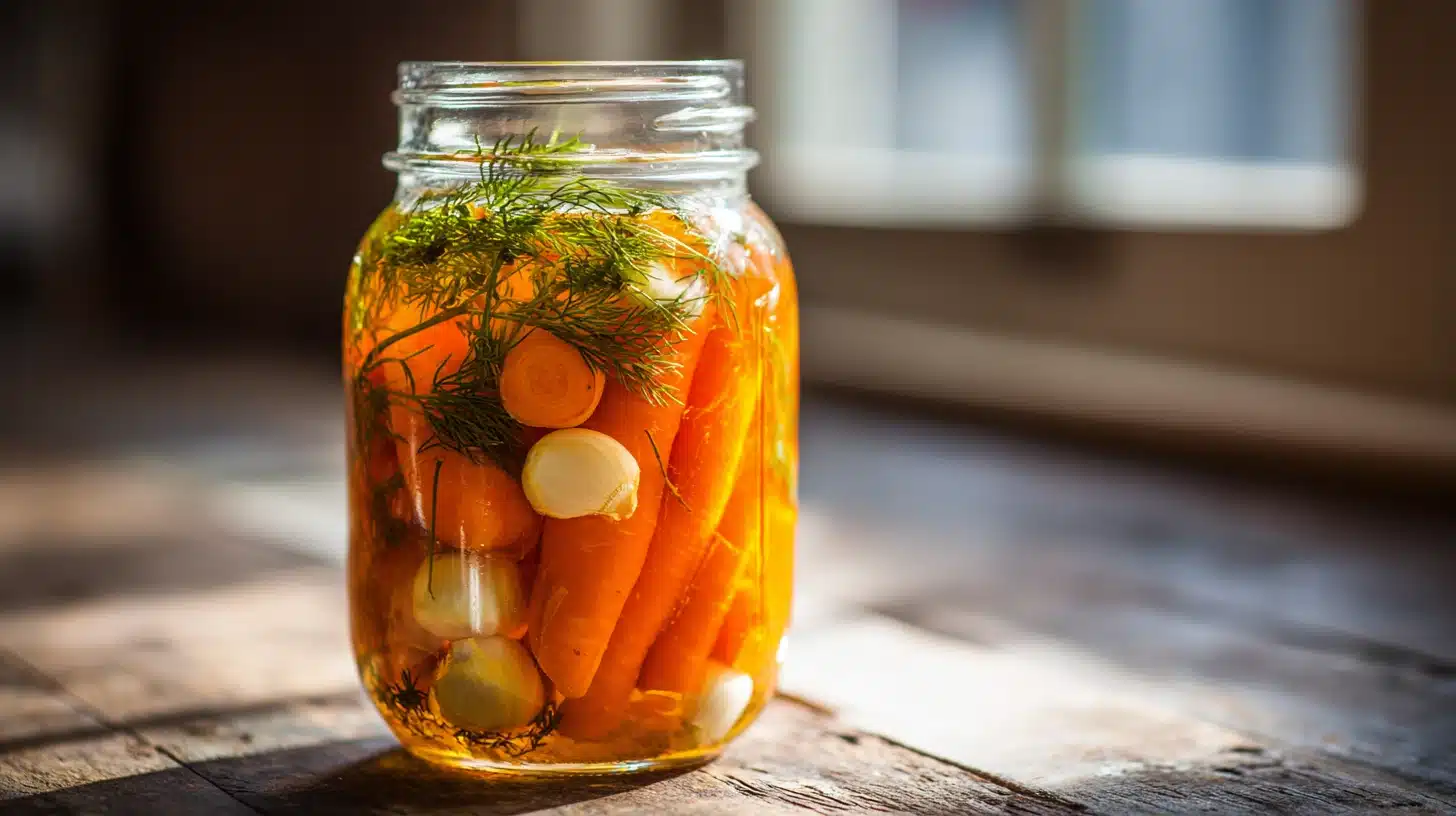
Table of Contents
Why you’ll love this fermented carrots recipe
The simplest ferment you’ll ever make
This fermented carrots recipe is the easiest lacto-fermentation project you’ll ever tackle. All you need are carrots, non-iodized salt, and water. Stir together a 3.5% salt brine (1 tablespoon salt per 2 cups water) and pour it over carrot sticks in a mason jar. No airlock lid required, a fermentation weight or a clean cabbage leaf keeps them submerged. In 5 days, you’ll have tangy, snappy carrots with zero fuss. Once you master this, a fermented honey garlic recipe is another simple next step.
Packed with gut-healthy probiotics
Lacto-fermentation spawns lactic acid bacteria, the same beneficial microbes found in yogurt and kimchi. These live cultures may support gut health by balancing your microbiome.
Unlike pasteurized store-bought pickles, these carrots retain enzymes and B vitamins that aid digestion. Just a few sticks a day can make a noticeable difference in how your stomach feels.
Kid-friendly and versatile
Getting kids to eat fermented foods can feel impossible. These carrot sticks solve that. They’re naturally sweet with a tangy kick that kids actually like. My niece calls them “pickle carrots” and eats them straight from the jar. Even my picky nephew asks for seconds.
- Crunchy, tangy carrot sticks kids will fight over
- Perfect for lunchboxes with ranch dip or hummus
- Shred into tacos, grain bowls, or salads
- Use the brine in dressings or as a probiotic shot
Always consult your pediatrician before introducing fermented foods to infants or toddlers.
Print
The Beginner’s Guide to Easy Small-Batch Fermented Carrots Recipe
- Total Time: 7210 min
- Yield: 8 servings 1x
- Diet: Gluten-Free, Vegetarian
Description
This fermented carrots recipe is the easiest lacto-fermentation project for beginners. With just carrots, salt, and water, you’ll have tangy, crunchy probiotic-rich carrot sticks in 5 days. Perfect for snacks, lunchboxes, or as a gut-healthy side.
Ingredients
For the ferment:
1 pound carrots (4–5 medium), peeled and cut into 4-inch sticks
2 cups filtered water
1 tablespoon non-iodized salt (sea salt, kosher, or pickling salt)
Optional add-ins:
2 garlic cloves, smashed
1-inch piece fresh ginger, sliced
2–3 sprigs fresh dill or 1 teaspoon whole spices (mustard seeds, peppercorns)
Instructions
1. Wash and scrub 1 pound carrots. No need to peel.
2. Cut carrots into 4-inch sticks, keeping thickness even.
3. Clean a mason jar with hot, soapy water. No sterilization needed.
4. Dissolve 1 tablespoon non-iodized salt in 2 cups filtered water to make the brine.
5. Place garlic, ginger, and dill in the jar, if using.
6. Pack carrot sticks tightly into the jar, standing upright.
7. Pour the brine over carrots, leaving 1-inch headspace. Tap jar to release air bubbles.
8. Add a fermentation weight (glass weight, cabbage leaf, or brine-filled ziplock bag) to keep carrots submerged.
9. Cover with an airlock lid or loose regular lid.
10. Ferment at 68–72°F for 5-10 days, tasting from day 2.
11. Once tangy and effervescent, remove weight, tighten lid, and refrigerate. Keeps 60 days.
Notes
Store in the refrigerator for up to 60 days. Do not freeze, texture will change.
A cabbage leaf tucked on top works as a free fermentation weight.
White sediment at the bottom is normal, it’s just settled bacteria and yeast.
If the brine turns slimy or smells yeasty, discard any exposed carrots and restart with a clean weight.
Soak carrots in ice water for 20 minutes before packing if they’ve been in the fridge a while to restore crispness.
- Prep Time: 10 min
- Rest Time: 7200 min
- Cook Time: 0 min
- Category: Side Dishes, Snack
- Method: No-bake
Nutrition
- Serving Size: about 4 carrot sticks
- Calories: 30 kcal
- Sugar: 3 g
- Sodium: 300 mg
- Fat: 0.2 g
- Saturated Fat: 0 g
- Unsaturated Fat: 0.2 g
- Trans Fat: 0 g
- Carbohydrates: 6 g
- Fiber: 2 g
- Protein: 1 g
- Cholesterol: 0 mg
Ingredients for fermented carrots
Active Time: 10 minutes Total Time: 120 hours 10 minutes Yield: 8 servings
- 1 pound carrots (4–5 medium), peeled and cut into 4-inch sticks
- 2 cups filtered water
- 1 tablespoon non-iodized salt (sea salt, kosher, or pickling salt)
- 2 garlic cloves, smashed (optional)
- 1-inch piece fresh ginger, sliced (optional)
- 2–3 sprigs fresh dill or 1 teaspoon whole spices like mustard seeds or peppercorns (optional)
No fresh dill? Use 1 teaspoon dried dill weed. No garlic? Skip it or use ¼ teaspoon garlic powder.
| Original | Substitute | Notes |
|---|---|---|
| non-iodized sea salt | kosher salt | same weight; volume may differ |
| non-iodized sea salt | pickling salt | fine grain, dissolves fast |
| non-iodized sea salt | Himalayan pink salt | works, but may tint brine slightly |
Choosing the best carrots
Firm, sweet carrots make the crunchiest ferment. Look for organic carrots with bright orange color and no cracks. Limp or rubbery ones won’t hold their snap. I leave the peel on if they’re well-scrubbed, but peeling removes any bitterness from the skin. Cut them into uniform sticks so they ferment evenly. Thick batons stay crisp longer than thin matchsticks.
The perfect salt-to-water ratio
A 3.5% brine (1 tablespoon salt per 2 cups water) is the sweet spot for this recipe. Too little salt invites mold; too much stalls the good bacteria. Always use non-iodized salt, iodine and anti-caking agents can cloud the brine and slow lacto-fermentation. Filtered water matters too, since chlorine kills the lactic acid bacteria you’re trying to grow.
Optional flavor add-ins (garlic, ginger, spices)
Garlic cloves add a mellow, savory depth that balances the carrots’ natural sweetness. Ginger slices bring a warm, peppery kick, if you love that zing, you’ll also enjoy a candied ginger cookie recipe for a sweet treat. Fresh dill gives a classic pickle flavor, while whole spices like mustard seeds or black peppercorns add gentle heat. Toss them into the jar before pouring the brine, and they’ll infuse every stick.
How to make fermented carrots
Preparing the carrots and jar
This recipe starts with fresh, firm carrots. Scrub them well under cool water. Peeling is optional; I skip it if they’re organic. Trim both ends, then cut into 4-inch sticks. Uniform thickness matters: chubby batons stay snappier than thin matchsticks.
- Wash and scrub 1 pound carrots. No need to peel.
- Cut them into 4-inch sticks, keeping thickness even.
- Grab a clean mason jar, just hot, soapy water, no sterilization needed.
Pro Tip: Soak carrots in ice water for 20 minutes before packing if they’ve been in the fridge a while. It restores crispness.
Making the brine and packing the jar
Stir 1 tablespoon non-iodized salt into 2 cups filtered water until it dissolves completely. You want a crystal-clear brine with no grit at the bottom.
Toss smashed garlic, sliced ginger, and dill sprigs into the jar. Pack the carrot sticks in tightly, standing upright. Leave 1 inch of space at the top. Pour the brine over until carrots are fully submerged. Air pockets are the enemy, tap the jar gently on the counter to release them.
- Dissolve salt in water for the brine.
- Place garlic, ginger, and dill in the mason jar.
- Wedge carrots in, then cover with brine, leaving 1-inch headspace.
- Add a fermentation weight, a glass weight, folded cabbage leaf, or a brine-filled ziplock bag, to keep everything under liquid.
Quick Note: A cabbage leaf tucked on top works perfectly and costs nothing. Fold it to fit, then press down lightly with the weight.
Fermentation process: time and temperature
Seal the jar with an airlock lid or a regular lid screwed on just loose enough for gas to escape. Set it at 68–72°F away from sunlight. Bubbles will appear within a day or two, that’s the lactic acid bacteria waking up. Start tasting on day 2. The carrots get tangier and slightly fizzy as fermentation progresses. At 5-10 days, they’ll be snappy with a bright, sour pop. White sediment on the bottom is totally normal.
- Lid the jar loosely or use an airlock lid.
- Ferment at 68–72°F for 5-10 days, tasting from day 2.
- When the flavor is tangy and effervescent, remove the weight, tighten the lid, and refrigerate. They keep for 60 days.
The process mirrors an easy homemade kimchi recipe because both use the same lacto-fermentation principles, just different vegetables. If your kitchen runs warm, wrap the jar in a damp towel to keep it cooler.
Chef’s Note: If the top smells yeasty or the brine turns slimy, you likely had a carrot tip above the brine. Scoop out any exposed carrot and restart with a clean weight. If the brine itself is slimy (not just an exposed tip), discard the entire batch.
Storage, troubleshooting, and serving ideas
How to store fermented carrots
Once the tang hits exactly where you want it, pop the jar straight into the fridge. Cold slows fermentation to a near halt, locking in that snappy texture and bright flavor. These fermented carrot sticks keep for up to 60 days chilled.
| Storage Method | Duration | Notes |
|---|---|---|
| Refrigerator | Up to 60 days | Keep carrots submerged in brine |
| Freezer | Not recommended | Texture turns mushy and flat |
The brine gets better with age. After a few weeks, it develops a deeper, more savory tang. Fish out the sticks with clean utensils every time. Introducing bacteria from a fork that’s been in your mouth can cloud the brine or shorten shelf life. I’ve learned this the hard way.
Common fermentation problems and solutions
Most fermented carrot issues are easy to fix. Lacto-fermentation is forgiving, but a few things can trip you up. Here’s what I’ve seen go sideways and how to handle it.
| Problem | Solution |
|---|---|
| Carrots float above brine | Tuck a folded cabbage leaf or glass fermentation weight on top to keep them submerged |
| Cloudy brine or white film | Both are normal. White film is kahm yeast, skim it off. Vegetables are still safe. |
| Soft, limp carrots | Start with the firmest carrots you can find and ferment at 68–72°F. Older or warm-fermented carrots lose their snap. |
| Not sour enough | Let it go longer. Taste daily after day 2 until the tang is where you want it. |
| Mold or pink scum | Discard the entire batch. Something went wrong, and it’s not worth the risk. |
Creative ways to serve fermented carrots
These tangy sticks do way more than sit on a relish tray. Their crunch is the real draw.
- Eat them straight from the jar as a snack with ranch dip. Kids who won’t touch sauerkraut often devour these.
- Slice them into salads for a vinegar-free brightness that doesn’t wilt the greens.
- Layer onto sandwiches or wraps where you’d normally use pickles.
- Serve alongside grilled sausages or burgers. The acidity cuts through rich meat like a pro.
- Chop into grain bowls with quinoa, roasted veggies, and a drizzle of tahini.
For a quick pickle with a sharper vinegar bite, a quick pickled red onions recipe is the perfect counterpart. I keep both in my fridge for sandwich spreads and taco nights.
Frequently asked questions
What is the difference between fermented carrots and pickled carrots?
This recipe uses a salt brine to let lactic acid bacteria create tanginess naturally, packing them with live probiotics. Pickled carrots get their sour punch from vinegar and a heat process that kills those cultures. Fermentation takes days; pickles are ready fast but skip the gut health benefits.
Why is my fermented carrot brine cloudy?
Cloudy brine in this recipe is a great sign, it’s live and dead bacteria and yeast settling out after active lacto-fermentation. That harmless sediment means the probiotics did their job. If a white film (kahm yeast) floats on top, just skim it off and keep eating. The vegetables are safe.
How long does it take for carrots to ferment?
With this recipe, tangy carrots happen in 5 to 10 days at 68–72°F. Bubbles show up within a day or two. Start tasting on day 2. If your kitchen is warm, they’ll sour faster; a cooler spot slows things. Pull them when the tang hits your sweet spot.
How long do fermented carrots last?
Once chilled, these carrots keep for up to 60 days in the fridge. Leave them submerged in brine and always use a clean fork. The tang deepens over weeks while the crunch holds. After two months, they gradually soften, so enjoy them sooner for that snappy, fizzy bite.
Are fermented carrots good for you?
Yes, this recipe delivers a hit of probiotics that may support gut health. Lacto-fermentation produces lactic acid bacteria, which may help balance your microbiome. Unlike quick pickles, they keep B vitamins and enzymes intact. Both the sticks and the brine offer live cultures.
What do fermented carrots taste like?
They’re tangy, subtly fizzy, and still naturally sweet. If you added garlic, ginger, and dill, you’ll get mellow savory notes and a peppery warmth. The sourness isn’t sharp like vinegar, it’s bright and rounded. Texture stays snappy, almost like a fresh carrot stick that got a pickle makeover.
Why does my ferment look cloudy or have a white film at the top?
A white film on the brine is likely kahm yeast, a harmless hitchhiker in fermentation. Skim it off and the carrots underneath are fine. Cloudiness alone is just bacteria sediment (see the cloudy brine question above). If the film is pink, fuzzy, or smells rotten, toss the jar.
Make this fermented carrots recipe this weekend
Now you’ve got the exact 3.5% brine ratio, the right salt, and a foolproof small-batch method. This recipe delivers snappy, tangy sticks worth making purely for that bright crunch and probiotic kick.
I keep a jar going constantly, tossing in garlic and ginger for a little heat. If you haven’t tried fermenting yet, grab some carrots this weekend, it’s genuinely hard to mess up and so satisfying to crack open that first bubbly jar.
What’s your go-to add-in for fermented carrots, dill, ginger, or a spicy mustard seed kick?
For more recipes like this, follow us on Facebook and Pinterest for simple ferments, probiotic snacks, and easy gut-friendly recipes.
More recipes in this series: