The step everyone skips in this recipe is a 30-second vinegar wash that prevents off-flavors and mold.
Funky, flat, or fuzzy salsa is a heartbreak. That thin layer of wild yeast or a lifeless taste usually comes from surface bacteria on your vegetables. The vinegar wash knocks them out before fermentation starts, so only the good probiotics thrive.
Inside: the salt ratio that keeps tomatoes from turning to mush, how to know exactly when your salsa hits peak tang (day 3), and the simple steps that make the whole process reliable.
Table of Contents
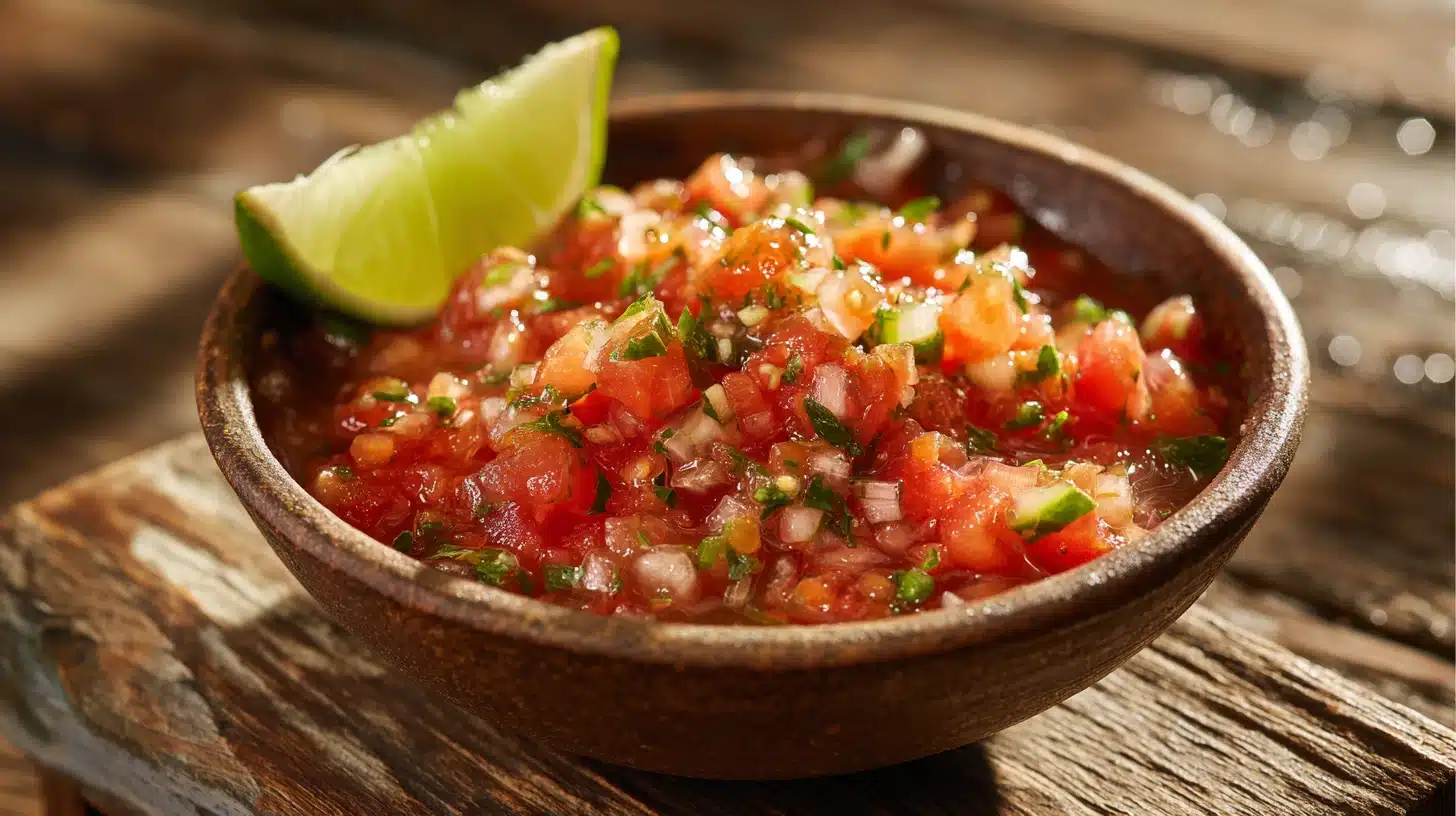
Table of Contents
Why lacto-fermented salsa beats fresh every time
What makes lacto-fermented salsa special
Summer tomatoes pile up fast. Instead of frantic canning, you can turn them into a tangy, live-culture salsa with almost no work. The real difference? A 30-second vinegar wash before chopping. It wipes out wild yeasts that cause off-flavors and fuzzy mold, so the brine stays clean.
If you’ve tried a fermented honey garlic recipe before, you know lacto-fermentation is mostly waiting. This salsa follows the same forgiving path. Salt draws moisture from the tomatoes, creating a natural brine where good bacteria dominate. The ingredients just need to stay submerged; a leftover onion skin or bell pepper slice works as a weight.
Here’s why this recipe becomes a summer staple:
- No cooking or hot jars. You chop, mix, and let salt do the preserving.
- The flavor shifts from sharp and raw on day 1 to bright and balanced by 3 days.
- It stays fresh in the fridge for 90 days without losing its crunch.
- You control the heat. Jalapeño keeps it mild; serrano peppers add a real kick.
Health benefits of probiotic-rich salsa
This isn’t just a condiment. Every spoonful delivers live probiotics that support digestion. Fermentation breaks down the harsher compounds in raw garlic and onion, so they’re gentler on your stomach and their flavor mellows beautifully. Unlike cooked or canned salsa, this version keeps all the vitamin C from fresh tomatoes intact because no heat is involved.
The salt brine creates an oxygen-free environment where beneficial Lactobacillus strains multiply. These are the same gut-friendly microbes you’d find in yogurt or sourdough. I notice a difference when I eat it daily: less bloating after meals and a sharper sense of appetite, though individual results vary. The tang is clean, never vinegary, and a couple of spoonfuls on eggs or tacos add life to your plate and your microbiome.
Print
Easy Fermented Salsa Recipe with the Vinegar Wash Trick (Probiotic-Rich!)
- Total Time: 4335 min
- Yield: 20 servings 1x
- Diet: Vegetarian
Description
This fermented salsa recipe uses a quick vinegar wash to ensure clean, mold-free fermentation. Fresh tomatoes, garlic, onion, and peppers create a tangy, probiotic-rich condiment ready in just 3 days. No cooking required, just chop, salt, and let lacto-fermentation do the work.
Ingredients
For the salsa:
2 pounds (900g) ripe tomatoes, diced (about 4 cups)
1 medium onion, diced (¾ cup / 115g)
3 cloves garlic, minced
1–2 jalapeño or serrano peppers, minced (remove seeds for less heat)
½ cup (15g) chopped fresh cilantro
1 tablespoon (18g) non-iodized sea salt or kosher salt
Optional:
1–2 tablespoons fresh lime juice
2 tablespoons whey or vegetable starter (optional)
Filtered water, as needed to cover vegetables
Instructions
1. Wash tomatoes and peppers in a vinegar bath (1 part vinegar to 3 parts water) for 30 seconds. Rinse well.
2. Dice tomatoes and onion into small, even chunks. Mince garlic and peppers fine.
3. Toss vegetables in a large bowl with salt and cilantro. Massage with hands for 1 minute until juicy.
4. For a chunkier salsa, pack as-is. For restaurant-style, pulse half in a food processor 3–4 times and stir back in.
5. Pack into a clean quart jar, pressing down so brine rises above vegetables. Leave 1 inch headspace.
6. Place a fermentation weight or brine-filled ziplock bag on top to keep solids submerged.
7. Screw lid loosely to allow gas to escape.
Notes
Store in the refrigerator for up to 90 days. Do not freeze, texture will change.
If you don’t have a fermentation weight, use a clean cabbage leaf or onion skin folded over the solids.
Always use a clean spoon when tasting to avoid introducing unwanted bacteria.
Fermentation starts within 24 hours. Taste from day 2; peak tangy flavor at day 3.
Substitute canned tomatoes: two 14.5‑oz cans, drained, and reduce salt to 2 teaspoons.
- Prep Time: 15 min
- Rest Time: 72 hours
- Cook Time: 0 min
- Category: Side Dishes, Snack
- Method: No-Cook
- Cuisine: Mexican
Nutrition
- Serving Size: 1/4 cup
- Calories: 12 kcal
- Sugar: 1.5 g
- Sodium: 900 mg
- Fat: 0.1 g
- Saturated Fat: 0 g
- Unsaturated Fat: 0.1 g
- Trans Fat: 0 g
- Carbohydrates: 2.6 g
- Fiber: 0.7 g
- Protein: 0.5 g
- Cholesterol: 0 mg
Fermented salsa ingredients & equipment
Active Time: 15 minutes Total Time: 72 hours 15 minutes Yield: 20 servings
- 2 pounds (900g) ripe tomatoes, diced (about 4 cups)
- 1 medium onion, diced (¾ cup / 115g)
- 3 cloves garlic, minced
- 1–2 jalapeño or serrano peppers, minced (remove seeds for less heat)
- ½ cup (15g) chopped fresh cilantro
- 1 tablespoon (18g) non-iodized sea salt or kosher salt
- 1–2 tablespoons fresh lime juice (optional)
- Filtered water, as needed
- 2 tablespoons whey or vegetable starter (optional)
No fresh tomatoes? Use two 14.5‑oz cans of diced tomatoes, drained, and cut the salt to 2 teaspoons. Swap jalapeño for serrano if you want more heat. Skip the whey entirely — it’s optional, and the salt alone does the job (fermentation might take an extra day).
| Original | Substitute | Notes |
|---|---|---|
| Jalapeño peppers | Serrano peppers | Double the heat; keep seeds for extra kick |
| Sea salt | Kosher salt | Same weight; volume may differ slightly |
| Whey starter | Nothing (omit) | Slower start but same tangy finish |
Key ingredients
This recipe leans hard on salt, and that’s a good thing. Non-iodized salt lets the good Lactobacillus bacteria thrive without the iodine or anti-caking agents that cloud the brine. The salt ratio is roughly 2% of the vegetable weight, which draws just enough water out of the tomatoes to create a natural brine and keeps them from turning to mush. Ripe tomatoes bring the sugars that feed fermentation. Garlic and onion lend prebiotic fibers and mellow flavor. Cilantro adds freshness. The optional lime juice brightens everything without overpowering the tangy finish.
Before you chop, give the tomatoes and peppers a quick vinegar rinse to knock down wild yeasts. If you’ve kept a sourdough starter recipe alive, you’ll find this ferment just as hands-off. The same principle of feeding microbes and waiting applies, but with far less daily attention.
Essential tools for fermentation
You don’t need a fancy setup. A wide-mouth quart mason jar is perfect, with a lid that you can burp daily. As the lacto-fermentation kicks in, carbon dioxide pushes up, and without a vent, pressure builds. A regular metal lid works if you slightly unscrew it each day. A fermentation weight keeps the vegetables submerged under the brine. That’s non-negotiable, because any bits floating above the water can mold. No weight? A small ziplock bag filled with extra brine (or just filtered water with a teaspoon of salt) does the same job.
An airlock lid is nice but not vital. I also keep a second clean jar handy for the discard if I’m adding whey starter, though most batches don’t need it. A large mixing bowl holds everything for the initial salt massage, and a chopstick or skewer helps release trapped air bubbles after packing the jars.
How to make fermented salsa
Step-by-step instructions
- Wash the tomatoes and peppers in a quick vinegar bath (1 part vinegar to 3 parts water) for 30 seconds. Rinse well. This kills surface wild yeasts before they can cause trouble.
- Dice the tomatoes and onion into small, even chunks. Mince the garlic and peppers fine. No one wants a surprise whole jalapeño slice.
- Toss everything into a large mixing bowl with the salt and cilantro. Squeeze and massage the vegetables with your hands for a full minute. You’ll see the tomatoes release their liquid and the mixture turn juicy. This is your brine starting to form.
- For a chunkier salsa, pack it as-is. Prefer restaurant-style? Pulse half the mixture in a food processor three or four times, then stir it back in.
- Scoop the salsa into a clean quart jar, pressing down hard so the brine rises above the vegetables. Leave 1 inch of headspace.
- Place a fermentation weight or a small brine-filled ziplock bag directly on top. Everything must stay submerged. Any floaters invite mold.
- Screw the lid on loosely. Gas needs to escape during fermentation.
Cook’s Tip: If you don’t have a weight, a washed cabbage leaf or a spare onion skin folded over the surface holds the solids down beautifully.
Fermentation time & tasting tips
Set the jar on a plate (brine can bubble over) and park it on the counter away from direct sun. Active fermentation starts within 24 hours. You’ll see tiny bubbles rising through the brine and the liquid will turn slightly cloudy. That’s exactly what you want. The lacto-fermentation is working.
Start tasting on day 2. Use a clean spoon every time. Dipping in with a used fork introduces unwanted bacteria. The flavor shifts fast. Day 1 tastes salty and raw. By day 3, the raw onion bite mellows and the peppers turn softer, while the garlic loses its harsh edge. The brine gets tangier but never vinegar-sharp. This is the peak window. If you like a stronger funk, leave it another day, but tomatoes can get soft past 4 days at room temperature.
When it tastes right, transfer the jar to the fridge. Chilling slows fermentation to a crawl, so the flavor holds steady for months. Spoon it over tacos with a pile of quick pickled red onions recipe on the side. The tangy crunch is a perfect match.
Storage, troubleshooting & serving ideas
How to store fermented salsa
Once the salsa hits that peak tang, usually around 3 days, move the jar straight to the fridge. Cold slows the lacto-fermentation to a crawl, so the flavor stays bright and balanced for up to 90 days. Always keep the vegetables submerged under brine. Any exposed bits invite mold. If liquid evaporates or leaks out, pour in a quick salt-water mix (1 teaspoon non-iodized salt per cup of filtered water) to cover everything again.
A clean smell is sharp and pleasantly sour. Toss the batch if you catch a rotten, yeasty, or rancid odor. Fuzzy mold sitting on the liquid? Skim it off right away and use the salsa within a week. But if mold threads down into the solids, don’t risk it. Start fresh. Freezing isn’t worth it. Thawed tomatoes turn mealy and watery, wrecking the texture that makes this ferment special.
| Storage Method | Duration | Notes |
|---|---|---|
| Refrigerator (submerged) | Up to 90 days | Keep brine covering vegetables; top with salt brine if needed. |
| Freezer | Not recommended | Texture degrades; tomatoes lose their bite when thawed. |
Serve it cold or let it sit at room temp for 15 minutes so the tang pops. A few favorite ways:
- Spooned over scrambled eggs or an omelet for a probiotic kick.
- Piled onto tacos, nachos, or burrito bowls.
- Mixed into mashed avocado for instant funky guacamole.
- Stirred into cooked black beans or rice as a bright finishing touch.
- Straight from the jar. No judgment. If you love hands-off ferments, this salsa lives in the same low-effort world as an easy homemade kimchi recipe: chop, salt, wait.
Troubleshooting common fermentation issues
| Problem | Solution |
|---|---|
| Ingredients float and risk mold | Keep solids submerged with a fermentation weight, an onion skin, or a bell pepper slice. Stir daily during the first few days. |
| Gas buildup with a regular lid | Burp jars daily by loosening the lid briefly, or use an airlock lid to let CO2 escape. |
| Vegetables turn too soft | Add sweet bell peppers for crunch. Don’t over-pulse in the food processor, and use firm, ripe tomatoes. |
| Salsa tastes too salty | Fermentation mellows saltiness naturally. If still too salty after day 3, mix with fresh diced tomatoes before serving. |
| Mold appears on the surface | Skim it off immediately if it’s only on the brine. If mold has penetrated the vegetables, discard the entire batch. |
| No bubbles or tang after 3 days | Your kitchen may be cold. Move the jar to a warmer spot (around 68–72°F) and give it 1 or 2 more days. Next time, add a little whey or vegetable starter to jump-start the process. |
A slow ferment just means cooler temps. Patience and a warm nook usually wake things up.
Fermented salsa recipe FAQ
What is fermented salsa?
This is a probiotic-rich condiment of diced tomatoes, onion, garlic, peppers, and cilantro, preserved by salt and lacto-fermentation. No cooking is involved. The salt pulls moisture from the vegetables to create a natural brine, and good bacteria turn the mixture tangy in about 3 days.
What does fermented salsa taste like?
It tastes bright and tangy with a mellowed garlic bite. The raw onion sharpness fades by day 3, replaced by a clean, almost lemony sourness that is not vinegary. Peppers soften and the cilantro stays fresh. The overall flavor is cleaner and more complex than fresh salsa.
How long does salsa take to ferment?
The mixture hits its peak tang between 2 and 3 days at room temperature (around 70°F). You will see bubbles and slight cloudiness by day 1. Start tasting on day 2 with a clean spoon, then transfer the jar to the fridge once you like the sourness.
How does the fermentation process work?
Salt draws water from the tomatoes, creating an oxygen-free brine. Beneficial Lactobacillus bacteria, already present on the vegetables, feed on natural sugars and produce lactic acid. This acid preserves the salsa and gives it that tang, while carbon dioxide bubbles rise through the jar.
How long do fermented foods last?
This batch stays fresh in the refrigerator for up to 90 days as long as the vegetables remain submerged under brine. If the liquid level drops, top it with a salt-water mix (1 tsp salt per cup water). Always discard if any mold grows below the brine’s surface.
Can salsa help lower cholesterol?
The soluble fiber in onions, garlic, and tomatoes may help slightly reduce LDL cholesterol over time, but this is a condiment, not a treatment. The live probiotics can support gut health, which indirectly influences cholesterol metabolism. For targeted advice, talk to a doctor rather than relying on salsa alone.
What makes this recipe unique?
A 30-second vinegar wash (1 part vinegar to 3 parts water) on the tomatoes and peppers before chopping wipes out wild yeasts that cause off-flavors and fuzzy mold. This simple rinse makes the fermentation surprisingly reliable, so you get a cleaner, brighter flavor every time without any extra equipment.
Try this fermented salsa recipe this weekend
The 30-second vinegar wash and 2% salt ratio keep this recipe crisp and mold-free, no canning required. Just chop, salt, and wait for bright, probiotic-packed flavor in three days.
I keep a jar in the fridge all summer and spoon it on scrambled eggs whenever I want that tangy kick. Grab some ripe tomatoes this weekend and see how easy it is.
Do you keep it mild with jalapeño or go all-in with serrano and seeds?
For more recipes like this one, follow us on Facebook and Pinterest for tangy fermented condiments and easy preservation ideas.
More recipes in this series: