You don’t need a blender or fancy ingredients to nail miso dressing. You need to stop doing one thing: dumping everything in a bowl at once.
The result? Oily puddles and salty clumps that never stick to your salad. The fix takes seconds, and it gives you a creamy, emulsified drizzle that clings to every leaf.
Here you’ll get a 5-minute formula that works as a marinade, dip, or bowl sauce. Plus the single whisking step that guarantees no grittiness.
Table of Contents
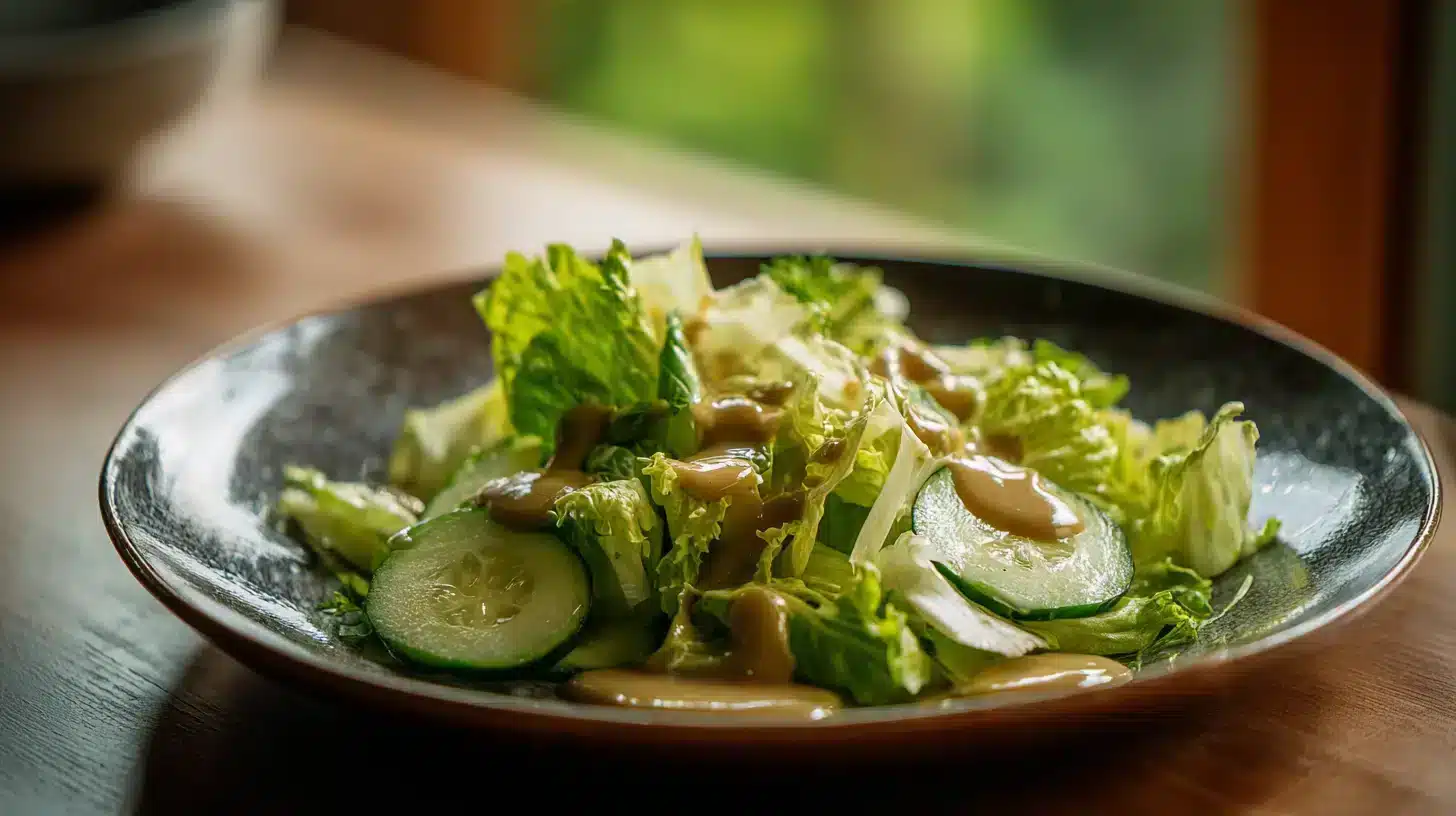
Table of Contents
Why This Miso Dressing Recipe Works
Umami-packed flavor in minutes
I used to whisk everything together and hope for the best. The miso stayed in stubborn little lumps, and the oil floated on top.
Then a chef friend showed me the trick: dissolve the miso in a splash of warm water first. That’s the whole secret. It takes 10 seconds, and it transforms this into a silky, emulsified sauce without a blender.
Miso naturally contains lecithin, a built-in emulsifier. Once you break up the paste, it grabs onto the oil and vinegar and holds everything together. White miso works best here. It’s fermented for less time, so it’s mellow and slightly sweet.
You get deep savory flavor in 5 minutes flat, no cooking required. I grate fresh ginger straight into the bowl, too. No need to dirty a cutting board.
- Ready in 5 minutes with no blender or food processor
- White miso’s natural lecithin creates a creamy texture without cream or egg
- Dissolving miso in warm water first prevents clumps and grittiness
- Fresh ginger grated directly into the bowl saves time and adds bright tang
Versatile and customizable
This isn’t just a salad dressing. I’ve drizzled it over roasted sweet potatoes, tossed it with cold soba noodles, and used it as a marinade for miso glazed salmon with coconut rice crispy.
To turn it into a thicker glaze, simply cut the olive oil in half. The flavor concentrates beautifully.
The base recipe is a canvas. Swap rice vinegar for lemon juice if you want a sweeter, brighter note. Lime juice makes it sharper. Add a teaspoon of maple syrup to balance the salt, or a spoonful of tahini for an oil-free creamy version. My friend stirs in peanut butter for a nutty twist.
This dressing keeps in the fridge for 7 days. It also freezes well; details in the storage section below. Make a double batch. You’ll find yourself reaching for it all week.
Print
Miso Dressing Recipe Easy: Ready in 5 Minutes, Better Than Store-Bought
- Total Time: 5 min
- Yield: 5 servings 1x
- Diet: Vegan
Description
A quick and creamy miso dressing ready in 5 minutes. Perfect for salads, grain bowls, or as a marinade, this savory sauce uses simple pantry ingredients and comes together without a blender.
Ingredients
For the dressing:
3 tablespoons white miso paste (45g)
⅓ cup neutral oil (80ml) (olive, avocado, or untoasted sesame)
2½ tablespoons rice vinegar (37ml)
1 teaspoon fresh ginger, grated straight into the bowl
1 teaspoon maple syrup or honey
1 teaspoon soy sauce or tamari
½ teaspoon Dijon mustard (optional, for extra cling)
Instructions
1. Place the miso, rice vinegar, and grated ginger in a medium bowl. Add a splash of warm water. Whisk until the miso dissolves completely and the mixture looks like smooth, pourable mud, no specks of paste should remain. This takes about 30 seconds.
2. While whisking briskly, slowly drizzle in the oil. Start with just a few drops, then a thin, steady stream. The dressing will thicken and turn opaque and creamy. If it looks broken or oily, stop adding oil and whisk vigorously until it comes back together before continuing.
3. Whisk in the maple syrup, soy sauce, and Dijon mustard. Taste and adjust: an extra drop of vinegar brightens, more maple syrup balances salt. Use right away or pour into a jar.
Notes
Dissolve miso in warm water first to prevent lumps.
Use room-temperature ingredients for easier emulsification.
Store in the refrigerator for up to 7 days or freezer for up to 3 months.
For a thicker glaze, cut the olive oil in half.
If dressing breaks, pour into a fresh bowl with a teaspoon of water and whisk vigorously to rescue it.
- Prep Time: 5 min
- Cook Time: 0 min
- Category: Condiment, Sauce
- Method: No-Cook
- Cuisine: Japanese
Nutrition
- Serving Size: 2 tablespoons
- Calories: 156 kcal
- Sugar: 1 g
- Sodium: 458 mg
- Fat: 16 g
- Saturated Fat: 2.1 g
- Unsaturated Fat: 13.4 g
- Trans Fat: 0 g
- Carbohydrates: 3 g
- Fiber: 0 g
- Protein: 1 g
- Cholesterol: 0 mg
Miso Dressing Ingredients
Active Time: 5 minutes Total Time: 5 minutes Yield: 5 servings
- 3 tablespoons white miso paste (45g)
- ⅓ cup neutral oil (80ml) (olive, avocado, or untoasted sesame)
- 2½ tablespoons rice vinegar (37ml)
- 1 teaspoon fresh ginger, grated straight into the bowl
- 1 teaspoon maple syrup or honey
- 1 teaspoon soy sauce or tamari
- ½ teaspoon Dijon mustard (optional, for extra cling)
Substitution tips: No rice vinegar? Use 2 tablespoons lemon juice for a sweeter note, or 2 tablespoons lime juice for sharpness. No maple syrup? A pinch of sugar works, but stir harder to dissolve it.
Key ingredients and substitutions
The oil you grab changes the whole personality of this dressing. Olive oil gives it a peppery backbone. Avocado oil keeps things neutral, making the miso flavor front and center.
A splash of toasted sesame oil, just a teaspoon in place of some neutral oil, pushes it toward nutty Japanese-restaurant vibes.
Rice vinegar brings mild, slightly sweet acidity. I don’t swap it unless I have to, because white wine vinegar is harsher and apple cider vinegar adds fruitiness this dressing doesn’t need. But if you’re in a pinch, lemon juice plus a small pinch of sugar gets you close.
Ginger adds brightness that cuts through the oil. Grate it directly into the bowl with a microplane. The juice, which holds most of the ginger’s bright, zesty flavor, joins the party, and you skip a dirty board. For a pantry-friendly version when fresh ginger is out, a tiny pinch of dry ginger works, though you lose the sharp spark.
| Original | Substitute | Notes |
|---|---|---|
| Rice vinegar | Lemon juice + pinch sugar | Sweeter, brighter acidity |
| Maple syrup | Honey or agave | Same liquid amount |
| Soy sauce | Tamari or coconut aminos | Tamari is gluten-free; aminos are sweeter |
| Olive oil | Avocado, grapeseed, or untoasted sesame | Neutral taste varies |
The Dijon mustard is optional but worth it. It’s not here for obvious mustard flavor. Mustard seeds contain mucilage, a natural thickener, so a tiny bit locks the emulsion tight for days. If you love creamy dips, you might also enjoy this yogurt dipping sauce recipe for crudités and pita.
Choosing the right miso
White miso, sometimes labeled shiro miso, is the one you want here. It’s fermented for just a few months with a high proportion of rice koji, so it tastes mild, a little nutty, and barely funky.
Red miso ferments for a year or more. It’s saltier, earthier, and can bully the other ingredients out of the bowl. I’ve tested this recipe with red miso. The result was fine, still good on grilled eggplant, but it needed more maple syrup to dial back the intensity. If red miso is all you have, cut the amount by a full tablespoon and taste as you go. Yellow miso sits in between, so it’s a decent backup. Just know it brings a slightly stronger soybean punch.
Check the label for dashi. Some white miso tubs come pre-mixed with bonito stock. That’s great for soup, but it adds a fishy note you might not want on a kale salad.
For this dressing, buy plain white miso paste. It keeps in the fridge for a year, well past the date stamped on the lid, because miso is already a fermented preserve.
How to make miso dressing
This dressing comes down to one sequence: dissolve, whisk, stream. Get it right and you get a glossy, clingy dressing that never separates.
Step-by-step instructions
- Place the miso, rice vinegar, and grated ginger in a medium bowl. Add a splash of warm water. Whisk until the miso dissolves completely and the mixture looks like smooth, pourable mud. No specks of paste should remain. This takes about 30 seconds.
- While whisking briskly, slowly drizzle in the oil. Start with just a few drops, then a thin, steady stream. The dressing will thicken and turn opaque and creamy. If it looks broken or oily, stop adding oil and whisk vigorously until it comes back together before continuing.
- Whisk in the maple syrup, soy sauce, and Dijon mustard. Taste and adjust: an extra drop of vinegar brightens, more maple syrup balances salt. Use right away or pour into a jar.
Quick note: If you’re out of fresh ginger, a tiny pinch of dried ginger stirred in with the miso adds warmth, but you’ll miss the fresh zing.
Tips for the creamiest emulsion
Dissolving miso in warm water first is the single most important technique. A few other details make the difference between a dressing that holds for days and one that puddles.
Always start with room-temperature ingredients. Cold vinegar straight from the fridge makes the oil harder to emulsify. Let it sit out for just 5 minutes. Whisk in one direction to keep the emulsion stable; switching back and forth can break it.
If you own an immersion blender, use it. Blend everything except the oil until the miso is completely smooth, then blend in the oil in a thin stream. The result is thicker and almost mayonnaise-like. For a fast jar method, combine all ingredients in a tight-sealing jar and shake hard for 30 seconds. The dressing will still be creamy, just slightly thinner.
A tiny amount of Dijon mustard acts as a stabilizer. See the ingredients section for why. If you enjoy the patient approach of fermentation, you might also love this fermented honey garlic recipe for a different flavor payoff.
Chef’s note: Adding oil too fast is the most common mistake. If your dressing looks thin and oily instead of thick and pale, you poured too quickly. To rescue it, pour the broken mixture into a fresh bowl with a teaspoon of water and whisk like crazy. It usually comes back together.
Storage & troubleshooting
How to store for maximum freshness
This dressing keeps beautifully in the fridge for up to 7 days. Pour it into an airtight jar or container while it’s still fresh. The flavors actually meld and mellow overnight, making day-two dressing even smoother.
If you plan to freeze it (up to 3 months), use a freezer-safe glass jar with headspace. Thaw overnight in the fridge. The dressing may look slightly separated after freezing because the emulsion loosens. A good shake or 10 seconds of whisking brings it right back. Don’t bother reheating; serve it cold or let it sit at room temperature for 5 minutes to take the chill off.
Need a full bowl in five minutes flat? Toss this dressing with cold noodles, shredded cabbage, and a scoop of easy homemade kimchi recipe. It’s the kind of fridge-raid lunch that tastes intentional.
| Storage Method | Duration | Notes |
|---|---|---|
| Refrigerator | Up to 7 days | Store in airtight jar; shake before using |
| Freezer | Up to 3 months | Thaw in fridge; whisk or shake to recombine |
Common problems & quick fixes
This dressing rarely gives trouble, but if it does, the fix is almost always a quick stir or a tiny tweak.
Troubleshooting
| Problem | Solution |
|---|---|
| Dressing too thick | Whisk in a teaspoon of water at a time until it pours easily |
| Miso clumps | Dissolve the miso in warm water first; whisk with the back of a spoon against the bowl to smash lumps |
| Dressing separates after storage | Shake or whisk vigorously, the emulsion comes back together |
| Tastes too salty | Add a tiny drizzle of maple syrup or a few drops more vinegar to round out the salt |
| Too tangy or sharp | Stir in an extra ½ teaspoon of neutral oil or a pinch of sugar |
| Not vegan (honey used) | Swap honey for maple syrup or agave, works exactly the same |
| Dressing overpowers delicate greens | Thin it with a little water and toss lightly; use just enough to coat |
Serving ideas
- Toss with mixed greens, shredded carrots, and sliced cucumbers for the simplest side salad.
- Drizzle over roasted sweet potatoes or steamed broccoli while they’re still warm.
- Spoon onto a grain bowl with brown rice, sautéed kale, and a soft-boiled egg.
- Use as a marinade for tofu, chicken, or salmon. 15 minutes for fish, about 30 for tofu.
- Stir into cold soba or udon noodles with scallions and sesame seeds for a no-cook lunch.
Miso dressing recipe easy FAQ
Can I use red miso instead of white miso?
Yes, but this dressing tastes best with white miso. Red miso is saltier and earthier, so reduce the amount by 1 tablespoon and add an extra drizzle of maple syrup to balance. Taste as you go. It works, just with a punchier, more fermented kick.
What can I substitute for rice vinegar?
In this recipe, swap 2 tablespoons of lemon juice plus a pinch of sugar for the rice vinegar. Lime juice works too for sharper acidity. Avoid white wine vinegar, it’s harsher. The dressing stays bright and tangy without needing a grocery run.
How long does miso dressing last in the fridge?
This dressing keeps for up to 7 days in an airtight jar. The flavor actually mellows and improves overnight. Shake or whisk before using. It may separate slightly as it sits, but it comes right back together in seconds.
Is this miso dressing gluten-free?
Yes, if you use tamari instead of soy sauce, this dressing becomes completely gluten-free. Check your miso paste label; some contain barley. White miso is typically gluten-free, but always verify. Coconut aminos work too for a slightly sweeter result.
Why does my miso dressing separate and how can I fix it?
Without an emulsifier, oil and vinegar drift apart. This recipe uses Dijon mustard as a stabilizer. Its natural mucilage locks the emulsion. If separation happens after storing, a vigorous shake brings it back. For prevention, blend the oil in slowly.
Make this miso dressing recipe easy tonight
The warm-water trick dissolves miso in seconds, giving you a smooth, no-blender dressing that clings to everything. This dressing takes 5 minutes flat, tastes better than store-bought, and keeps for a week in the fridge.
I always make a double batch. Half stays in the fridge for salads, the other half becomes a marinade for grilled salmon. Whisk up a jar this weekend and see how many meals it brightens.
Do you use this dressing on noodles, roasted veggies, or straight-up salads?
For more recipes like this, follow us on Facebook and Pinterest for easy salad dressing ideas and quick flavor-packed sauce recipes.
Related Recipes:
More recipes in this series: