The first time I tasted a truly great korean cucumber salad, I was stunned that four ingredients could hit so hard. That initial crunch of cold, seasoned cucumber completely changed my side dish game.
Too often, watery dressing and gummy textures ruin a perfectly good cucumber. I will show you the quick salting technique that draws out excess moisture and locks in maximum crunch for your korean cucumber salad.
You will walk away with the exact cucumber variety to buy, the science behind the salt draw, and how to balance sweet, spicy, and umami flavors perfectly.
Table of Contents
The Foundation of a Great Korean Cucumber Salad
Every unforgettable korean cucumber salad starts long before the garlic hits the bowl. It begins at the produce aisle with the cucumber itself. You want a cucumber that has thick flesh, minimal seeds, and a skin that snaps when you bend it. Standard slicing cucumbers from the grocery store often have waxed skins and watery seed cavities that turn your beautiful banchan into a soupy mess. Instead, reach for English cucumbers or Persian cucumbers. English cucumbers are long, dark green, and wrapped in plastic to protect their unwaxed skin. Persian cucumbers are shorter and stockier, with an incredibly crisp bite and almost no seeds. Either variety works beautifully for this seasoned cucumber salad, but Persian cucumbers are my personal favorite because you do not even need to peel them.
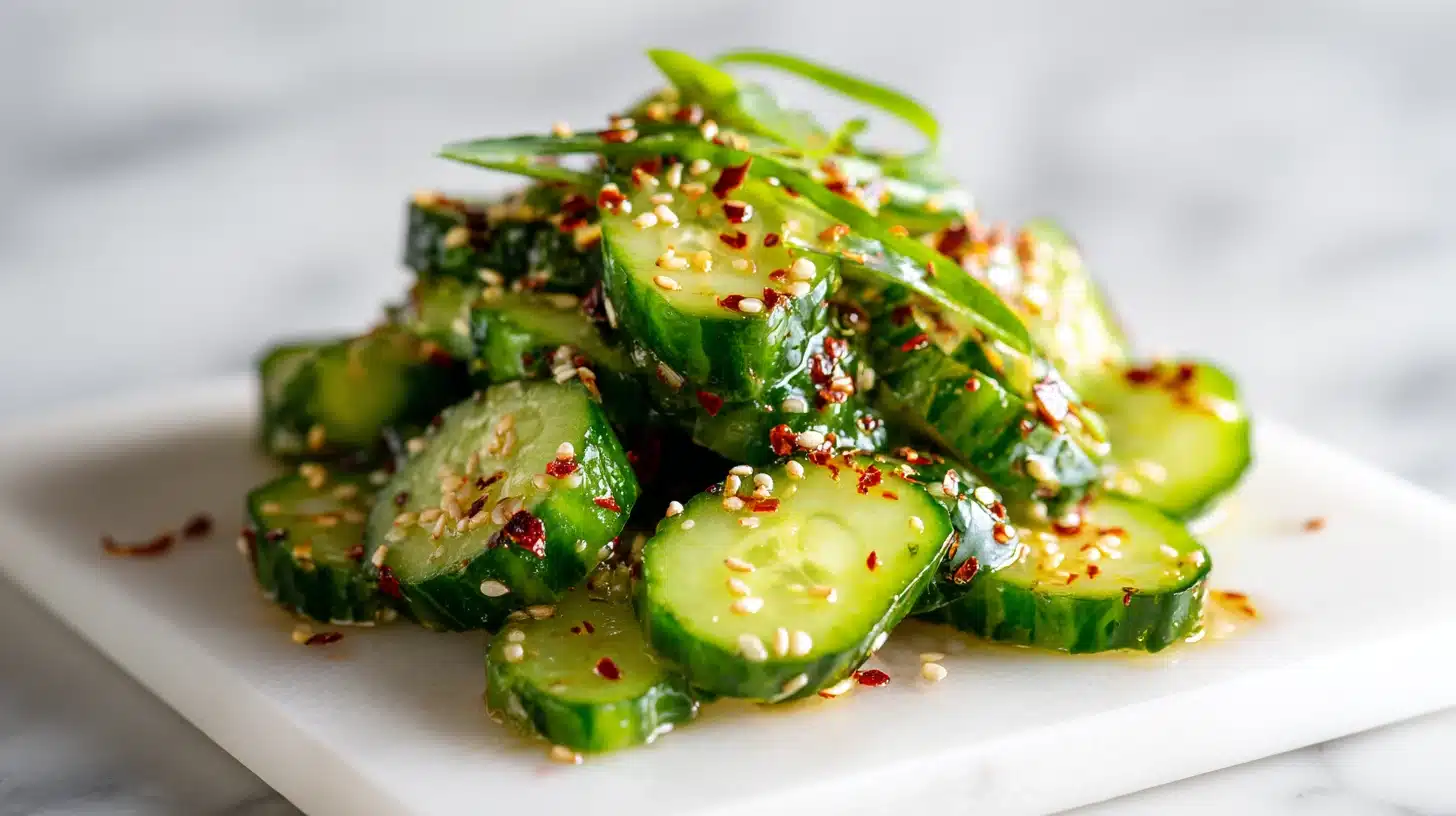
Once you have your cucumbers, the way you cut them matters just as much as the variety you chose. You want irregular, jagged pieces rather than uniform rounds. This traditional technique is often called the smashed cut. You place the flat side of a heavy knife blade over the cucumber and press down firmly with your palm or strike it gently with the side of your fist. The cucumber cracks and splinters into rough, ridged shards. These jagged edges are the secret to a phenomenal spicy cucumber salad because they grab onto the dressing like tiny flavor hooks. Uniform slices feel slippery and smooth, and the vinaigrette slides right off before it ever reaches your tongue.
If you are looking to expand your vegetable side dish rotation, this technique pairs wonderfully with other crisp produce. Our cucumber edamame salad uses a similar approach to keep things green and refreshing. When making your korean cucumber salad, those cracked, bright green pieces covered in a glossy, spicy dressing look as good as they taste. You are creating dozens of tiny crevices for the garlic and sesame oil to pool into, so every single bite is intensely flavorful. This texture is what separates a mediocre side from a side dish that disappears before the main course even hits the table.
Print
The Crispiest Korean Cucumber Salad You Will Ever Make
- Total Time: 5 min
- Yield: 4 servings 1x
- Diet: Vegetarian
Description
A quick and crunchy Korean cucumber salad featuring smashed English cucumbers tossed in a glossy, spicy dressing of soy sauce, garlic, gochugaru, and toasted sesame oil.
Ingredients
For the cucumbers:
2 English cucumbers (or 4 Persian cucumbers)
1 teaspoon kosher salt
For the dressing:
1 tablespoon soy sauce (or coconut aminos)
1 tablespoon rice vinegar
1 teaspoon honey (or sugar)
1 teaspoon toasted sesame oil
2 cloves garlic (minced into a paste)
2 green onions (thinly sliced)
1 teaspoon gochugaru (Korean chili flakes)
1 teaspoon toasted sesame seeds
Instructions
1. Wash the cucumbers and cut them into rough, jagged pieces using the flat side of a heavy knife to smash them before breaking them apart.
2. Place the smashed cucumber pieces in a bowl and sprinkle with kosher salt, tossing to coat them evenly.
3. Let the cucumbers sit for 5 to 10 minutes until visible beads of moisture form on the surface.
4. Gently squeeze the cucumbers with your hands over the sink to expel the excess water without crushing their structure.
5. In a separate small bowl, whisk together the soy sauce, rice vinegar, honey, sesame oil, minced garlic, green onions, gochugaru, and sesame seeds until the honey dissolves.
6. Pour the dressing over the squeezed cucumbers and toss vigorously until every piece is coated in the glossy, spicy mixture.
7. Serve immediately at room temperature or chill for 5 minutes for an even crisper bite.
Notes
Store in the refrigerator for up to 2 days. The salting step ensures the cucumbers retain their crunch without watering down the dressing.
For a gluten free version, substitute the soy sauce with coconut aminos.
If you prefer a thicker, stickier heat, swap the gochugaru for 1 teaspoon of gochujang paste.
- Prep Time: 5 min
- Cook Time: 0 min
- Category: Salads, Side Dishes
- Method: No-Cook
- Cuisine: Asian
Nutrition
- Serving Size: 1 cup
- Calories: 35 kcal
- Sugar: 3 g
- Sodium: 410 mg
- Fat: 2 g
- Saturated Fat: 0 g
- Unsaturated Fat: 2 g
- Trans Fat: 0 g
- Carbohydrates: 5 g
- Fiber: 1 g
- Protein: 1 g
- Cholesterol: 0 mg
The Secret to Unbeatable Crunch
The biggest complaint people have when making a korean cucumber salad at home is the sudden, heartbreaking pool of liquid at the bottom of the bowl. You toss the cucumbers with a beautiful dressing, step away for ten minutes, and return to find a sad, diluted broth. This happens because cucumbers are roughly ninety five percent water. When you add salt and acidic liquids directly to fresh cut cucumbers, osmotic pressure pulls that water out rapidly, flooding your carefully balanced seasonings. The fix is not complicated, but it requires a specific step that many home cooks skip.
You must salt the cucumbers before dressing them. This is a technique rooted in both Korean and Japanese cooking traditions. By tossing your cut cucumber pieces with a generous pinch of kosher salt and letting them sit for just five to ten minutes, you actively draw out that excess moisture on your own terms. You will literally see beads of water pooling on the surface of the bright green shards. After they rest, you take the cucumbers in your hands and give them a firm but gentle squeeze over the sink. You want to expel the liquid without crushing the vegetable structure. What you are left with is a resilient, springy piece of cucumber that acts like a flavor sponge rather than a leaky faucet.
This step is what keeps your korean cucumber banchan crunchy for hours, and sometimes even days, in the refrigerator. The dressing clings to the dry surface of the vegetable, so the flavors intensify rather than dilute. You get a highly concentrated burst of sesame, garlic, and chili in every bite. We use this same osmotic draw trick in our popular cucumber salad recipe to maintain optimal texture. Skipping this step is the single fastest way to ruin a korean cucumber salad. Taking five extra minutes to salt and squeeze your cucumbers guarantees a dish that holds its own on a buffet table or alongside a saucy main course. The snap of the vegetable against your teeth will be audible, and the dressing will coat each piece in a thick, glossy sheen.
Building the Dressing: Sweet, Spicy, and Umami
Now that your cucumbers are prepped and squeezed, it is time to build the soul of the korean cucumber salad. The dressing is a careful balance of salty, sweet, spicy, and nutty. Start with a base of soy sauce or coconut aminos if you are keeping the dish gluten free. Soy sauce provides that deep, salty umami backbone that anchors the brighter ingredients. Next comes rice vinegar, which adds a clean, sharp acidity that makes your mouth water. Unlike heavier vinegars, rice vinegar brightens the dish without overshadowing the delicate flavor of the cucumber itself.
To round out the acidity, you need a touch of sweetness. Honey or fine sugar works perfectly here. The sweetness does not make the dish sugary, but rather tempers the harsh edges of the garlic and the chili heat, bringing everything into a cohesive harmony. Finely minced garlic is a must, and you should grate it or crush it into a paste so it integrates seamlessly into the liquid rather than sitting in sharp chunks. Green onions sliced thin add a sharp, oniony bite and a pop of visual color. For our feta cucumber watermelon salad, we rely on a similar balance of sweet and sharp, but the Korean version leans much heavier into umami.
The spicy component is where you can customize your korean cucumber salad recipe. Gochugaru, the bright red Korean chili flakes, is traditional. It offers a smoky, slightly sweet heat that blooms beautifully in cold dishes. If you prefer a thicker, more aggressive heat with deep fermented undertones, a dollop of gochujang paste works wonders. Just remember that gochujang will turn your dressing a deeper red and add a sticky texture. Finally, the magic ingredient is toasted sesame oil. Just a teaspoon adds an intensely nutty, roasted aroma that instantly signals this is a Korean dish. You will smell the rich, golden sesame oil the second it hits the bowl. Toss everything together until the dark, glossy dressing coats every jagged ridge of the cucumber. Finish with a heavy sprinkle of toasted sesame seeds for a satisfying visual contrast and a gentle crunch.
Serving and Pairing Your Banchan
Your korean cucumber salad is now ready, and understanding how to serve it makes a big difference. In Korean cuisine, this dish is known as oi muchim, which translates to seasoned cucumber. It is a classic banchan, meaning it is served as a small side dish alongside rice, soup, and a main protein. The bright, acidic, and spicy profile of the salad is specifically designed to cut through rich, fatty meats. If you are grilling pork belly or serving braised short ribs, this spicy cucumber salad is the perfect palate cleanser between bites. The cold crunch of the cucumber and the sharp vinegar wake up your taste buds and prepare them for the next rich mouthful.
You do not need to save this dish strictly for Korean meals. It pairs beautifully with almost any grilled protein. Try serving it alongside roasted chicken, pan seared steak, or glazed salmon. The glossy red dressing and bright green shards look gorgeous on a white ceramic plate next to a charred piece of fish. You can even tuck a few pieces into a wrap or a rice bowl for an instant crunch factor. If you are building a grain bowl, this salad adds the exact kind of textural contrast that keeps every bite interesting.
For a full Asian inspired spread, you might enjoy our cold sesame noodles with cucumber edamame as a main course. The noodles are rich and creamy, making the spicy, acidic crunch of the cucumber salad an essential companion. If you are looking to add more fermented sides to your table, our kimchi salad offers a completely different but equally traditional Korean flavor profile. When serving your seasoned cucumber salad, offer it chilled or at room temperature. Keep it in the refrigerator until right before dinner to preserve that aggressive snap. The dish is best enjoyed within the first couple of hours of dressing, but the salting technique means any leftovers will still be crispy the next day.
Frequently Asked Questions
Can you eat Korean cucumber raw?
Yes, Korean cucumbers are entirely edible raw and are actually best enjoyed without any cooking. The entire vegetable, including the dark green skin and the tiny seeds, is tender enough to eat fresh. Cooking them would only destroy the crisp texture and fresh flavor that makes this dish so appealing.
Is the Korean cucumber salad healthy?
This salad is very healthy. Cucumbers are low in calories and high in hydration, while the dressing uses heart healthy sesame oil and antioxidant rich garlic. The only thing to watch is the sodium level from the soy sauce, which you can easily reduce by using a low sodium variety or coconut aminos.
What cucumber to use for Korean cucumber salad?
English cucumbers and Persian cucumbers are the best choices. They have thin, unwaxed skins and minimal seeds, which keeps the salad crisp rather than watery. Standard slicing cucumbers have tough skins and large seed cavities that turn mushy quickly when salted.
Why salt cucumbers before making cucumber salad?
Salting draws out excess moisture through osmosis, preventing the dressing from becoming diluted and watery. It also slightly softens the cellular structure, which helps the cucumber absorb the flavors of the sesame oil, vinegar, and garlic much more efficiently without losing its signature crunch.
Conclusion
A great korean cucumber salad is all about respecting the main ingredient. By choosing the right cucumber, smashing it for better texture, and salting it to lock in the crunch, you guarantee a side dish that stands out on any table.
Give this recipe a try this week. It takes only five minutes of active time, but the crispy, spicy, and nutty results will taste like you spent hours in the kitchen.
For more recipes like korean cucumber salad, follow us on Facebook and Pinterest for quick weeknight dinner ideas.
More recipes in this series: