Cold Sesame Noodles with Cucumber & Edamame were the dish I brought to a summer potluck on a whim, thinking I had nothing impressive to offer, and walked away with zero leftovers and six requests for the recipe.
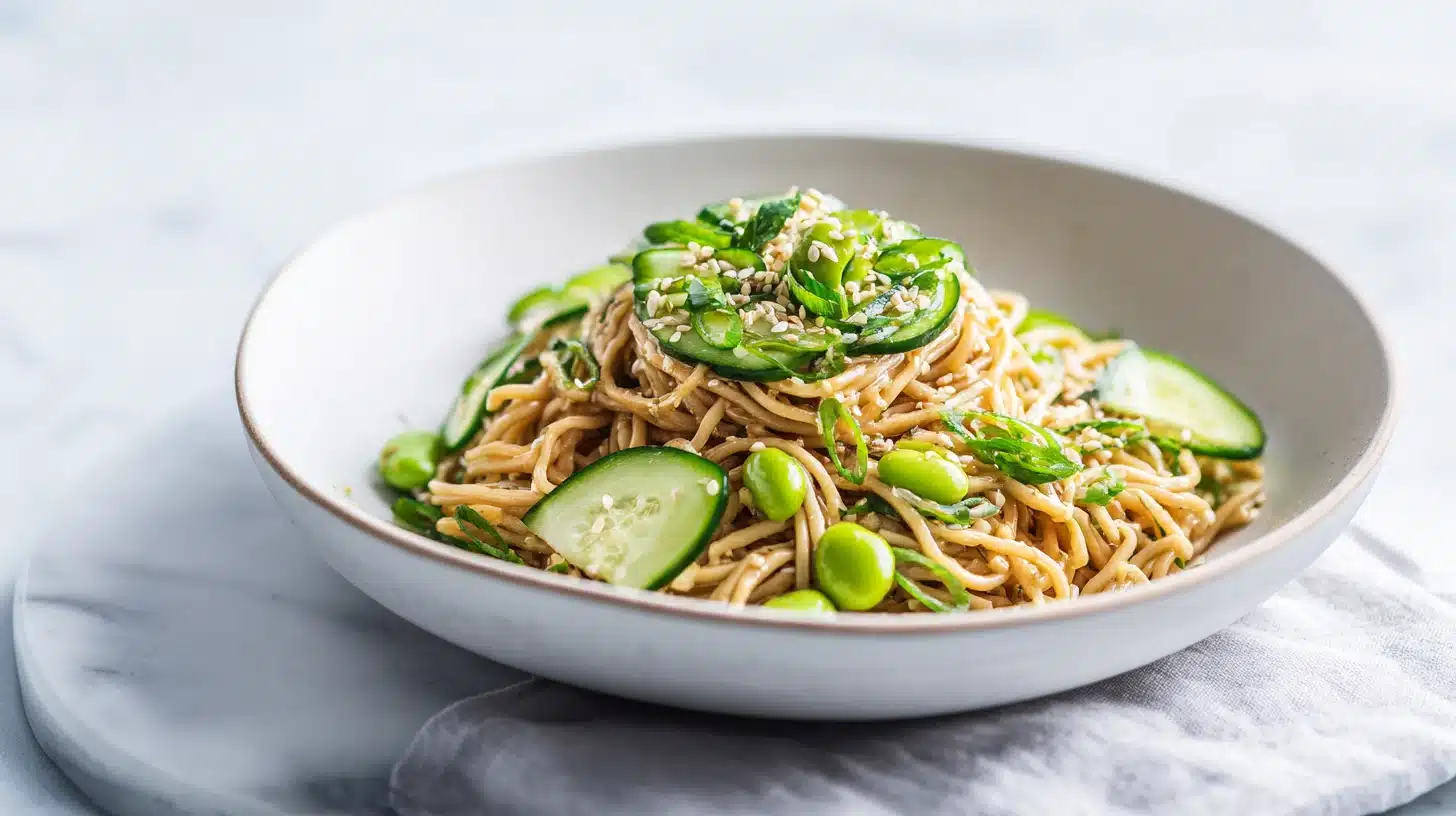
Most cold noodle dishes go wrong the same way: the noodles clump into a gummy brick the moment they cool down, and the sauce turns thick and gloppy rather than silky and cling-worthy. This recipe fixes both problems with one key technique and a sauce ratio that stays loose even after chilling.
Inside: exactly how to cook your noodles so they stay separate and springy, the precise sauce blend that balances tahini richness with bright rice vinegar, and the simple garnish moves that make this dish look like it came from a restaurant.
Table of Contents
Why this cold sesame noodle salad works so well
There is a quiet logic to cold noodle dishes that most recipes skip over. They are not just warm noodles that have been chilled. They are a different animal, and they need to be built with that in mind from the very first step.
The noodle choice matters more than you think
The noodle you pick sets the texture for the whole bowl. Here are the three best options and what each one brings to the dish:
- Lo mein noodles: thick, chewy, and very satisfying. They hold the sauce well and have a slightly toothsome bite that stands up to refrigeration without turning soft.
- Soba noodles: earthy, nutty, and a bit more delicate. They make a chilled soba noodle salad that feels lighter and more refined, with a subtle buckwheat flavor that pairs beautifully with sesame.
- Glass noodles: translucent, slippery, and refreshing. They absorb the sesame sauce deeply and have a springy bounce that is genuinely fun to eat cold.
Each one works. The key difference is texture preference. If you want hearty, go lo mein. If you want light and elegant, soba is your noodle. For something a little different, glass noodles are a great choice (and I have more on cooking those properly in the FAQ section below).
The science behind clump-free cold noodles
Here is the technique that changes everything: right after you drain your cooked noodles, toss them immediately with a small drizzle of toasted sesame oil. This coats each strand before the surface starches can grab onto each other and lock the noodles together.
Then, rinse them under cold running water for a full 30 to 60 seconds. This stops the cooking instantly and washes away the excess surface starch that causes gumminess. Shake the colander firmly, spread the noodles on a sheet pan if you have time, and let a little airflow finish the job.
This two-step process is what separates a springy, separate-stranded cold noodle salad from the sad clumped mass that makes people think they do not like cold noodles. It is worth the extra 90 seconds every single time.
If you love the idea of cold noodle dishes and want to see how a similar approach applies to pasta, the spaghetti cold pasta salad on Forkful Daily uses a comparable rinsing method with great results.
Print
Cold Sesame Noodles with Cucumber & Edamame That Actually Taste Better the Next Day
- Total Time: 50 min
- Yield: 4 servings 1x
- Diet: Vegan
Description
Cold sesame noodles tossed in a smooth tahini and sesame oil sauce with crisp cucumber, bright green edamame, and a drizzle of chili oil. The dish comes together quickly, tastes even better after chilling, and works as a main course or a side.
Ingredients
For the noodles:
8 oz lo mein noodles (or soba noodles or glass noodles)
1 teaspoon toasted sesame oil (to toss noodles after draining)
For the sesame sauce:
3 tablespoons tahini
2 tablespoons toasted sesame oil
3 tablespoons soy sauce (or tamari for gluten-free)
2 tablespoons rice vinegar
1 teaspoon fresh ginger (finely grated)
2 cloves garlic (minced or grated)
1 to 2 teaspoons brown sugar or maple syrup
2 to 3 tablespoons warm water (to thin the sauce)
For the vegetables and garnish:
1 cup shelled edamame (frozen, cooked and cooled)
1 large English cucumber (thinly sliced into half-moons or matchsticks)
1/4 teaspoon salt (to draw water from cucumber)
3 scallions (thinly sliced)
1 tablespoon toasted sesame seeds
1 to 2 teaspoons chili oil or chili crisp (to drizzle)
Instructions
1. Cook the noodles according to package directions until just tender. Drain and immediately rinse under cold running water for 30 to 60 seconds until the noodles feel cool to the touch and no longer sticky.
2. Toss the drained noodles with 1 teaspoon of toasted sesame oil to prevent clumping, then spread on a sheet pan or leave in the colander and let them air-dry for a few minutes.
3. Place the sliced cucumber in a colander, toss with 1/4 teaspoon salt, and let sit for 5 to 10 minutes. Pat dry with a paper towel. The cucumber should look slightly limp but still smell fresh and clean.
4. Cook the frozen edamame in boiling water for 2 to 3 minutes until bright green and just tender. Drain and rinse under cold water until completely cool.
5. Whisk together the tahini, toasted sesame oil, soy sauce, rice vinegar, ginger, garlic, and brown sugar in a medium bowl until smooth. The sauce will tighten before it relaxes. Add warm water one tablespoon at a time, whisking until the sauce is pourable and coats a spoon.
6. Add the cooled noodles to a large bowl and pour two-thirds of the sauce over them. Toss well with tongs, lifting from the bottom, until every strand looks glossy. Add more sauce as needed.
7. Fold in the cucumber and edamame gently and toss once more so they are evenly distributed throughout the noodles.
8. Transfer to a serving bowl or airtight container and refrigerate for at least 30 minutes so the flavors can meld and the garlic mellows.
9. Before serving, top with sliced scallions, toasted sesame seeds, and a drizzle of chili oil. If the sauce has thickened in the fridge, add a splash of warm water and toss again.
Notes
Store leftovers in an airtight container in the refrigerator for up to 3 days. This dish is not suitable for freezing. If the noodles thicken overnight, stir in 1 to 2 tablespoons of warm water before serving.
For a gluten-free version, use 100 percent buckwheat soba noodles or rice noodles, and swap soy sauce for tamari.
For glass noodles, soak in boiling water for 3 to 5 minutes rather than boiling on the stove. Snip with scissors into shorter lengths after draining.
To add protein, toss in shredded rotisserie chicken, sliced tofu, or a soft-boiled egg. The sesame sauce pairs well with all three.
- Prep Time: 10 min
- Rest Time: 30 min
- Cook Time: 10 min
- Category: Dinner, Main Course
- Method: No-Cook, Stovetop
- Cuisine: Asian
Nutrition
- Serving Size: 1 generous bowl (about 1.5 cups)
- Calories: 420 kcal
- Sugar: 5 g
- Sodium: 780 mg
- Fat: 16 g
- Saturated Fat: 2 g
- Unsaturated Fat: 13 g
- Trans Fat: 0 g
- Carbohydrates: 55 g
- Fiber: 5 g
- Protein: 15 g
- Cholesterol: 0 mg
Building the sesame sauce from scratch
The sauce is the heart of this recipe. Get it right and every other element falls into place. Get it wrong and even perfect noodles will taste flat.
The core ingredients
This is a tahini-forward sauce rather than a peanut butter-forward one, which gives it a slightly more savory, complex depth. Here is what goes in and why each ingredient earns its place:
- Tahini (3 tablespoons): the creamy, slightly bitter base. It thickens the sauce and gives it body without making it heavy.
- Toasted sesame oil (2 tablespoons): the aromatic backbone. Do not use plain sesame oil here. The toasted version has a nutty, almost smoky quality that is essential.
- Soy sauce or tamari (3 tablespoons): the salt and umami layer. Tamari is the move if you need the dish to be gluten-free.
- Rice vinegar (2 tablespoons): the brightness. Without acid, a sesame sauce tastes flat and one-dimensional. Rice vinegar is mild enough not to overpower.
- Fresh ginger (1 teaspoon, finely grated): the warmth. Pre-ground ginger is not a substitute here. Fresh ginger has a zingy, almost floral heat that makes the whole sauce feel alive.
- Garlic (2 cloves, minced or grated): the savory depth. Raw garlic gives a sharpness that softens beautifully after 30 minutes of chilling.
- Brown sugar or maple syrup (1 to 2 teaspoons): the balance. Just enough to round out the soy sauce’s salt and the vinegar’s punch.
- Warm water (2 to 3 tablespoons): the consistency tool. Whisk it in a tablespoon at a time until the sauce pours like heavy cream.
Mixing the sauce
Add the tahini, sesame oil, soy sauce, rice vinegar, ginger, garlic, and sweetener to a medium bowl or a jar with a tight lid. Whisk or shake vigorously until completely smooth. The tahini will seize up slightly when it first meets the liquids, which is normal. Keep whisking. It will smooth out.
Add warm water one tablespoon at a time and whisk until the sauce reaches a pourable, slightly fluid consistency. You want it to coat a spoon but still flow easily. It will thicken again once it hits the cold noodles, so err on the side of slightly looser than you think you need.
Taste it before you dress the noodles. It should be savory, a little tangy, faintly sweet, and deeply nutty. Adjust with a splash more rice vinegar if it needs brightness, or a tiny bit more sweetener if the tahini bitterness is too forward.
If you love sesame as a flavor in baked goods too, the sesame yogurt bagels here on Forkful Daily are a great companion recipe to explore.
Preparing the cucumber and edamame
The vegetables in this dish are not an afterthought. The cucumber brings crunch and cool freshness that cuts right through the richness of the sesame sauce, and the edamame adds a mild, grassy protein that makes the whole bowl feel substantial enough for a real meal.
How to prep your cucumber
Use an English cucumber or Persian cucumbers here. Both have thin, tender skin you do not need to peel, and their seed cavities are small. If you are using a regular garden cucumber with thick skin and large seeds, peel it and scoop out the seeds with a small spoon before slicing.
Slice the cucumber into thin half-moons or cut it into matchsticks. Matchsticks give you more surface area and a slightly more elegant look in the finished bowl. Half-moons are faster and perfectly fine for a weeknight version.
After slicing, place the cucumber in a colander, toss it with a small pinch of salt, and let it sit for 5 to 10 minutes. This draws out a bit of the excess water, which means the cucumber will stay crisp inside the dressed noodles rather than releasing liquid that dilutes your sauce. Pat the slices dry with a paper towel before adding them.
This is a technique I also love in a straight cucumber salad recipe where you want maximum crunch from start to finish.
Edamame: frozen is perfect
Shelled frozen edamame is exactly what this recipe calls for. Bring a small pot of water to a boil, add the edamame, and cook for 2 to 3 minutes until just tender and bright green. Drain immediately and rinse under cold water to stop the cooking. The edamame should be vivid green, slightly firm, and smell faintly grassy and sweet when they are done right.
One cup of shelled edamame per four servings adds about 8 grams of protein per serving to the finished dish, which is a meaningful bump for what looks like a vegetable-forward bowl.
Assembling and finishing the dish
With your noodles chilled, sauce whisked, cucumber prepped, and edamame cooked and cooled, the assembly takes about three minutes. This is the moment the whole recipe comes together, and it is genuinely satisfying to watch the sauce fold into the noodles.
Tossing the noodles
Add your cooled noodles to a large mixing bowl. Pour about two-thirds of the sauce over them and toss well with tongs or two large forks, lifting and folding the noodles from the bottom of the bowl to make sure every strand gets coated. The noodles will absorb the sauce quickly, so work with a light hand. Add more sauce as needed until the noodles look glossy and well-dressed but not swimming.
Add the cucumber and edamame and toss gently one more time. You want them distributed throughout without breaking the cucumber slices.
The garnishes that do real work
This is where the dish goes from “good” to “restaurant-worthy” with very little effort:
- Sliced scallions: bright, sharp, and fresh against the rich sauce.
- Toasted sesame seeds: they add a subtle crunch and deepen the sesame flavor even further.
- Chili oil or chili crisp (drizzled over the top): a layer of heat and texture that makes the dish feel complex and exciting. Start with half a teaspoon and go up from there.
- Extra cucumber ribbons on top: a little visual height and freshness.
Chill the assembled dish for at least 30 minutes before serving if you have time. The flavors meld, the garlic mellows, and the sauce soaks more deeply into the noodles. If you are in a rush, 10 minutes in the freezer works in a pinch.
These Asian cold noodles with cucumber and edamame are excellent the next day straight from the fridge. The sauce will have thickened overnight, so add a tablespoon of warm water and toss again before eating.
Frequently asked questions
Can I meal prep these cold sesame noodles ahead of time?
Yes, and honestly they are one of the best meal-prep noodle dishes out there. Cook the noodles, make the sauce, and prep the cucumber and edamame up to 3 days ahead, storing everything separately in the fridge. Toss it all together the morning of the day you plan to eat it. The fully assembled dish keeps well for 2 days, though the cucumber will soften slightly on day two.
Should I remove cucumber seeds before adding them to the noodles?
For English cucumbers and Persian cucumbers, the seed cavity is small and you can leave them in without any issues. For standard garden cucumbers, yes, scoop the seeds out with a small spoon before slicing. Large cucumber seeds hold a lot of water and will release it into the sauce as the dish sits, which dilutes the flavor and makes the noodles soggy around the cucumber pieces.
How can I make this recipe gluten-free?
Swap regular soy sauce for tamari, which is brewed without wheat and tastes nearly identical in this sauce. Use soba noodles made from 100 percent buckwheat (check the label, as many soba brands include wheat flour), or choose rice noodles or glass noodles, both of which are naturally gluten-free. Every other ingredient in this recipe is already gluten-free.
How do you cook glass noodles for a cold salad?
Glass noodles, also called cellophane noodles or mung bean vermicelli, do not need boiling water. Place them in a large bowl, pour boiling water over them, and let them soak for 3 to 5 minutes until they turn translucent and feel tender but still have a slight bite. Drain, rinse under cold water, and use scissors to snip them into shorter lengths so they are easier to toss and eat. Toss immediately with a tiny drizzle of sesame oil to prevent sticking.
Conclusion
Cold Sesame Noodles with Cucumber & Edamame started as my potluck secret weapon. Once you taste how the chilled sesame sauce, crisp cucumber, and bright edamame come together after a proper rest in the fridge, you will understand why the bowl comes home empty every single time. The no-clump noodle technique and the sauce ratio are the two things that make this recipe genuinely reliable rather than hit-or-miss.
Give this a try on Sunday and pack the leftovers for lunch on Monday. You will be glad you made a full batch.
For more recipes like cold sesame noodles with cucumber and edamame, follow us on Facebook and Pinterest for easy Asian-inspired weeknight dinner ideas.