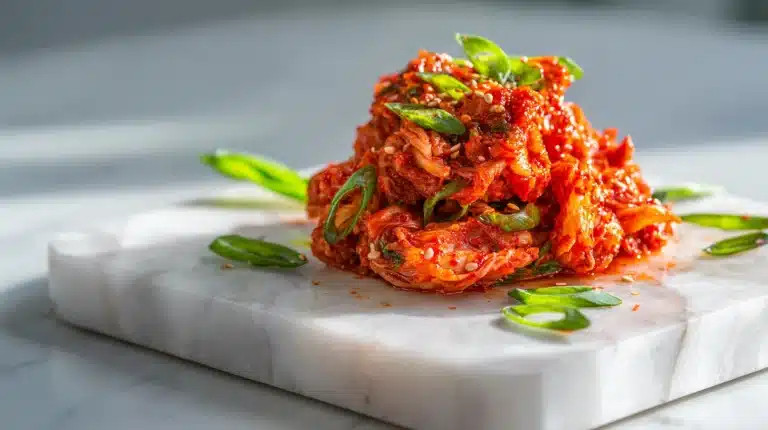
The first time I made a proper kimchi salad, I nearly scraped it into the trash before I ever tasted it, because it looked too simple to be worth serving to anyone.
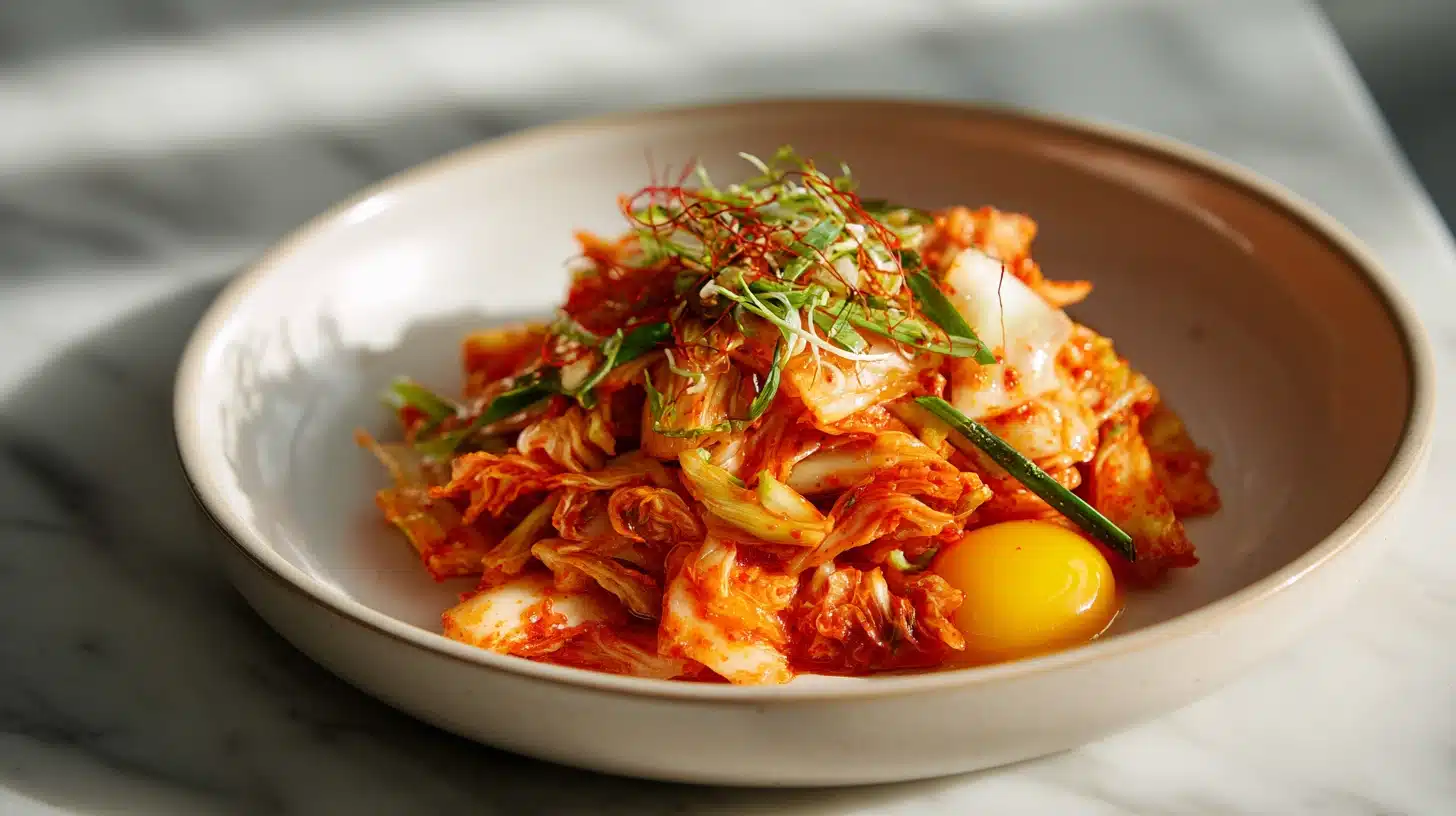
Most people hit a wall with kimchi-based dishes when the kimchi itself turns soupy and limp the second it touches anything else. This recipe solves that by leaning into the liquid as a dressing base rather than fighting it, giving you a salad that only gets more flavorful as it sits.
Inside: the exact technique for balancing kimchi’s punch with a few fresh ingredients, how to build texture that holds up for hours, and three ways to customize the heat level to suit your crowd.
Table of Contents
What Makes a Great Kimchi Salad (And What Most Recipes Get Wrong)
A truly great kimchi salad is more than just a bowl of chopped kimchi with a drizzle of sesame oil. That version exists, and it is fine, but it does not do justice to the potential sitting in that jar in your fridge. The real magic happens when you treat the kimchi as a full participant in the dish, pulling its brine forward as a tangy dressing component, layering in textures that contrast its softness, and adding fresh aromatics that cut through the fermented depth.
The Kimchi Brine Is Your Secret Dressing
The biggest mistake home cooks make is draining the kimchi before tossing it into a salad. That brine is packed with gochugaru heat, garlic, ginger, and a pleasant sourness that no bottled dressing can replicate. For this recipe, you squeeze the kimchi lightly over the bowl so most of the brine drips directly into the salad, then use that liquid as the foundation of your dressing. A teaspoon of sesame oil, a squeeze of lime, and a small spoon of honey or agave round it out beautifully.
Choosing the Right Kimchi
Not all kimchi behaves the same in a salad context. Here is what to look for:
- Older, more fermented kimchi (two weeks to a month in the jar) gives a deeper, sourer flavor and tends to have more brine to work with.
- Fresher kimchi, sometimes labeled “fresh cut” or sold at the deli counter, has a milder, crisper character that works especially well in a cucumber kimchi salad variation.
- Vegan kimchi, made without fish sauce or salted shrimp, is widely available now and produces a vegan kimchi salad with absolutely no compromise on flavor.
If you have never made your own kimchi, the easy homemade kimchi recipe on this site is a genuinely approachable starting point. Having a batch in the fridge means this salad comes together any night of the week.
Texture Is Everything
This dish lives and dies by texture. Kimchi is inherently soft and layered, so you need contrast. Shredded napa cabbage adds extra crunch without competing with the kimchi flavor. Thinly sliced cucumber keeps things cool and crisp. Toasted sesame seeds provide a subtle nuttiness and a little crackle in every bite. Scallions bring a fresh, sharp snap. Together, these elements make a salad that feels complete rather than one-note.
Print
Kimchi Salad: Bold, Tangy, and Ready in 15 Minutes Flat
- Total Time: 15 min
- Yield: 4 servings 1x
- Diet: Vegan
Description
A quick and tangy Korean-inspired salad made with chopped kimchi, shredded napa cabbage, crisp cucumber, and julienned carrot, all tossed in a punchy brine-based dressing. It comes together in 15 minutes with no cooking required. The dressing uses the kimchi’s own brine as its base, so nothing goes to waste and every bite carries deep fermented flavor.
Ingredients
For the salad:
1 cup kimchi (roughly chopped, about 4 oz, brine reserved)
2 cups napa cabbage (thinly shredded)
1 medium cucumber (thinly sliced into half-moons, about 1 cup)
3 scallions (thinly sliced, white and green parts)
1 medium carrot (julienned or grated, about 1/2 cup)
1 tablespoon toasted sesame seeds
For the dressing:
3 tablespoons kimchi brine (reserved from the jar)
1 teaspoon toasted sesame oil
1 teaspoon honey or agave syrup
1 teaspoon soy sauce or tamari
1 teaspoon fresh lime juice
1/2 teaspoon gochugaru or red pepper flakes (optional)
1 small garlic clove (finely grated)
Instructions
1. Prep the kimchi: Remove the kimchi from the jar and hold it over a small bowl, squeezing gently to release the brine. Collect about 3 tablespoons of brine in the bowl. Roughly chop the squeezed kimchi into 1-inch pieces and set aside.
2. Make the dressing: Add the sesame oil, honey or agave, soy sauce, lime juice, grated garlic, and gochugaru if using to the bowl with the brine. Whisk together until combined. The dressing should smell sharp and garlicky with a warm sesame note. Taste and adjust lime or honey as needed.
3. Prep the vegetables: Thinly shred the napa cabbage, slice the cucumber into half-moons, julienne or grate the carrot, and thinly slice the scallions.
4. Combine the salad base: Add the napa cabbage, cucumber, carrot, and scallions to a large mixing bowl. Toss them loosely together with your hands so they are evenly distributed but not compacted.
5. Add kimchi and dress: Add the chopped kimchi to the bowl. Pour the dressing over the top. Toss everything together using tongs or two large spoons, lifting from the bottom so the dressing coats all the vegetables evenly. You should hear a faint crunch as the cabbage shifts.
6. Finish and serve: Scatter the toasted sesame seeds over the top and give the salad one final gentle toss. Taste and add a pinch of salt or an extra squeeze of lime if needed. Serve immediately for the crispest texture, or refrigerate for up to 30 minutes for slightly more melded flavors.
Notes
Store leftover salad in an airtight container in the refrigerator for up to 24 hours. The dressing alone keeps for up to 3 days in a sealed jar in the fridge. This salad is not suitable for freezing as the vegetables lose their texture.
For a vegan kimchi salad, use agave instead of honey and tamari instead of soy sauce. Confirm your kimchi brand is made without fish sauce or salted shrimp.
For a spicy kimchi salad, double the gochugaru and add 1 teaspoon of gochujang paste to the dressing for extra heat and body.
To make ahead for a party, store the tossed vegetable base and the dressing separately in the fridge, then combine no more than 30 minutes before serving to preserve crunch.
- Prep Time: 15 min
- Cook Time: 0 min
- Category: Side Dish
- Method: No-Cook
- Cuisine: Korean
Nutrition
- Serving Size: 1 cup
- Calories: 65 kcal
- Sugar: 4 g
- Sodium: 420 mg
- Fat: 3 g
- Saturated Fat: 0 g
- Unsaturated Fat: 3 g
- Trans Fat: 0 g
- Carbohydrates: 9 g
- Fiber: 2 g
- Protein: 2 g
- Cholesterol: 0 mg
Ingredients You Need for This Recipe
Every ingredient here earns its place. There are no filler items, and the whole list stays short enough to work with whatever is already in your kitchen.
For the Salad Base
- 1 cup kimchi (roughly chopped, about 4 oz, with brine reserved separately)
- 2 cups napa cabbage (thinly shredded)
- 1 medium cucumber (thinly sliced into half-moons, about 1 cup)
- 3 scallions (thinly sliced, white and green parts)
- 1 medium carrot (julienned or grated, about 1/2 cup)
- 1 tablespoon toasted sesame seeds
For the Dressing
- 3 tablespoons kimchi brine (reserved from the kimchi)
- 1 teaspoon sesame oil (toasted)
- 1 teaspoon honey or agave syrup (for a vegan kimchi salad, use agave)
- 1 teaspoon soy sauce or tamari
- 1 teaspoon fresh lime juice
- 1/2 teaspoon gochugaru or red pepper flakes (optional, for extra heat in a spicy kimchi salad)
- 1 small garlic clove (finely grated)
Optional Add-ins
- Sliced avocado for creaminess
- Crispy tofu cubes for protein, inspired loosely by the flavors in tofu kimchi
- Thinly sliced radish for extra crunch and color
- A handful of fresh cilantro or perilla leaves for an herbal lift
The ingredient list is flexible by design. Once you have the core ratio of kimchi to fresh vegetables down, you can swap and add based on what looks good at the market or what is wilting in the crisper drawer.
How to Make Kimchi Salad Step by Step
This is a no-cook recipe, which means your prep work is the entire job. Treat it with care and the results will be noticeably better than a rushed toss.
Step 1: Prep the Kimchi
Remove the kimchi from the jar with tongs or a fork and set it over a small bowl. Squeeze it gently with clean hands or press it against the side of the bowl so the brine drips down. You want about 3 tablespoons of brine for the dressing. Roughly chop the squeezed kimchi into pieces about an inch wide. This size gives you a forkful of kimchi in every bite without overwhelming the other vegetables.
Step 2: Build the Dressing
In the same small bowl with the brine, whisk together the sesame oil, honey or agave, soy sauce, lime juice, grated garlic, and gochugaru if using. Taste it. It should be tangy, slightly sweet, a little salty, and hit you with a gentle warmth at the back of the throat. Adjust lime for more acid or honey for a softer edge. The dressing should smell sharp and a little garlicky with that unmistakable toasted-sesame note threading through it.
Step 3: Combine the Vegetables
In a large mixing bowl, combine the shredded napa cabbage, cucumber, carrot, and scallions. Use your hands to toss them together loosely. This is a quick kimchi salad, not a packed slaw, so keep the mix light and airy rather than pressing everything down.
Step 4: Add the Kimchi and Dress
Add the chopped kimchi to the vegetable bowl. Pour the dressing over the top. Toss everything together using tongs or two large spoons, lifting from the bottom so the dressing coats every layer. You will hear a faint crunch as the napa cabbage shifts in the bowl. That sound is a good sign.
Step 5: Finish and Serve
Scatter the toasted sesame seeds over the top and give the salad one final gentle toss. Taste and adjust seasoning if needed. A pinch of salt or another small squeeze of lime can make a real difference at this stage. Serve immediately for the crispest texture, or refrigerate for up to 30 minutes if you want the flavors to meld slightly. After about an hour, the cabbage softens noticeably, so plan accordingly.
The whole process from jar to table takes about 15 minutes. That includes the time to wash and cut the vegetables, which is the only real work involved.
Serving Ideas, Variations, and Storage Tips
One of the best things about an easy kimchi salad is how well it adapts to whatever you are eating around it. It is not a dish that demands a specific occasion.
What to Serve It With
This salad works beautifully as a side dish alongside grilled meats, sticky rice, or a bowl of kimchi fried rice. It also pairs well with richer, heavier dishes because its tartness cuts through fat and richness the way a great slaw cuts through barbecue.
Serve it in lettuce cups as a light lunch. Spoon it over a grain bowl for a quick weekday meal. Pile it into a sandwich or wrap for a punch of flavor and crunch that turns a plain lunch into something memorable.
Variations Worth Trying
Cucumber Kimchi Salad: Swap the napa cabbage for extra cucumber. Use English or Persian cucumbers, slice them thin, and salt them lightly for 10 minutes before draining. This version is cooler and more refreshing, perfect alongside something spicy or deeply savory.
Spicy Kimchi Salad: Double the gochugaru in the dressing and add a teaspoon of gochujang paste. The paste adds body and a sweet-hot depth that makes the whole salad feel richer without adding any fat.
Vegan Kimchi Salad: Use agave instead of honey, tamari instead of soy sauce, and confirm your kimchi is vegan (check the label for fish sauce or salted shrimp). Every other element is already plant-based.
Protein-Forward Version: Add a soft-boiled egg halved over the top, or toss in 1/2 cup of cooked, cooled edamame. Both additions make this a more substantial meal without changing the character of the salad.
Storage Notes
This kimchi salad is best eaten fresh, within the first hour. If you need to make it ahead, store the dressed salad and the toasted sesame seeds separately in the fridge. The salad base will keep for about 24 hours before the vegetables lose their texture. The dressing can be made up to three days in advance and stored in a small jar in the refrigerator. Give it a quick shake before using.
Avoid freezing. The cucumber and cabbage will become mushy when thawed and will not recover their crunch.
Frequently Asked Questions
Can I use store-bought kimchi, or does it need to be homemade?
Store-bought kimchi works perfectly well here and is what most people will use day to day. Look for a brand that does not contain high-fructose corn syrup or artificial colors, as those versions tend to taste one-dimensional. If you want to try making your own, the easy homemade kimchi recipe on this site is a reliable place to start.
How spicy is this kimchi salad?
The base recipe is mildly spicy, coming mostly from the kimchi itself. If your kimchi is older and more fermented, it will be tangier rather than hotter. The optional gochugaru in the dressing is where you control the heat level. Leave it out for a mild version, double it for a genuinely spicy kimchi salad that will clear your sinuses pleasantly.
Is this recipe gluten-free?
It can be made gluten-free with one simple swap: use tamari instead of regular soy sauce. Tamari is brewed without wheat and has a similar flavor profile. Also confirm that your kimchi brand is gluten-free, as some contain small amounts of wheat-based ingredients in the seasoning paste.
Can I make this salad ahead of time for a party or meal prep?
You can prep all the components ahead and store them separately, which is the best approach for keeping the texture fresh. Chop the vegetables and keep them in a covered container in the fridge. Make the dressing and store it in a small jar. Combine and toss everything together no more than 30 minutes before serving for the best crunch and flavor.
Conclusion
This kimchi salad proves that the most satisfying dishes are often the ones that require the least amount of cooking. The fermented depth of good kimchi, balanced by fresh vegetables and a simple brine-based dressing, creates something that tastes far more complex than its 15-minute prep time suggests.
Give it a try this week as a side dish for dinner or a quick lunch on its own. It is the kind of recipe you will come back to again and again once you realize how fast and flexible it really is.
For more recipes like this, follow us on Facebook and Pinterest for bold and easy Asian-inspired dinner ideas.
Craving more ways to use that jar? Browse all my recipes with kimchi in one place — there is a kimchi dish for every craving.