Kimchi udon was the dish that finally convinced me fermented food belongs in a hot skillet. The moment tangy, aged kimchi hits sizzling bacon fat, it caramelizes into something almost unrecognizable and entirely irresistible.
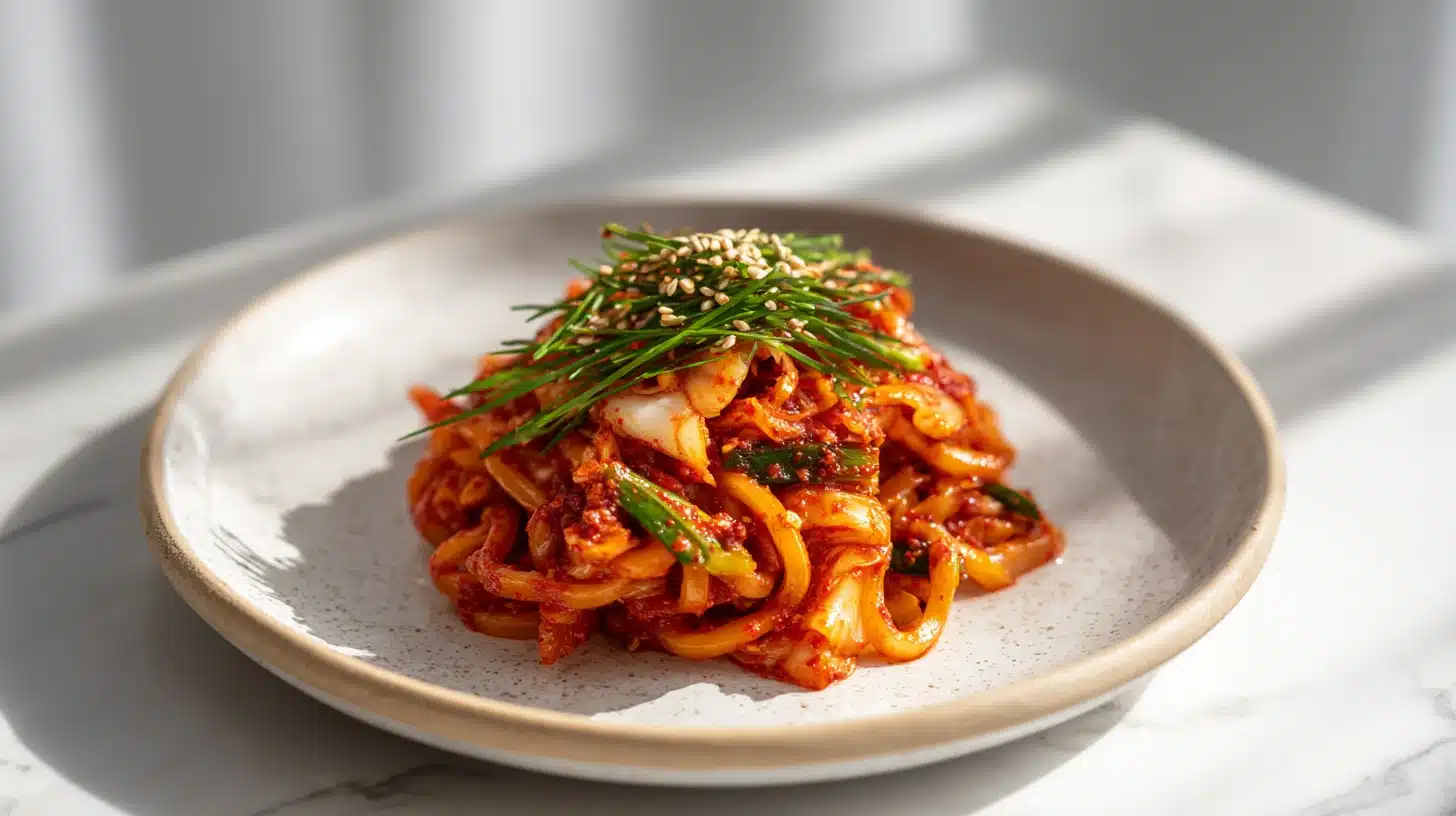
Most udon recipes end up with gummy, clumped noodles drowning in a watery sauce. This recipe fixes that by building the sauce directly in the pan from kimchi juice, gochujang, and a knob of butter that brings everything into a glossy, clingy coating.
Inside: how to choose the right kimchi for maximum flavor, the one technique that keeps your udon silky instead of sticky, and the finishing touch that makes this Korean udon noodle dish taste like it came from a restaurant counter.
Table of Contents
What makes kimchi udon so addictively good
There’s a specific kind of magic that happens when you cook kimchi down in a hot pan. The moisture burns off, the natural sugars concentrate, and the sharpness mellows into something sweet, smoky, and deeply savory. That’s the entire foundation of a great kimchi udon.
The role of aged kimchi
Fresh kimchi is bright, crunchy, and mildly tangy. Aged kimchi, the kind that’s been sitting in your fridge for three weeks or more, is funkier, sourer, and far more complex. For this spicy udon stir fry, aged kimchi is the better choice.
When you cook it down in bacon fat or butter, the acidity tempers and the fermented depth stays behind. The result is a flavor base that tastes like it took hours to build, even though it takes about four minutes on a medium-high burner.
Don’t throw away the kimchi juice. It’s liquid gold here. A few tablespoons stirred into the pan along with soy sauce and a spoonful of gochujang creates the sauce without any additional mixing or prep.
Bacon and pork belly: optional but outstanding
The recipe works without meat, but bacon or pork belly adds a smoky, fatty layer that amplifies every other flavor in the bowl. Cook your bacon or pork belly first, then use the rendered fat as your cooking medium. The kimchi absorbs that smokiness as it caramelizes, and the whole dish takes on a richer, more rounded character.
If you want to keep things vegetarian, swap the bacon fat for a tablespoon of butter and a small drizzle of toasted sesame oil. You’ll still get a deeply savory result, just without the smoke.
Why butter belongs here
Butter in a Korean-inspired dish might seem out of place, but it’s one of the best additions you can make. A tablespoon stirred in off the heat emulsifies the pan sauce, making it coat every strand of udon in a glossy, creamy layer instead of pooling at the bottom of the bowl. Think of it as the same principle behind finishing a pasta sauce: fat binds, smooths, and enriches.
This technique is what separates a good kimchi udon from one you genuinely cannot stop eating. If you enjoy bold, fermented flavors paired with rich, savory sauces, you might also love this tofu kimchi as a side dish alongside this bowl.
Print
Kimchi Udon: The Spicy, Buttery Stir Fry You’ll Make on Repeat
- Total Time: 15 min
- Yield: 2 servings 1x
Description
Kimchi udon is a fast Korean-inspired stir fry made with thick udon noodles, caramelized aged kimchi, gochujang, and butter. The noodles soak up a spicy, tangy pan sauce and the whole bowl comes together in about 15 minutes. It is rich, bold, and satisfying with very little cleanup.
Ingredients
For the noodles:
2 portions fresh or frozen udon noodles (about 7 oz each)
For the stir fry:
2 strips bacon (sliced into 1/2-inch pieces)
1/2 cup aged kimchi (roughly chopped, juice reserved)
3 tablespoons kimchi juice (from the jar)
3 cloves garlic (minced)
1 tablespoon gochujang (Korean chili paste)
1 tablespoon low-sodium soy sauce
3 tablespoons water
1 tablespoon unsalted butter
1 teaspoon toasted sesame oil
For topping:
2 egg yolks (one per bowl)
2 green onions (thinly sliced)
1 teaspoon sesame seeds
Instructions
1. Cook the udon noodles in a pot of boiling water according to package instructions, about 2 minutes for fresh or 3 to 4 minutes for frozen. Drain and rinse under cold water, then set aside.
2. Cook the bacon pieces in a wide skillet over medium heat for about 4 minutes until the fat renders and the edges are golden and crisp. Remove the bacon with a slotted spoon and leave the fat in the pan.
3. Turn the heat to medium-high. Add the chopped kimchi and kimchi juice to the bacon fat. Let it cook undisturbed for 90 seconds until the bottom begins to caramelize and smells slightly sweet and nutty.
4. Stir the kimchi once, then add the minced garlic. Cook for 30 seconds until fragrant.
5. Add the gochujang, soy sauce, and water. Stir everything together to form a loose sauce. The pan should sizzle and the sauce will turn a deep reddish-orange.
6. Add the drained udon noodles to the skillet and toss continuously over medium-high heat for about 2 minutes until the noodles are coated in the sauce and heated through.
7. Turn off the heat. Add the butter and sesame oil. Toss the noodles for 30 seconds as the butter melts into a glossy coating.
8. Divide the noodles between two bowls. Top with the reserved crispy bacon, sliced green onions, and sesame seeds. Place one raw egg yolk in the center of each bowl. Stir the yolk into the hot noodles before eating.
Notes
Store leftovers in a sealed container in the refrigerator for up to 2 days. Reheat in a skillet over medium heat with a splash of water, stirring constantly for about 2 minutes. Not recommended for freezing.
For a vegetarian version, skip the bacon and use 1 tablespoon of neutral oil plus an extra knob of butter in its place.
Use aged kimchi (fermented 2 to 3 weeks or more) for the best caramelized flavor. Fresh kimchi will work but the depth of flavor will be milder.
To reduce the spice level, cut the gochujang to 1/2 tablespoon and add a small drizzle of honey to balance the acidity.
- Prep Time: 5 min
- Cook Time: 10 min
- Category: Dinner, Main Course
- Method: Stovetop
- Cuisine: Korean
Nutrition
- Serving Size: 1 bowl
- Calories: 620 kcal
- Sugar: 5 g
- Sodium: 980 mg
- Fat: 28 g
- Saturated Fat: 10 g
- Unsaturated Fat: 18 g
- Trans Fat: 0 g
- Carbohydrates: 72 g
- Fiber: 4 g
- Protein: 22 g
- Cholesterol: 215 mg
Ingredients and how to pick each one
Getting the right ingredients is less about hunting down specialty items and more about knowing what to look for in everyday options. Most of what you need is probably already in your kitchen or available at any grocery store.
Udon noodles
You have three format options: fresh, frozen, and dried. Fresh udon, often sold in vacuum-sealed packets in the refrigerated section, has the best texture. The noodles are thick, chewy, and cook in about two minutes in boiling water. Frozen udon is almost as good and comes in individual portions, which makes measuring easy. Dried udon works in a pinch but tends to be thinner and softer once cooked.
For a stir fry, you want noodles that hold their shape under high heat and toss well in the pan. Fresh or frozen win every time. If your fresh noodles are clumped together, loosen them gently under warm running water before they go into the pan.
Kimchi
Look for kimchi that has been fermenting for at least two to three weeks. The label might say “well-fermented” or the liquid inside the jar will appear deeper in color and more bubbly than fresh-packed kimchi. Napa cabbage kimchi (baechu-kimchi) is the standard, and it’s what this recipe is built around. Don’t forget to reserve the juice when you scoop it out.
Gochujang
Gochujang is a Korean fermented chili paste with a flavor that’s spicy, slightly sweet, and earthy all at once. One to two tablespoons is the standard range for this recipe. If you’re sensitive to heat, start with one tablespoon and taste as you go. Gochujang isn’t as sharp as fresh chili or hot sauce, so it adds warmth rather than fire.
The rest of the lineup
| Ingredient | Amount | Purpose |
|---|---|---|
| Soy sauce (low-sodium) | 1 tablespoon | Saltiness and umami depth |
| Garlic (minced) | 3 cloves | Aromatic base |
| Sesame oil (toasted) | 1 teaspoon | Nutty finish |
| Butter | 1 tablespoon | Sauce creaminess |
| Egg yolk | 1 per bowl | Rich, velvety topping |
| Green onions | 2 stalks | Fresh contrast and color |
The egg yolk is stirred in right at the table or just before serving. It melts into the hot noodles and adds a richness that rounds out the spice beautifully. Think of it as the finishing note that makes the whole dish feel complete.
How to make kimchi udon step by step
The entire dish comes together in one skillet in about ten minutes of active cooking. The key is having everything ready before you turn on the heat, because the process moves quickly.
Step 1: Cook the noodles
Bring a medium pot of water to a boil. Cook your udon according to the package instructions, typically 2 minutes for fresh and 3 to 4 minutes for frozen. Don’t overcook them. You want the noodles slightly underdone because they’ll finish cooking in the skillet. Drain them and rinse briefly under cold water to stop the cooking, then set aside.
Step 2: Render the bacon
Slice two strips of bacon into small pieces and cook them in a wide skillet over medium heat until the fat renders and the edges turn golden and crisp. This takes about 4 minutes. Remove the bacon with a slotted spoon and leave the fat in the pan. That fat is your flavor base.
Step 3: Caramelize the kimchi
Turn the heat up to medium-high. Add about half a cup of chopped aged kimchi and a few tablespoons of kimchi juice to the bacon fat. Let it sizzle and cook without stirring for about 90 seconds. You want the kimchi to develop a little color on the bottom of the pan. It should smell nutty and slightly sweet as the sugars caramelize. Then stir once, add your minced garlic, and cook for another 30 seconds until fragrant.
Step 4: Build the sauce and add noodles
Add the gochujang and soy sauce directly to the pan and stir to combine with the kimchi. Add a splash of water (2 to 3 tablespoons) to loosen the mixture into a sauce. Drop in the drained udon noodles and toss everything together over medium-high heat for about 2 minutes. The noodles will absorb the sauce and take on a deep reddish color.
Step 5: Finish with butter and sesame oil
Turn off the heat. Add the tablespoon of butter and the teaspoon of sesame oil. Toss the noodles continuously for about 30 seconds as the butter melts and coats everything. This is the moment the sauce transforms from spicy and sharp to glossy and rounded. You can read more about the flavors in a dish like this by checking out the kimchi jjigae recipe for context on how Korean fermented flavors behave with heat.
Step 6: Serve and top
Divide the noodles between two bowls. Top with the reserved crispy bacon, sliced green onions, and a raw egg yolk nestled in the center of each bowl. Serve immediately and stir the yolk into the hot noodles before eating.
Variations, tips, and serving ideas
Once you’ve made kimchi udon once, you’ll start seeing ways to make it your own. The base recipe is flexible enough to take on new proteins, swap in different heat levels, and pair with a range of side dishes.
Protein swaps
- Pork belly: Slice thinly and sear in the dry pan before removing and adding the kimchi. It gives a richer result than bacon with a slightly more tender bite.
- Shrimp: Toss peeled shrimp into the pan after the kimchi caramelizes and cook for two minutes per side before adding the noodles.
- Ground beef: Brown a quarter pound of ground beef in the skillet first, drain most of the fat, and proceed with the kimchi step. For a heartier Korean-inspired protein bowl, the high protein korean beef bowl is a great companion recipe to keep in your rotation.
- No meat: Skip the bacon entirely and use a tablespoon of neutral oil plus extra butter for richness.
Heat level adjustments
The spice in this kimchi udon noodle dish comes from two sources: the kimchi itself and the gochujang. To dial up the heat, add a teaspoon of gochugaru (Korean chili flakes) along with the gochujang. To cool things down, reduce the gochujang to half a tablespoon and add a small drizzle of honey to balance the acidity without losing the overall flavor profile.
Make it a full meal
Kimchi udon is satisfying on its own, but a couple of well-chosen sides turn it into a complete spread.
- A simple cucumber salad dressed with rice vinegar and sesame seeds cuts through the richness.
- Soft-boiled eggs marinated in soy and mirin add another protein element and look beautiful on the side.
- A bowl of miso soup keeps the overall meal feeling light and balanced.
Storage and reheating
Leftover kimchi butter udon stores well in the refrigerator for up to two days in a sealed container. The noodles will absorb more sauce as they sit, so add a small splash of water when reheating in a skillet over medium heat. Stir constantly and the noodles will come back to life in about two minutes. Avoid microwaving if you can, as it tends to make udon gummy and uneven.
A note on portion size
This recipe makes two generous bowls. If you’re cooking for one, the leftovers reheat well as described above. If you’re scaling up to four servings, use a large wok or the widest skillet you own to keep the noodles from steaming instead of stir-frying. Crowded noodles lose their chewy texture.
Frequently asked questions
What is kimchi udon?
Kimchi udon is a Korean-inspired stir fry made with thick udon noodles and caramelized kimchi cooked together in a skillet. The sauce typically includes gochujang, soy sauce, sesame oil, and butter, creating a dish that’s spicy, tangy, rich, and deeply savory all at once. It can be made with or without meat and is ready in about 15 minutes.
What does kimchi udon taste like?
The flavor is bold and layered. The kimchi brings a funky, sour depth that mellows and sweetens as it cooks. Gochujang adds earthy warmth and a subtle sweetness. Butter and sesame oil round out the edges, making the overall taste rich without feeling heavy. The egg yolk stirred in at the end adds a silky, mellow note that ties everything together.
Does kimchi go well with udon?
It pairs exceptionally well. Udon noodles are thick, chewy, and mild in flavor, which makes them a natural base for bold sauces. The noodles absorb the tangy, spicy kimchi sauce without being overpowered, and their heft stands up to high-heat stir frying without breaking apart. The combination is balanced, with the noodles providing substance and the kimchi providing nearly all the flavor complexity.
Is kimchi udon really spicy?
It’s spicy but not punishing. The heat level sits somewhere between a mild curry and a spicy pasta, with warmth that builds gradually rather than hitting all at once. The butter and egg yolk actively moderate the spice. If you’re heat-sensitive, reducing the gochujang to half a tablespoon and using a smaller amount of kimchi juice brings the dish well within a comfortable range while keeping all the flavor intact.
Conclusion
Kimchi udon proves that one of the most satisfying bowls you can put together on a weeknight takes almost no time and almost no effort. The trick is trusting the ingredients: aged kimchi caramelized in bacon fat, a spoonful of gochujang, a knob of butter, and thick udon noodles that soak up every bit of that glossy, spicy sauce.
Give it a try this week, especially on a night when you want something bold without a lot of cleanup. It might become your new default for fast, flavorful dinners.
For more recipes like kimchi udon, follow us on Facebook and Pinterest for easy weeknight dinner ideas.
Craving more ways to use that jar? Browse all my recipes with kimchi in one place — and if you want to ferment your own, the easy homemade kimchi recipe is where to start.