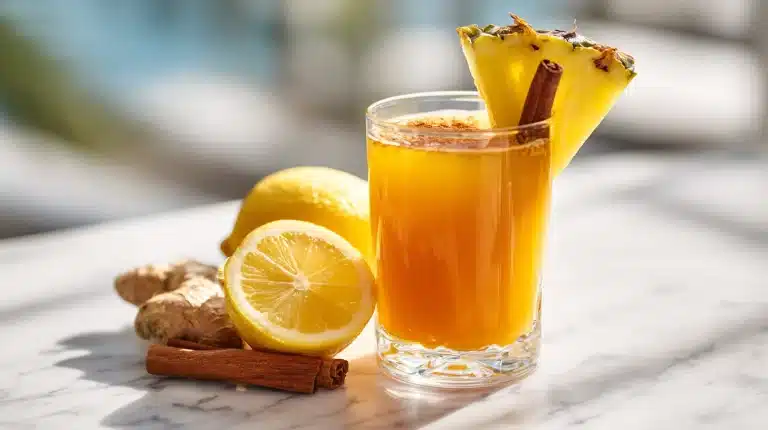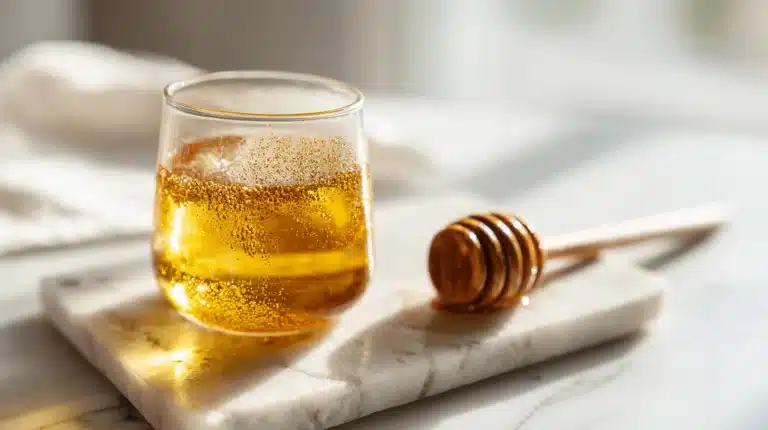
My grandmother stirred raw honey into warm water every single morning for forty years, long before anyone called it the asian honey protocol. She swore it kept her mind sharp. I loved her for it, and I still make the drink – but I want to be straight with you from the first line: there is no evidence that honey water protects memory, and her sharpness was hers, not the honey’s.
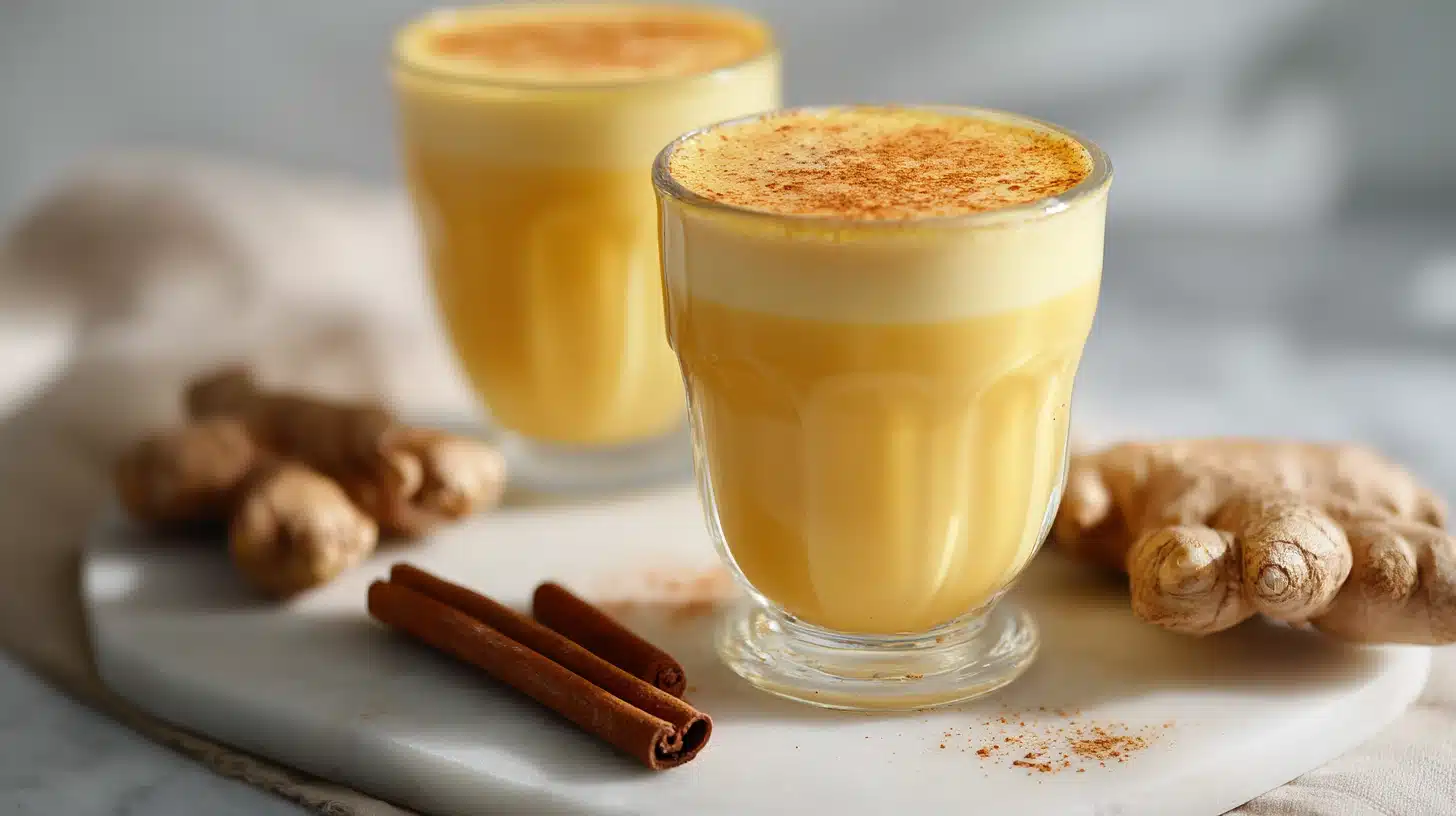
Most honey drinks fall flat because the water is too hot, which scalds the aroma, or the honey is processed and has little flavour left. This version fixes both with a precise temperature range and the right honey choice.
Here is what you will get: the exact water temperature that keeps raw honey tasting the way it should, the right honey to choose, an honest account of what the research does and does not show, and a morning ritual that takes under sixty seconds.
Table of Contents
What is the Asian honey protocol?
The asian honey protocol is a simple daily practice. You combine raw honey with warm water and optional spices like cinnamon and ginger, then drink it first thing in the morning on an empty stomach. The word “protocol” is intentional here. This is a structured, repeatable morning ritual, not something you grab on the way out the door. It is a small, repeatable habit – and that is all it claims to be.
The roots of this practice stretch across multiple Asian cultures. In traditional Chinese medicine, honey is classified as a nourishing sweet that supports the spleen and stomach while calming the mind. Ayurvedic practice from India recommends warm honey water on an empty stomach to balance digestion and clear mental fog. Korean households have long relied on honey and ginger combinations for sore throats, sustained energy, and mental clarity. What unites these traditions is a shared belief that honey, consumed mindfully and daily, does something real for both body and brain.
Why “Protocol” and not just “Recipe”
Modern interest in the asian honey protocol surged when honey’s polyphenol content started circulating online, usually stripped of every caveat the original research carried. The protocol framing is about repetition and routine, not about a compounding health effect. One glass of honey water will not transform your memory, and neither will thirty.
The protocol is deliberately minimal. One tablespoon of raw honey, three quarters of a cup of warm water, a pinch of cinnamon, a pinch of ginger, and sixty seconds of your morning. No blender, no supplements, no expensive powders. Just real food and a consistent habit. When something takes less than a minute to prepare, you are far more likely to stick with it day after day. That consistency is the entire point – the habit is the benefit here, not a physiological effect.
If you have tried a basic honey trick recipe before, this protocol builds on the same foundation but adds structure, specific temperature guidance, and optional spices.
Print
The Asian Honey Protocol: A 60-Second Morning Honey Drink
- Total Time: 1 min
- Yield: 1 serving 1x
- Diet: Gluten Free
Description
A simple morning drink of raw honey, warm water, cinnamon and ginger. Sixty seconds, no equipment.
Ingredients
For the honey water:
1 tbsp raw honey (unpasteurized, unfiltered)
3/4 cup warm water (105 to 115 degrees F)
1/4 tsp ground Ceylon cinnamon
1/4 tsp ground ginger (or 1 small piece fresh ginger, grated)
Optional premium substitute:
1 tbsp manuka honey (UMF 10+ or higher, substitute for raw honey)
Instructions
1. Heat 3/4 cup filtered water to 105 to 115 degrees F. If using a kettle that boils, let the water sit off heat for 5 minutes. The water should feel warm on your wrist but never hot enough to sting.
2. Pour the warm water into a mug and add 1 tablespoon of raw honey. The honey will sit at the bottom in a thick golden pool.
3. Stir gently until the honey is fully dissolved. You will see golden ribbons swirl through the water before it turns a pale, translucent gold.
4. Add 1/4 teaspoon ground Ceylon cinnamon and 1/4 teaspoon ground ginger (or a small piece of freshly grated ginger root).
5. Stir again. A thin aromatic film of cinnamon will form on the surface and the drink will smell floral and warm.
6. Drink slowly on an empty stomach, ideally within 15 minutes of waking. The flavor should be delicate and sweet with a gentle warmth from the ginger and a hint of spice from the cinnamon.
Notes
Store raw honey at room temperature in a sealed jar. Do not refrigerate.
Keep the water between 105 and 115 degrees F – hotter water scalds the aroma out of raw honey.
If you cannot find Ceylon cinnamon, cassia works but use a smaller amount (1/8 tsp) due to its higher coumarin content.
This is a warm drink, not a treatment for any condition.
- Prep Time: 1 min
- Cook Time: 0 min
- Category: Drink
- Method: No-Cook
- Cuisine: Asian
Nutrition
- Serving Size: 1 cup
- Calories: 64 kcal
- Sugar: 17 g
- Sodium: 5 mg
- Fat: 0 g
- Saturated Fat: 0 g
- Unsaturated Fat: 0 g
- Trans Fat: 0 g
- Carbohydrates: 17 g
- Fiber: 0 g
- Protein: 0 g
- Cholesterol: 0 mg
What the research actually says
Honey does contain polyphenols and flavonoids – chrysin, galangin and pinocembrin among them – and these show antioxidant activity in the laboratory (review of honey and human health). That is a real finding, and it is where every viral claim about this drink begins. It is also where the evidence stops.
The leap people make next is the problem. Antioxidant activity in a test tube is not the same as protecting neurons in a living person, and no clinical trial has shown that drinking honey water affects memory, cognitive decline or Alzheimer’s risk. Anyone telling you otherwise is selling the gap between those two things.
Polyphenols, flavonoids, and the leap people make
You will see claims that honey’s polyphenols cross the blood-brain barrier and protect neural tissue. Those mechanisms are proposed from cell and animal studies, at doses unrelated to a spoonful in a mug, and they have not been demonstrated to produce any cognitive benefit in humans.
Manuka honey, produced in New Zealand from the nectar of the manuka tree, contains methylglyoxal and is prized for its distinctive flavour and antibacterial properties. It costs several times more than good raw honey and there is no reason to expect it to do anything extra in this drink.
Cinnamon and ginger are here for flavour, and they earn their place on that basis alone. You will see cinnamaldehyde and gingerol cited for neuroprotective or anti-inflammatory potential, but those are laboratory findings, not reasons to expect anything from a pinch in your mug.
The honey trick recipe for memory explores a similar angle, and the scientific overlap with this protocol is significant. Honey is food, not a cure or a pharmaceutical drug. But it is food with a complex chemical profile, and when you consume it daily in a form that preserves those compounds rather than destroying them with heat, you give your brain a small, consistent dose of protective antioxidants.
Choosing your ingredients
The quality of your ingredients directly determines how much benefit you get from this protocol. This is not the place for the squeeze bear of clover honey from the baking aisle. Here is what to look for and why each choice matters.
Raw honey: the non-negotiable
Raw honey is honey that has not been pasteurized or filtered at high temperatures. Pasteurization strips out much of the aroma and flavour that makes good honey worth buying. When you heat honey above 118 degrees Fahrenheit, you begin to degrade the diastase enzyme and reduce the polyphenol content significantly. Raw honey is cloudy, sometimes crystallized, and often sold in jars rather than squeeze bottles. Look for honey labeled “raw” and “unfiltered” from a local beekeeper if possible. The variety of floral sources in local honey means a broader spectrum of flavonoids and antioxidants.
Warm water: temperature matters more than you think
The single most common mistake people make is using water that is too hot. Boiling water destroys the enzymes and degrades the polyphenols in raw honey. The sweet spot is between 105 and 115 degrees Fahrenheit. At that temperature, honey dissolves easily, the drink is pleasantly warm, and the bioactive compounds survive intact. If you do not have a thermometer, let boiled water sit for about five minutes before adding honey. The water should feel warm on your wrist but not hot enough to sting.
Cinnamon and ginger: optional but recommended
Ceylon cinnamon, sometimes called “true cinnamon,” is preferable to cassia cinnamon because it contains lower levels of coumarin, a compound that can be harmful in large doses over time. Ground Ceylon cinnamon is widely available online and in spice shops. For ginger, fresh is ideal. Grate a small piece, about the size of a pea, directly into the drink. Ground ginger works if that is what you have on hand. The korean honey ritual uses a similar spice-and-honey combination worth exploring.
At-a-glance comparison
| Version | Honey Type | Add-ins | Key Benefit | Cost per Serving |
|---|---|---|---|---|
| Classic Protocol (This Recipe) | Raw honey | Cinnamon + ginger | Warmest, most rounded flavour | $0.50 to $0.75 |
| Plain Honey Water | Raw honey | None | Simplest; lets the honey taste come through | $0.40 to $0.50 |
| Premium Manuka Protocol | Manuka (UMF 10+) | Cinnamon + ginger | Distinctive, medicinal-tasting; much pricier | $2.00 to $3.50 |
The classic version hits the best balance of cost and flavour. The plain version is fine if you are sensitive to spices or just starting out. The manuka version tastes distinctive but costs roughly four times as much per serving, and it will not do anything extra for you. If you enjoy cooking with honey beyond drinks, the fermented honey garlic recipe is a great way to preserve honey’s benefits in a savory format.
How to prepare your morning honey drink
The actual preparation is almost absurdly simple, but the details matter enormously. Here is the step-by-step process that preserves the maximum number of beneficial compounds in every cup.
The step-by-step method
Start by heating your water. Pour about three quarters of a cup of filtered water into a small saucepan or kettle. Heat it until it reaches 105 to 115 degrees Fahrenheit. If you are using a kettle that boils water, let it sit off the heat for five minutes after boiling. The water should feel warm to the touch but not hot enough to make your fingers uncomfortable when you hold the mug.
Pour the warm water into your favorite mug. Add one tablespoon of raw honey. Stir gently with a spoon until the honey is fully dissolved. You will see the honey spiral through the water in golden ribbons before blending completely. The color should be a pale, translucent gold, not dark or murky. If the color is dark, your honey may be over-processed or your water may be too hot.
Add a quarter teaspoon of ground Ceylon cinnamon and a quarter teaspoon of ground ginger, or a small piece of freshly grated ginger root about the size of a pea. Stir again. The cinnamon will create a thin, aromatic film on the surface that catches the light. The ginger adds a warm, slightly peppery note that balances the sweetness of the honey beautifully.
What you will notice
The drink should smell floral and warm, with a faint spice from the cinnamon and ginger that rises with the steam. The texture is smooth and slightly viscous from the honey, but it is not syrupy or thick. The flavor is delicate and pleasant, not cloying or overly sweet. You are drinking water that has been subtly transformed by honey and spice, not a heavy syrup.
Drink it slowly on an empty stomach, ideally within fifteen minutes of waking. Sipping slowly helps your body absorb the sugars gradually, avoiding a blood sugar spike. The warmth is soothing and helps your digestive system ease into the day. If you prefer a version for the evening, the honey cinnamon bedtime drink uses the same principles but is optimized for sleep support rather than morning focus.
Common mistakes to avoid
The three most common mistakes are using water that is too hot, using processed honey instead of raw, and adding honey to boiling water then letting it cool. All three flatten the aroma and flavour that make good raw honey worth buying. Another mistake is using too much honey – one tablespoon is plenty, and it is still sugar.
Timing, consistency, and pairings
Think of this as a morning habit rather than a health intervention. One cup will not change your life, and neither will thirty – what thirty mornings will give you is a small, pleasant ritual, which is a real thing worth having on its own terms.
When to drink it
The optimal window is within fifteen to thirty minutes of waking, before you eat or drink anything else. Your stomach is empty, which means the honey’s compounds are absorbed quickly and efficiently without competing with other foods. The warm water rehydrates you after a night of sleep, and the honey provides a gentle source of glucose that your brain can use immediately. Your brain runs primarily on glucose, and after eight hours of sleep, it is ready for a small, steady supply rather than a jolt of caffeine.
Building the habit
Habit stacking is the most reliable way to make this stick. Attach the protocol to something you already do every morning without fail. If you make coffee, make the honey water first and drink it while the coffee brews. If you feed a pet, make the honey water while the pet eats. If you stretch or meditate, drink it right after. What works is putting the honey jar, a mug, and a spoon in the same visible spot every night before bed so the friction in the morning is zero. When the ingredients are already on the counter waiting for you, the protocol feels effortless.
What to pair it with
The protocol works well alongside other morning habits. A cup of cinnamon tea recipe is a natural companion if you want a second warm drink. If you practice intermittent fasting, the honey water will technically break your fast because of the sugar content, but the amount is small enough that the cognitive benefits often outweigh the concern for most people who are not strict about clean fasting.
What to expect
Honestly? You will notice that you like it, or you will notice that you do not. That is the whole of it. If what you actually want is to look after your thinking as you age, the National Institute on Aging points to regular physical activity, managing blood pressure and diabetes, sleeping well, staying socially connected, and mentally demanding activities. Those have evidence behind them. This drink does not.
Variations and adjustments
If you find the cinnamon too strong, halve the amount for the first week and build up gradually. If fresh ginger is too pungent, use ground ginger instead, which has a milder, more rounded flavor. If raw honey is hard to find locally, manuka honey is an excellent substitute, though more expensive. You can also adjust the water temperature slightly cooler in summer months for a more refreshing drink, but never exceed 115 degrees Fahrenheit. That threshold is the difference between a drink that delivers antioxidants and one that delivers empty sugar.
Frequently asked questions
What is the Asian honey protocol recipe?
The asian honey protocol recipe is a simple morning drink made by dissolving one tablespoon of raw honey in three quarters of a cup of warm water, with optional cinnamon and ginger for flavour. Keep the water between 105 and 115 degrees Fahrenheit so you do not scald the aroma out of the hnzymes and polyphenols. It is consumed on an empty stomach first thing in the morning for maximum absorption.
What is the 7 second honey ritual?
The 7-second honey ritual is a simplified version of the honey protocol that emphasizes speed and simplicity above all else. The idea is that stirring honey into warm water takes roughly seven seconds, making it one of the fastest wellness habits you can build into your morning. The protocol builds on this concept by adding specific temperature guidance and optional spices for extra antioxidant benefits.
Does the honey trick do anything for memory?
It does not. Raw honey contains polyphenols with antioxidant activity in the lab, but no clinical trial shows that drinking it affects memory, cognitive decline or dementia risk. For cognitive health the National Institute on Aging points to exercise, blood pressure and diabetes control, sleep and social connection. If you have noticed real memory changes, see a doctor – several causes are treatable.
What are the three ingredients in the honey trick?
The three core ingredients are raw honey, warm water, and cinnamon. Some versions add ginger as a fourth ingredient for its warmth. The honey provides the sweetness, the warm water carries it, and the cinnamon adds warmth and aroma. That is genuinely all the drink is doing – it is pleasant, not medicinal. and anti-inflammatory compounds that complement the honey.
Can I drink the Asian honey protocol every day?
Yes, the asian honey protocol is designed for daily use over weeks and months. One tablespoon of raw honey per day is a moderate amount of sugar that most people can handle without issue. However, if you have diabetes or are monitoring your blood sugar closely, consult your doctor before starting. The protocol is most effective when practiced consistently rather than occasionally.
Conclusion
The asian honey protocol is proof that the best habits are often the simplest. A tablespoon of raw honey, warm water and two common spices, in under a minute each morning. It will not sharpen your memory or protect your brain – I have been clear about that throughout, because you deserve better than the version of this page that promises otherwise. The ritual itself, warm and aromatic and grounding, is its own quiet reward, and that turns out to be enough.
Make it tomorrow morning, then tell me how yours turned out. Did you go with cinnamon and ginger, or keep it plain? I want to hear what your version looks like.
For more recipes like the asian honey protocol, follow us on Facebook and Pinterest for more simple morning recipes.
More recipes in this series:
A Note on Health Claims
This is a food blog, and nothing here is medical advice. If you are managing a health condition – including diabetes, high blood pressure, kidney disease, or memory changes – please talk to your doctor before changing your routine. Never give honey to a baby under 12 months old: it can cause infant botulism (CDC).