The first time I ordered tofu kimchi at a tiny Korean restaurant in my city, it arrived sizzling on a cast-iron plate and smelled so good I nearly forgot to let it cool down before eating.
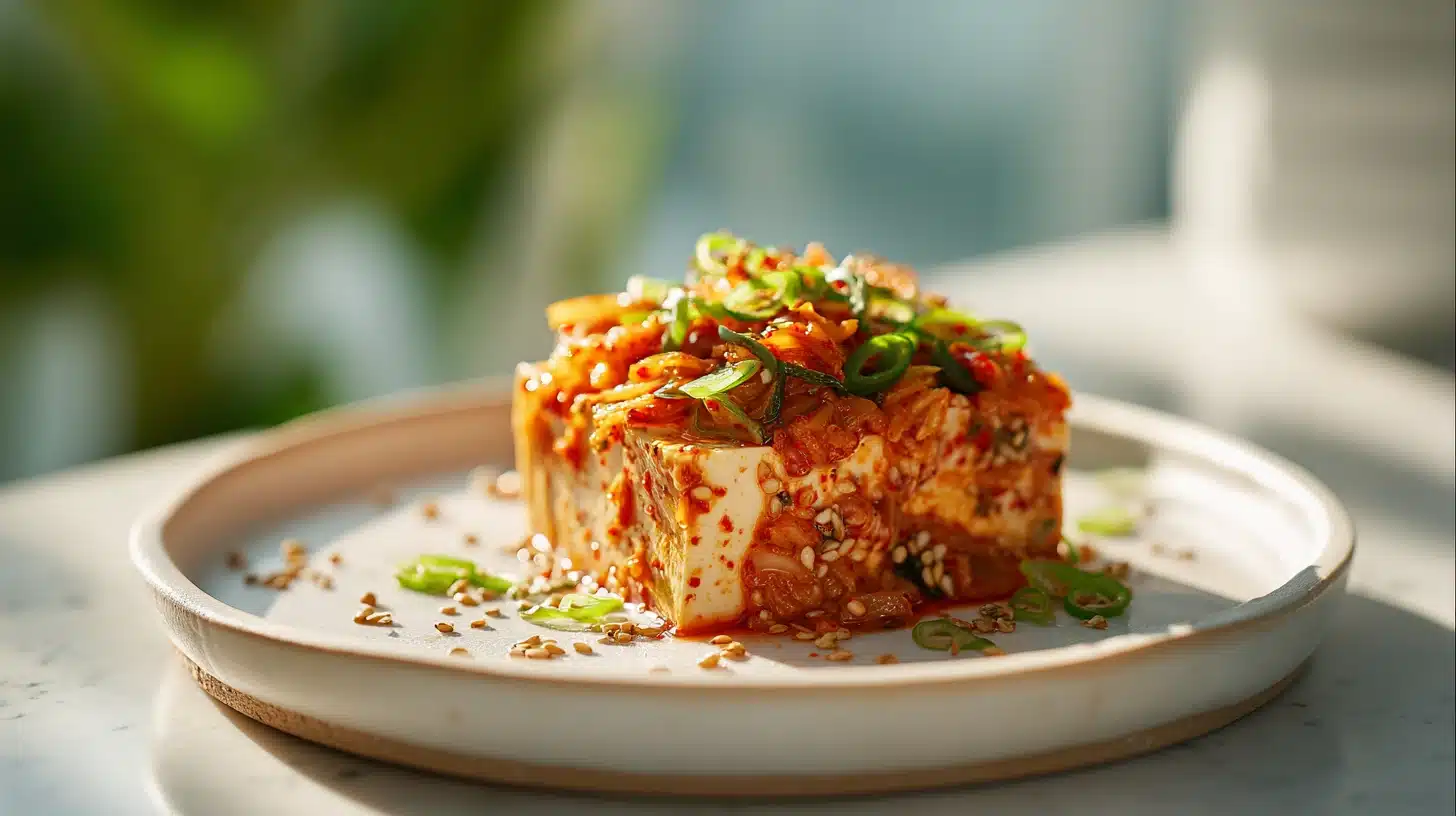
Most people assume getting that deeply savory, slightly caramelized kimchi flavor at home means a long simmer or complicated prep. This recipe proves otherwise, delivering bold, tangy results in a single skillet without any fuss or soggy tofu.
Inside: you’ll learn exactly how to press and pan-fry tofu so it stays firm, how to coax maximum flavor from your kimchi in under 10 minutes of cooking, and the one sauce addition that ties everything together.
Table of Contents
What is tofu kimchi and why you’ll love it
Tofu kimchi, known in Korean as dubu kimchi, is a classic Korean side dish and light main course that pairs firm tofu with stir-fried, deeply flavored kimchi. It sits somewhere between a banchan (small side dish) and a proper meal, which is exactly what makes it so useful on busy weeknights.
The flavor profile
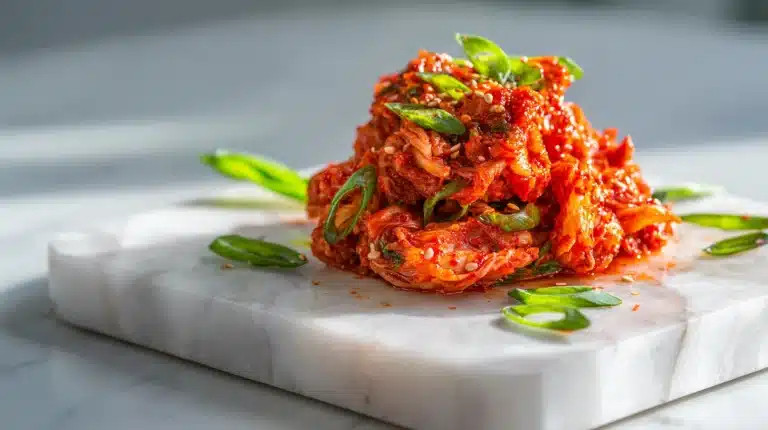
The magic of Korean tofu kimchi is in the contrast. You get the clean, mild creaminess of the tofu playing directly against the sour, spicy, and slightly funky notes of well-fermented kimchi. When the kimchi hits a hot pan, the sugars in the gochugaru and the brine begin to caramelize, deepening from bright red to a burnished, rusty orange. The smell shifts from sharp and acidic to something richer, almost meaty, even though there is no meat involved.
That transformation is why aged kimchi works best here. Fresh kimchi is zippy and crunchy, perfect for eating straight from the jar, but kimchi that has been fermenting for two weeks or longer develops the sour complexity that really shines once it hits a hot skillet. If you want to make your own supply at home, this easy homemade kimchi recipe walks you through the whole process with simple, accessible ingredients.
Why this dish is so practical
- Ready in 20 minutes from start to finish
- Uses only one pan, keeping cleanup minimal
- Works as a side dish, a main over rice, or even a filling for lettuce wraps
- Naturally gluten-free when you use tamari instead of soy sauce
- Budget-friendly, with tofu and kimchi both being low-cost staples
The dish is also forgiving. The kimchi carries so much flavor on its own that even a basic pantry can produce a genuinely satisfying result. You don’t need a long list of specialty ingredients or any advanced technique. What you do need is a pan that gets properly hot and a few straightforward steps, which is exactly what the next section covers.
Tofu and kimchi are one of those combinations that feels greater than the sum of its parts, which is why dubu kimchi has been a Korean staple for generations.
Print
Tofu Kimchi (Dubu Kimchi): The 20-Minute Korean Stir-Fry You’ll Make on Repeat
- Total Time: 18 min
- Yield: 3 servings 1x
- Diet: Vegetarian
Description
Tofu kimchi (dubu kimchi) is a Korean stir-fry of golden pan-seared firm tofu and caramelized napa cabbage kimchi cooked in a savory, slightly spicy sauce. It comes together in 20 minutes and works as a side dish or a light main course served over steamed rice.
Ingredients
For the tofu:
14 oz firm tofu (pressed for 15 minutes, cut into 1/2-inch rectangles)
2 tablespoons neutral oil (avocado or grapeseed)
For the stir-fry:
1 1/2 cups napa cabbage kimchi (well-fermented, roughly chopped)
2 cloves garlic (minced)
2 tablespoons kimchi brine (from the jar)
1 tablespoon soy sauce or tamari
1 teaspoon gochugaru (Korean chili flakes)
1/2 teaspoon sugar
1 teaspoon toasted sesame oil
For garnish:
2 scallions (thinly sliced)
1 teaspoon toasted sesame seeds
Instructions
1. Press the tofu: Wrap the tofu block in a clean kitchen towel and set a heavy pan on top. Press for 15 minutes, then cut into 1/2-inch thick rectangles and pat dry with a paper towel.
2. Sear the tofu: Heat a large skillet or wok over medium-high heat. Add the neutral oil and let it shimmer for 30 seconds. Lay the tofu in a single layer and cook undisturbed for 2 to 3 minutes until the bottom is golden and crisp. Flip and sear the other side for 2 minutes. Remove to a plate.
3. Start the stir-fry: In the same pan over medium-high heat, add a small splash of oil if the pan looks dry. Add the minced garlic and stir for 30 seconds until fragrant and lightly golden.
4. Cook the kimchi: Add the chopped kimchi to the pan. Spread it out and cook undisturbed for 1 minute so the edges begin to caramelize, then stir and cook for another 2 minutes until the kimchi looks darker and smells deeply savory.
5. Add the sauce: Pour in the soy sauce, kimchi brine, gochugaru, and sugar. Stir everything together and let the sauce bubble for 1 minute until it thickens slightly and coats the kimchi.
6. Combine and finish: Return the seared tofu to the pan and fold it gently into the kimchi mixture so every piece gets coated. Drizzle the sesame oil over the top, give one final stir, and pull the pan off the heat.
7. Serve: Transfer to a serving plate or bowl, scatter sliced scallions and toasted sesame seeds on top, and serve immediately alongside steamed rice.
Notes
Store leftovers in an airtight container in the refrigerator for up to 3 days. Reheat in a skillet over medium heat for 3 to 4 minutes. This dish is not recommended for freezing as the tofu texture changes significantly.
Use kimchi that has fermented for at least 10 to 14 days for the best depth of flavor. Fresh kimchi works but will produce a brighter, less complex result.
For a vegan version, choose a kimchi made without fish sauce or fermented shrimp paste, and use tamari instead of regular soy sauce.
Pressing the tofu is the most important step for a good sear. Skip it and the tofu steams instead of crisping, which affects both texture and flavor.
- Prep Time: 8 min
- Cook Time: 10 min
- Category: Side Dish
- Method: Stovetop
- Cuisine: Korean
Nutrition
- Serving Size: 1 cup
- Calories: 185 kcal
- Sugar: 3 g
- Sodium: 620 mg
- Fat: 12 g
- Saturated Fat: 1 g
- Unsaturated Fat: 11 g
- Trans Fat: 0 g
- Carbohydrates: 9 g
- Fiber: 2 g
- Protein: 11 g
- Cholesterol: 0 mg
Ingredients you need for tofu kimchi
Getting the ingredient list right is the first step toward a dish that actually tastes like restaurant-quality stir-fried kimchi with tofu. Here is a breakdown of everything you need, along with notes on why each item matters.
The tofu
Use firm or extra-firm tofu for this recipe. Soft or silken tofu will fall apart the moment it hits the hot pan. Look for a block that weighs around 14 ounces, which is the standard size you will find at most grocery stores.
Pressing the tofu is not optional here. Even firm tofu holds a surprising amount of moisture, and that moisture is the enemy of a good sear. Wrap the block in a clean kitchen towel, set something heavy on top (a cast-iron skillet works perfectly), and press it for at least 15 minutes before you start cooking. The result is a denser, chewier cube that browns properly instead of steaming.
The kimchi
Use well-fermented, jar-bought or homemade napa cabbage kimchi. Aim for kimchi that has been fermenting for at least 10 to 14 days. Give it a rough chop before it goes into the pan so the pieces are manageable on a fork. Save the brine from the jar because it goes directly into the sauce.
The sauce and aromatics
| Ingredient | Quantity | Purpose |
|---|---|---|
| Gochugaru (Korean chili flakes) | 1 teaspoon | Adds heat and color |
| Soy sauce or tamari | 1 tablespoon | Savory depth |
| Toasted sesame oil | 1 teaspoon | Nutty finish |
| Kimchi brine | 2 tablespoons | Tang and seasoning |
| Garlic (minced) | 2 cloves | Aromatic base |
| Sugar | 1/2 teaspoon | Balances acidity |
You will also need a neutral oil with a high smoke point, such as avocado oil or grapeseed oil, for frying the tofu. Garnish with sliced scallions and toasted sesame seeds before serving.
How to make tofu kimchi step by step
This is where the actual cooking happens, and the steps are simpler than you might expect. The whole process takes about 18 to 20 minutes, including prep.
Step 1: Press and cut the tofu
After pressing the tofu for 15 minutes, cut it into rectangles roughly 1/2 inch thick. You can also cut into cubes if you prefer smaller bites. Pat the pieces dry one more time with a paper towel right before they go into the pan. This extra step makes the difference between tofu that sizzles and tofu that steams.
Step 2: Sear the tofu until golden
Heat a large skillet or wok over medium-high heat. Add a thin layer of neutral oil and let it shimmer for about 30 seconds. Lay the tofu pieces flat in a single layer and do not touch them for 2 to 3 minutes. You are listening for a steady sizzle. When the bottom is golden and crisp, flip and repeat. Remove the seared tofu and set it aside on a plate.
Step 3: Stir-fry the kimchi
In the same pan, add a small splash of oil if needed and drop in the minced garlic. Stir for 30 seconds until fragrant, then add the chopped kimchi. Spread it across the pan and let it cook undisturbed for 1 minute so the edges catch some color. Then stir and cook for another 2 to 3 minutes until the kimchi looks darker, slightly glossy, and smells deeply savory.
Step 4: Add the sauce
Pour in the soy sauce, kimchi brine, gochugaru, and sugar. Stir everything together and let it bubble for 1 minute. This is the point where the sauce thickens slightly and coats the kimchi. You will see the color shift from bright red to a deeper, richer hue.
Step 5: Combine and finish
Return the seared tofu to the pan. Fold it gently into the kimchi mixture so every piece gets coated without breaking apart. Drizzle the sesame oil over the top, give one final stir, and pull the pan off the heat. Plate immediately and scatter scallions and sesame seeds on top.
Tips, variations, and serving ideas for tofu kimchi
Once you have the base recipe down, there is a lot of room to make this dish your own. The core technique stays the same, but the add-ins and accompaniments can change completely depending on what you have in the fridge.
Flavor and texture tips
The single biggest tip for better stir-fried kimchi with tofu is to use a pan that is genuinely hot before anything goes in. A pan that is only warm will cause the tofu to stick and the kimchi to stew rather than sear. Medium-high heat on a standard gas burner, or the highest setting on an induction cooktop, is what you want.
If your kimchi is very sour and you find the dish a touch sharp for your taste, a pinch more sugar in the sauce rounds it out nicely. Conversely, if your kimchi is on the younger side and lacks that deep fermented tang, add an extra tablespoon of kimchi brine and a tiny splash of rice vinegar to compensate.
Protein variations
- Swap half the tofu for thinly sliced pork belly for a more traditional dubu kimchi presentation
- Add a handful of cooked shrimp in the last minute of cooking
- Stir in a beaten egg directly into the pan after the sauce step for a scrambled texture that soaks up all the flavor
Serving suggestions
Tofu kimchi is most commonly served alongside steamed short-grain rice, and that pairing is genuinely excellent. The rice absorbs the spiced, tangy sauce and balances the heat. Beyond rice, consider these options:
- Serve with a side of quick pickled vegetables, like these quick pickled red onions, for extra brightness on the plate
- Spoon the mixture into warm flour tortillas for a Korean-Mexican fusion wrap
- Pile it on top of plain ramen noodles tossed with a little sesame oil
- Serve as part of a larger spread with a simple soup and steamed greens
Make it ahead
The stir-fried kimchi base (without the tofu) can be made up to two days ahead and stored in an airtight container in the refrigerator. When you are ready to eat, re-sear fresh tofu and warm the kimchi base in the pan, then combine. This approach makes the dish genuinely fast on a weeknight since most of the work is already done.
Easy tofu kimchi is one of those recipes that rewards you every time you make it, because the process becomes second nature after just one or two attempts.
Frequently asked questions
Can I use silken tofu for tofu kimchi?
Silken tofu will not hold up to stir-frying and will break apart into soft, creamy pieces in the pan. That texture is not necessarily bad, but it changes the character of the dish significantly. If you enjoy silken tofu, consider serving it steamed and cold on the side of the stir-fried kimchi rather than cooking it together.
What kind of kimchi works best for this recipe?
Well-fermented napa cabbage kimchi that has been aging for at least two weeks produces the best results because the sourness deepens and the flavor becomes more complex during cooking. You can use freshly made kimchi in a pinch, but the final dish will taste brighter and less savory. Check the jar date or make your own using a trusted guide.
Is tofu kimchi vegan?
Traditional kimchi is often made with fish sauce or fermented shrimp paste, which means it is not vegan by default. However, many brands now offer vegan kimchi made without any animal products. As long as you use vegan kimchi and swap regular soy sauce for tamari, this entire tofu kimchi recipe is fully plant-based.
How do I store and reheat leftovers?
Store leftover tofu kimchi in an airtight container in the refrigerator for up to three days. The tofu will soften slightly as it sits, absorbing more of the sauce, which many people actually prefer. Reheat it in a skillet over medium heat for 3 to 4 minutes until warmed through. Avoid microwaving if possible, as it tends to make the tofu rubbery.
Conclusion
Tofu kimchi is proof that deeply satisfying food doesn’t require a long ingredient list or complicated technique. From the moment the kimchi hits a hot pan and starts to caramelize, you’ll understand why this dish has stayed in Korean home kitchens for so long. The contrast of firm, golden tofu against tangy, spiced kimchi is just good cooking, full stop.
Give this recipe a try on a weeknight when you need something fast, flavorful, and genuinely satisfying. It comes together in 20 minutes and disappears from the plate just as quickly.
For more recipes like tofu kimchi, follow us on Facebook and Pinterest for easy Asian-inspired weeknight dinner ideas.
Craving more ways to use that jar? Browse all my recipes with kimchi in one place — there is a kimchi dish for every craving.