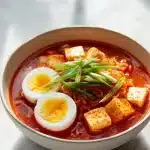
The first time I made kimchi ramen on a rainy Tuesday with nothing but leftover kimchi and a pack of instant noodles, I had no idea it would become my most-requested recipe.
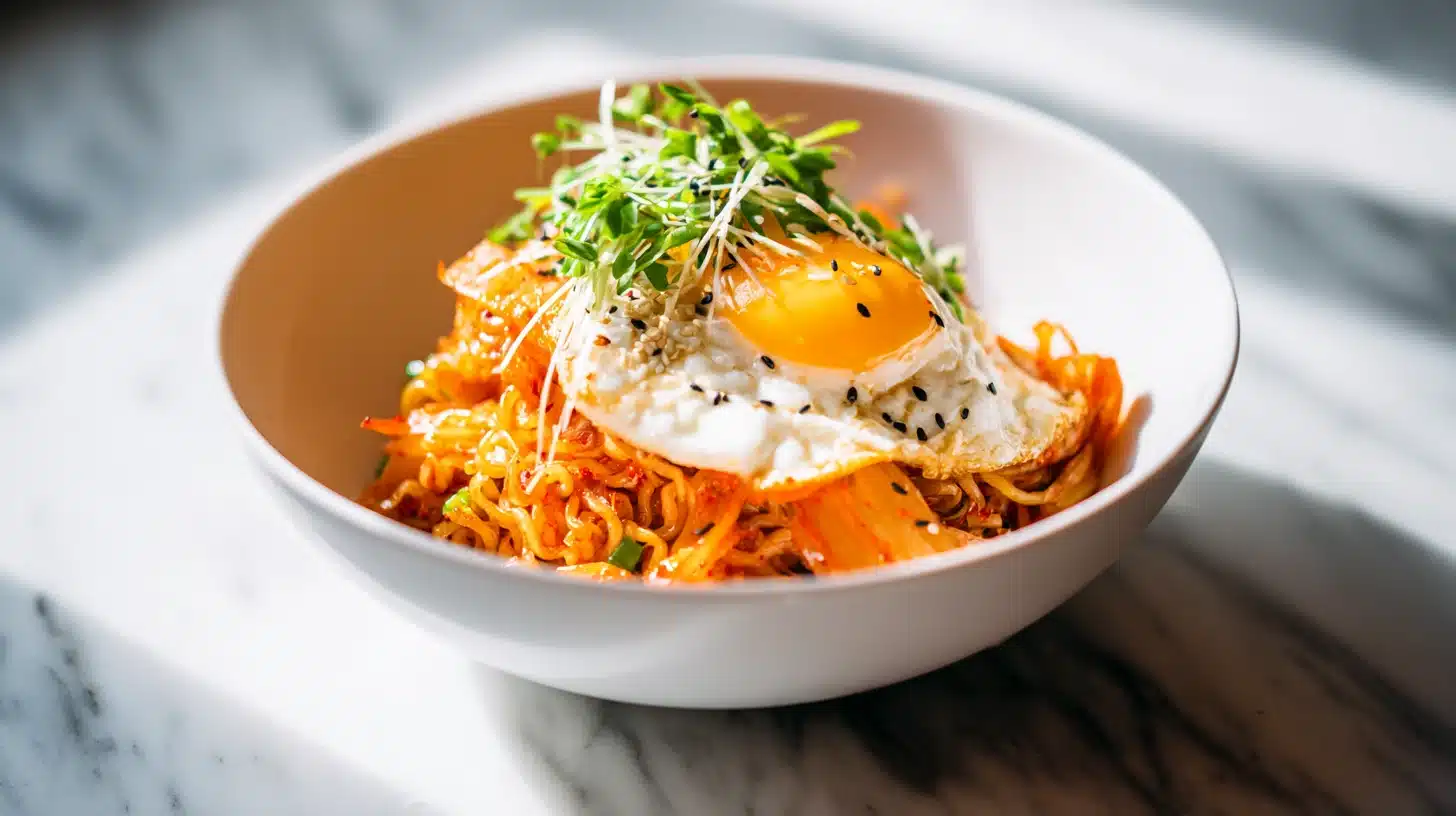
Most homemade ramen ends up tasting flat or watery because the broth never gets enough depth in a short cook time. This recipe solves that by building a punchy, layered base in under five minutes before the noodles ever hit the pot.
Inside: how to build a restaurant-worthy broth from pantry staples, which kimchi to use for the best flavor, and the one finishing touch that makes every bowl taste complete.
Table of Contents
What Makes a Great Kimchi Ramen Broth
The broth is everything in a bowl of kimchi ramen. It carries the heat, the funk, the umami, and the soul of the whole dish. Get the broth right, and even plain noodles taste extraordinary.
Start With Aromatics, Not Water
The single biggest mistake people make with quick ramen is adding broth to a cold pot. Instead, start by heating a teaspoon of sesame oil in a medium saucepan over medium heat. Add three cloves of minced garlic and about a teaspoon of freshly grated ginger. Let them sizzle for 30 to 45 seconds. You want them fragrant and just barely golden, not brown. The smell at this point should be warm and sharp, almost floral.
Next, add two tablespoons of well-fermented kimchi juice directly from the jar. That liquid is pure concentrated flavor: acidic, spicy, and deeply savory. Stir it into the aromatics and let it bubble for about 20 seconds before adding anything else.
The Miso and Gochugaru Base
Once your aromatics are bloomed, stir in one tablespoon of white or red miso paste and one teaspoon of gochugaru (Korean chili flakes). Miso adds a rounded, slightly sweet saltiness that softens the sharp edges of the kimchi. Gochugaru brings a fruity, slow-building heat that is very different from generic chili powder. These two ingredients are what separate a truly Korean kimchi ramen from a generic spicy noodle soup.
Add two cups of chicken broth or vegetable broth and one cup of water. Bring everything to a simmer over medium-high heat, then reduce and let it cook for 5 minutes. Taste it. Adjust soy sauce for salt and more gochugaru for heat. The broth should taste bold enough to season the noodles on its own.
If you love a deeply rich soup base, check out this chicken bone broth soup recipe for tips on getting maximum flavor from your liquid base. The technique of building flavor in layers translates perfectly here.
The Role of Kimchi in the Broth
About half a cup of chopped kimchi goes directly into the broth. Older, more fermented kimchi works best here because its sourness and complexity have had time to develop. Fresh kimchi is milder and sweeter, which makes a lighter, less complex broth. Both are fine, but know what you are working with. If your kimchi is very young, add an extra splash of rice vinegar to compensate.
The kimchi pieces will soften as the broth simmers, releasing even more flavor into the liquid. Some pieces will essentially dissolve into the soup, thickening it slightly and giving it a gorgeous reddish-orange color.
Print
Kimchi Ramen: The Spicy, Tangy Noodle Bowl You’ll Make Every Week
- Total Time: 21 min
- Yield: 2 servings 1x
Description
Kimchi ramen is a quick Korean-inspired noodle soup with a spicy, tangy broth built from kimchi, miso paste, garlic, and gochugaru. Chewy ramen noodles soak up the bold broth, and toppings like soft-boiled egg and green onions finish every bowl. The whole thing comes together in about 21 minutes from a cold pan.
Ingredients
For the broth:
1 tsp sesame oil
3 cloves garlic (minced)
1 tsp fresh ginger (grated)
2 tbsp kimchi juice (from the jar)
1 tbsp white or red miso paste
1 tsp gochugaru (Korean chili flakes)
2 cups chicken broth or vegetable broth
1 cup water
1 tbsp soy sauce
1/2 cup kimchi (chopped)
For the noodles and protein:
2 blocks instant ramen noodles (seasoning packets discarded)
1/2 block soft tofu (cut into 1-inch cubes, about 7 oz)
For the toppings:
2 eggs (soft-boiled, halved)
2 green onions (thinly sliced)
1 tsp toasted sesame seeds
1 tsp sesame oil (for finishing)
2 small sheets toasted nori (optional)
Instructions
1. Heat 1 tsp sesame oil in a medium saucepan over medium heat. Add the minced garlic and grated ginger and cook for 30 to 45 seconds, stirring constantly, until fragrant and just starting to turn golden.
2. Add 2 tbsp kimchi juice to the pan and stir for about 20 seconds until it bubbles and cooks into the aromatics.
3. Stir in the miso paste and gochugaru until fully combined with the aromatics. The mixture should look deep red and smell warm and sharp.
4. Pour in the chicken broth and water, then stir in the soy sauce. Bring to a simmer over medium-high heat.
5. Add the chopped kimchi and reduce heat to medium. Simmer for 5 minutes, stirring occasionally, until the broth turns a vivid reddish-orange and smells deeply savory.
6. Gently slide the tofu cubes into the broth and stir to submerge. Simmer for 2 minutes until the tofu is warmed through.
7. Break the ramen noodle blocks into the simmering broth and cook for 2 to 3 minutes, stirring occasionally, until the noodles are tender but still slightly springy.
8. Remove the pot from heat. Ladle the broth and noodles into two deep bowls. Top each bowl with a halved soft-boiled egg, sliced green onions, sesame seeds, and a drizzle of sesame oil. Add a sheet of nori to the side if using. Serve immediately.
Notes
Store leftover broth in the refrigerator for up to 3 days or freeze for up to 2 months. Store noodles separately from the broth to prevent them from becoming soggy.
For a vegetarian version, use vegetable broth and skip the egg or use a plant-based alternative. White miso is usually vegan but check the label.
Older, well-fermented kimchi gives the broth more sourness and depth. If your kimchi is fresh and mild, add a splash of rice vinegar to balance the flavor.
Gochugaru is the best chili option for authentic flavor. If you cannot find it, use 1/2 tsp mild paprika plus a small pinch of cayenne as a substitute.
- Prep Time: 8 min
- Cook Time: 13 min
- Category: Dinner, Main Course
- Method: Stovetop
- Cuisine: Korean
Nutrition
- Serving Size: 1 bowl
- Calories: 380 kcal
- Sugar: 4 g
- Sodium: 1420 mg
- Fat: 14 g
- Saturated Fat: 3 g
- Unsaturated Fat: 9 g
- Trans Fat: 0 g
- Carbohydrates: 44 g
- Fiber: 3 g
- Protein: 18 g
- Cholesterol: 186 mg
Choosing Your Noodles and Protein
The noodles and protein you choose will shape the personality of your kimchi ramen in a big way. There is no single right answer, but there are smart choices.
Instant Ramen vs. Fresh Noodles
Instant ramen noodles are a perfectly legitimate choice here, and I say that without apology. The wavy, pre-dried noodles have a specific texture: slightly springy, a little chewy, and excellent at holding onto broth. Discard the seasoning packet entirely and use just the noodles. Cook them directly in the simmering broth for the final 2 to 3 minutes so they absorb flavor as they cook rather than soaking in plain water.
Fresh ramen noodles, available at most Asian grocery stores, give you a more silky, substantial texture. They take about the same time to cook but need to be loosened before going into the pot because they tend to clump. Either way, do not overcook them. Pull the pot off heat the moment the noodles are tender but still have a slight resistance. Overcooked ramen noodles turn mushy within minutes.
Dried ramen noodles are the middle ground: more structure than instant, slightly less silky than fresh. Cook them separately in boiling water, then rinse briefly under cold water to stop cooking before adding them to the broth.
Best Proteins for This Bowl
Soft tofu is my go-to for this recipe. Cut half a block into one-inch cubes and slide them into the broth during the last 2 minutes of simmering. They warm through gently and pick up the spicy, tangy broth without breaking apart. If you want tofu as a main component in a Korean-style dish, the tofu kimchi recipe is a great companion read.
Other proteins that work well:
- Soft-boiled eggs, halved and placed on top just before serving
- Thinly sliced pork belly, quickly sauteed in the pot before building the broth
- Shredded rotisserie chicken stirred in during the last minute of cooking
- Shiitake mushrooms added with the broth, where they soak up flavor and add a meaty bite
For a heartier ramen experience with crispy protein on top, the katsu chicken ramen noodle soup shows exactly how to pull off that contrast of textures.
Toppings That Complete the Bowl
Toppings are not optional decoration in kimchi ramen. They are functional. They add contrasting textures, temperatures, and flavors that keep every bite interesting from start to finish.
The Essential Garnishes
A soft-boiled egg is close to non-negotiable. Cook your eggs for exactly 6 minutes and 30 seconds in boiling water, then transfer immediately to an ice bath. The whites will be fully set and the yolks will be jammy, bright orange, and creamy. When you place one on top of your hot broth, it continues to warm through and the yolk starts to melt into the soup. That moment is genuinely spectacular.
Sliced green onions add a fresh, sharp bite that cuts through the richness of the broth. Scatter them generously over the top right before serving. Toasted sesame seeds add a nutty crunch. A small sheet of toasted nori (dried seaweed) tucked against the side of the bowl adds a subtle ocean flavor that echoes the umami in the miso.
A final drizzle of sesame oil over the finished bowl ties everything together. It adds a glossy sheen and a warm, nutty aroma that rises up with the steam.
Optional but Excellent Add-Ons
- A drizzle of chili oil for extra heat and color
- Corn kernels, thawed from frozen and dropped in cold for a sweet contrast
- Sauteed shiitake or enoki mushrooms piled in the center
- Bean sprouts added raw for crunch and freshness
- A spoonful of extra kimchi placed directly on top, not stirred in, so it stays cool and crunchy
The temperature contrast of cold kimchi on a steaming hot broth is one of those small details that makes the whole bowl feel intentional.
Building the Bowl
Ladle the hot broth over the noodles in a deep bowl rather than adding noodles to the pot. This keeps portion control clean and prevents the noodles from soaking up all your broth before you even sit down. Arrange your toppings deliberately. A well-built bowl of kimchi ramen should look as good as it tastes, with colors layered across the surface: deep red broth, pale noodles, golden egg yolk, bright green onions, white sesame.
Tips, Swaps, and How to Make It Your Own
One of the best things about this recipe is how flexible it is. The core technique stays the same, but the details can shift based on what you have in your kitchen and who you are feeding.
Making It Vegetarian or Vegan
Swap the chicken broth for a good-quality vegetable broth or a simple dashi made from dried kombu and shiitake mushrooms. Skip the egg or use a marinated soft-boiled egg made without animal-based toppings. White miso is typically vegan, but check the label. The rest of the ingredients are already plant-based.
The flavor will be slightly lighter without chicken broth, so compensate by adding an extra teaspoon of miso and a small piece of kombu to the simmering broth. Let the kombu steep for 3 minutes then remove it before serving. The result is a clean, mineral-rich umami that holds up beautifully.
Adjusting the Heat Level
Gochugaru ranges from mild to very spicy depending on the brand and grind. If you are heat-sensitive, start with half a teaspoon and taste before adding more. If you want serious fire, add a tablespoon of gochujang (Korean chili paste) to the broth base. Gochujang is thicker and more fermented than gochugaru, so it adds both heat and a deeper, slightly sweet complexity.
For a full breakdown of how kimchi pairs with rich, savory broth in a traditional Korean context, the kimchi jjigae recipe is worth exploring. The two dishes share DNA but have a very different personality on the table.
Storage and Leftovers
The broth stores beautifully for up to 3 days in the refrigerator. Store the noodles separately, because ramen noodles left sitting in broth will absorb all the liquid and turn bloated and soft overnight. When reheating, bring the broth back to a simmer, add fresh noodles, and cook for 2 minutes. It tastes just as good the second time.
If you want to prep ahead for the week, make a double batch of broth on Sunday. Freeze half in a zip-top bag lying flat. When you need a fast weeknight dinner, thaw the broth in the fridge overnight, reheat, add noodles, and dinner is on the table in under ten minutes. This is a genuinely make-ahead friendly recipe.
| Swap | Use Instead | Notes |
|---|---|---|
| Chicken broth | Vegetable broth or dashi | Add extra miso for depth |
| Gochugaru | Red pepper flakes | Less fruity, more sharp heat |
| Instant noodles | Spaghetti or linguine | Cook al dente, rinse cold |
| Tofu | Shredded chicken or pork | Stir in during last minute |
| Miso paste | Soy sauce (double the amount) | Less sweet, thinner body |
Frequently Asked Questions
What is kimchi ramen?
Kimchi ramen is a Korean-inspired noodle soup that combines a savory, spicy broth built from kimchi, miso, garlic, and gochugaru with chewy ramen noodles and toppings like soft-boiled egg, tofu, or green onions. It draws from both Japanese ramen traditions and Korean kimchi-based soups, landing somewhere deeply satisfying between the two.
Can you use instant ramen noodles?
Yes, absolutely. Instant ramen noodles work very well in this recipe. Just toss the seasoning packet aside and cook only the dried noodle block directly in the simmering kimchi broth during the last 2 to 3 minutes. The noodles pick up the broth’s flavor as they hydrate, which actually gives you better results than cooking them separately.
Is kimchi good in ramen?
Kimchi is one of the best possible additions to ramen broth. The fermentation adds a complex sourness that brightens the rich, savory base, and the chili and garlic already present in kimchi layer naturally with the other aromatics. Both the kimchi solids and the kimchi juice contribute flavor, so use both generously for the best results.
What is the best chili powder for kimchi ramen?
Gochugaru, Korean chili flakes, is the ideal choice. It has a fruity, moderately hot flavor with a slightly smoky undertone that standard chili powder and cayenne do not replicate well. If you cannot find gochugaru, a combination of mild paprika and a pinch of cayenne gets closer than generic chili powder. Gochujang paste is a good substitute if you want deeper fermented heat.
Conclusion
There is something almost magical about what happens when tangy kimchi meets a properly built broth. The sourness rounds out. The heat mellows just enough. The whole bowl becomes something genuinely more than the sum of its parts. That is the promise of kimchi ramen, and this recipe delivers on it in 21 minutes flat.
Give this a try on a weeknight when you need something warming and satisfying without a long project in the kitchen. Save the broth-building technique too, because once it clicks, you will use it again and again.
For more recipes like kimchi ramen, follow us on Facebook and Pinterest for cozy noodle soup inspiration.
Craving more ways to use that jar? Browse all my recipes with kimchi in one place — and if you want to ferment your own, the easy homemade kimchi recipe is where to start.