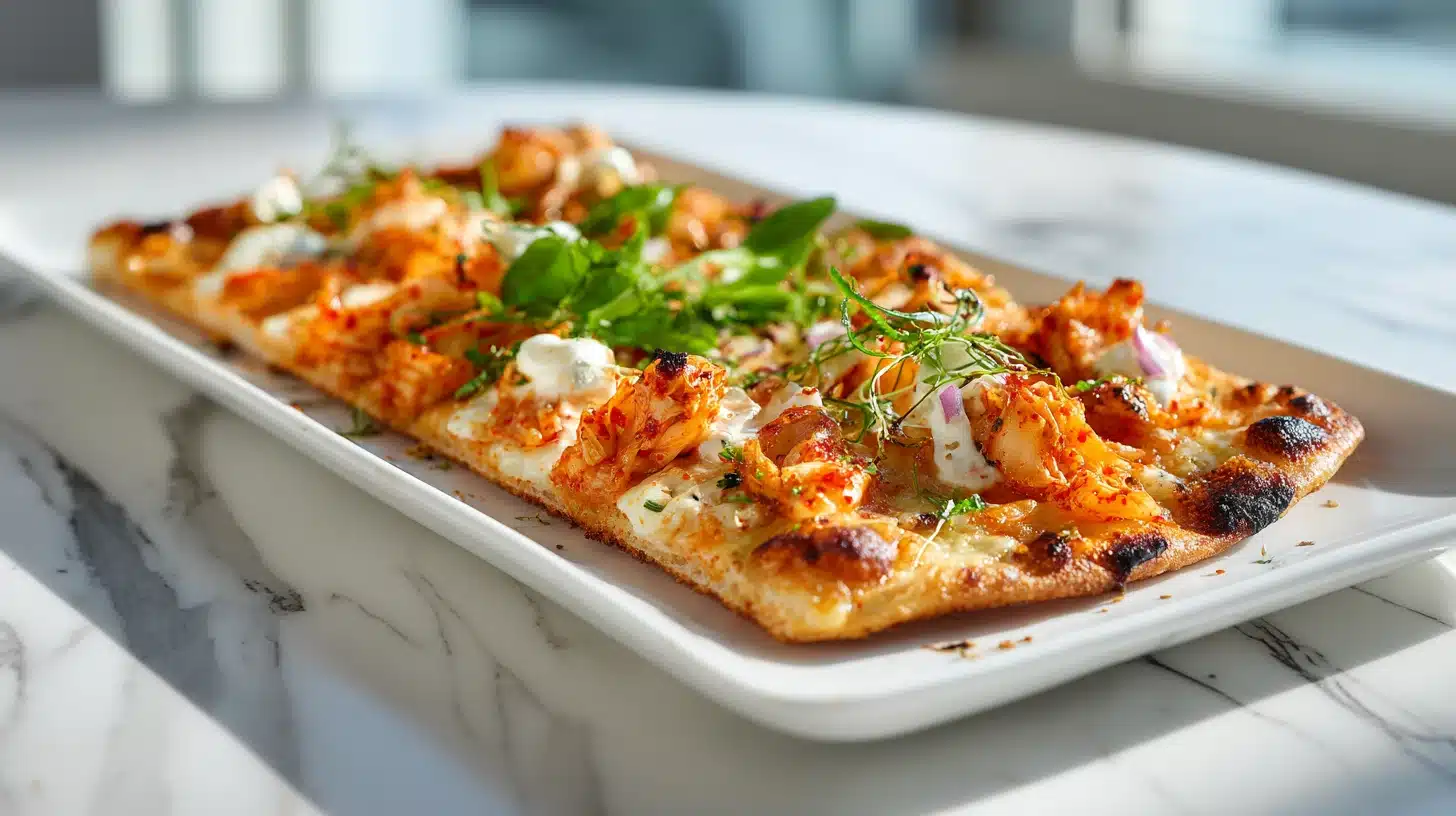
Kimchi pizza was the last thing I expected to become my most-requested recipe, yet here we are. The first time I layered tangy, funky fermented cabbage onto a hot, blistered crust with gooey mozzarella, something clicked that no plain pepperoni slice had ever managed.
Most cheese pizza nights fall flat because there’s nothing interesting happening in the flavor department. This recipe fixes that by building heat and brightness into every single bite, from the gochujang-spiked base to the crisp kimchi on top.
Inside: you’ll learn exactly how to layer a Korean pizza so the crust stays crisp (not soggy), which proteins pair best with kimchi and cheese, and how to pull off a fast, satisfying weeknight dinner in under 30 minutes.
Table of Contents
Why Kimchi and Pizza Are a Match Worth Making
It sounds unlikely, but the combination makes complete sense once you think about what both foods are actually doing. Pizza loves bold, acidic toppings. Think capers, pickled peppers, or sun-dried tomatoes. Kimchi is bold and acidic by nature, with the added complexity of fermentation and a low, building heat from gochugaru chili flakes. Put it on a hot oven crust and something almost magical happens: the edges of the kimchi begin to caramelize, turning jammy and slightly sweet while the center stays tangy and bright.
The Science of Kimchi on a Hot Crust
When kimchi hits a 475°F oven, the natural sugars in the fermented cabbage start to brown. The lactic acid, which gives kimchi that characteristic sour punch, mellows slightly under heat without disappearing entirely. What you’re left with is a topping that is simultaneously sweet, sour, savory, and spicy, four of the five basic taste categories hitting your palate at once. That’s why spicy pizza with kimchi feels so satisfying even in small portions.
The sesame oil drizzle added just after baking reinforces the Korean flavor profile and adds a nutty, aromatic finish. It’s a small step that makes a big difference, and I never skip it.
Gochujang: The Secret Weapon Base Sauce
Many kimchi pizza recipes use straight marinara or tomato sauce, and that works perfectly well. But swapping in a thin layer of gochujang either on its own or stirred into a few tablespoons of tomato sauce creates an entirely different beast. Gochujang is a fermented Korean chili paste with a deep, almost smoky sweetness that threads right through the cheese and crust. It complements the kimchi instead of competing with it.
If you’re making the dough from scratch rather than reaching for a store-bought ball, consider trying a sourdough discard pizza dough. The subtle tang from the discard echoes the fermented notes of the kimchi beautifully, making the whole pizza taste like everything was planned together from the very beginning.
Use about 2 tablespoons of gochujang thinned with 1 teaspoon of sesame oil for a single 12-inch pizza. Spread it thinly enough that the crust can still bubble and char at the edges. You want flavor, not a paste wall.
Print
Kimchi Pizza: The Spicy, Crispy Slice You Never Knew You Needed
- Total Time: 27 min
- Yield: 3 servings 1x
Description
Kimchi pizza is a Korean-inspired flatbread pizza that combines a spicy gochujang base sauce with tangy fermented kimchi, melty mozzarella, and your choice of protein. It bakes in about 12 minutes and delivers bold, layered flavor that standard pizza rarely achieves. The kimchi caramelizes at the edges in the hot oven, giving each slice a sweet, sour, and savory finish.
Ingredients
For the gochujang base:
2 tablespoons gochujang (Korean chili paste)
2 tablespoons tomato sauce or marinara
1 teaspoon sesame oil
3 garlic cloves (minced)
For the pizza:
1 ball pizza dough (homemade or store-bought, about 12 ounces)
1.5 cups shredded low-moisture mozzarella cheese
1 cup kimchi (well-drained and roughly chopped)
1 cup pork belly strips (pre-cooked and sliced thin), or shredded chicken, or soppressata
0.5 cup sliced mushrooms
2 scallions (thinly sliced)
1 teaspoon toasted sesame seeds
1 teaspoon sesame oil (for finishing)
Instructions
1. Preheat oven to 475 degrees F with a pizza stone or inverted baking sheet inside. Allow at least 30 minutes for the surface to heat fully before baking.
2. Drain the kimchi by spreading it on paper towels and pressing gently. This step prevents a soggy crust and is important for getting the right texture.
3. Mix the gochujang, tomato sauce, sesame oil, and minced garlic together in a small bowl until smooth. Taste and adjust with a pinch of sugar if you want a slightly sweeter base.
4. Stretch the pizza dough on a lightly floured surface into a roughly 12-inch round. Work from the center outward, using your hands rather than a rolling pin, to keep the interior airy and light.
5. Spread the gochujang sauce over the dough in a thin, even layer, leaving about half an inch at the edges for the crust. Scatter the mozzarella evenly across the sauce.
6. Distribute the protein, mushrooms, and drained kimchi evenly over the cheese, spreading toppings all the way to the edges so every slice is fully covered.
7. Slide the pizza onto the hot stone or baking sheet and bake for 10 to 12 minutes, until the crust is deeply golden on the bottom, the cheese is bubbling with browned spots, and the kimchi edges look caramelized and slightly darkened.
8. Remove from the oven and immediately drizzle a thin thread of sesame oil over the top. Scatter the sliced scallions and toasted sesame seeds across the pizza.
9. Rest for 2 minutes before slicing to allow the cheese to firm up slightly, then cut into 6 slices and serve immediately.
Notes
Store leftover kimchi pizza in an airtight container in the refrigerator for up to 3 days. Reheat slices in a dry skillet over medium heat with a lid on for 3 to 4 minutes for the best crust texture.
For a vegetarian version, skip the meat and add thinly sliced bok choy, extra mushrooms, or fresh spinach in its place. Make sure all vegetables are patted dry before adding to the pizza.
Draining the kimchi is the single most important prep step. Wet kimchi releases liquid in the oven and will make the crust soft in the center.
For extra heat, sprinkle 1 teaspoon of gochugaru chili flakes over the toppings before baking. For a milder pizza, reduce the gochujang to 1 tablespoon and increase the tomato sauce to 3 tablespoons.
- Prep Time: 15 min
- Cook Time: 12 min
- Category: Dinner, Main Course
- Method: Baking
- Cuisine: Korean
Nutrition
- Serving Size: 2 slices
- Calories: 480 kcal
- Sugar: 5 g
- Sodium: 820 mg
- Fat: 22 g
- Saturated Fat: 9 g
- Unsaturated Fat: 11 g
- Trans Fat: 0 g
- Carbohydrates: 48 g
- Fiber: 3 g
- Protein: 22 g
- Cholesterol: 55 mg
Ingredients You Need for Homemade Kimchi Pizza
Getting the ingredient list right before you start is the difference between a pizza that sings and one that just sits there. Here’s what you need, with notes on why each item earns its place.
For the base:
- 1 ball pizza dough (homemade or store-bought, about 12 ounces)
- 2 tablespoons gochujang
- 2 tablespoons tomato sauce or marinara (optional, for a milder base)
- 1 teaspoon sesame oil (for the sauce, plus extra for finishing)
- 3 garlic cloves (minced)
For the toppings:
- 1 cup well-drained kimchi (roughly chopped)
- 1.5 cups shredded low-moisture mozzarella
- 1 cup protein of choice: sliced pork belly, cooked shredded chicken, or soppressata
- 0.5 cup sliced mushrooms
- 2 scallions (thinly sliced, for finishing)
- 1 teaspoon toasted sesame seeds (for finishing)
Choosing Your Kimchi
The quality and fermentation stage of your kimchi matters a lot here. Fresh kimchi (less than a week old) is crunchy and quite mild in flavor. Older, well-fermented kimchi has a deeper sourness and a softer texture that breaks down more readily in the oven. Both work, but they give you slightly different results. Fresh kimchi holds its texture and gives you more crunch. Aged kimchi caramelizes faster and contributes more complexity.
If you want to make your own from scratch rather than buying a jar, the easy homemade kimchi recipe on this site walks you through a batch that’s ready to use in as little as one to two days.
Draining your kimchi is non-negotiable. Spread it on a paper towel for a few minutes and press gently. Excess liquid is the single biggest cause of a soggy bottom on a kimchi and cheese pizza, and you won’t enjoy discovering that after the pizza comes out of the oven.
Choosing Your Protein
Pork belly, sliced thin and cooked in a skillet until the fat renders and the edges crisp, is the most indulgent route. It pairs with kimchi the way bacon pairs with eggs: you wonder why you ever tried anything else. Shredded rotisserie chicken is the fastest option and keeps things lighter. Soppressata adds a cured-meat depth that leans more Italian, which creates an interesting cross-cultural tension against the Korean toppings.
All three work. Pick based on what you have on hand.
Step-by-Step: How to Make Kimchi Pizza at Home
This recipe comes together in 27 minutes from start to finish. The only prep that takes any real time is draining the kimchi and getting your oven fully up to temperature. A cold oven is the enemy of a good crust, so turn it on first, before you do anything else.
- Preheat hard and fast. Set your oven to 475°F (or as high as it goes) with a pizza stone or an inverted baking sheet inside. You want the surface scorching hot so the bottom of the crust cooks before the top overcooks. Give it at least 30 minutes to preheat properly.
- Prepare your sauce. Stir the gochujang, tomato sauce if using, sesame oil, and minced garlic together in a small bowl. Taste it. It should be fiery, savory, and slightly sweet. Adjust with a pinch of sugar or an extra drop of sesame oil if needed.
- Shape your dough. On a lightly floured surface, stretch or roll your dough to about 12 inches. Don’t use a rolling pin if you can avoid it: stretching by hand keeps the interior light and airy. Lay it on a piece of parchment paper if you’re using a stone.
- Build the pizza. Spread the gochujang sauce in a thin, even layer, leaving about half an inch at the edge. Scatter the mozzarella over the sauce. Distribute the protein, mushrooms, and drained kimchi evenly across the cheese. Don’t pile everything in the center: spread it to the edges so every slice gets a full hit of toppings.
- Bake until bronze. Slide the pizza onto your preheated stone or sheet and bake for 10 to 12 minutes. The crust should be deeply golden on the bottom when you lift an edge with a spatula. The cheese should be bubbling with lightly browned spots, and the kimchi edges should look just slightly caramelized and darkened.
- Finish and slice. Pull the pizza from the oven and immediately drizzle a thin thread of sesame oil over the top. Scatter the sliced scallions and toasted sesame seeds. Let it rest for 2 minutes before cutting, just long enough for the cheese to firm up so it doesn’t slide off your first slice. The smell at this point is extraordinary: toasted cheese, caramelized chili, nutty sesame.
Variations, Tips, and Ways to Make It Your Own
Once you have the base recipe down, this Korean pizza becomes a canvas. Here are the best ways to adjust it without losing what makes it work.
Make it vegetarian
Skip the meat and double the vegetables. Thinly sliced bok choy, blanched briefly and squeezed dry, adds a mild bitterness that plays well against the spicy gochujang. Sauteed mushrooms deepen the savory notes. A handful of fresh spinach wilts beautifully under the cheese without releasing much water, provided you dry it well first.
Replacing the mozzarella entirely with a blend of mozzarella and gruyere cheese is worth trying on the vegetarian version. Gruyere has a nutty, slightly funky depth that mirrors fermentation flavors and makes the whole pizza taste more complex without adding any meat.
Adjust the heat level
Gochujang varies in heat between brands. The standard version gives you a medium burn that builds slowly. If you want more fire, add 1 teaspoon of gochugaru (Korean chili flakes) on top of the toppings before baking. If you’re cooking for guests who find spice uncomfortable, cut the gochujang to 1 tablespoon and increase the tomato sauce to 2 tablespoons. The base will still carry the Korean flavor profile without overwhelming anyone.
Crispier crust every time
Two things guarantee a crisp bottom every single time. First, your oven surface must be blazing hot before the pizza goes in. Second, the kimchi must be drained. If you’re still getting a soft center despite those steps, try blind-baking the dough for 3 minutes before adding toppings. Slide the plain, sauced dough in, let the base set slightly, then add the cheese and toppings and return it to the oven.
For a completely different but equally satisfying texture, a focaccia-style base makes a thick, spongy kimchi and cheese pizza that’s more like a loaded flatbread. The souplantation focaccia pizza recipe gives you a great starting point for that style.
Storing and reheating
Leftover homemade kimchi pizza keeps in the fridge for up to 3 days, sealed in an airtight container or wrapped tightly in foil. Reheat it in a skillet over medium heat with a lid on for 3 to 4 minutes. The bottom crisps back up and the cheese melts without the rubbery microwave texture. Avoid reheating in the microwave if you can: it turns the crust soft and the kimchi gets oddly steamed.
Frequently Asked Questions
Is kimchi good on pizza?
Yes, kimchi is genuinely good on pizza, and the combination works for specific flavor reasons. Kimchi adds acidity, heat, and fermented depth that standard pizza toppings rarely deliver. When it hits the heat of a hot oven, the edges caramelize and the sourness mellows, creating a sweet-savory-spicy topping that makes the whole slice more interesting.
How long can you store leftover kimchi pizza?
Leftover kimchi pizza keeps well in the refrigerator for up to 3 days when stored in an airtight container. For the best texture, reheat slices in a dry skillet over medium heat rather than in the microwave. The crust crisps back up nicely and the cheese remelts without becoming rubbery.
Can I use store-bought pizza dough?
Absolutely. Store-bought pizza dough works perfectly in this recipe and saves you significant time on a weeknight. Let it sit at room temperature for 20 to 30 minutes before stretching so it relaxes and stops springing back. Most grocery store dough balls weigh around 12 to 16 ounces, which is the right size for one 12-inch pizza.
Can I make this pizza vegetarian?
Yes, this recipe is easy to make vegetarian. Simply skip the meat and add more vegetables instead: thinly sliced bok choy, sauteed mushrooms, fresh spinach, or blanched broccoli all work well. The gochujang base and the mozzarella carry plenty of flavor on their own, and the kimchi provides all the bold, punchy character that makes this pizza stand out.
Conclusion
Making kimchi pizza at home is one of those cooking experiments that starts as curiosity and ends as a permanent weeknight rotation. You come for the novelty and stay because the flavor combination, tangy fermented kimchi, fiery gochujang, melty mozzarella, and nutty sesame, is genuinely greater than the sum of its parts. Every bite closes that loop: bold, complex, and deeply satisfying in a way that a standard slice rarely achieves.
Give this one a try on a busy weeknight. It comes together faster than ordering delivery, and the results are far more satisfying.
For more recipes like kimchi pizza, follow us on Facebook and Pinterest for bold fusion dinner ideas and easy weeknight inspiration.
Craving more ways to use that jar? Browse all my recipes with kimchi in one place — there is a kimchi dish for every craving.