The first time I made a fermented beet salad, I expected earthy and sweet. What I got was bright, funky, deeply savory, and completely addictive in a way that plain roasted beets had never been.
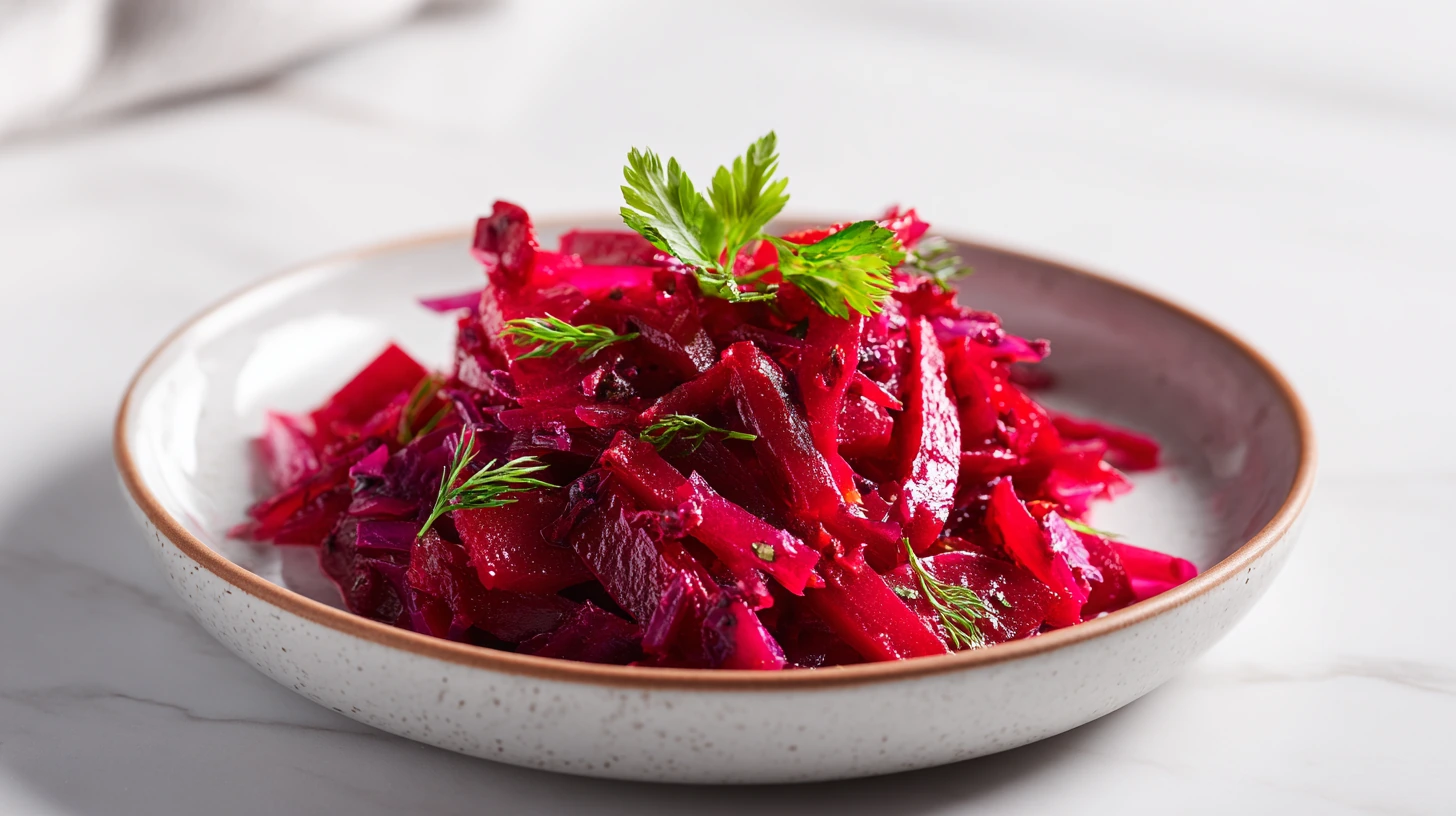
Most beet salads go limp and watery within hours of dressing, leaving you with a soggy, flat mess by the time you serve it. Fermentation solves that completely: the beets firm up, the brine doubles as the dressing, and the flavor only deepens over time.
Inside: how lacto fermentation actually works with beets, which add-ins turn this into a full probiotic beet salad, and how to time your ferment for maximum tang without over-sourness.
Table of Contents
Why Fermentation Makes Beets So Much Better
Raw beets are dense, sweet, and mildly earthy. Roasted beets are tender and rich. But a properly fermented beetroot salad is something else entirely: tangy without being sharp, complex without being fussy, and alive with a brightness that vinegar-pickled beets can only approximate.
The Science Behind the Tang
Lacto fermentation is one of the oldest food preservation methods on the planet. When you submerge raw beets in a salt brine, the naturally occurring Lactobacillus bacteria on the vegetable’s surface get to work. They consume the sugars in the beet and produce lactic acid. That lactic acid is what gives your lacto fermented beet salad its signature sour punch.
The process requires no vinegar, no starter culture, and no special equipment. All you need is salt, water, beets, and patience. The salt concentration matters: too little and you risk spoilage, too much and you slow the ferment to a crawl and end up with an unbearably salty brine. A ratio of 2 percent salt by weight of water is the sweet spot for beets.
What Changes in the Beet Itself
Beyond flavor, fermentation changes the texture and nutrition of the beet in ways that cooking simply cannot replicate. The cell walls soften slightly but stay firm enough to hold their shape in a salad. The natural sugars convert, which means the finished beet tastes noticeably less sweet and more complex. The result is a vegetable that holds its own against strong flavors like crumbled goat cheese, toasted walnuts, or sharp red onion without being overwhelmed.
Nutritionally, the live cultures produced during fermentation support gut health. This makes a probiotic beet salad genuinely functional food, not just a trendy label. If you enjoy the tangy, gut-friendly world of fermented vegetables, you might also love a batch of fermented carrots recipe made the same simple way.
How Long Should You Ferment Beets?
For a fermented beet salad, the ideal window is 3 to 5 days at room temperature, which is roughly 68 to 72 degrees Fahrenheit. At 3 days you get a mild tang and firm texture. At 5 days the sourness is more pronounced and the brine gets visibly cloudy, which is a good sign, not a bad one. Beyond 5 days, the beets continue to soften and the flavor intensifies further. Some people love a 7-day ferment. Start at 3 days for your first batch and taste your way forward from there.
Print
Fermented Beet Salad: Tangy, Probiotic-Rich and Worth the Wait
- Total Time: 4340 min
- Yield: 4 servings 1x
- Diet: Vegetarian
Description
A tangy, probiotic-rich salad made from raw beets fermented in a simple salt brine for 3 to 5 days. The beets stay firm, develop a bright sour flavor, and get finished with goat cheese, toasted walnuts, red onion, and a brine-based dressing. No cooking required.
Ingredients
For the ferment:
1.5 lbs raw beets (about 3 medium beets, peeled and sliced into 1/4-inch rounds)
2 cups filtered or non-chlorinated water
1 teaspoon fine sea salt (non-iodized)
3 garlic cloves (lightly smashed)
1 teaspoon whole black peppercorns
2 sprigs fresh dill
1/4 teaspoon caraway seeds (optional)
For the salad:
2 tablespoons ferment brine (reserved from the jar)
1 tablespoon extra-virgin olive oil
1 teaspoon honey
1/4 small red onion (thinly sliced)
2 oz crumbled goat cheese or feta
2 tablespoons toasted walnuts or pepitas
1 small handful arugula or fresh dill (for garnish)
Instructions
1. Peel the beets and slice them into 1/4-inch rounds. Wear gloves to avoid staining your hands, and use a cutting board you do not mind coloring deep magenta.
2. Make the brine by stirring 1 teaspoon of fine sea salt into 2 cups of filtered water until fully dissolved, about 30 seconds.
3. Pack the beet slices tightly into a clean sterilized quart-sized mason jar, tucking the smashed garlic cloves, peppercorns, dill sprigs, and caraway seeds in between the layers as you go.
4. Pour the brine over the packed beets until every slice is fully submerged. Leave about 1 inch of headspace. Use a small brine-filled zip-lock bag or a clean weight to press the beets below the surface.
5. Cover the jar loosely with a cloth or coffee filter to let carbon dioxide escape. Place the jar at room temperature (68 to 72 degrees F) away from direct sunlight.
6. Check the jar once daily. By day 2 or 3 you will see the brine turn deep magenta and notice small bubbles forming around the beet slices. That cloudiness is a healthy sign.
7. Starting on day 3, taste a beet slice. The flavor should be pleasantly tangy with a slightly sour finish. If you want more sourness, leave the jar out for another 1 to 2 days, tasting each day.
8. Once fermented to your liking, seal the jar tightly and transfer it to the refrigerator to stop active fermentation and preserve the flavor.
9. When ready to serve, remove the beets from the jar and pat them lightly dry. Whisk together 2 tablespoons of the reserved brine, 1 tablespoon olive oil, and 1 teaspoon honey until combined.
10. Arrange the beets on a plate or in a wide shallow bowl. Scatter the red onion and goat cheese over the top, add the toasted walnuts, drizzle the brine dressing over everything, and finish with fresh arugula or dill.
Notes
Store fermented beets in a sealed jar in the refrigerator for up to 3 weeks. Keep them submerged in the brine at all times. They do not freeze well with brine, but the drained beets can be frozen for up to 2 months and used in cooked dishes.
Use non-iodized salt only. Iodine in regular table salt can slow or prevent lacto fermentation by inhibiting the Lactobacillus bacteria you need.
If a thin white film (kahm yeast) forms on the surface of the brine, skim it off with a clean spoon. It is harmless but can add an off-flavor if left in.
Save any leftover brine after the salad is gone. It works as a tangy base for salad dressings, a splash in soups, or a probiotic addition to a Bloody Mary.
- Prep Time: 20 min
- Rest Time: 4320 min
- Cook Time: 0 min
- Category: Side Dishes
- Method: No-Cook
- Cuisine: American
Nutrition
- Serving Size: 1 cup
- Calories: 145 kcal
- Sugar: 9 g
- Sodium: 420 mg
- Fat: 9 g
- Saturated Fat: 3 g
- Unsaturated Fat: 6 g
- Trans Fat: 0 g
- Carbohydrates: 13 g
- Fiber: 3 g
- Protein: 5 g
- Cholesterol: 11 mg
Ingredients You Need for the Best Fermented Beet Salad
The base of this recipe is intentionally simple. Fermentation provides most of the flavor, so you don’t need a long list of ingredients to make something memorable.
The Ferment (What Goes in the Jar)
- 1.5 lbs raw beets (about 3 medium beets, peeled and sliced into 1/4-inch rounds or matchsticks)
- 2 cups filtered or non-chlorinated water
- 1 teaspoon fine sea salt (2 percent brine)
- 3 garlic cloves (lightly smashed)
- 1 teaspoon whole black peppercorns
- 2 sprigs fresh dill (optional, but excellent)
- 1/4 teaspoon caraway seeds (optional, for a Central European flavor note)
A quick note on water: chlorine in tap water can inhibit or kill the Lactobacillus bacteria you need for fermentation. Use filtered water, well water, or leave tap water to sit uncovered for 30 minutes so the chlorine dissipates.
The Salad Finish (What You Add After Fermentation)
- 2 tablespoons of the ferment brine (it acts as your dressing base)
- 1 tablespoon extra-virgin olive oil
- 1 teaspoon honey or maple syrup
- 1/4 of a small red onion (thinly sliced)
- 2 oz crumbled goat cheese or feta
- 2 tablespoons toasted walnuts or pepitas
- A small handful of arugula or fresh dill for garnish
The brine-based dressing is what sets this fermented beet salad apart from any beet vinaigrette salad you have had before. It’s tangy, savory, and slightly mineral, and it ties every element of the plate together without any added acid.
If you enjoy building fresh, textured salads around bold ingredients, the asparagus pea salad recipe uses a similar approach to balancing earthy vegetables with a bright, simple dressing.
Step-by-Step: How to Make a Lacto Fermented Beet Salad
The process has two distinct phases: the fermentation itself (mostly hands-off), and the final salad assembly (quick and satisfying). Here’s how to do both well.
Phase 1: Pack and Ferment the Beets (Day 1)
Start by scrubbing your beets thoroughly under cold water. Peel them with a standard vegetable peeler. The beet will stain everything it touches, so use a cutting board you don’t mind coloring and consider wearing kitchen gloves. Slice the beets into 1/4-inch rounds or cut them into matchsticks, which will ferment slightly faster due to more surface area.
Make your brine by dissolving the fine sea salt in the filtered water. Stir until completely dissolved, about 30 seconds. Don’t skip the dissolving step: undissolved salt sitting at the bottom of the jar won’t protect the beets at the top.
Pack the beet slices tightly into a clean, sterilized quart-sized mason jar, tucking the garlic, peppercorns, dill, and caraway seeds in between the layers. Pour the brine over the beets until they are fully submerged, leaving about 1 inch of headspace at the top. The beets will want to float. Use a small zip-lock bag filled with brine as a weight, or a clean stone, to keep every piece below the surface. Any beet exposed to air risks mold.
Loosely cover the jar with a cloth, a coffee filter, or the lid left very slightly open. The ferment produces carbon dioxide as it works, and that gas needs somewhere to escape. Place the jar at room temperature, away from direct sunlight.
Phase 2: Fermenting and Monitoring (Days 2 to 5)
Check your jar once a day. You’ll notice the brine turning a deep, jewel-toned magenta within 24 hours. By day 2 or 3, tiny bubbles will appear around the beet slices, and the brine will begin to turn slightly cloudy. Both of these are signs that the lacto fermentation is active and working.
Taste a small slice starting on day 3. If you want more tang, leave it another day or two. Once the flavor is where you want it, seal the jar and move it to the refrigerator. Cold temperature doesn’t stop fermentation entirely, but it slows it to a near-standstill, preserving the flavor at the stage you like.
Phase 3: Assemble the Salad (Day 3 to 5)
When you’re ready to serve, remove the fermented beets from the jar and pat them dry lightly. Whisk together the brine, olive oil, and honey in a small bowl until emulsified. The result smells intensely mineral and tangy with a soft floral note from the honey.
Arrange the beets on a plate or in a wide shallow bowl. Scatter the thinly sliced red onion and crumbled goat cheese over the top. Add the toasted walnuts for crunch. Drizzle the brine dressing over everything and finish with a handful of fresh arugula or dill. The whole assembly takes under 10 minutes once the ferment is done.
Serving Ideas, Variations, and Storage Tips
One of the best things about this fermented beet salad is how well it plays with other dishes and how easily you can customize it to suit what you already have in your kitchen.
Ways to Serve It
- As a standalone starter, plated on a wide bowl with goat cheese and walnut garnish
- Alongside roasted chicken, pan-seared salmon, or grilled lamb
- Folded into cooked farro, quinoa, or lentils for a grain bowl that keeps well for lunch
- On top of thick-sliced crusty sourdough with a smear of hummus
- As part of a mezze spread with other fermented and pickled items
The tangy, mineral flavor of the beets cuts through rich proteins beautifully. It also holds its own next to other bold flavors, much like a kimchi salad does when served alongside heavier mains.
Variations Worth Trying
Beet and sauerkraut salad: Toss 1/2 cup of your finished fermented beets with an equal amount of good-quality sauerkraut. Add a spoonful of whole-grain mustard to the brine dressing. The result is sharper and more savory, excellent with cold cuts or on a rye bread open sandwich.
With orange and ginger: Add three thin rounds of fresh ginger and a strip of orange zest to the jar during fermentation. The citrus oils infuse the brine and give the finished salad a bright, warm complexity.
Vegan version: Skip the goat cheese and replace it with toasted pumpkin seeds and a few slices of ripe avocado. The creaminess of the avocado balances the tang in a similar way.
Spicy version: Add one small dried chili or a pinch of red pepper flakes to the jar before sealing. The heat develops slowly during the ferment and ends up woven through the brine.
Storage
Once fermented to your liking and transferred to the refrigerator, the beets will keep well for up to 3 weeks. The flavor will continue to develop slowly, getting a little more tart and complex over time. Keep them submerged in the brine at all times. If you notice any white film forming at the very top of the brine (called kahm yeast), simply skim it off with a clean spoon. It’s harmless, though it can add a slight off-flavor if left in.
The brine itself is useful. Save any extra and use it as a base for salad dressings, a splash in a Bloody Mary, or a tangy drizzle over roasted vegetables.
| Storage Method | Duration | Notes |
|---|---|---|
| Room temperature (active ferment) | 3 to 5 days | Keep loosely covered, check daily |
| Refrigerator (jar sealed) | Up to 3 weeks | Keep beets submerged in brine |
| Frozen beets (no brine) | Up to 2 months | Texture changes; best in cooked dishes after thawing |
Frequently Asked Questions
Is fermented beet salad safe to eat raw?
Yes, completely. Lacto fermentation is a naturally self-preserving process. The lactic acid created during fermentation lowers the pH of the brine to a level where harmful bacteria cannot survive. As long as your beets stayed submerged in brine throughout the fermentation and you used clean equipment, the finished salad is safe and rich in beneficial live cultures.
Why did my brine turn cloudy and is that a problem?
Cloudy brine is actually a good sign. It means the Lactobacillus bacteria are active and producing lactic acid, which is exactly what you want in a lacto fermented beet salad. Clear brine early in the ferment is normal too, as cloudiness develops as the culture builds. The only thing to watch for is a distinct foul smell or fuzzy visible mold on the beets themselves, which would indicate a problem.
Can I use pre-cooked or canned beets for this recipe?
You can pickle cooked or canned beets with brine, but you cannot truly lacto-ferment them. Cooking kills the naturally occurring bacteria on the beet’s surface that drive lacto fermentation. The result will taste like a quick brine rather than a proper fermented beetroot salad. For the full probiotic benefit and that characteristic tangy depth, start with fresh, raw beets.
How much salt do I actually need, and does the type matter?
For a 2-cup brine, you need approximately 1 teaspoon (about 6 grams) of fine sea salt. Use non-iodized salt if possible, as iodine can inhibit bacterial activity and slow or prevent fermentation. Fine sea salt, kosher salt (measured by weight), or pickling salt all work well. Table salt with anti-caking agents is the least ideal choice but will still produce a result if it’s what you have on hand.
Conclusion
A good fermented beet salad is proof that patience is a cooking technique. The bright, tangy result you get after three to five days of hands-off fermentation is something no quick-pickled or roasted beet can match. The brine does the work, the salt keeps everything safe, and the live cultures that develop turn a simple root vegetable into something genuinely complex and gut-friendly.
Give this recipe a try this week. Start your jar on Sunday and you’ll have a stunning, ready-to-dress salad by Wednesday.
For more recipes like fermented beet salad, follow us on Facebook and Pinterest for gut-friendly fermented recipe ideas.