My gastroenterologist told me to eat more fiber, and the first gut health green smoothie I made tasted like a lawnmower accident. It took me six months of tinkering to figure out what actually works.
Most green smoothies that promise digestive benefits either taste medicinal, separate into a watery mess within minutes, or rely on so many powders and supplements that they cost a small fortune. This recipe skips all of that.
Here’s what you’ll get: the exact ingredient ratios that keep the texture creamy without going gluey, the one prebiotic and probiotic pairing that genuinely supports your microbiome, and a flavor balance that makes spinach taste like dessert.
Table of Contents
Why your gut actually needs this smoothie
You’ve heard the phrase “gut health” enough times that it’s started to blur. So let’s make it concrete. Your gut microbiome is a community of trillions of bacteria, fungi, and microorganisms living in your digestive tract. When that community is diverse and well-fed, it produces short-chain fatty acids that reduce inflammation, synthesizes certain B vitamins, and even sends signals to your brain through the gut-brain axis. When it’s out of balance, you feel it: bloating, sluggish digestion, energy crashes, and skin that looks tired no matter how much water you drink.
The ingredients in this smoothie work together as a system, not as individual “superfoods” thrown into a blender.
Prebiotics: food for your good bacteria
Prebiotics are the fibers and plant compounds that feed beneficial bacteria. In this smoothie, the key prebiotic sources are:
- Ripe banana: Contains resistant starch (especially if the banana is slightly underripe) and inulin, both of which feed Bifidobacterium strains.
- Baby spinach: Provides sulfoquinovose, a specific sugar that selectively feeds beneficial gut microbes.
- Ground flaxseed: Offers soluble mucilaginous fiber that acts as a prebiotic and helps move things along the digestive tract.
Probiotics: the live bacteria themselves
Greek yogurt brings the live cultures. Look for the “Live and Active Cultures” seal on the container, and choose plain, unsweetened so you control the sugar content. The Lactobacillus and Bifidobacterium strains in quality Greek yogurt are among the most researched probiotic species for digestive comfort. Pairing them with the prebiotic fiber in this recipe means the bacteria actually have something to eat once they arrive.
Anti-inflammatory support
Chronic low-grade gut inflammation drives bloating, irregular digestion, and discomfort. Fresh ginger is one of the most reliable natural anti-inflammatories you can blend into a drink. Even half a teaspoon of freshly grated ginger contains gingerols and shogaols that calm gut inflammation and speed gastric emptying, meaning food moves through your stomach at a healthy pace rather than sitting there making you uncomfortable.
This is why a great detox smoothie and a great gut health smoothie often share the same building blocks: they both prioritize fiber, hydration, and anti-inflammatory compounds over gimmicks.
Print
The Gut Health Green Smoothie That Actually Tastes Good
- Total Time: 7 min
- Yield: 2 servings 1x
- Diet: Gluten Free, Vegetarian
Description
A creamy, jade-green smoothie made with baby spinach, frozen banana, plain Greek yogurt, ground flaxseed, and fresh ginger. It takes 7 minutes to make and delivers a solid mix of prebiotic fiber and live probiotic cultures to support everyday digestive health.
Ingredients
For the smoothie:
1 cup unsweetened almond milk
3/4 cup plain full-fat Greek yogurt (with live and active cultures)
2 large handfuls baby spinach (about 60g)
1 medium banana (sliced and frozen)
1 tablespoon ground flaxseed (flaxseed meal)
1/2 inch piece fresh ginger (peeled and roughly chopped)
Optional add-ins:
1 tablespoon kefir
1/4 ripe avocado
1 teaspoon raw honey
1/4 cup frozen mango chunks
Instructions
1. Add the almond milk to your blender first. This creates a vortex that pulls solid ingredients down toward the blades and prevents chunks from sticking to the sides.
2. Add the Greek yogurt and ground flaxseed directly on top of the almond milk. No pre-mixing needed.
3. Place the baby spinach on top of the yogurt layer. If your blender is not a high-speed model, pulse on medium for about 10 seconds before adding the fruit.
4. Add the frozen banana slices and the chopped fresh ginger, tucking the ginger pieces between the banana slices so the blades catch them from multiple angles.
5. Blend on the highest setting for 45 seconds. The smoothie is ready when it is a deep, opaque jade green with no visible spinach flecks or ginger threads. If using a standard blender, extend blending to 60 to 75 seconds.
6. Check the texture by tipping a small amount into a glass. It should flow slowly, like a slightly melted milkshake. Add almond milk in 2-tablespoon increments if too thick, or a few more frozen banana slices if too thin. Blend for another 10 seconds to adjust.
7. Pour into two glasses and serve immediately for the best color, texture, and probiotic activity. Garnish with a pinch of ground flaxseed and thin ginger slices if desired.
Notes
Store leftovers in a sealed mason jar filled to the very top to minimize air contact. Refrigerate for up to 24 hours and shake or re-blend briefly before drinking. Do not freeze the finished smoothie as the dairy will separate on thawing.
To meal prep, portion spinach, frozen banana slices, ginger, and flaxseed into individual zip-lock or silicone freezer bags. Freeze for up to 3 months. On the day, tip one bag into the blender, add almond milk and Greek yogurt, and blend.
For a dairy-free version, replace the Greek yogurt with an equal amount of unsweetened coconut yogurt that contains live cultures. Check the label for active probiotic strains.
For the most resistant starch content in your banana, freeze it when it is just turning yellow with a few small spots forming. Fully ripe brown-spotted bananas are sweeter but lower in resistant starch.
- Prep Time: 7 min
- Cook Time: 0 min
- Category: Drink
- Method: No-Cook
- Cuisine: American
Nutrition
- Serving Size: 1 large glass (approximately 300ml)
- Calories: 210 kcal
- Sugar: 14 g
- Sodium: 130 mg
- Fat: 6 g
- Saturated Fat: 2 g
- Unsaturated Fat: 4 g
- Trans Fat: 0 g
- Carbohydrates: 28 g
- Fiber: 5 g
- Protein: 13 g
- Cholesterol: 10 mg
The ingredients (and why each one earns its place)
Every ingredient in this recipe was chosen deliberately. Nothing is here for aesthetics alone.
Baby spinach (2 big handfuls, about 60 grams)
Spinach is the gentlest leafy green for beginners to green smoothies. Unlike kale, which can taste bitter and requires more blending, spinach nearly disappears behind the fruit. It delivers folate, magnesium, and vitamin K, plus that gut-selective sulfoquinovose mentioned above. Freeze a bag in advance and you’ll also get a colder, thicker smoothie without needing extra ice.
Frozen banana (1 medium, sliced before freezing)
Freeze your bananas when they are just past yellow with a few spots starting to form. At that stage, they’re sweet enough to balance the greens but still have meaningful resistant starch content. Frozen banana is what gives this smoothie its milkshake-level creaminess. Fresh banana simply can’t replicate that thick, almost soft-serve texture.
Plain Greek yogurt (3/4 cup, full-fat)
Full-fat Greek yogurt blends smoother than low-fat versions, and the fat actually helps your body absorb the fat-soluble vitamins in the spinach. It also adds about 17 grams of protein per serving, which keeps you full well past your morning commute.
Ground flaxseed (1 tablespoon)
Pre-ground flaxseed (also sold as flaxseed meal) is non-negotiable here. Whole flaxseeds pass through your digestive system largely intact, which means you get very little of the omega-3s or fiber. Ground flaxseed releases its mucilaginous soluble fiber within minutes of hitting liquid, slightly thickening the smoothie and coating the gut lining in a way that soothes irritation.
Fresh ginger (1/2 inch piece, peeled and roughly chopped)
This is the ingredient most people hesitate on. It smells strong. It looks intimidating. But half an inch of fresh ginger in a full blender of fruit and yogurt gives you a bright, almost citrusy warmth rather than an aggressive burn. It’s the difference between this drink tasting like medicine and tasting like a fancy spa smoothie.
Unsweetened almond milk (1 cup)
Almond milk keeps calories moderate and gives the blender something to work with. You can substitute coconut water for a lighter, more tropical flavor, or use oat milk for a creamier result. If you use oat milk, be aware it will add more natural sugars. Avoid anything with carrageenan in the ingredient list, as some research suggests it may irritate gut lining.
Optional add-ins
- 1 tablespoon kefir (extra probiotic punch)
- 1/4 avocado (creamier texture, more healthy fat)
- 1 teaspoon raw honey (sweetness plus prebiotics)
- 1/4 cup frozen mango (tropical twist that amplifies the sweetness without refined sugar)
If you enjoy exploring other nutrient-dense morning blends, the glucose reset smoothie recipe is a great companion to this one for blood sugar stability.
How to blend it perfectly (step by step)
The order in which you add ingredients to your blender matters more than most smoothie recipes admit. Getting it wrong means unblended chunks of spinach, ginger fibers floating in the liquid, or a smoothie that is 90% foam.
Step 1: Liquid first
Pour the almond milk into the blender before anything else. This creates a vortex when the blade starts spinning, which pulls solid ingredients down into the blades rather than leaving them stuck on top. Skipping this step is the number-one reason home blenders struggle with green smoothies.
Step 2: Soft ingredients next
Add the Greek yogurt and the ground flaxseed directly on top of the liquid. These need no pre-processing and blend quickly.
Step 3: Greens before fruit
Place the baby spinach on top of the yogurt. Putting greens in before frozen fruit means they get proper contact with the liquid and the blades before the denser frozen ingredients weigh everything down. Blend this layer for 10 seconds on medium before adding fruit, if your blender is on the lower-powered end.
Step 4: Frozen banana last
Drop the frozen banana slices in on top. They’re the heaviest items and will push everything down toward the blades once blending begins at high speed. Add the fresh ginger here too, tucking it between banana slices so it gets pulled in from multiple angles.
Step 5: Blend high for 45 seconds
Run your blender on its highest setting for a full 45 seconds. This is longer than most recipes suggest, but it’s what separates a genuinely smooth, creamy result from one with tiny spinach threads still visible. The smoothie should be a deep, opaque jade green with no visible flecks when it’s done. If you have a standard countertop blender rather than a high-speed model, blend for 60 to 75 seconds.
Step 6: Check texture and adjust
Pour a small amount into a glass and tip it. It should flow slowly, like a slightly melted milkshake. If it’s too thick, add almond milk in 2-tablespoon increments. If it’s thinner than you like, add a few more frozen banana slices or a small handful of ice and blend again for 15 seconds.
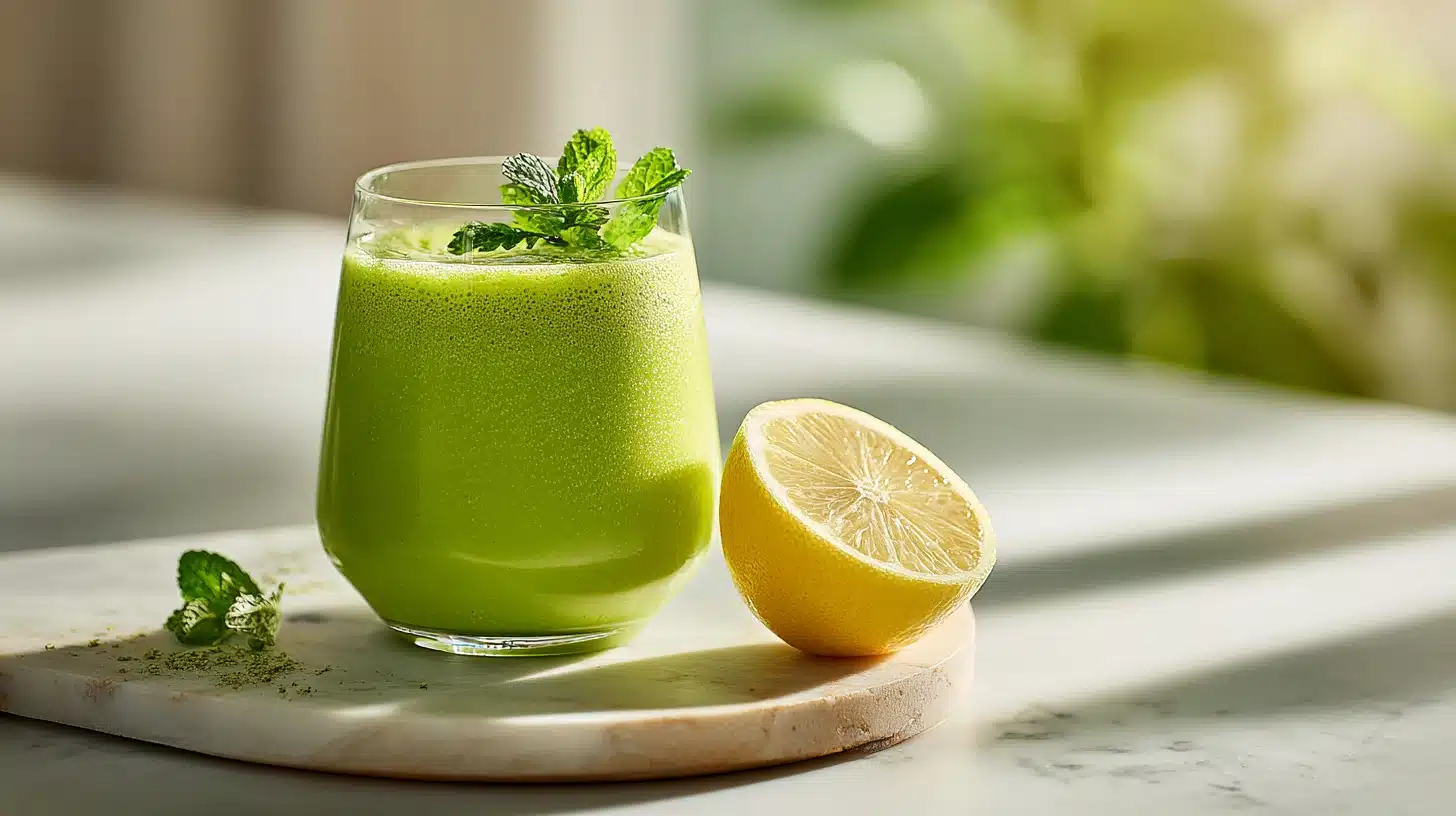
The final color should make you want to drink it. Deep green, slightly glossy, with a faint ginger smell that rises when you pour it into the glass.
Storing, meal-prepping, and variations
Storing leftovers
This gut health green smoothie is best consumed immediately after blending. Oxidation begins as soon as the smoothie hits air, and within 20 to 30 minutes you’ll notice the color shifting from bright green to a slightly murky olive. The flavor is still good, but the visual appeal drops.
If you need to store it, pour immediately into a mason jar and fill it all the way to the top before sealing. The less air in the jar, the slower the oxidation. Refrigerate for up to 24 hours. Give it a good shake or a 10-second re-blend before drinking.
Do not freeze the finished smoothie. The dairy separates on thawing and the texture becomes unpleasant.
Meal prepping smoothie packs
This is where the real time savings happen. Portion out your spinach, banana slices, ginger, and flaxseed into individual zip-lock bags or silicone bags and freeze them. In the morning, dump one bag directly into the blender, add the almond milk and Greek yogurt, and blend. You go from freezer to glass in under three minutes. Prepped bags keep well for up to three months.
Variations worth trying
Tropical version: Swap half the banana for frozen mango and add a squeeze of lime juice. Still deeply gut-supportive, with a flavor that tastes like a vacation.
Higher protein version: Add a scoop of unflavored or vanilla collagen peptides or a half-scoop of plain whey protein. If you’re dairy-free, a neutral-flavored pea protein works well. For a protein-packed option in a similar vein, the whey protein smoothie with banana and peanut butter shows exactly how to balance protein and fruit.
Cucumber mint version: Add 1/3 of a cucumber (roughly chopped) and 5 fresh mint leaves. This version is particularly soothing on days when your stomach feels irritated or puffy, and it’s a wonderful gut-healing green smoothie for summer mornings.
Keto-adapted version: Replace the banana with half an avocado and add 2 tablespoons of hemp hearts. The texture is richer, the sweetness is much lower, and the fat content increases significantly. This adaptation still delivers the prebiotic fiber from spinach and flaxseed.
Nutritional overview
| Nutrient | Per serving (approx.) |
|---|---|
| Calories | 210 kcal |
| Protein | 13 g |
| Carbohydrates | 28 g |
| Fiber | 5 g |
| Fat | 6 g |
| Sugar | 14 g |
Values are estimates based on full-fat Greek yogurt and unsweetened almond milk. Using low-fat yogurt or adding honey will shift these numbers.
Frequently asked questions
Can I use kale instead of spinach in a gut health green smoothie?
You can, but there are trade-offs. Kale is slightly more bitter and much tougher than spinach, so it requires a more powerful blender and a longer blending time to fully break down. If you like kale, remove the tough center stems before blending and start with one cup rather than two handfuls. Spinach is genuinely gentler on both your blender and your palate, especially if you’re new to green smoothies for gut health.
Can I make this smoothie dairy-free?
Yes. Replace the Greek yogurt with an equal amount of unsweetened coconut yogurt that contains live cultures. Check the label carefully because not all dairy-free yogurts contain active probiotic strains. The texture will be slightly less thick and the protein content will drop, but the digestive benefits from the prebiotic fiber and ginger remain intact.
How often should I drink this gut health green smoothie?
Once a day is a reasonable starting point. If you’re not used to a high-fiber diet, introduce this smoothie gradually, starting with every other day for the first week. Jumping from a low-fiber diet to a high-fiber one too quickly can cause temporary bloating as your gut bacteria adjust to their new food supply. After two weeks, your digestion should feel noticeably smoother.
Does blending destroy the fiber in spinach and banana?
No. Blending breaks cell walls, which actually makes some nutrients more bioavailable, not less. The soluble and insoluble fiber in both spinach and banana remains structurally intact after blending. What blending does change is the physical form of the food, which means your stomach does less mechanical work. This can be a genuine benefit for people with sensitive digestion or irritable bowel tendencies.
Conclusion
A gut health green smoothie doesn’t have to be a punishment. This recipe proves that supporting your microbiome can taste like something you actually want to drink every single morning. We started with the frustration of chalky, medicinal green blends and landed on something creamy, gently sweet, and genuinely effective because every ingredient pulls double duty on flavor and function.
Give this a try this week, ideally on a morning when you have seven minutes and a ripe banana in the freezer. You might be surprised how quickly it becomes a non-negotiable part of your routine.
For more recipes like this gut health green smoothie, follow us on Facebook and Pinterest for nourishing blender recipes and digestive wellness drink ideas.