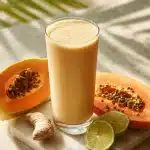
My grandmother kept half a papaya on the counter every single morning, and this papaya digestive smoothie is my modern spin on her quiet, consistent ritual.
Bloating, sluggish mornings, and that uncomfortable heaviness after meals are genuinely frustrating. Most “gut health” drinks taste like punishment. This recipe gives you real digestive relief in a glass that actually tastes like a tropical vacation.
Here’s what you’ll learn: why papaya’s natural enzymes work better when you blend them with specific partners, the one ingredient that doubles the fiber content, and exactly how to get a silky-smooth texture every single time.
Table of Contents
Why Papaya Is the Star of Any Digestive Smoothie
Papaya has been used as a natural digestive aid across Southeast Asia, Central America, and the Caribbean for generations. The science behind it is straightforward, and once you understand it, you’ll reach for this fruit far more often.
The Papain Factor
Papaya contains papain, a proteolytic enzyme that breaks down protein molecules in your gut. Think of it as a natural tenderizer working on your digestive tract. Papain helps your stomach process heavy proteins more efficiently, which is why eating papaya or drinking a papaya smoothie after a rich meal eases that tight, overfull feeling so quickly.
Papain is most concentrated in unripe papaya, but ripe papaya still carries a meaningful amount, along with chymopapain, another enzyme that reduces inflammation in the gut lining. For a drinkable, pleasant-tasting smoothie, ripe papaya is the right choice. It blends into a naturally creamy base with a sweet, musky flavor that needs very little added sweetener.
Fiber That Actually Moves Things Along
One cup of ripe papaya delivers roughly 2.5 grams of dietary fiber, a mix of soluble and insoluble types. Soluble fiber slows digestion and feeds beneficial gut bacteria. Insoluble fiber adds bulk and keeps things moving, making papaya a genuinely useful constipation relief smoothie ingredient.
When you combine papaya with banana for additional soluble fiber and Greek yogurt for live probiotic cultures, you get a smoothie that works on multiple fronts at once. The banana also thickens the blend so the final texture is luscious and spoonable, not watery.
Ginger: The Quiet Digestive Hero
Fresh ginger is not optional here. It contains gingerols and shogaols, compounds that speed gastric emptying, meaning food moves from your stomach into your small intestine faster. That’s the mechanism behind ginger’s well-known ability to relieve nausea and bloating. Even half a teaspoon of fresh grated ginger makes a noticeable difference in how quickly you feel comfortable after drinking this smoothie.
The combination of papain from the papaya, probiotics from the yogurt, fiber from the banana, and anti-inflammatory compounds from the ginger creates a layered digestive support system in a single glass. Each ingredient has a specific job.
Print
Papaya Digestive Smoothie: The 5-Minute Gut-Soothing Blend You’ll Make Every Morning
- Total Time: 5 min
- Yield: 2 servings 1x
- Diet: Vegetarian
Description
A quick and refreshing papaya smoothie made with ripe papaya, frozen banana, Greek yogurt, fresh ginger, and lime juice. It takes just 5 minutes to blend and supports digestion through natural enzymes, probiotics, and dietary fiber. Great first thing in the morning or after a heavy meal.
Ingredients
For the smoothie:
1.5 cups ripe papaya (fresh or frozen, cut into 1-inch cubes)
1 medium ripe banana (frozen, broken into chunks)
0.5 cup plain Greek yogurt (full-fat or 2%)
0.5 cup coconut water (or plain water)
0.5 teaspoon fresh ginger (finely grated)
1 tablespoon fresh lime juice
1 teaspoon raw honey (optional, add only if papaya is not fully sweet)
1 small pinch ground turmeric (optional)
Instructions
1. Add the coconut water to the blender first so the blades catch immediately without air pockets forming at the bottom.
2. Add the Greek yogurt and lime juice directly on top of the liquid, then add the grated fresh ginger.
3. Add the papaya cubes next, distributing them evenly over the liquid and yogurt layer.
4. Place the frozen banana chunks on top of everything as the final layer before blending.
5. Blend on high speed for 60 to 90 seconds until the mixture is completely smooth, pale orange in color, and free of any visible ginger threads or banana chunks. A standard blender needs the full 90 seconds; a high-speed blender needs about 45 seconds.
6. Taste and adjust: add more lime juice if the flavor is too earthy, a drizzle of honey if you want more sweetness, or a tablespoon of coconut water if the texture is too thick.
7. Pour immediately into two tall glasses and garnish with a few cubes of fresh papaya and a lime wheel on the rim. Serve right away for the best texture and brightest color.
Notes
Store leftovers in a sealed jar in the refrigerator for up to 4 hours. The color will deepen slightly but the flavor stays good. This smoothie does not freeze well once blended.
For a dairy-free version, swap the Greek yogurt for an equal amount of coconut yogurt with live cultures. The texture and probiotic content stay comparable.
To make this higher in protein, add 1 scoop of unflavored or vanilla whey or plant-based protein powder before blending.
For a thicker smoothie bowl version, reduce coconut water to 2 tablespoons and pour into a bowl. Top with fresh papaya cubes, hemp seeds, and toasted coconut flakes.
- Prep Time: 5 min
- Cook Time: 0 min
- Category: Drink
- Method: No-Cook
- Cuisine: Tropical
Nutrition
- Serving Size: 1 large glass (approximately 12 oz)
- Calories: 178 kcal
- Sugar: 24 g
- Sodium: 62 mg
- Fat: 3 g
- Saturated Fat: 1 g
- Unsaturated Fat: 2 g
- Trans Fat: 0 g
- Carbohydrates: 36 g
- Fiber: 4 g
- Protein: 7 g
- Cholesterol: 7 mg
Ingredients You Need and Why Each One Earns Its Place
Good smoothies aren’t just about throwing fruit into a blender. Every ingredient in this papaya digestive smoothie has a clear, functional reason for being there.
The Core Lineup
- 1.5 cups ripe papaya (fresh or frozen, cubed)
- 1 medium ripe banana (frozen gives the best creamy texture)
- 0.5 cup plain Greek yogurt (full-fat or 2% for creaminess and live cultures)
- 0.5 cup coconut water (or plain water if you prefer a less tropical flavor)
- 0.5 teaspoon fresh ginger (grated finely, not powdered)
- 1 tablespoon fresh lime juice
- 1 teaspoon raw honey (optional, only if your papaya is not yet fully sweet)
- Small pinch of ground turmeric (optional, adds anti-inflammatory support)
Why Frozen Banana Beats Fresh
Frozen banana is the secret to a thick, cold, almost ice-cream-like texture without needing ice, which dilutes the flavor. If you use fresh banana, your smoothie will be thinner and slightly warmer. The fix is simple: peel ripe bananas, break them into chunks, freeze overnight on a parchment-lined tray, then transfer to a zip-close bag. You’ll always have perfect smoothie banana on hand.
Dairy-Free Swaps That Work
If you want to keep this dairy-free, swap the Greek yogurt for coconut yogurt with live cultures. The texture stays creamy, and the coconut flavor plays beautifully with the tropical papaya. Avoid plain silken tofu here because it mutes the bright, fruity notes that make this drink so refreshing.
You can also check out this detox smoothie for another plant-based gut-health drink that pairs well with a morning routine focused on clean ingredients.
Choosing the Right Papaya
A ripe papaya should have skin that is at least 50 percent yellow to orange. Press it gently; it should give slightly, like a ripe avocado. If it’s rock hard and fully green, leave it on the counter for two to three days. The flesh inside should be a deep salmon-orange, fragrant, and very sweet. Avoid any papaya with large soft, mushy spots, which signals overripeness and can turn the smoothie slightly fermented in flavor.
How to Make This Papaya Digestive Smoothie in 5 Minutes
The technique here is almost embarrassingly simple, but a few details separate a good smoothie from a great one. Follow this order and you’ll get a perfectly smooth, velvety blend with no icy chunks and no unblended ginger threads.
Step-by-Step Blending Order
Add your ingredients to the blender in this specific sequence for the smoothest result:
- Pour the coconut water in first. Liquid at the bottom helps the blades catch immediately and prevents air pockets.
- Add the Greek yogurt directly on top of the liquid.
- Add the lime juice and ginger.
- Add the papaya chunks next.
- Place the frozen banana in last, on top of everything else.
Blend on high for 60 to 90 seconds. A standard blender needs the full 90 seconds to completely break down the frozen banana and ginger. A high-speed blender like a Vitamix or Blendtec will get there in about 45 seconds. You’re looking for a completely smooth, uniform pale-orange color with no white streaks from the yogurt and no visible ginger fibers.
Texture Troubleshooting
If the smoothie is too thick, add coconut water one tablespoon at a time and pulse to combine. Don’t add more than four tablespoons or you’ll lose that creamy, substantial texture that makes this feel like a real meal.
If the smoothie is too thin, the most likely culprit is a fresh banana instead of frozen, or papaya that was very wet and juicy. Add two to three ice cubes and blend again for 20 seconds.
If you taste too much earthiness, add another teaspoon of lime juice. Citrus is the great flavor equalizer in tropical smoothies and will immediately lift the whole drink.
Serving and Storage
Pour into tall glasses immediately for the best texture and the most vivid orange color. The papaya and banana oxidize quickly once blended, so the color will deepen slightly toward a darker orange-brown if you let it sit. It’s still perfectly delicious, just not as visually striking.
If you want to prep ahead, store the unblended, portioned ingredients in freezer bags. In the morning, dump the bag into the blender, add coconut water and yogurt, and blend. That’s genuinely a two-minute breakfast.
For another quick morning option with a different wellness focus, the banana carrot smoothie recipe uses a similar build and is ready in about the same time.
Variations, Add-Ins, and When to Drink This Smoothie
One of the things I love most about this papaya digestive smoothie is how adaptable it is. Once you have the base dialed in, you can shift its function with a few targeted additions depending on what your body needs that day.
Add-Ins by Goal
| Goal | Add-In | Amount |
|---|---|---|
| More protein | Plain whey or plant protein powder | 1 scoop |
| Higher fiber | Ground flaxseed or chia seeds | 1 tablespoon |
| Deeper anti-inflammation | Fresh turmeric root (grated) | 1/4 teaspoon |
| Prebiotic boost | Raw chicory powder | 1/2 teaspoon |
| Gut lining support | Collagen peptides (unflavored) | 1 tablespoon |
When to Drink It for Maximum Benefit
Timing matters with a gut-soothing smoothie like this one. Here are the best windows:
First thing in the morning on an empty stomach. Papain absorbs most efficiently when there’s no other food competing for digestive resources. This is the traditional way to eat papaya and it works beautifully in smoothie form too.
20 to 30 minutes before a heavy protein-rich meal. The enzymes will be active and ready when the protein arrives.
After a meal if you already feel bloated or uncomfortable. This is more of a rescue approach, and it does provide relief, though the enzyme activity is slightly diluted by existing stomach contents.
Make It a Smoothie Bowl
Pour a slightly thicker version into a bowl by using half the coconut water. Top with a few cubes of fresh papaya, a small handful of hemp seeds, a drizzle of honey, and a sprinkle of toasted coconut flakes. The result is a more substantial breakfast that feels like a treat but works exactly as hard as the drink version on your digestion.
Scale It Up for Meal Prep
This recipe makes two generous servings. If you’re making it just for yourself, use half the quantities and drink it fresh. If you’re making it for two people at once, the recipe is already calibrated for you. Don’t double and try to store it; the texture and enzyme activity both degrade significantly after about four hours in the refrigerator.
If you enjoy building a broader gut-health morning routine, pairing this smoothie with a glucose reset smoothie recipe on alternating days gives your body a range of digestive support without repeating the same nutrient profile every morning.
Frequently Asked Questions
Can I use frozen papaya instead of fresh?
Yes, frozen papaya works very well here and is often more convenient and more affordable than fresh. It also makes the smoothie colder and thicker without needing ice. Look for frozen papaya chunks in the freezer aisle, and check that the only ingredient on the label is papaya with no added sugar or syrup, which would make the smoothie too sweet and add unnecessary calories.
Is this papaya digestive smoothie safe to drink every day?
For most people, yes. Papaya, banana, ginger, and yogurt are all whole foods with well-established safety profiles. The papain in papaya is present in amounts that are therapeutic when eaten as food, not concentrated to supplement levels. If you’re pregnant, note that unripe papaya contains high amounts of latex-like compounds and should be avoided, but ripe papaya in smoothie quantities is generally considered safe. Always check with your doctor if you have specific health conditions.
Why does my smoothie taste bitter or too earthy?
The most common cause is ginger that was over-measured or not fresh. Powdered ginger is far more concentrated than fresh and can easily overwhelm a smoothie. Always use fresh grated ginger and stick to the half-teaspoon amount in the recipe. A squeeze of extra lime juice will neutralize bitterness almost immediately. An overripe, slightly fermented papaya can also cause off flavors, so always smell your papaya before blending.
Can I make this without dairy?
Absolutely. Swap the Greek yogurt for an equal amount of coconut yogurt with live probiotic cultures, and the smoothie stays creamy and delicious. Cashew yogurt also works well. If you skip yogurt entirely, you lose the probiotic benefit but the papain and fiber from the papaya still do their digestive work. In that case, add one tablespoon of ground flaxseed to keep the fiber content comparable.
Conclusion
There’s something quietly powerful about a recipe this simple doing this much good. This papaya digestive smoothie takes five minutes, uses ingredients you can find in almost any grocery store, and brings together a handful of science-backed digestive aids in a glass that genuinely tastes good, which is the part most gut-health recipes forget about.
Give this one a try tomorrow morning on an empty stomach and notice how you feel by mid-morning. I think you’ll be pleasantly surprised by how much lighter and more comfortable you feel throughout the day.
For more recipes like this papaya digestive smoothie, follow us on Facebook and Pinterest for gut-friendly smoothie and wellness drink ideas.