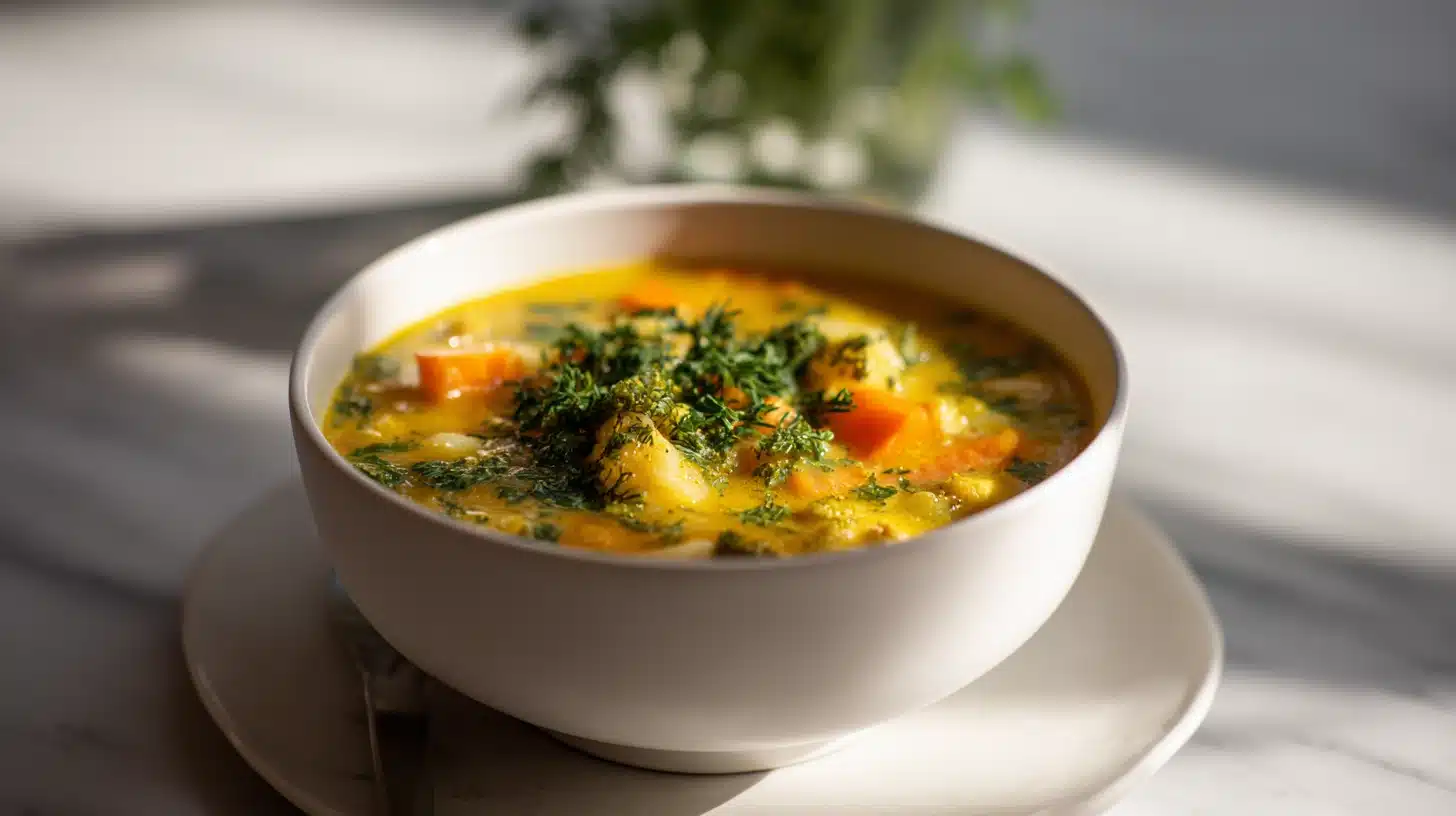
My grandmother kept a stockpot on the stove every single Sunday, and this bone broth vegetable soup is the closest thing I have ever found to that memory in a bowl.
Most vegetable soups taste thin and flat because the base has no backbone. Starting with a rich, collagen-packed bone broth instead of standard stock solves that problem instantly, giving you a deeply savory, full-bodied soup without hours of effort.
You’ll walk away with a 25-minute recipe that nails the right vegetable texture, a seasoning method that layers flavor from the very first step, and smart tips for customizing the broth base to match what you already have in your pantry.
Table of Contents
Why Bone Broth Makes All the Difference in Vegetable Soup
There is a reason restaurant soups taste richer than anything you make at home on a Wednesday night, and nine times out of ten the answer is the liquid they start with. Standard vegetable stock is fine, but it is essentially flavored water. Bone broth, on the other hand, is loaded with natural gelatin from collagen-rich bones, which gives the finished soup a silky, slightly thick body that coats your spoon and your palate.
When you make a vegetable soup with bone broth as the base, every single vegetable in the pot has something to cling to. The carrots taste sweeter. The celery reads as aromatic rather than just crunchy. The garlic and onion melt into the liquid and become the background hum that makes each spoonful feel complete.
The Difference Between Bone Broth and Stock
People use these words interchangeably, but they are not the same thing. Stock is simmered for a shorter time, usually two to four hours, and it is thinner and lighter in color. Bone broth is simmered anywhere from eight to twenty-four hours, which pulls not just flavor but also minerals and gelatin out of the bones. That long simmer is exactly why bone broth vegetable soup tastes so much more satisfying than a soup made with boxed stock.
You can use chicken bone broth or beef bone broth here depending on what flavor direction you want. A chicken bone broth soup recipe base will give you a lighter, more golden soup with a gentle savory note. Beef bone broth pulls the soup into deeper, earthier territory. Both work beautifully with the vegetables in this recipe.
Store-Bought vs. Homemade Bone Broth
Homemade is always going to win on flavor and gelatin content, but a good quality store-bought bone broth is a completely acceptable shortcut on a busy weeknight. Look for a brand that lists bones as the first ingredient, has a deep amber color in the carton, and ideally goes slightly jelly-like when refrigerated. That jelly texture is your cue that the gelatin is there.
If you are managing specific dietary needs, a recipe scaled to a smaller yield works well as a base. Check out this bariatric bone broth recipe for a lower-volume option that is still packed with nutrients.
The bottom line: upgrading your liquid base costs almost no extra effort and produces a result that tastes like you spent the whole afternoon in the kitchen.
Print
The Bone Broth Vegetable Soup That Tastes Like It Simmered All Day
- Total Time: 25 min
- Yield: 7 servings 1x
- Diet: Gluten Free
Description
A quick and hearty vegetable soup made with rich bone broth as the base. Tender carrots, celery, zucchini, green beans, and tomatoes come together in a savory, full-bodied broth that tastes slow-cooked but comes together in just 25 minutes. Great for meal prep and easy to customize with your favorite vegetables.
Ingredients
For the soup base:
1 tablespoon olive oil
1 medium yellow onion (diced)
3 cloves garlic (minced)
3 medium carrots (sliced into 1/4-inch coins)
3 stalks celery (sliced on a diagonal)
1 medium zucchini (cut into half-moons)
1 can (14.5 oz) diced tomatoes (with juices)
1 cup frozen green beans
For the broth and seasoning:
6 cups chicken or beef bone broth
1 teaspoon dried thyme
1 bay leaf
1/2 teaspoon kosher salt (plus more to taste)
1/4 teaspoon black pepper
1 tablespoon fresh lemon juice
2 tablespoons fresh flat-leaf parsley (chopped, for serving)
1 teaspoon olive oil (for drizzling, optional)
Instructions
1. Heat 1 tablespoon of olive oil in a large heavy-bottomed pot over medium heat. Once the oil shimmers and you smell a faint grassy note, add the diced onion with a pinch of salt. Cook for 3 to 4 minutes, stirring occasionally, until the edges turn translucent and slightly golden.
2. Add the minced garlic and cook for 60 seconds, stirring constantly, until it smells warm and nutty rather than sharp. Do not let it brown.
3. Add the sliced carrots and celery to the pot. Stir everything together and cook for 2 minutes so the vegetables begin to soften slightly at the edges.
4. Pour in the bone broth, diced tomatoes with their juices, dried thyme, bay leaf, salt, and black pepper. Stir well and bring to a gentle simmer over medium heat.
5. Once the soup is simmering, add the zucchini half-moons. Cook for 8 minutes, keeping the heat at a gentle simmer so the vegetables stay tender and hold their shape.
6. Add the frozen green beans and stir them in. Cook for a final 3 to 4 minutes until the green beans are bright green and just tender.
7. Remove the bay leaf. Stir in the fresh lemon juice and taste the broth, adjusting salt and pepper as needed until the flavor is round and savory.
8. Ladle the soup into bowls. Finish each bowl with a scatter of fresh chopped parsley and a small drizzle of olive oil if you like. Serve immediately.
Notes
Store leftovers in an airtight container in the refrigerator for up to 5 days or in the freezer for up to 3 months. Reheat gently on the stovetop over medium-low heat until warmed through.
For the best freezer results, leave out the zucchini and green beans before freezing and add them fresh when reheating, as these vegetables become soft after freezing and thawing.
Use chicken bone broth for a lighter, golden soup or beef bone broth for a darker, richer result. Both work well with this vegetable combination.
To add more substance, stir in a can of drained white beans or chickpeas in the last 5 minutes, or add 1/2 cup of small pasta like ditalini along with the carrots and celery and extend cooking by 5 minutes.
- Prep Time: 10 min
- Cook Time: 15 min
- Category: Dinner, Main Course
- Method: Stovetop
- Cuisine: American
Nutrition
- Serving Size: 1.5 cups
- Calories: 95 kcal
- Sugar: 6 g
- Sodium: 620 mg
- Fat: 4 g
- Saturated Fat: 1 g
- Unsaturated Fat: 3 g
- Trans Fat: 0 g
- Carbohydrates: 11 g
- Fiber: 3 g
- Protein: 6 g
- Cholesterol: 0 mg
Choosing and Prepping Your Vegetables for the Best Texture
Here is the thing nobody tells you about vegetable soup: the biggest mistake home cooks make is overcooking the vegetables. A 25-minute soup window actually works in your favor here because there is simply not enough time to turn your carrots to mush if you stay organized and pay attention.
The goal is vegetables that are tender all the way through but still hold their shape when you press them with a spoon. You want to bite into a chunk of zucchini and feel it give cleanly, not dissolve. That distinction is the line between a soup that looks beautiful in the bowl and one that looks like baby food.
The Best Vegetables to Use
This recipe uses a classic combination that delivers color, texture contrast, and a range of flavors:
- Carrots, sliced into coins about a quarter inch thick
- Celery, sliced on a slight diagonal for a bit of visual interest
- Zucchini, cut into half-moons so they stay intact during cooking
- Canned diced tomatoes, which bring acidity and body to the broth
- Frozen green beans, added at the very end so they stay bright and slightly snappy
- Yellow onion and garlic, which build the aromatic foundation everything else sits on
The order in which you add the vegetables matters a lot. Dense vegetables like carrots and celery go in first because they need the most time. Zucchini goes in about halfway through. Frozen green beans land in the pot with just three to four minutes left because they are already partially cooked and only need to warm through and get that gorgeous bright green color.
Quick Prep Tips
You do not need a mandoline or any special equipment. A sharp chef’s knife and a cutting board are all it takes. Cut everything before you turn on the heat, and the cooking process will feel fast and controlled rather than rushed.
If you want to add a starch to the soup, small pasta shapes like ditalini or elbow macaroni work well. Add them right after the carrots and celery and give the pot an extra five minutes. For a heartier option, check out this potato soup with vegetables recipe if you want to lean into a thicker, more filling bowl.
Dicing evenly ensures every piece finishes cooking at the same time so you are not fishing out overcooked onion while the carrot is still hard in the middle.
How to Build Deep Flavor in 25 Minutes
Twenty-five minutes sounds short for a soup, but when you build flavor strategically from the very first step, you can achieve something that tastes genuinely deep and complex. Treat each stage of the cooking process as a flavor-building opportunity rather than just a step to get through.
Start by warming a generous pour of olive oil in a heavy-bottomed pot over medium heat. The moment the oil shimmers and you catch a faint grassy smell, add your diced onion. You are not just softening the onion here. You are pulling sweetness out of it, and that takes about three to four minutes of actual contact with the hot oil, stirring occasionally, until the edges start to go translucent and slightly golden.
Add the garlic next and give it about 60 seconds. Garlic burns fast and goes bitter, so this is the one moment in the recipe where you want to stay close and keep things moving. You will smell a sharp, pungent aroma immediately, and then it will mellow into something warm and nutty. That is your cue to move on.
Seasoning at Every Layer
Add a pinch of salt and black pepper right when the aromatics go in. This is not just about making things salty. Salt at this stage draws moisture from the onion and garlic and helps them soften faster while concentrating their flavor in the oil. It also means you will need less salt at the end because the flavor is already built into the base.
Dried thyme and a bay leaf go in with the carrots and celery. These herbs need time and heat to open up, and the 20 minutes they spend in the hot broth is enough to do exactly that. Taste the broth about halfway through cooking and adjust seasoning. A small squeeze of lemon juice right at the end brightens everything without making the soup taste citrusy.
If you want more ideas for soups with this kind of layered approach, the soup archives on Forkful Daily have plenty of options organized by style and technique.
The Final Finish
Right before serving, do one last taste and adjust. The soup should taste savory and rounded, not flat or one-note. A tiny drizzle of good olive oil on top of each bowl, plus a scatter of fresh parsley, adds a brightness that dried herbs alone cannot replicate. The green of the parsley against the amber broth and colorful vegetables makes the whole bowl look as good as it tastes.
Storing, Freezing, and Customizing Your Soup
One of the best things about a bone broth vegetable soup is how well it holds up over time. The flavor actually improves after a night in the refrigerator as the herbs continue to bloom and the broth absorbs more depth from the vegetables. This makes it an ideal recipe to double on the weekend and eat through the week.
Storing in the Refrigerator
Let the soup cool completely before transferring it to an airtight container. It will keep in the refrigerator for up to five days without any quality loss. When reheating, warm it gently over medium-low heat on the stove. A microwave works in a pinch, but stovetop reheating keeps the vegetables from getting any softer than they already are.
Freezing Instructions
This soup freezes exceptionally well, especially if you hold back the zucchini and green beans before freezing. Those two vegetables become mushy when frozen and thawed, so either eat them fresh or add them fresh when you reheat from frozen. The broth-based portion with carrots, celery, tomatoes, and aromatics freezes perfectly for up to three months.
Freeze in individual portions for easy weekday lunches. A wide-mouth mason jar with about an inch of headspace works well, or use zip-lock freezer bags laid flat to save space.
Customizations and Variations
This recipe is genuinely flexible. Here are some easy ways to make it your own:
- Swap the chicken bone broth for beef bone broth to make a richer, heartier beef bone broth vegetable soup
- Add a can of white beans or chickpeas in the last five minutes for extra protein and staying power
- Stir in a large handful of baby spinach or chopped kale right at the end for added greens
- Use vegetable broth instead of animal-based bone broth to keep it plant-forward, though the body of the soup will be thinner
If you love a bean-heavy vegetarian take on this, the vegetarian lentil soup from Forkful Daily is a natural companion recipe.
For meal prep purposes, the homemade bone broth vegetable soup base doubles or triples easily. A 6-quart Dutch oven handles a doubled batch without crowding, which is important because you want the broth to simmer rather than steam-cook the vegetables.
Frequently Asked Questions
Can I use store-bought bone broth for this recipe?
Yes, store-bought bone broth works very well here and is the most practical option for a 25-minute soup. Look for a brand with a deep amber color and at least 9 grams of protein per cup, which signals good collagen content. Avoid broths with very high sodium if you plan to season the soup aggressively.
What is the difference between chicken and beef bone broth in this soup?
Chicken bone broth gives you a lighter, more golden soup with a delicate savory flavor that lets the vegetables shine. Beef bone broth produces a darker, richer, more robust bowl that feels heartier. Both are equally good choices. The right one depends on whether you want something light and fresh or deep and warming.
Can I make this soup in a slow cooker or Instant Pot?
Absolutely. For the slow cooker, saute your aromatics first, then combine everything and cook on low for six to seven hours or high for three to four hours. For the Instant Pot, use the saute function for the aromatics, add everything else, and pressure cook on high for four minutes with a quick release. Check out chicken noodle soup in the crock pot for a similar technique guide.
How do I keep the vegetables from getting mushy?
The two main rules are: cut dense vegetables slightly thicker than you think you need to, and add delicate vegetables like zucchini and green beans in the last few minutes of cooking. Avoiding a hard rolling boil and keeping the soup at a gentle simmer also protects texture significantly.
Conclusion
There is something quietly satisfying about a bowl of bone broth vegetable soup that comes together in under half an hour but tastes like the result of an entire afternoon. The rich, gelatin-forward broth does the heavy lifting while fresh vegetables add color, texture, and brightness. Layer your seasonings from the start, respect your vegetable cooking times, and finish with fresh herbs, and you will have a soup worth making on repeat.
Give this recipe a try this week, whether it is a quick Sunday lunch or a meal-prepped batch for the days ahead.
For more recipes like this bone broth vegetable soup, follow us on Facebook and Pinterest for cozy soup and dinner ideas all season long.