Sicilian-Style Grilled Swordfish with Capers and Lemon is the dish that changed the way I think about weeknight fish dinners. The first time I tasted it in a small trattoria outside Palermo, I couldn’t believe something so bold and bright came together in under an hour.
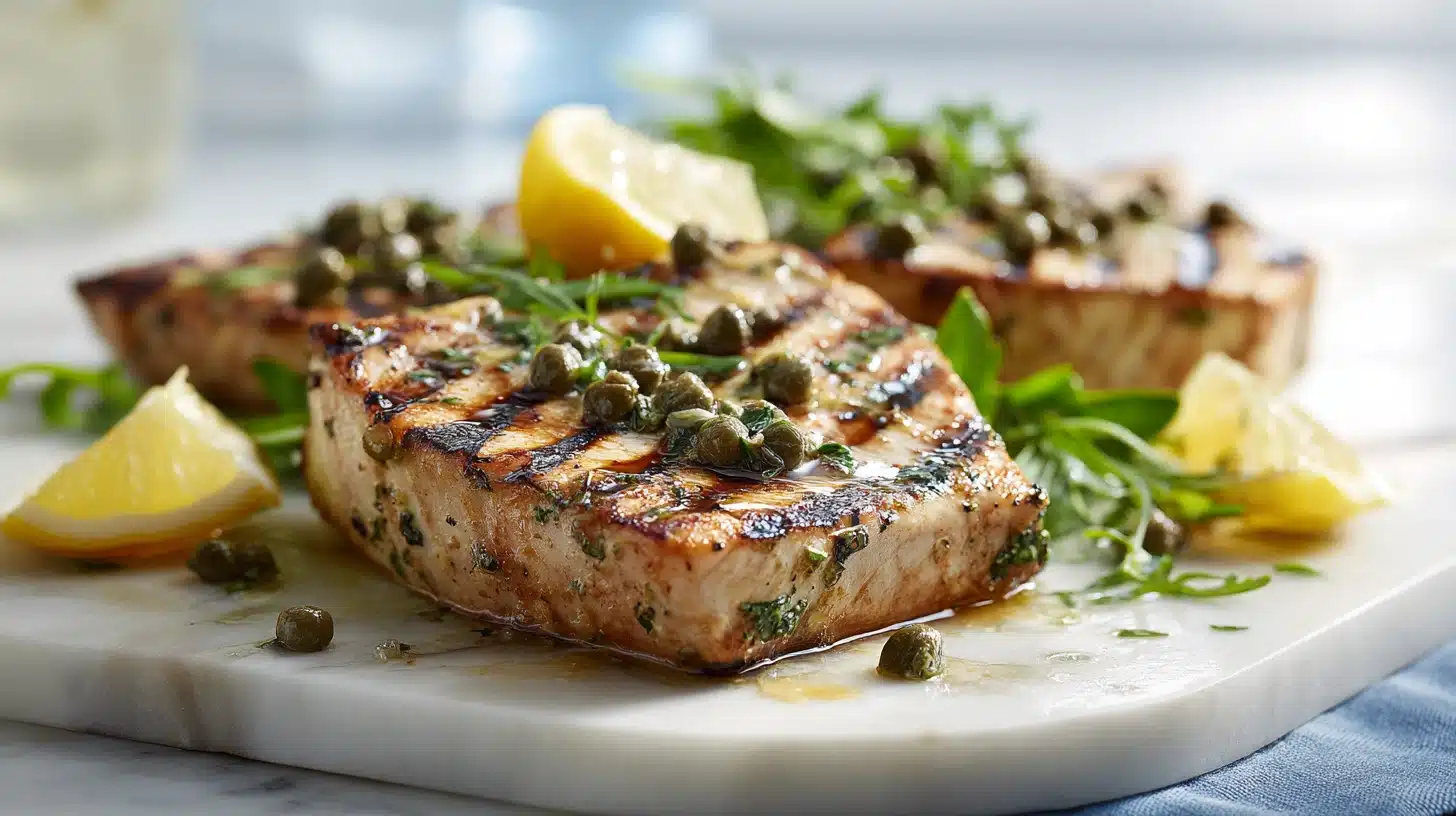
Most grilled swordfish ends up dry and chalky before it ever hits the plate. This recipe solves that with a browned butter and olive oil base that keeps every steak moist and deeply savory from edge to center.
Inside: you’ll learn the exact grill timing that prevents overcooking, how to build the classic Sicilian lemon caper sauce in one pan, and which pantry staples turn an ordinary swordfish steak into something special.
Table of Contents
What Makes Sicilian Swordfish So Special
Swordfish has a long history in Sicilian cooking. The island sits at the crossroads of the Mediterranean, and its cuisine reflects that geography. Swordfish, known locally as pesce spada, is fished from the Strait of Messina, and Sicilian cooks have spent centuries figuring out exactly how to treat it. The answer almost always involves lemons, capers, olives, and good olive oil.
What Swordfish Is Like
If you’ve never cooked swordfish before, it’s worth knowing what you’re working with. Swordfish steaks are firm, meaty, and mild. The flesh is dense and opaque, almost like a well-marbled tuna steak, and it holds up beautifully on the grill without falling apart the way flakier fish tends to do. The flavor is clean and slightly sweet, which makes it a perfect canvas for briny capers, sharp lemon zest, and fruity black olives.
The fat content is moderate, which means swordfish can go dry quickly if it’s overcooked. You want to pull it off the heat when the center is just barely opaque, with a little give when you press the thickest part with your fingertip. That’s the sweet spot. Once you hit it, the texture is extraordinary: silky, tender, and nothing like the rubbery slabs you might have had at a mediocre seafood restaurant.
What Is Pesce Spada alla Ghiotta?
The traditional Sicilian preparation you’re drawing from here is called pesce spada alla ghiotta, which translates roughly to “swordfish in the glutton’s style.” The name is affectionate. Ghiotta refers to a rich, deeply flavorful braising sauce built from tomatoes, onions, celery, capers, olives, and sometimes pine nuts or raisins. It’s a sweet-savory, intensely layered sauce that Sicilian grandmothers have been spooning over fish for generations.
This recipe takes those same signature flavors, the capers, olives, tomatoes, and lemon, and pairs them with grilled swordfish steaks rather than braised ones. You get the char and smokiness of the grill alongside the brightness of a quick lemon caper pan sauce. It’s a little faster and lighter than the traditional long-braised version while still honoring everything that makes Sicilian swordfish so compelling.
The key aromatics are garlic and fresh oregano. Both are essential. Dried oregano can work in a pinch, but fresh gives you a floral, slightly peppery note that dried simply cannot replicate. If you love bright, herby Mediterranean dishes, you’ll also enjoy this greek orzo salad with lemon herb dressing, which pairs beautifully as a side dish.
Print
Sicilian-Style Grilled Swordfish with Capers and Lemon (Ready in 35 Minutes)
- Total Time: 35 min
- Yield: 4 servings 1x
Description
Sicilian-style grilled swordfish steaks served with a quick pan sauce of browned butter, capers, lemon juice, cherry tomatoes, and Kalamata olives. The fish gets a deep char from the grill and the sauce comes together in the same pan in under 10 minutes. Ready from start to finish in 35 minutes and serves four people.
Ingredients
For the swordfish:
4 swordfish steaks (about 6 ounces each, cut 1 inch thick)
2 tablespoons olive oil
1 teaspoon kosher salt
1/2 teaspoon freshly cracked black pepper
1 teaspoon dried oregano (or 1 tablespoon fresh oregano leaves)
Zest of 1 lemon
For the lemon caper sauce:
2 tablespoons unsalted butter
1 tablespoon olive oil
4 garlic cloves (thinly sliced)
3 tablespoons capers (drained, roughly chopped if large)
1/2 cup cherry tomatoes (halved)
1/3 cup pitted Kalamata olives (halved)
3 tablespoons fresh lemon juice (from 1 large lemon)
1/4 cup dry white wine (optional)
2 tablespoons fresh flat-leaf parsley (roughly chopped)
Instructions
1. Pat the swordfish steaks completely dry with paper towels, then drizzle both sides with olive oil. Season evenly with salt, pepper, dried oregano, and lemon zest, pressing gently so the seasoning adheres. Let the steaks rest at room temperature for 10 minutes while the grill preheats.
2. Preheat your grill to high heat, around 450 degrees F. Brush the grates with oil using a folded paper towel held with tongs to prevent sticking.
3. Place the seasoned swordfish steaks on the hot grill. You should hear a loud, steady sizzle immediately. Do not move the fish for 4 minutes, letting a deep golden crust form.
4. Flip each steak once using a wide spatula and grill for another 3 to 4 minutes on the second side. The fish is ready when the center is just opaque and gives slightly when pressed with a fingertip. Transfer to a plate and tent loosely with foil.
5. While the fish rests, melt the butter with the olive oil in a medium skillet over medium heat. Watch closely until the foam subsides and the butter turns golden amber and smells nutty, about 2 to 3 minutes.
6. Add the sliced garlic to the browned butter and stir constantly for 1 minute until fragrant and pale gold at the edges. Add the capers and olives and stir for 30 seconds.
7. Pour in the white wine if using and let it bubble and reduce for 1 minute, scraping up any browned bits from the pan. Add the cherry tomatoes and cook for 2 minutes until they begin to soften and release their juice.
8. Pour in the lemon juice, stir to combine, and taste for salt. Spoon the warm sauce generously over the rested swordfish steaks, scatter fresh parsley on top, and serve immediately.
Notes
Store leftover swordfish in an airtight container in the refrigerator for up to 2 days. Reheat gently in a covered skillet over low heat with a splash of water or white wine to prevent drying out. Swordfish does not freeze well once cooked.
If you cannot find fresh swordfish, fresh-thawed frozen swordfish steaks work well. Thaw overnight in the refrigerator and pat very dry before seasoning.
Salt-packed capers rinsed under cold water have more depth of flavor than brine-packed. Either works in this recipe.
Do not marinate the swordfish in lemon juice for more than 30 minutes or the acid will begin to break down the outer layer of the flesh before it hits the grill.
- Prep Time: 10 min
- Cook Time: 25 min
- Category: Dinner, Main Course
- Method: Grilling
- Cuisine: Italian
Nutrition
- Serving Size: 1 swordfish steak with sauce
- Calories: 380 kcal
- Sugar: 3 g
- Sodium: 620 mg
- Fat: 24 g
- Saturated Fat: 7 g
- Unsaturated Fat: 17 g
- Trans Fat: 0 g
- Carbohydrates: 6 g
- Fiber: 1 g
- Protein: 34 g
- Cholesterol: 95 mg
Ingredients You Will Need
Getting the right ingredients matters here because this dish is relatively simple. There’s nowhere to hide behind a heavy cream sauce or a long braise, so every component needs to be in good shape.
For the swordfish:
- 4 swordfish steaks (about 6 ounces each, cut 1 inch thick)
- 2 tablespoons olive oil
- 1 teaspoon kosher salt
- 1/2 teaspoon freshly cracked black pepper
- 1 teaspoon dried oregano (or 1 tablespoon fresh oregano leaves)
- Zest of 1 lemon
For the lemon caper sauce:
- 2 tablespoons unsalted butter
- 1 tablespoon olive oil
- 4 garlic cloves (thinly sliced)
- 3 tablespoons capers (drained, roughly chopped if large)
- 1/2 cup cherry tomatoes (halved)
- 1/3 cup pitted Kalamata olives (halved)
- Juice of 1 large lemon (about 3 tablespoons)
- 1/4 cup dry white wine (optional but recommended)
- 2 tablespoons fresh flat-leaf parsley (roughly chopped)
On sourcing your swordfish: Buy the freshest steaks you can find. Look for flesh that is pale ivory to light pink with a clean ocean smell, not fishy. A good fishmonger will cut them to order. Avoid steaks that look gray or have any brownish patches at the edges, as that indicates age.
On capers: Use salt-packed capers rinsed well if you can find them; they have more depth than brine-packed. If you only have brine-packed, drain them and give them a quick rinse. Either works.
On butter: The browned butter in this sauce is what gives the whole thing its nutty, toasty backbone. Don’t skip it. Watch the pan carefully as the butter foams, and pull it off the heat the moment it turns a warm amber color and smells like toasted hazelnuts. That smell is your cue.
How to Make Sicilian-Style Grilled Swordfish with Capers and Lemon
This recipe moves quickly, so read through the steps before you start. The sauce comes together while the fish rests, which means everything lands on the plate warm and at the same time.
Step 1: Season and Prep the Fish
Pat the swordfish steaks completely dry with paper towels. Moisture on the surface is the enemy of a good sear because water steams the fish instead of letting it develop a crust. Drizzle both sides with olive oil, then season generously with salt, pepper, dried oregano, and lemon zest. Press the seasonings gently into the flesh and let the steaks sit at room temperature for 10 minutes while your grill heats up.
Step 2: Grill the Steaks
Preheat your grill to high heat, around 450°F to 500°F. Brush the grates with oil using a folded paper towel gripped with tongs. Place the steaks on the grill and don’t move them for 4 minutes. You should hear a strong, steady sizzle the moment they hit the grates. That sound is what you want. Flip once and cook for another 3 to 4 minutes on the second side. The fish is done when the center is just opaque and yields slightly to light pressure. Transfer to a plate and tent loosely with foil while you build the sauce.
Step 3: Build the Lemon Caper Sauce
In a medium skillet over medium heat, melt the butter with the olive oil. Once the foam subsides and the butter begins to turn golden, add the sliced garlic and cook for 1 minute, stirring constantly, until fragrant and just beginning to turn pale gold at the edges. Add the capers and olives and stir for another 30 seconds. Pour in the white wine if using and let it bubble and reduce for 1 minute. Add the cherry tomatoes and cook until they just begin to soften and release their juice, about 2 minutes. Squeeze in the lemon juice, stir everything together, and taste for seasoning.
Step 4: Plate and Finish
Spoon the warm sauce generously over the rested swordfish steaks. Scatter fresh parsley over the top and add a few thin lemon slices for color. Serve immediately. The combination of the charred, smoky fish and the bright, briny sauce is what makes this so satisfying. It smells absolutely incredible the moment it hits the table.
For a complete dinner, serve alongside a simple pasta. The flavors here would complement a plate of lemon butter garlic pasta perfectly.
Tips for the Best Results Every Time
A few targeted adjustments will take your Sicilian-Style Grilled Swordfish with Capers and Lemon from good to genuinely memorable. These are the details that make a real difference.
Do Not Overcook the Fish
The single most common mistake with swordfish is leaving it on the heat too long. Swordfish steaks that are 1 inch thick need 7 to 8 minutes total over high heat. At the 6-minute mark, start checking. The fish should feel firm around the outer edges but still have a slight springiness in the very center. If it feels completely rigid all the way through, it’s gone past its best point. Pull it a touch early and let carryover heat finish the job during the rest.
Use a Two-Zone Grill If You Have One
If your steaks are thicker than 1 inch, set up a two-zone fire: high heat on one side, medium heat on the other. Sear for 3 minutes per side over the hot zone, then slide the steaks to the cooler side to finish cooking gently. This prevents the exterior from charring before the center has cooked through.
Brown the Butter Properly
The browned butter in this sauce isn’t optional in spirit, even if it’s quick. Let it go past the pale foam stage until the solids turn golden and the whole pan smells nutty and warm. That flavor difference is significant. Just watch it closely because it can go from browned to burned in about 30 seconds.
Marinating: A Short Window Works Best
A 10-minute rest with the seasoning is all you need. Don’t marinate swordfish in an acidic marinade for more than 30 minutes. The lemon juice will begin to denature the protein, giving the outside a mushy, pre-cooked texture before it ever hits the grill.
Choosing the Right Pan for the Sauce
A stainless steel or cast iron skillet works best for building the lemon caper sauce because you want the pan to develop a little color. Nonstick pans prevent the fond from forming, which means you lose the depth that makes the sauce taste like it’s been cooking far longer than it has.
| Swordfish Thickness | Grill Time Per Side | Internal Target |
|---|---|---|
| 3/4 inch | 3 min | Just opaque center |
| 1 inch | 4 min | Slight give at center |
| 1.25 inches | 5 min | Use two-zone method |
If you enjoy grilling proteins with bold sauces on weeknights, the technique here is similar to what makes grilled california avocado chicken work so well.
Frequently Asked Questions
What is swordfish like?
Swordfish is a firm, meaty fish with a mild, slightly sweet flavor. It has a dense, steak-like texture that holds up well to grilling, broiling, and pan-searing. Because of its fat content and firm flesh, it’s one of the most forgiving fish to cook on a grill, though it can turn dry and tough if left on the heat too long.
What does pesce spada alla ghiotta mean?
Pesce spada alla ghiotta is a traditional Sicilian dish whose name translates to “swordfish in the glutton’s style.” The word ghiotta refers to a rich, flavor-packed sauce made with tomatoes, capers, olives, onions, and celery. It’s a beloved preparation from the coastal towns of Sicily, especially around Messina, where swordfish has been a staple catch for centuries.
Can I make this recipe indoors without a grill?
Yes. A cast iron grill pan heated over high heat works well and will give you good char marks. Alternatively, a very hot stainless steel skillet will sear the fish beautifully. The key is getting the surface extremely hot before the fish touches it, so the exterior sears rather than steams.
What can I serve with lemon caper swordfish?
This dish pairs well with simple grains like couscous, farro, or white rice, which soak up the sauce nicely. A green salad, roasted zucchini, or steamed broccoli work well on the side. For a more substantial spread, the greek orzo salad with lemon herb dressing is a natural pairing that keeps the whole meal in the Mediterranean spirit.
Conclusion
Sicilian-Style Grilled Swordfish with Capers and Lemon proves that bold, restaurant-quality fish is entirely within reach on a Tuesday night. The secret isn’t a long ingredient list or complicated technique. It’s respecting the fish with good heat, a short cook time, and a bright sauce that does exactly what great Sicilian cooking has always done: let fresh, honest ingredients speak clearly.
Give it a try this week. Serve it with a cold glass of Sicilian white wine, a pile of couscous to catch the sauce, and good company if you can manage it.
For more recipes like this Sicilian-Style Grilled Swordfish with Capers and Lemon, follow us on Facebook and Pinterest for easy Mediterranean dinner ideas.