
Greek Orzo Salad with Lemon Herb Dressing is one of those rare recipes where the leftovers outshine the original batch. Once you understand why, you’ll never look at pasta salad the same way again.
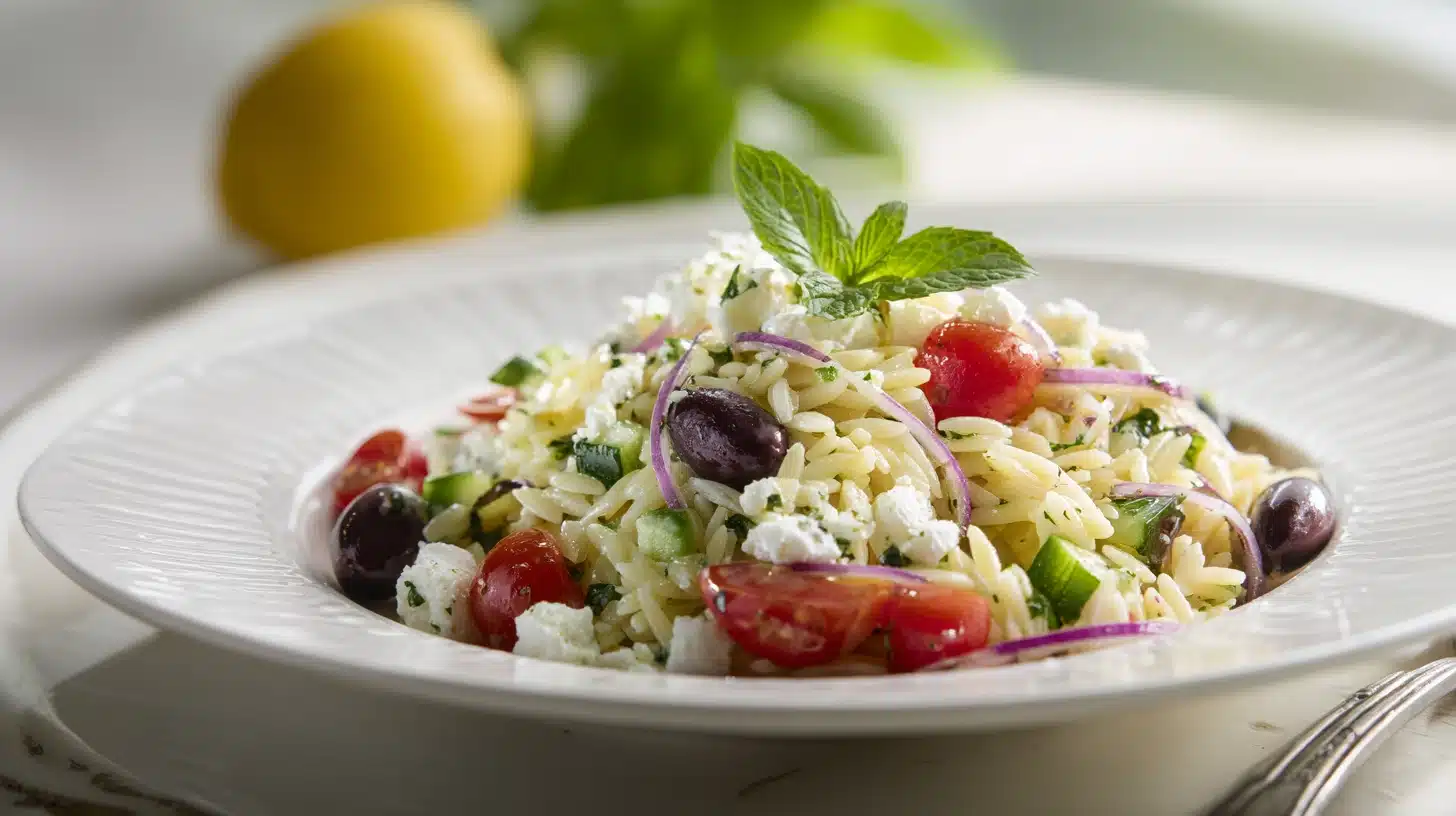
Most orzo salads turn into a clumped, dry mess by lunch the next day. This one does the opposite: the lemon herb dressing soaks deeper into every grain overnight, making the whole bowl bolder and more satisfying.
Inside: exactly how to cook orzo so it never sticks, the one dressing technique that keeps things bright for days, and the ratio of feta to briny olives that makes every bite pop.
Table of Contents
Why This Greek Orzo Pasta Salad Works So Well
There’s a quiet genius to orzo that most people overlook. It looks like rice, it cooks like pasta, and it holds dressing in a way that larger shapes simply can’t. Each tiny grain has just enough surface area to absorb flavor without getting waterlogged.
The Magic of the Right Pasta Shape
Orzo is a semolina pasta cut to about the size of a large grain of rice. When cooked properly, it has a gentle chew and a slightly dense center that grips onto olive oil and lemon juice rather than letting them pool at the bottom of the bowl. If you want to see how orzo performs in a warm, saucy context, the one pot spring herb and lemon orzo is a good comparison.
The difference between a Greek orzo pasta salad that holds up and one that turns gluey comes down to two things: cooking in well-salted water and rinsing immediately after draining. I know, rinsing pasta is usually a sin. But for cold pasta salads, that cold rinse stops the cooking, washes away excess starch, and drops the temperature fast enough to keep the grains separate. You’ll hear a satisfying hiss when the hot pasta hits the cold water, and you’ll see each piece fall free from the others.
Building Layers of Mediterranean Flavor
The flavors in this salad are bold. Kalamata olives bring a dark, briny depth. Crumbled feta adds a salty, creamy contrast. Cherry tomatoes bring sweetness and a burst of juice when you bite into them. Thin-sliced red onion adds a sharp edge that softens once it sits in the dressing for even ten minutes.
Cucumber is the underrated hero here. Use a Persian or English cucumber and slice it into half-moons rather than full rounds. The thinner cut means every bite gets a little crunch without any one piece overwhelming a forkful. If you love salads with fresh produce, the feta cucumber watermelon salad uses some of these same ingredients in a completely different way.
Fresh parsley and fresh dill are non-negotiable. Dried herbs work in a pinch for the dressing, but the chopped fresh herbs scattered through the salad are what make it smell like a Mediterranean kitchen. That grassy, almost floral scent when you toss everything together is the moment you know it’s going to be good.
Print
Greek Orzo Salad with Lemon Herb Dressing That Actually Tastes Better the Next Day
- Total Time: 30 min
- Yield: 6 servings 1x
- Diet: Vegetarian
Description
A fresh and bright cold pasta salad made with tender orzo, crumbled feta, Kalamata olives, cucumber, and cherry tomatoes, all tossed in a tangy lemon herb dressing. It comes together in 30 minutes and tastes even better the next day, making it great for meal prep and potlucks.
Ingredients
For the salad:
1 1/2 cups dry orzo pasta
1 cup cherry tomatoes (halved)
1 cup English cucumber (diced, about half a large cucumber)
1/4 medium red onion (thinly sliced)
1/2 cup Kalamata olives (pitted and halved)
4 ounces feta cheese (crumbled)
3 tablespoons fresh parsley (roughly chopped)
2 tablespoons fresh dill (roughly chopped)
For the lemon herb dressing:
3 tablespoons fresh lemon juice (about 1 large lemon)
2 tablespoons red wine vinegar
1 small garlic clove (finely grated)
1 teaspoon Dijon mustard
1/2 teaspoon dried oregano
1/2 teaspoon kosher salt
1/4 teaspoon black pepper
1/3 cup extra virgin olive oil
2 tablespoons fresh dill (chopped)
2 tablespoons fresh parsley (chopped)
Instructions
1. Cook the orzo in a large pot of generously salted boiling water for 8 to 9 minutes, until just tender with a slight bite at the center. Taste at the 7-minute mark to check texture.
2. Drain the orzo through a fine mesh strainer and immediately run cold water over it for 30 seconds, tossing as you go, until the pasta is fully cooled and the grains separate easily.
3. Spread the rinsed orzo onto a sheet pan or large plate and let it rest for 5 minutes until the surface is dry and no steam remains.
4. Make the dressing by whisking together lemon juice, red wine vinegar, grated garlic, Dijon mustard, dried oregano, salt, and pepper in a small bowl until the salt dissolves. Slowly pour in the olive oil while whisking constantly until the dressing looks creamy and slightly opaque. Stir in the chopped fresh dill and parsley.
5. Add the cooled orzo to a large bowl and pour about two-thirds of the dressing over it. Toss well so every grain is coated and glistening.
6. Add the cherry tomatoes, cucumber, red onion, and Kalamata olives. Toss gently to combine, then taste and add more dressing as needed.
7. Scatter half the crumbled feta over the salad and fold it in gently so it keeps some of its texture rather than dissolving into the dressing.
8. Top with the remaining feta, fresh parsley, and fresh dill. Let the salad rest for at least 10 minutes before serving so the dressing absorbs into the orzo. Serve at room temperature or chilled.
Notes
Store in an airtight container in the refrigerator for up to 4 days. This salad is not suitable for freezing as the vegetables lose their texture when thawed.
To refresh leftovers: stir in a drizzle of olive oil and a squeeze of fresh lemon juice before serving. The orzo absorbs dressing as it sits and may look dry straight from the fridge.
For meal prep: keep the dressing, extra fresh herbs, and feta topping separate and add them just before eating each portion to keep everything at peak freshness.
To reduce the sharpness of raw red onion, soak the slices in cold water for 5 minutes, then pat them dry before adding to the salad.
- Prep Time: 20 min
- Cook Time: 10 min
- Category: Side Dishes
- Method: No-Cook, Stovetop
- Cuisine: Mediterranean
Nutrition
- Serving Size: 1 cup
- Calories: 320 kcal
- Sugar: 3 g
- Sodium: 540 mg
- Fat: 18 g
- Saturated Fat: 5 g
- Unsaturated Fat: 13 g
- Trans Fat: 0 g
- Carbohydrates: 33 g
- Fiber: 2 g
- Protein: 8 g
- Cholesterol: 17 mg
How to Make the Lemon Herb Dressing
The dressing ties every ingredient in this lemon orzo salad together. It’s a straightforward vinaigrette, but a few small decisions make it noticeably better than basic lemon-and-oil.
The Ingredients
For one batch serving six people, you need:
- 3 tablespoons fresh lemon juice (about 1 large lemon)
- 2 tablespoons red wine vinegar
- 1 small garlic clove (finely grated or pressed)
- 1 teaspoon Dijon mustard
- 1/2 teaspoon dried oregano
- 1/2 teaspoon kosher salt
- 1/4 teaspoon black pepper
- 1/3 cup extra virgin olive oil
- 2 tablespoons chopped fresh dill
- 2 tablespoons chopped fresh parsley
Why Dijon and Red Wine Vinegar Both Matter
Dijon mustard acts as an emulsifier. When you whisk it into the lemon juice before adding the olive oil, it helps the fat and acid stay combined instead of separating into oily puddles at the bottom of the bowl. The result is a dressing that clings to every grain of orzo rather than sinking away.
Red wine vinegar adds a different kind of acidity than lemon juice. Lemon juice is bright and floral. Red wine vinegar is deeper and slightly earthy. Using both gives the dressing a layered quality that makes people ask what’s in it. Just lemon, and the whole thing can taste thin. Just vinegar, and you lose the freshness that defines a healthy Greek orzo salad.
Grate the garlic on a microplane rather than mincing it. Grated garlic dissolves almost completely into the dressing and distributes its flavor evenly. Minced garlic tends to clump in a couple of bites and stay raw and sharp in others.
To build the dressing: combine lemon juice, vinegar, garlic, mustard, oregano, salt, and pepper in a small bowl or jar. Whisk until the salt dissolves. Slowly pour in the olive oil while whisking constantly. You’ll see the color shift from pale yellow to a creamy, slightly opaque emulsion. Stir in the fresh herbs last so they don’t bruise from too much mixing.
Taste it before it goes on the salad. It should be punchy and a little assertive on its own, because the orzo and feta will absorb and mellow a lot of that intensity once everything is combined.
Step-by-Step: Putting the Salad Together
This orzo salad with feta comes together in about 30 minutes, and most of that time is hands-off cooking.
Cook and Cool the Orzo
Bring a large pot of water to a rolling boil. Salt it generously, at least a tablespoon of kosher salt for every 4 quarts of water. The water should taste almost like light broth. Add 1 1/2 cups dry orzo and cook according to package directions, usually 8 to 9 minutes, until just tender with a slight bite at the center. Taste one at the 7-minute mark. You want it al dente, not mushy. The orzo will soften a little more as it sits in dressing.
Drain immediately through a fine mesh strainer, then run cold water over it for a full 30 seconds, tossing as you go. Spread the drained orzo on a sheet pan or large plate and let it sit for 5 minutes. This step ensures any remaining steam escapes and the surface dries out just enough so the dressing coats rather than slides off.
Prep the Vegetables
While the orzo cooks:
- Halve 1 cup cherry tomatoes
- Dice half an English cucumber (about 1 cup)
- Thinly slice 1/4 of a red onion
- Halve 1/2 cup Kalamata olives if they are whole
- Crumble 4 ounces feta cheese
If your red onion tastes very sharp, soak the slices in cold water for 5 minutes, then pat them dry. This takes the edge off without losing the flavor.
Toss and Rest
Add the cooled orzo to a large bowl. Pour about two-thirds of the dressing over it and toss well. Add the tomatoes, cucumber, red onion, olives, and half the feta. Toss again gently. Taste and add more dressing as needed. Scatter the remaining feta and a handful of fresh herbs over the top.
If you’re serving right away, let the salad sit for at least 10 minutes at room temperature so the dressing has a chance to absorb. If you’re making it ahead, cover and refrigerate, then add the remaining dressing and fresh herbs just before serving.
For another cold pasta salad approach with a completely different flavor profile, the tangy mediterranean pasta salad is worth a look alongside this one.
Serving Ideas, Storage, and Meal Prep Tips
One of the best things about this Greek Orzo Salad with Lemon Herb Dressing is how well it fits into a real week of cooking. It’s the kind of recipe that earns its place in your rotation because it does multiple jobs at once.
Serving Suggestions
Serve it as a main course for a light lunch, or as a side dish next to grilled chicken, lamb chops, or salmon. A scoop alongside simple grilled protein is the kind of dinner that feels put-together with very little effort. It also travels well, which makes it ideal for potlucks, picnics, and packed lunches.
If you want to make it more substantial, add a can of drained chickpeas or some shredded rotisserie chicken. The lemon herb dressing complements both options without any adjustments needed. For a protein-forward orzo recipe that shares the same lemony spirit, the high protein lemon chicken orzo is a solid companion recipe.
How to Store It
Store the salad in an airtight container in the refrigerator for up to 4 days. The orzo will absorb more dressing as it sits, so the salad may look a little dry when you pull it out. A drizzle of olive oil and a squeeze of fresh lemon juice stirred in before serving brings it right back to life. Don’t freeze this salad: the cucumber and tomatoes turn watery and soft once thawed, and the orzo loses its texture.
Meal Prep Notes
This lemon orzo salad is excellent for meal prep because it gets better with time. Make the full batch on Sunday. Store the dressing separately if you want maximum freshness. Pack individual servings in containers with a small container of extra dressing on the side. By Tuesday, the flavors are more developed, and the whole thing requires zero effort to get lunch on the table.
One tip: hold the fresh herbs and the feta topping until day-of if you’re portioning for multiple days. The parsley and dill stay greener and the feta keeps its texture better when they’re not sitting in dressing for 48 hours.
| Storage Method | Duration | Notes |
|---|---|---|
| Refrigerator (whole batch) | Up to 4 days | Add fresh lemon juice before serving |
| Refrigerator (dressing separate) | Up to 5 days | Dress just before eating |
| Freezer | Not recommended | Vegetables lose texture |
Frequently Asked Questions
Can I make Greek orzo salad ahead of time?
Yes, and it’s actually a good idea. Make the salad up to 24 hours in advance and store it covered in the refrigerator. Hold back a little extra dressing, the feta topping, and the fresh herbs. Right before serving, stir in the reserved dressing and add the herbs and feta so they stay fresh and bright.
How long does Greek orzo salad last in the fridge?
This salad keeps well for up to 4 days in an airtight container. The vegetables will soften slightly by day 3, but the flavor actually deepens. A splash of fresh lemon juice and a light drizzle of olive oil before serving on day 2 or later will refresh the whole bowl.
Can I use a different type of pasta?
You can, though the texture will change. Small shapes like ditalini, pearl couscous, or small shells work well as substitutes. Larger shapes like penne or rotini can work too, but the salad will feel heavier and less delicate. The orzo shape is specifically what gives this Mediterranean orzo salad its light, cohesive quality.
Is this salad gluten-free?
Standard orzo is made from semolina wheat, so no, this recipe is not gluten-free as written. To make it gluten-free, substitute a certified gluten-free orzo (several brands now make rice-based versions) or use another gluten-free small pasta. All other ingredients in the recipe are naturally gluten-free.
Conclusion
Greek Orzo Salad with Lemon Herb Dressing earns its place as a go-to recipe because it solves the pasta salad problem most people have given up trying to fix: the one where the whole bowl tastes flat and dry by the time anyone actually eats it. The emulsified lemon herb dressing, the al dente orzo, and the balance of salty, briny, and fresh ingredients make sure that doesn’t happen here.
Give this one a try this week, especially if you have a lunch or a potluck coming up where you need something that looks and tastes like you put in real effort.
For more recipes like this Greek Orzo Salad with Lemon Herb Dressing, follow us on Facebook and Pinterest for fresh Mediterranean meal prep ideas.