The first time I made kimchi pasta, I was skeptical that a jar of funky, fermented cabbage had any business being near a pot of spaghetti.
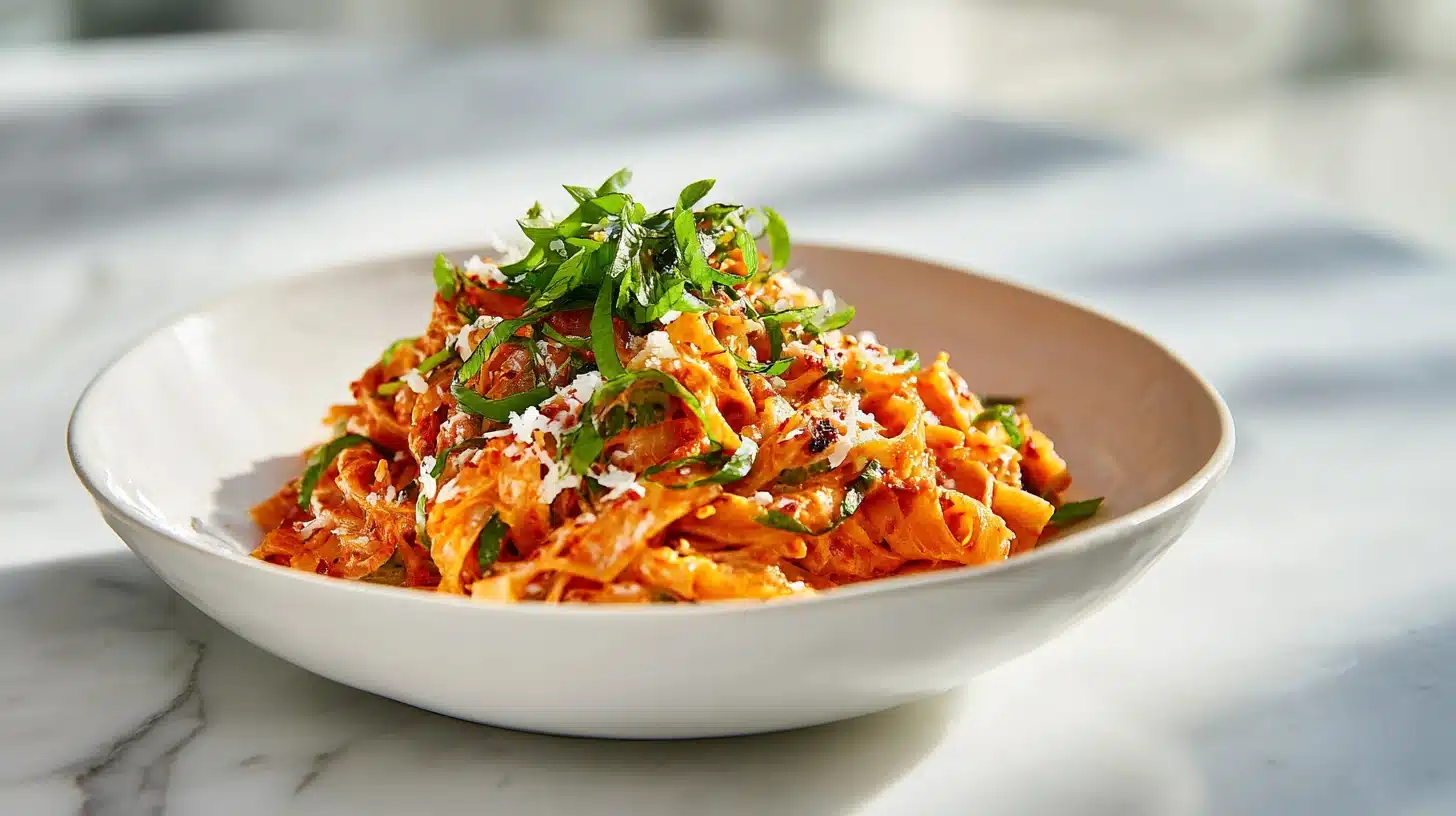
Most quick pasta recipes either taste flat and boring or turn mushy from a sauce that never quite comes together. This one uses the brine from your kimchi jar as a secret flavor weapon, giving you a deeply savory, tangy sauce with zero extra effort.
Inside: how to build the sauce without breaking it, which pasta shape holds up best, and the one finishing move that makes this dish taste like you spent an hour in the kitchen.
Table of Contents
Why Kimchi and Pasta Belong Together
If you’ve ever cooked kimchi fried rice, you already know that kimchi works with almost anything. It’s sour, spicy, deeply umami, and it adds instant complexity to whatever it touches. Pasta, with its neutral, starchy base, is basically the perfect partner.
The Flavor Science Behind the Combination
Kimchi is made through lacto-fermentation, the same process that gives sourdough bread its tang and aged cheese its depth. When you cook kimchi down in a pan, two things happen. First, the raw edge softens and the sourness mellows into something more rounded and caramel-like. Second, the gochugaru (Korean red pepper) in the kimchi blooms in the hot fat, releasing a gentle heat and a beautiful brick-red color.
That color, by the way, is your visual cue that the kimchi is ready. You want it to go from bright, cold-fridge red to a deeper, almost rust-toned shade before you add any liquid. That’s when you know the sugars have started to caramelize and the flavor has concentrated.
Why This Is a Korean Italian Fusion Worth Making
Korean Italian fusion pasta sounds like a trend, but the logic is sound. Both cuisines lean heavily on fermentation, fat, salt, and starch as building blocks of flavor. Italian cooking has bottarga, aged parmesan, and anchovy paste. Korean cooking has kimchi, gochujang, and doenjang. They work on the same umami frequency.
When you make this dish, you’re not just throwing two cuisines at each other. You’re using pasta as the canvas for a sauce that hits every taste receptor at once: sour from the fermented cabbage, spicy from the gochugaru, rich from the butter, salty from the kimchi brine, and savory from a finish of parmesan. It’s a complete flavor profile in under 15 minutes, and once you try it, plain tomato sauce starts to feel a little one-dimensional.
The key is treating the kimchi like you would any aromatics in a classic Italian soffritto. Don’t rush it. Let it sit in the pan, sizzling and softening, for a full three to four minutes before you add anything else. That patience is what separates a great kimchi noodle recipe from a flat, watery one.
Print
Kimchi Pasta: The Bold, Creamy 15-Minute Dinner You’ll Make Every Week
- Total Time: 15 min
- Yield: 2 servings 1x
Description
Kimchi pasta is a quick Korean Italian fusion dish that combines tangy, fermented kimchi with butter, garlic, heavy cream, and parmesan to create a savory, spicy pasta sauce. It comes together in 15 minutes using just one skillet and a pot of boiling water. The result is bold, creamy, and satisfying with very little effort.
Ingredients
For the pasta:
6 oz spaghetti or linguine (dried)
Salt (for pasta water, about 1 tablespoon kosher salt)
For the kimchi sauce:
1 cup chopped kimchi (well-fermented, at least 2 weeks old)
3 tablespoons kimchi brine (from the jar)
2 tablespoons unsalted butter
3 cloves garlic (minced)
1/4 cup heavy cream
1/4 cup finely grated parmesan cheese (plus more for serving)
1 teaspoon gochugaru or red pepper flakes (optional)
1 teaspoon sesame oil (for finishing)
For garnish:
2 scallions (thinly sliced)
1 teaspoon sesame seeds
Instructions
1. Boil salted pasta water. Bring a large pot of water to a rolling boil. Add salt until the water tastes like mild seawater. Cook the spaghetti according to package directions but pull it out 1 minute before the time listed. Reserve 1/2 cup of pasta water before draining.
2. Cook the garlic in butter. Melt the butter in a wide skillet over medium heat. Add the minced garlic and stir for 30 seconds until fragrant but not browned.
3. Caramelize the kimchi. Add the chopped kimchi to the skillet and spread it out. Cook without stirring for 3 to 4 minutes until the kimchi turns a deeper rust-red and you can smell a slightly sweet, caramelized aroma.
4. Add the brine and cream. Pour in the kimchi brine and let it bubble for 30 seconds. Reduce heat to low and stir in the heavy cream. The sauce will turn a pale pink-orange. Add a splash of reserved pasta water if the sauce looks too thick.
5. Toss in the pasta. Add the drained pasta to the skillet and toss over medium-low heat for about 1 minute, adding pasta water a splash at a time until the sauce coats every strand in a glossy, clingy layer.
6. Finish with parmesan and sesame oil. Remove the pan from heat and stir in the grated parmesan until it melts completely. Drizzle with sesame oil and toss once more.
7. Taste and serve. Taste for salt and adjust as needed, keeping in mind that the kimchi and brine are already salty. Divide between two bowls and top with sliced scallions and sesame seeds. Serve immediately.
Notes
Store leftovers in an airtight container in the refrigerator for up to 2 days. Reheat gently in a skillet over low heat with a splash of water, stirring constantly. The dish does not freeze well.
Use kimchi that has been fermenting for at least 2 weeks for the best flavor. Fresh kimchi lacks the deep sourness that makes the sauce complex.
To make this vegan, swap the butter for olive oil or vegan butter, replace the heavy cream with full-fat coconut cream, and use white miso in place of parmesan. Check your kimchi label for fish sauce or shrimp, and choose a vegan variety.
Don’t skip saving the pasta water. The starch in it is what makes the sauce cling to the noodles rather than slide off.
- Prep Time: 5 min
- Cook Time: 10 min
- Category: Dinner, Main Course
- Method: Stovetop
- Cuisine: Korean Italian Fusion
Nutrition
- Serving Size: 1 bowl
- Calories: 520 kcal
- Sugar: 3 g
- Sodium: 890 mg
- Fat: 24 g
- Saturated Fat: 14 g
- Unsaturated Fat: 8 g
- Trans Fat: 0 g
- Carbohydrates: 58 g
- Fiber: 3 g
- Protein: 16 g
- Cholesterol: 68 mg
Ingredients for Creamy Kimchi Pasta
Good kimchi pasta starts with quality ingredients, but “quality” here doesn’t mean expensive. The ingredient list is genuinely short, and most of these items are pantry staples.
What You’ll Need
- 6 oz spaghetti or linguine (dried)
- 1 cup chopped kimchi (well-fermented, at least 2 weeks old)
- 3 tablespoons kimchi brine (from the jar)
- 2 tablespoons unsalted butter
- 3 cloves garlic (minced)
- 1/4 cup heavy cream
- 1/4 cup finely grated parmesan (plus more to serve)
- 1 teaspoon gochugaru or red pepper flakes (optional, for extra heat)
- 1 teaspoon sesame oil (for finishing)
- Salt for pasta water
- Thinly sliced scallions and sesame seeds for garnish
Ingredient Notes and Smart Swaps
Kimchi age matters. Fresh kimchi eaten within the first few days is bright and crunchy but lacks the fermented depth you need for a savory sauce. Look for kimchi that’s been sitting in your fridge for at least two weeks, or buy it from a Korean grocery where it’s likely to be more mature. The older and more sour it is, the better your sauce will taste.
Pasta shape. Spaghetti is the classic choice here because the long strands coat evenly in the clingy sauce. Linguine works just as well. If you want a little more texture, rigatoni or penne holds the sauce inside each tube. For a more casual vibe, try udon or ramen noodles instead of dried Italian pasta.
Dairy-free and vegan options. To make vegan kimchi pasta, swap the butter for a good-quality olive oil or vegan butter, use full-fat coconut cream instead of heavy cream, and skip the parmesan or replace it with a tablespoon of white miso whisked into the sauce. Just make sure your kimchi is vegan, as some versions are made with fish sauce or salted shrimp.
The brine is non-negotiable. That liquid gold at the bottom of your kimchi jar is packed with salt, sourness, and fermented flavor. Don’t drain it. Three tablespoons of kimchi brine do the work of half a dozen separate seasonings.
How to Make Kimchi Pasta Step by Step
This whole recipe comes together in about 15 minutes, and most of that time is the pasta cooking. The sauce itself takes under 10 minutes, so read through the steps once before you start, then move with confidence.
Step 1: Salt Your Pasta Water Generously
Bring a large pot of water to a rolling boil. Salt it until it tastes like mild seawater, about 1 tablespoon of kosher salt per 4 quarts of water. Cook your spaghetti according to package directions, but pull it out 1 minute early. It should still have a firm bite, because it will finish cooking in the sauce. Before you drain it, scoop out at least 1/2 cup of the cloudy, starchy pasta water and set it aside.
Step 2: Cook the Kimchi
While the pasta cooks, melt the butter in a wide skillet over medium heat. Add the minced garlic and stir for about 30 seconds until you can smell it but before it starts to brown. Add the chopped kimchi and spread it out in the pan. Let it cook, mostly undisturbed, for 3 to 4 minutes. You’re listening for a steady sizzle and looking for that color shift from bright red to a deeper, more brick-like rust. That’s the Maillard reaction working in your favor.
Step 3: Build the Sauce
Pour the kimchi brine into the pan and let it bubble for 30 seconds. Then reduce the heat to low and add the heavy cream. Stir gently to combine. The sauce will turn a beautiful pale pink-orange color. If it looks too thick, add a splash of that reserved pasta water. If you love this kind of quick, no-fuss approach, you’d also enjoy the one pot creamy garlic pasta on our site.
Step 4: Add the Pasta and Finish
Add the drained pasta directly to the sauce and toss it over medium-low heat for about 1 minute, adding pasta water a splash at a time until the sauce coats every strand in a glossy, clingy layer. Remove from heat and stir in the grated parmesan until it melts completely. Drizzle with sesame oil, taste for salt, and serve immediately with scallions and sesame seeds on top.
The sesame oil goes in at the very end, off the heat. It’s a fragrant, toasty finishing note that ties the Korean and Italian elements together without overpowering either one.
Variations, Tips, and What to Serve Alongside
Once you know the base recipe, kimchi pasta becomes a template you can riff on endlessly. Here are the variations I come back to most often, along with a few tips to make sure you nail it every single time.
Variations Worth Trying
Add protein. Sliced cooked chicken thighs, crispy bacon, a soft-poached egg on top, or pan-seared shrimp all work beautifully. The richness of any of these proteins plays off the sourness of the kimchi sauce perfectly.
Go double-fermented. If you want even more depth, stir a teaspoon of gochujang paste into the pan with the garlic, right before you add the kimchi. It deepens the color and adds a slightly sweet, smoky heat that takes the sauce in a different direction.
Make it spicier. Add a pinch of gochugaru when the kimchi hits the pan and again when the cream goes in. The heat mellows as it cooks, so you can be more generous than you might expect.
Lighten it up. For a less rich version, skip the cream entirely and use an extra splash of pasta water and a tablespoon of olive oil to emulsify the sauce. It’s lighter but still deeply flavorful, and it makes this a good candidate for cottage cheese pasta if you stir in some blended cottage cheese for body.
Pro Tips for Perfect Results
- Use a wide skillet, not a saucepan. You need surface area to cook the kimchi properly and to toss the pasta without making a mess.
- Don’t skip the pasta water. That starch is what makes the sauce cling instead of sliding off the noodles.
- Taste before you add extra salt. Kimchi and its brine are already salty. You may not need any additional seasoning at all.
- Serve immediately. Creamy kimchi pasta is best the moment it comes out of the pan. If you let it sit, the pasta absorbs the sauce and the texture becomes gluey.
What to Serve With It
This dish is rich and bold enough to stand alone, but a simple side makes it a full meal. A lightly dressed cucumber salad with rice vinegar and sesame oil cuts through the richness perfectly. Steamed edamame, a plate of roasted broccoli, or a fried egg on top all turn this into something more substantial. For a full Korean-inspired spread, serve it alongside something from our kimchi jjigae recipe.
Frequently Asked Questions
Can I use fresh kimchi instead of aged kimchi?
You can, but the flavor will be milder and less complex. Fresh kimchi lacks the deep sourness that makes the sauce so interesting. If that’s all you have, add an extra tablespoon of kimchi brine and a small squeeze of rice vinegar to compensate for the missing fermented tang. The dish will still taste good, just gentler.
How do I store and reheat leftover kimchi pasta?
Store leftovers in an airtight container in the refrigerator for up to 2 days. When reheating, add a splash of water or broth to the pan and warm it gently over low heat, stirring constantly. Avoid microwaving if you can, because the cream sauce tends to separate and turn grainy. A few drops of sesame oil stirred in at the end brings the dish back to life quickly.
Is kimchi pasta gluten-free?
The pasta itself is not, but the sauce is naturally gluten-free as long as your kimchi doesn’t contain any wheat-based ingredients (some do, so check the label). To make the whole dish gluten-free, substitute your favorite certified gluten-free pasta or use rice noodles. The cooking time may vary slightly, so follow the package directions for whichever alternative you choose.
Can I make this dish vegan?
Yes, with a few straightforward swaps. Use olive oil or vegan butter instead of dairy butter, replace the heavy cream with full-fat coconut cream or cashew cream, and skip the parmesan or use a tablespoon of white miso for umami depth. The most important step is checking your kimchi label, because traditional kimchi often contains fish sauce or salted shrimp. Look for vegan-labeled kimchi at Korean grocery stores or make your own using the easy homemade kimchi recipe on our site.
Conclusion
Kimchi pasta is one of those recipes that sounds unexpected until you taste it, and then it feels completely inevitable. The tangy, spicy, creamy sauce comes together in minutes, and the combination of fermented cabbage with buttery noodles and parmesan hits every flavor note you could want from a weeknight dinner.
Give it a try this week, especially if you have a jar of kimchi sitting in the back of your fridge waiting for a purpose. It’s a 15-minute commitment with a serious payoff.
For more recipes like kimchi pasta, follow us on Facebook and Pinterest for bold weeknight dinner ideas.
Craving more ways to use that jar? Browse all my recipes with kimchi in one place — and if you want to ferment your own, the easy homemade kimchi recipe is where to start.