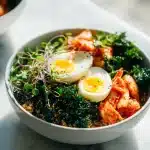
Every gut friendly quinoa bowl I have ever loved started with a single, slightly counterintuitive idea: the ingredient that smells the most pungent is usually doing the most good for you.
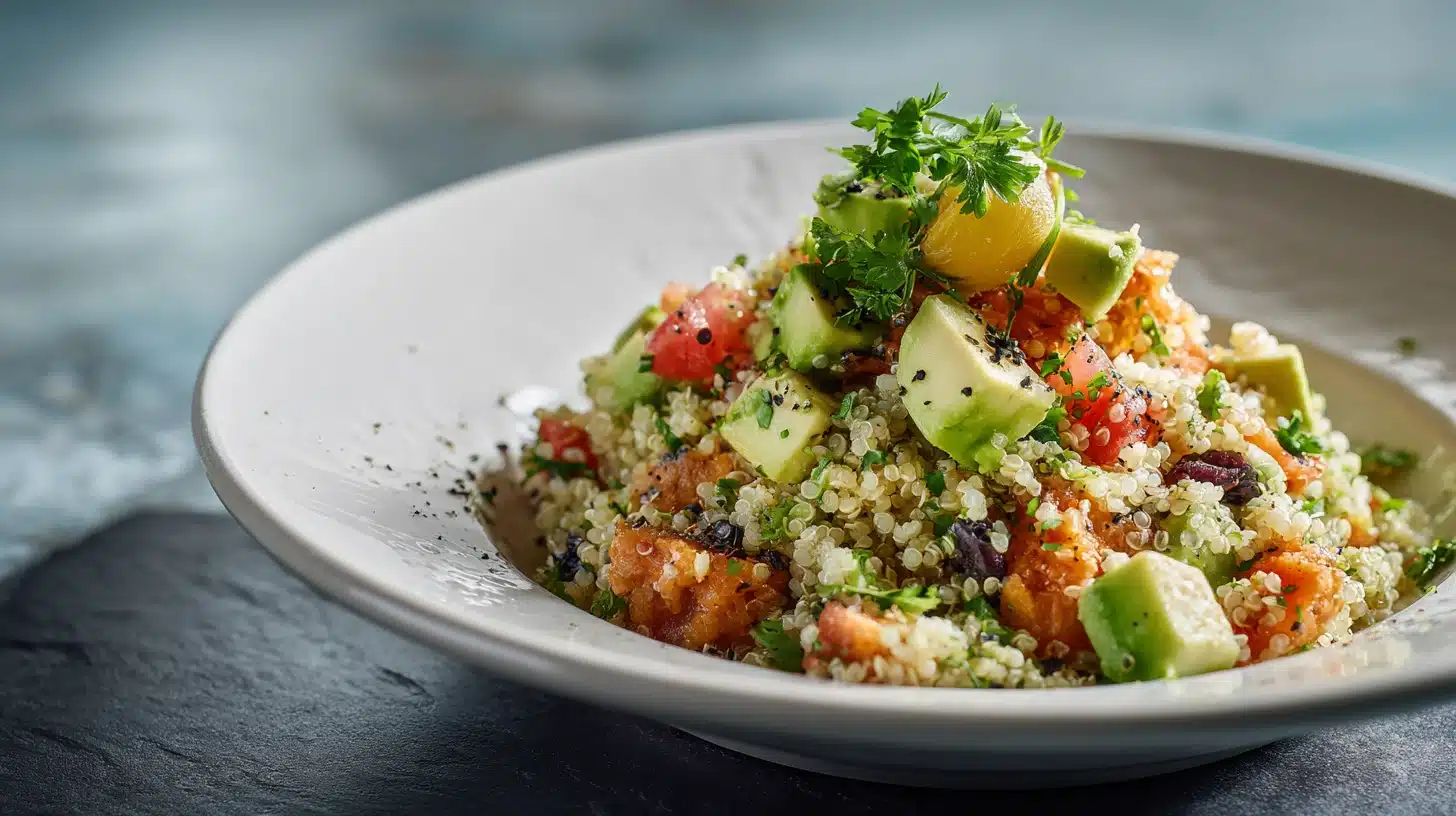
Most “healthy bowls” taste like obligation. They are dry, under-seasoned, and forget that fiber and flavor are not enemies. This recipe fixes that with a punchy sesame-tamari dressing, wilted kale, and a spoonful of kimchi that transforms the whole thing.
By the end, you will know how to cook perfectly fluffy quinoa, which fermented ingredients do the heavy gut-health lifting, and exactly how to layer everything so each bite has heat, crunch, and depth.
Table of Contents
Why Quinoa and Kimchi Are a Gut Health Power Couple
There is a reason nutritionists keep pointing to quinoa as a foundation grain, and it goes well beyond its reputation as a complete protein. Quinoa contains both soluble and insoluble fiber, which means it feeds beneficial gut bacteria while also keeping digestion moving at a healthy pace. One cooked cup delivers around 5 grams of fiber and 8 grams of protein, making it one of the most nutritionally dense grains you can build a bowl around.
What Quinoa Does for Your Gut
The fiber in quinoa acts as a prebiotic, which is essentially food for the probiotic organisms already living in your digestive system. When you pair a prebiotic-rich food like quinoa with a probiotic-rich food like kimchi, you get a synergistic effect: the prebiotics feed the probiotics, helping them thrive. Think of it as planting seeds and watering them at the same time.
Quinoa is also naturally gluten-free, which matters a great deal for anyone who has discovered that gluten is a trigger for their digestive discomfort. It digests more slowly than white rice, which helps stabilize blood sugar and keeps you feeling full without the bloated, heavy feeling that can follow a carb-heavy meal.
What Kimchi Brings to the Bowl
Kimchi is a traditional Korean fermented vegetable condiment, most commonly made from napa cabbage and seasoned with garlic, ginger, and chili flakes. The fermentation process produces live lactic acid bacteria, primarily Lactobacillus strains, which are among the most well-studied probiotic organisms in gut health research.
A single tablespoon of kimchi can introduce billions of beneficial bacteria into your gut environment. Those bacteria help maintain the balance of your gut microbiome, support immune function, and have been linked to reduced inflammation. If you want to explore more ways to use kimchi in everyday cooking, check out these recipes with kimchi for fresh inspiration.
The flavor contribution is just as important. Kimchi brings acidity, heat, and a deep umami funk that makes this gut friendly quinoa bowl taste anything but boring. It does the seasoning work that most bowls struggle with, cutting through the earthiness of the kale and the nuttiness of the sesame oil with sharp, fermented brightness.
Kale, Garlic, and Ginger: Supporting Cast Members
Kale adds another layer of fiber as well as vitamins K, C, and A. Quickly wilting it in a hot pan with garlic and a splash of sesame oil softens its bitterness while keeping its structure. Raw garlic and fresh ginger both contain compounds that have demonstrated antimicrobial and anti-inflammatory properties in research, making them natural companions in any digestive health quinoa bowl recipe.
Together, these ingredients are genuinely functional, not just marketed as healthy.
Print
The Gut Friendly Quinoa Bowl That Actually Tastes Amazing
- Total Time: 30 min
- Yield: 2 servings 1x
- Diet: Gluten Free
Description
A nourishing bowl built on fluffy broth-cooked quinoa topped with sesame-wilted kale, crispy chickpeas, probiotic kimchi, a jammy soft-boiled egg, and a sesame-tamari dressing. It comes together in 30 minutes and works well for meal prep throughout the week.
Ingredients
For the quinoa base:
1 cup dry quinoa (rinsed under cold water for 45 seconds)
2 cups low-sodium vegetable broth
1 garlic clove (minced)
1/4 teaspoon fine sea salt
For the sauteed kale:
2 cups kale (stems removed, roughly torn)
1 teaspoon sesame oil
1 garlic clove (minced)
1 teaspoon tamari or gluten-free soy sauce
Pinch of chili flakes (optional)
For the protein (pick one):
2 large eggs (soft-boiled 7 minutes, cooled in ice bath, halved)
1/2 cup firm tofu (pressed, sliced 1/2 inch thick, pan-seared golden)
For the toppings:
1/2 cup canned chickpeas (rinsed, patted dry, pan-toasted until crispy)
4 tablespoons kimchi (roughly chopped)
2 green onions (thinly sliced)
1 teaspoon sesame seeds (toasted)
Small handful of microgreens
For the dressing:
1 tablespoon sesame oil
1 tablespoon tamari
1 teaspoon rice vinegar
1 teaspoon fresh ginger (grated)
1 teaspoon honey or maple syrup
Instructions
1. Rinse the quinoa in a fine mesh strainer under cold running water for 45 seconds, stirring with your fingers until the water runs clear. This removes the bitter saponin coating that makes quinoa taste soapy.
2. Combine the rinsed quinoa, vegetable broth, minced garlic, and salt in a medium saucepan. Bring to a boil over medium-high heat, then reduce to the lowest setting, cover, and cook for 15 minutes until the liquid is fully absorbed and the germ rings have popped from the grains.
3. Remove the quinoa from heat and let it rest, still covered, for 5 full minutes. Uncover and fluff with a fork. The grains should be light, separate, and smell nutty.
4. While the quinoa rests, heat a small skillet over medium-high heat and add a small drizzle of sesame oil. Add the chickpeas in a single layer and cook undisturbed for 2 minutes, then toss and cook 2 to 3 minutes more until golden and crispy. Season with a pinch of salt and set aside.
5. In the same skillet over medium heat, add 1 teaspoon sesame oil. Add the minced garlic and stir for 30 seconds until fragrant and golden. Add the torn kale and drizzle with 1 teaspoon tamari. Toss and cook for 2 to 3 minutes until the kale wilts to a deep glossy green. Remove from heat.
6. If using soft-boiled eggs, bring a small pot of water to a boil, lower the eggs gently, and cook for exactly 7 minutes. Transfer to an ice bath for 2 minutes, peel, and slice in half lengthwise. If using tofu, sear the pressed slabs in a hot oiled skillet for 3 to 4 minutes per side until deeply golden.
7. Whisk together the sesame oil, tamari, rice vinegar, grated ginger, and honey or maple syrup in a small bowl until smooth and glossy.
8. Divide the warm quinoa between two bowls. Arrange the wilted kale, toasted chickpeas, and chopped kimchi in separate sections. Place the egg halves or tofu on top.
9. Drizzle the dressing over both bowls. Finish with sliced green onions, toasted sesame seeds, and a small pile of microgreens in the center. Serve immediately.
Notes
Store components separately in airtight containers in the refrigerator for up to 4 days. Quinoa keeps for up to 5 days. Reheat quinoa and kale in a covered skillet with a splash of water over low heat, or microwave for 90 seconds.
Always add kimchi cold at serving time. Heating kimchi kills the live cultures that make it beneficial for gut health.
For a fully vegan option, use maple syrup instead of honey in the dressing and choose tofu instead of eggs. Confirm your kimchi brand is vegan, as traditional kimchi often contains fish sauce.
For extra probiotic depth, whisk 1 teaspoon of white miso paste into the dressing. You can also add a few slices of naturally fermented cucumber pickle alongside the kimchi.
- Prep Time: 10 min
- Cook Time: 20 min
- Category: Dinner, Main Course
- Method: Stovetop
- Cuisine: Asian
Nutrition
- Serving Size: 1 bowl
- Calories: 420 kcal
- Sugar: 6 g
- Sodium: 680 mg
- Fat: 16 g
- Saturated Fat: 3 g
- Unsaturated Fat: 13 g
- Trans Fat: 0 g
- Carbohydrates: 52 g
- Fiber: 9 g
- Protein: 18 g
- Cholesterol: 185 mg
Ingredients You Need and Why Each One Earns Its Spot
Building a great gut friendly quinoa bowl is about choosing ingredients with purpose. Every item below does more than one job: it adds flavor and supports digestive health, or adds texture and provides protein. Nothing is here just for appearance.
The Full Ingredient List
For the quinoa base:
- 1 cup dry quinoa (rinsed thoroughly under cold water)
- 2 cups low-sodium vegetable broth (or water)
- 1 garlic clove (minced)
- 1/4 teaspoon fine sea salt
For the sauteed kale:
- 2 cups kale (stems removed, roughly torn) or baby spinach
- 1 teaspoon sesame oil
- 1 garlic clove (minced)
- 1 teaspoon tamari or gluten-free soy sauce
- Pinch of chili flakes (optional)
For the protein:
- 2 large eggs (soft-boiled or fried, one per bowl) OR 1/2 cup firm tofu (pressed and pan-seared for a vegan option)
- 1/2 cup canned chickpeas (rinsed, patted dry, and pan-toasted for crunch)
For the toppings and dressing:
- 4 tablespoons kimchi (roughly chopped, plus extra brine if you want more heat)
- 1 tablespoon sesame oil
- 1 tablespoon tamari
- 1 teaspoon rice vinegar
- 1 teaspoon freshly grated ginger
- 1 teaspoon honey or maple syrup (for balance)
- 2 green onions (thinly sliced)
- 1 teaspoon sesame seeds (toasted)
- Small handful of microgreens (for finishing)
Why These Specific Ingredients Matter
Rinsing quinoa is non-negotiable. The grain is coated in saponins, naturally occurring compounds that create a bitter, soapy flavor if left on. A thorough rinse under cold running water for 30 to 45 seconds removes them completely and is the single biggest step between gummy, bitter quinoa and nutty, fluffy quinoa.
Cooking quinoa in vegetable broth instead of plain water adds a savory depth that makes the base taste seasoned on its own, before you add a single topping. The ratio matters too: 1 cup of dry quinoa to 2 cups of liquid, cooked covered on low heat after the initial boil, then rested off the heat for 5 minutes before fluffing with a fork. That rest period is what keeps the grains separate instead of clumping.
Tamari is used here instead of regular soy sauce because it is typically brewed with little or no wheat, making this recipe accessible for gluten-sensitive eaters. The flavor is slightly deeper and more rounded than standard soy sauce. If you are not managing a gluten concern, regular soy sauce works equally well.
For anyone interested in the fermented element beyond kimchi, a small drizzle of fermented honey garlic over the finished bowl adds a gentle sweetness with its own probiotic benefits.
Step-by-Step: How to Build the Bowl
This probiotic quinoa bowl comes together in 30 minutes when you work through the steps in the right order. Start the quinoa first because it takes the longest and sits happily while you prepare everything else.
Step 1: Cook the Quinoa
Rinse 1 cup of quinoa in a fine mesh strainer under cold running water for 45 seconds, stirring with your fingers. You will notice the water runs slightly foamy at first and then clears as the saponins wash away.
Add the rinsed quinoa, 2 cups of vegetable broth, 1 minced garlic clove, and 1/4 teaspoon salt to a medium saucepan. Bring to a boil over medium-high heat, then immediately reduce to the lowest setting, cover, and cook for 15 minutes. The quinoa is done when the germ ring (a tiny white spiral) has popped out from each grain, the liquid is fully absorbed, and the pan smells nutty and faintly toasted. Remove from heat and let it rest, covered, for 5 full minutes. Then uncover and fluff with a fork. The grains should be light, separate, and fragrant.
Step 2: Toast the Chickpeas
While the quinoa cooks, pat the rinsed chickpeas completely dry with paper towels. Heat a small skillet over medium-high heat, add a tiny drizzle of sesame oil, and add the chickpeas in a single layer. Leave them undisturbed for 2 minutes until the undersides are golden, then toss and cook for another 2 to 3 minutes. They should be crispy on the outside and slightly chewy inside, with a nutty, roasted aroma. Season with a pinch of salt and set aside.
Step 3: Saute the Kale
In the same skillet, reduce heat to medium and add 1 teaspoon of sesame oil. Add the minced garlic and stir for 30 seconds until fragrant (the smell shifts from raw and sharp to warm and mellow). Add the torn kale and toss to coat. Drizzle in 1 teaspoon of tamari and add the chili flakes if using. Cook for 2 to 3 minutes, stirring often, until the kale has wilted to about half its original volume and turned a deep, glossy green. Remove from heat.
Step 4: Cook the Protein
For soft-boiled eggs: bring a small pot of water to a boil, lower the eggs gently, and cook for exactly 7 minutes. Transfer immediately to an ice bath for 2 minutes, then peel. The whites will be fully set and the yolks will be jammy and golden, not chalky. Slice in half lengthwise just before serving.
For tofu: slice pressed tofu into 1/2-inch slabs, pat dry, and sear in a hot oiled skillet for 3 to 4 minutes per side until the surface is deeply golden and slightly crisp. Season with a drop of tamari.
Step 5: Mix the Dressing
Whisk together 1 tablespoon sesame oil, 1 tablespoon tamari, 1 teaspoon rice vinegar, 1 teaspoon grated ginger, and 1 teaspoon honey or maple syrup in a small bowl. Taste it. It should be savory, a little sweet, a little sharp, and carry a warm sesame fragrance.
Step 6: Assemble
Divide the warm quinoa between two bowls. Arrange the kale, toasted chickpeas, and kimchi in separate sections so each topping is visible. Place the egg halves or tofu on top. Drizzle the dressing over everything. Finish with sliced green onions, toasted sesame seeds, and a small pile of microgreens right in the center. Serve immediately while the quinoa is still warm and the egg yolk is still soft.
Meal Prep, Variations, and Smart Swaps
One of the best qualities of this gut healthy quinoa bowl is how naturally it fits into a meal prep routine. The components are modular, so you can cook once and mix and match for three to four days of lunches or quick dinners.
Meal Prep Strategy
Cook a full batch of quinoa (up to 3 cups dry) at the start of the week. Store it in an airtight container in the fridge for up to 5 days. It reheats beautifully with a splash of water or broth in a covered skillet over low heat, or in the microwave for 90 seconds. The dressing keeps well in a small jar in the fridge for up to a week, so you can dress each bowl fresh rather than dressing them all in advance, which keeps the microgreens crisp and the quinoa from absorbing too much liquid.
Kimchi should always be added fresh at serving time. Heating kimchi above 115°F kills the live cultures, which defeats the probiotic purpose of including it. Spoon it straight from the jar onto the warm bowl just before you eat.
If you store fully assembled bowls, leave out the kimchi, microgreens, and sesame seeds and add them at the last minute. Stored this way, the bowls last 3 to 4 days in the fridge with no real loss of quality.
Protein Variations
The egg and tofu options are listed in the main recipe, but this digestive health quinoa bowl works beautifully with several other proteins:
- Baked salmon: the omega-3 fatty acids in salmon actively support gut barrier integrity. For a full salmon bowl approach, the salmon bowl recipe on Forkful Daily is a strong reference.
- Edamame: shell 1/2 cup of cooked edamame per bowl for a quick plant-based protein that also adds a pop of bright green color.
- Roasted chicken thighs: slice thinly and lay across the top. Chicken thighs stay juicy even after refrigeration, making them better than breast meat for meal prep bowls.
Grain Swaps
If quinoa is not available, millet and buckwheat are both naturally gluten-free grains that work in this bowl. Brown rice is a reliable backup, though it is heavier and the texture is less fluffy. For a lower-carb version, cauliflower rice sauteed with a touch of sesame oil and garlic mimics the base well.
Vegetable Swaps
Baby spinach can replace kale if you prefer a milder green. It does not need to be cooked as long and will wilt in under a minute. Shredded red cabbage adds crunch and a beautiful color contrast when served raw. Roasted sweet potato cubes add sweetness and extra fiber that the gut bacteria in the kimchi will love.
Boosting the Probiotic Content
For an even more fermented quinoa bowl experience, add a spoonful of miso paste to the dressing (whisk in 1 teaspoon of white miso with the other dressing ingredients). You can also add a few slices of pickled cucumber alongside the kimchi. Both miso and naturally fermented pickles contain live cultures that amplify the gut-supporting effect of this bowl.
If you want to explore other gut-supporting bowl formats, the bloat bowl high protein recipe takes a complementary approach with slightly different ingredients.
Frequently Asked Questions
Is kimchi vegan or gluten-free?
Traditional kimchi is often made with fish sauce or salted shrimp, which makes it not vegan. However, many brands now produce certified vegan kimchi using miso or soy sauce instead. For gluten-free needs, check the label carefully because some kimchi brands include soy sauce made with wheat. Your safest options are kimchi labeled explicitly as both vegan and gluten-free, or you can make your own at home with full control over the ingredients.
Can you make these quinoa bowls ahead of time?
Yes, and this recipe is genuinely well-suited to meal prep. Cook the quinoa, saute the kale, toast the chickpeas, and mix the dressing up to 4 days in advance. Store each component separately in the fridge. Leave the kimchi, microgreens, and sesame seeds out until serving because the kimchi should stay raw to preserve its live cultures, and the microgreens wilt quickly once dressed.
How long do quinoa bowls last in the fridge?
Cooked quinoa keeps for up to 5 days in an airtight container in the refrigerator. Fully assembled bowls without kimchi and fresh garnishes last 3 to 4 days. Once you add the dressing, the bowl is best eaten within a few hours because the quinoa absorbs liquid over time and can become dense. Keeping the dressing separate until you are ready to eat is the best way to maintain ideal texture through the week.
What are the best toppings for a gut friendly quinoa bowl?
The most effective toppings combine probiotic ingredients with fiber-rich vegetables and a source of healthy fat. Kimchi, miso-based sauces, and naturally fermented pickles add live cultures. Kale, microgreens, and roasted vegetables add fiber that feeds those cultures. Avocado slices, toasted sesame seeds, and a drizzle of sesame oil add healthy fats that help your body absorb fat-soluble vitamins from the greens. Toasted chickpeas or a soft-boiled egg round things out with protein that keeps you full.
Conclusion
A well-built gut friendly quinoa bowl is proof that digestive health and real dinner satisfaction are not competing goals. This recipe started with a hunch that pungent kimchi and earthy quinoa had more to say to each other than most bowls allowed, and after testing it a dozen times, I am confident the result lives up to that instinct. Every component earns its place, from the prebiotic fiber in the rinsed, broth-cooked quinoa to the live cultures in the cold spoonful of kimchi added at the very end.
Give this one a try on a Sunday afternoon and keep the components in the fridge for easy weeknight bowls all week long.
For more recipes like this gut friendly quinoa bowl, follow us on Facebook and Pinterest for nourishing bowl recipes and gut-friendly meal ideas.