My grandmother kept a small crock of miso paste in the back of her fridge for thirty years, and I never once questioned it until my doctor told me my gut microbiome needed serious attention. That conversation sent me straight back to the kitchen, and miso soup for gut health became my daily ritual.

Most people assume healing your gut means expensive supplements and complicated protocols. This recipe proves that a humble bowl of fermented soybean soup, ready in thirty minutes, can do the heavy lifting.
This guide covers how miso’s live cultures actually survive in your bowl, which ingredients amplify the probiotic benefit the most, and the exact technique for adding miso without killing its beneficial bacteria.
Table of Contents
Why Miso Is One of the Best Fermented Foods for Digestion
Miso paste has been central to Japanese cooking for over a thousand years, and it goes well beyond flavor. The paste is made from soybeans that have been inoculated with a mold called Aspergillus oryzae, known in Japan as koji. During fermentation, koji breaks down the proteins and starches in the soybeans into amino acids and simple sugars. The result is a dense, salty paste loaded with beneficial microorganisms and a deeply savory umami flavor.
What Fermentation Does to Soybeans
Raw soybeans are notoriously difficult to digest. They contain antinutrients like phytic acid and trypsin inhibitors that block the absorption of minerals and proteins. Fermentation largely neutralizes these compounds, making the nutrients in miso far more bioavailable than those in plain cooked soybeans. When you eat miso soup for gut health, your body is getting a more efficient form of plant-based nutrition, not just a pleasant broth.
The Probiotic and Prebiotic Angle
Miso contains live bacterial cultures, primarily lactic acid bacteria, that function as probiotics in the gut. The soybeans also supply prebiotic fiber, the kind of indigestible plant material that feeds your existing gut bacteria. This combination of probiotics and prebiotic fiber creates what researchers call a “synbiotic effect,” and it’s one reason gut-healing miso soup performs well in studies on digestive health.
Aspergillus oryzae produces digestive enzymes during fermentation, including amylases and proteases, that continue to support your digestion even after the miso reaches your bowl. Every spoonful is a tiny enzymatic boost for your stomach.
White Miso vs. Red Miso for Gut Health
Not all miso pastes are created equal when digestion is your goal.
- White miso (shiro miso) is fermented for a shorter period, usually a few weeks to a few months. It is mild, slightly sweet, and lower in sodium. It retains a larger population of live cultures because it hasn’t been exposed to salt for as long.
- Yellow miso (shinshu miso) sits in the middle, with a balanced flavor and a moderately robust culture count.
- Red miso (aka miso) is fermented the longest, sometimes for three years or more. It is intensely savory and high in sodium, which can reduce its probiotic count.
For this probiotic miso soup recipe, white or yellow miso is the best choice. You get the gut benefits without the sodium overload, and the gentler flavor plays well with the other ingredients.
If you enjoy building your soup knowledge, the miso glazed salmon with coconut rice crispy recipe on Forkful Daily shows another excellent way to use miso paste beyond the soup bowl.
Print
Miso Soup for Gut Health: The Gut-Healing Bowl You’ll Make Every Week
- Total Time: 30 min
- Yield: 2 servings 1x
- Diet: Vegetarian
Description
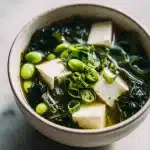
A simple, nourishing bowl of gut-healthy miso soup made with white miso paste, silken tofu, wakame seaweed, bok choy, and edamame in a clean kombu dashi broth. The miso is added off the heat to keep the live probiotic cultures intact, making every bowl genuinely good for your digestion.
Ingredients
For the kombu dashi:
4 cups cold filtered water
1 piece dried kombu (about 4 inches long)
1/4 cup loosely packed bonito flakes (optional, omit for vegan)
For the soup:
3 tablespoons white or yellow miso paste (unpasteurized)
6 ounces silken tofu (cut into 1/2-inch cubes)
1 tablespoon dried wakame seaweed
1/2 cup frozen shelled edamame (thawed)
1 cup baby bok choy (roughly chopped)
1 teaspoon fresh ginger (finely grated)
2 green onions (thinly sliced)
Instructions
1. Place the kombu in a medium saucepan with 4 cups of cold water and soak for 20 minutes at room temperature until the water turns pale golden-green and smells gently of the sea.
2. Set the pan over medium-low heat and warm slowly until small bubbles form at the bottom, about 8 to 10 minutes. Do not allow the broth to boil. Remove and discard the kombu with tongs.
3. If using bonito flakes, drop them into the warm dashi and let them steep for 2 minutes, then strain the broth through a fine mesh sieve back into the pot. The broth should smell golden and savory.
4. Return the broth to medium-low heat. Add the grated ginger, bok choy, and edamame. Simmer gently for 4 to 5 minutes until the bok choy is wilted and bright green.
5. Add the silken tofu cubes and dried wakame. Let them warm in the broth for 2 minutes; the tofu will look glossy and the wakame will swell and turn deep green.
6. Remove the pot completely from the heat. Spoon the miso paste into a small ladle or mesh strainer, dip it into the broth, and dissolve the paste by stirring it through the mesh with a small whisk or chopsticks. This keeps the live cultures intact.
7. Taste the broth and adjust with an extra half tablespoon of miso for more depth or a splash of warm water if it tastes too salty.
8. Ladle into two bowls, top with sliced green onion, and serve immediately while the broth is warm but not boiling.
Notes
Store leftover broth and vegetables (without miso stirred in) in an airtight container in the refrigerator for up to 3 days. Add fresh miso paste each time you reheat a portion. Do not freeze; silken tofu becomes grainy after freezing.
To keep sodium in check, use a low-sodium miso paste or reduce to 2 tablespoons and taste before adding more. Each bowl contains roughly 900 to 1050 mg sodium with standard white miso.
For a vegan version, skip the bonito flakes and use plain kombu dashi or low-sodium vegetable broth as the base.
Buy unpasteurized, refrigerated miso paste for the highest live culture count. Pasteurized miso has had its beneficial bacteria removed during processing.
- Prep Time: 5 min
- Cook Time: 25 min
- Category: Soups
- Method: Stovetop
- Cuisine: Japanese
Nutrition
- Serving Size: 1 bowl
- Calories: 145 kcal
- Sugar: 3 g
- Sodium: 980 mg
- Fat: 5 g
- Saturated Fat: 1 g
- Unsaturated Fat: 4 g
- Trans Fat: 0 g
- Carbohydrates: 13 g
- Fiber: 4 g
- Protein: 11 g
- Cholesterol: 0 mg
Key Ingredients That Boost the Gut-Healing Power of This Soup
A great homemade miso soup for digestion is not just miso paste dissolved in hot water. Every ingredient in this recipe was chosen to support your digestive system in a specific way. Here’s what goes into the bowl and why each component earns its spot.
Dashi or Kombu Broth (The Gut-Friendly Base)
Traditional dashi is made from kombu, a type of dried kelp, and optional bonito flakes. Kombu is one of the richest natural sources of glutamic acid, the amino acid responsible for umami flavor. More importantly for gut health, kombu contains soluble fiber and a class of polysaccharides called fucoidans that have shown prebiotic activity in research.
To keep this recipe accessible, you can use a simple cold-brew kombu dashi: soak one 4-inch piece of dried kombu in four cups of cold water for at least twenty minutes, then gently heat it to just below a simmer. Remove the kombu before it boils to keep the broth clear and slightly sweet. If you prefer a richer base, add a small handful of bonito flakes during the last two minutes of steeping, then strain.
For those avoiding fish products, plain vegetable broth works as a substitute. A good quality low-sodium version keeps the sodium in check so the miso paste isn’t competing with an already salty base.
Silken Tofu (Protein and Gut Support)
Silken tofu cut into half-inch cubes adds a soft, custard-like texture that practically melts on the tongue. Tofu is a complete plant protein derived from soybeans, and because the soybeans have already been processed, it’s gentle on the digestive tract. The isoflavones in tofu also have emerging associations with positive changes in gut microbiome diversity.
Wakame Seaweed (Prebiotic Fiber Boost)
Dried wakame rehydrates in about five minutes and adds a tender, slightly oceanic chew to the soup. Like kombu, it contains prebiotic polysaccharides that feed beneficial gut bacteria. A small tablespoon of dried wakame is all you need; it expands significantly once it hits the broth.
Ginger, Bok Choy, Edamame, and Green Onion
Fresh ginger contains gingerols and shogaols, compounds that reduce intestinal inflammation and ease nausea. Bok choy contributes cruciferous fiber and folate. Edamame adds additional plant protein and prebiotic fiber. Sliced green onion provides a sharp, fresh finish and contains fructooligosaccharides, another category of prebiotic compounds.
Together, these ingredients create a soup that genuinely earns the description “gut healing.” For another fermented-food approach to a comforting bowl, check out this chicken bone broth soup recipe which uses a deeply nourishing, collagen-rich base.
How to Make Miso Soup for Gut Health (Step-by-Step)
The biggest mistake people make with easy miso soup with probiotics is boiling the miso paste. Once the liquid hits around 140°F, the live bacterial cultures begin to die off rapidly. At a full boil, most of the probiotic benefit is gone. The entire technique of this recipe is built around that single fact: the broth is brought to a gentle simmer, taken off the heat, and then the miso is stirred in at the very end.
Ingredient List
For the kombu dashi:
- 4 cups cold filtered water
- 1 piece dried kombu (about 4 inches long)
- 1/4 cup loosely packed bonito flakes (optional, skip for vegan)
For the soup:
- 3 tablespoons white or yellow miso paste
- 6 ounces silken tofu (cut into 1/2-inch cubes)
- 1 tablespoon dried wakame seaweed
- 1/2 cup frozen shelled edamame (thawed)
- 1 cup baby bok choy (roughly chopped)
- 1 teaspoon fresh ginger (finely grated)
- 2 green onions (thinly sliced)
Step-by-Step Instructions
Step 1: Cold-steep the kombu. Place the kombu in a medium saucepan with four cups of cold water. Let it soak for 20 minutes at room temperature. The water will turn a pale golden-green and smell gently of the sea.
Step 2: Gently heat the dashi. Set the saucepan over medium-low heat. Warm the kombu water slowly until you see small bubbles forming at the bottom of the pan, about 8 to 10 minutes. Do not let it boil. Remove the kombu with tongs and discard or save it for another use.
Step 3: Add bonito and strain (if using). If using bonito flakes, drop them into the warm dashi. Let them steep for 2 minutes, then strain the broth back into the pot through a fine mesh sieve. The broth should smell golden and savory.
Step 4: Simmer the vegetables. Return the broth to medium-low heat. Add the grated ginger, bok choy, and edamame. Let them cook gently for 4 to 5 minutes, just until the bok choy is wilted and bright green. Add the silken tofu cubes and dried wakame and let them warm through for 2 minutes. The tofu will look glossy and hold its shape.
Step 5: Remove from heat and dissolve the miso. This is the critical step for gut health benefits. Take the pot completely off the heat. Spoon the miso paste into a small ladle or mesh strainer, then dip it into the hot broth and use chopsticks or a small whisk to dissolve the paste through the mesh. This technique prevents lumps and ensures even distribution without hot spots that could kill the bacteria.
Step 6: Taste and adjust. Taste the broth. If it needs more depth, add another half tablespoon of miso. If it tastes too salty, add a splash of warm water.
Step 7: Serve immediately. Ladle into bowls and top with sliced green onion. Serve within a few minutes while the broth is hot but not boiling.
Pro Tips for Maximum Probiotic Benefit
- Never reheat miso soup to a full boil after adding the paste. If you have leftovers, reheat gently on the stove over low heat until warm to the touch, around 110 to 120°F.
- Buy refrigerated miso paste from a health food store rather than shelf-stable packets for a higher live culture count.
- Look for “unpasteurized” on the miso label. Pasteurized miso has had its beneficial bacteria killed during processing.
Serving Suggestions, Storage, and Variations
Miso soup for gut health is flexible enough to anchor a full meal or serve as a restorative starter. Here are several ways to build on the base recipe and make it your own without sacrificing the gut-healing benefits.
Making It a Full Meal
Add a handful of soba noodles, cooked separately and rinsed, to each bowl before ladling in the broth. Soba made from buckwheat adds a nutty flavor and more fiber. Alternatively, serve the soup alongside a bowl of brown rice for a complete, balanced meal that will keep you full for hours.
A swirl of toasted sesame oil and a pinch of red pepper flakes over the top adds warmth and depth without any extra prep. For a heartier protein addition, poached or soft-boiled eggs work beautifully; the yolk breaks into the broth and turns it silky.
If you’re a ramen fan, you’ll find the flavor DNA of this soup familiar. Our katsu chicken ramen noodle soup uses a similarly umami-forward broth and is well worth a bookmark for your weeknight rotation.
Variations to Keep Things Interesting
- Ginger and lemon version: Add an extra teaspoon of grated ginger and a squeeze of lemon juice at the end for a brighter, more anti-inflammatory bowl.
- Mushroom version: Swap the bonito flakes for sliced fresh shiitake mushrooms simmered in the dashi for five minutes. Shiitake contains beta-glucans, a powerful prebiotic fiber with immune-supporting properties.
- Spinach and sesame version: Replace bok choy with baby spinach, which wilts in about 60 seconds. Top with a teaspoon of toasted sesame seeds for a nutty crunch.
Storage Tips
The soup base (broth plus vegetables) keeps well in an airtight container in the refrigerator for up to three days. Store it without the miso paste mixed in. Add fresh miso paste each time you reheat a portion so the probiotics remain intact. The tofu can become slightly spongy after a day in the broth, so if that texture bothers you, add fresh cubes when reheating.
Freezing is not recommended for this soup. The silken tofu changes to a grainy, firm texture after freezing, and frozen broth loses some of its delicate kombu flavor. This is a soup best made fresh or stored short-term in the fridge.
Sodium Considerations
White miso paste contains roughly 600 to 700 mg of sodium per tablespoon. This recipe uses three tablespoons across two servings, so each bowl contains approximately 900 to 1,050 mg of sodium from the miso alone. If you’re managing your sodium intake, start with two tablespoons of miso and taste before adding more. Choosing a low-sodium miso paste, which is now widely available, can cut that number by around a third.
Frequently Asked Questions
Is miso soup good for the gut?
Yes, miso soup is genuinely good for the gut when the miso paste is added off the heat. Miso contains live probiotic bacteria and prebiotic fiber from soybeans, both of which support a healthy gut microbiome. Regular consumption has been associated with improved digestion, reduced bloating, and better immune function in several small studies.
What happens if I drink miso soup every day?
Daily miso soup consumption is common in Japan and is generally considered safe for healthy adults. Research following large Japanese populations suggests regular miso intake is linked to a lower risk of certain digestive cancers and improved gut diversity. The main consideration is sodium, so choosing white or low-sodium miso paste and keeping portions to one bowl per day is a smart approach for most people.
Do probiotics survive in miso soup?
They do, as long as you add the miso paste after removing the broth from the heat. The live cultures in miso, primarily lactic acid bacteria, begin to die at around 140°F. Dissolving miso in broth that has cooled slightly, around 120 to 130°F, preserves a meaningful portion of those beneficial microorganisms. Boiling miso kills the probiotics entirely, so the technique really does matter.
What does miso soup taste like?
Miso soup has a deeply savory, slightly salty flavor that food scientists classify as umami. White miso gives the broth a mild, subtly sweet quality, while red miso produces a more intense, almost earthy depth. The broth is light and clean, not heavy or creamy, with a faint oceanic note from the kombu. Most first-timers describe it as comforting, warm, and somehow more satisfying than the simple ingredient list suggests.
Conclusion
A warm bowl of miso soup for gut health is one of those rare recipes that delivers on both comfort and function without asking much of you in return. We started with the science behind fermentation and koji, worked through the gut-supporting ingredients, and landed on a simple technique that keeps every probiotic alive in the bowl.
Give it a try this week. Make the kombu dashi on a quiet evening, keep the miso paste in the fridge, and you’ll have a gut-healing breakfast or light dinner ready in under thirty minutes whenever you need it.
For more recipes like miso soup for gut health, follow us on Facebook and Pinterest for nourishing soup and wellness bowl ideas.