Garlic brown sugar carrots were the dish that made me realize a humble bag of carrots could steal the spotlight at any dinner table. That contrast of deep, buttery caramel against sharp, toasty garlic is the kind of thing that makes people ask, “Wait, what IS this?”
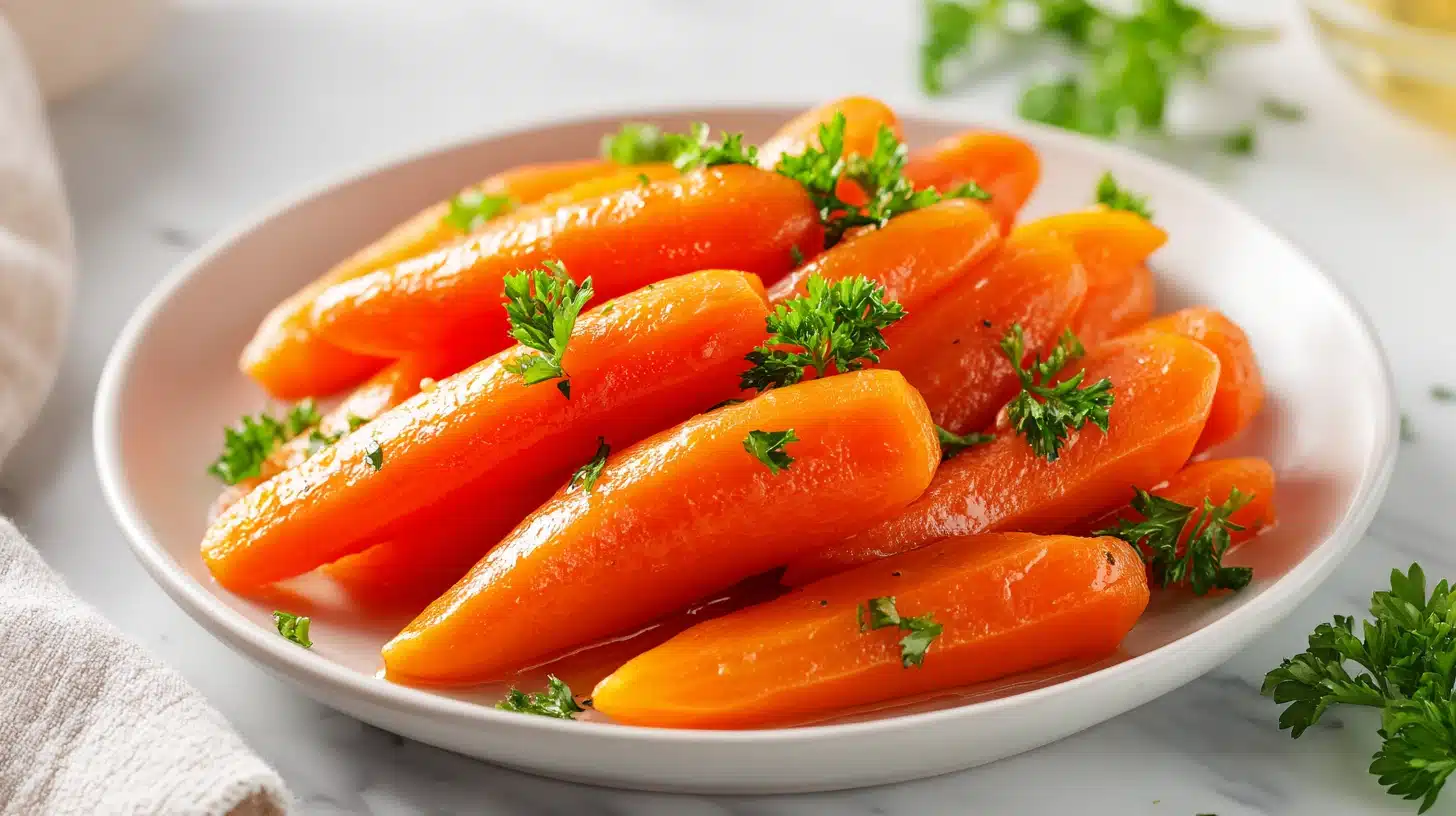
Most glazed carrot recipes either turn out watery and bland or so candy-sweet they belong on a dessert plate. This recipe fixes both problems by building a proper glaze right in the skillet so every carrot is coated, not swimming.
This guide covers exactly how to nail the glaze consistency, which type of carrot works best, and how to customize the flavor with simple pantry swaps.
Table of Contents
Why This Recipe Works: The Science Behind the Glaze
Every great stovetop glazed carrot recipe lives or dies by one thing: how the glaze behaves in the pan. When you combine butter, brown sugar, and a splash of liquid over medium heat, something genuinely interesting happens. The sugar dissolves, the butter emulsifies, and you get a glossy, clingy sauce that coats each carrot slice like lacquer. Get it wrong and you end up with a greasy puddle or a sticky, burnt mess.
The Role of Brown Sugar vs. White Sugar
Brown sugar is non-negotiable here. Its molasses content gives the glaze a rounded, slightly smoky depth that plain white sugar simply cannot replicate. Dark brown sugar delivers a bolder, more intense flavor, while light brown sugar keeps things a little gentler. Either works beautifully, so use what you have. The sugar also helps the carrots caramelize at a lower temperature than roasting requires, which means you can achieve that gorgeous bronzed color entirely on the stovetop in under 20 minutes.
The Garlic Question: Fresh vs. Jarred
Fresh garlic is the clear winner here, but the timing matters enormously. Add minced garlic too early and it burns, turning acrid and bitter before the carrots are even halfway done. Add it at the right moment, about halfway through cooking when the carrots have softened slightly, and it blooms into the butter and sugar without scorching. You get that warm, nutty garlic aroma that makes the whole kitchen smell incredible. Jarred minced garlic works in a pinch, but fresh cloves have a sharper, more pungent bite that really sings against the sweetness.
Why Butter Beats Oil Here
Olive oil is wonderful, but butter has milk solids that brown and add an extra layer of nuttiness to the glaze. That browned butter quality ties the garlic and sugar together in a way oil cannot. Use unsalted butter so you control the salt level yourself. A pinch of kosher salt added at the end amplifies both the sweetness and the savory notes and makes the whole dish taste more complete.
If you enjoy sweet and savory garlic glazes, you will also love this garlic brown sugar pork tenderloin juicy glazed easy dinner for a full dinner pairing.
The key takeaway is simple: respect the glaze. Keep the heat at medium, not high. Stir gently and consistently. Patience here means the difference between a glossy, restaurant-quality side dish and a sticky, uneven coating.
Print
Garlic Brown Sugar Carrots: The Sweet and Savory Side Dish You’ll Make on Repeat
- Total Time: 28 min
- Yield: 4 servings 1x
- Diet: Vegetarian
Description
Garlic brown sugar carrots are a quick stovetop side dish where carrot coins are cooked in butter, then coated in a brown sugar and garlic glaze until tender and caramelized. The glaze turns thick and shiny, coating each piece with a sweet, savory, and slightly nutty flavor. Ready in under 30 minutes using one skillet and simple pantry ingredients.
Ingredients
For the carrots:
1 lb fresh carrots (peeled and sliced diagonally, about 1/4 inch thick)
3 tablespoons unsalted butter
3 tablespoons light or dark brown sugar (packed)
4 cloves garlic (minced)
3 tablespoons water or low-sodium chicken broth
1/2 teaspoon kosher salt
1/4 teaspoon black pepper
For garnish:
2 tablespoons fresh flat-leaf parsley (roughly chopped)
Instructions
1. Peel the carrots and slice them diagonally into coins about 1/4 inch thick. Pat the slices dry with a paper towel to remove any surface moisture so they brown properly.
2. Heat a large skillet (10 or 12 inch) over medium heat. Add the butter and let it melt completely until foamy, swirling it around the pan.
3. Add the carrot slices to the pan in as close to a single layer as possible. Let them cook undisturbed for 2 minutes so the bottoms pick up a little color.
4. Pour in the water or broth. It will hiss and steam. Stir to combine, then cover the skillet with a lid and cook over medium heat for 8 minutes until the carrots are fork-tender with a little resistance at the center.
5. Remove the lid. Add the packed brown sugar and stir well until it dissolves into the butter and liquid, forming a sauce that begins to coat the carrots. You will see the sauce start to thicken and turn amber.
6. Add the minced garlic and stir immediately. Cook uncovered for 5 to 7 minutes, stirring every 60 seconds, until the glaze reduces to a thick, shiny coating and the carrot edges are golden and caramelized. The kitchen should smell of toasty garlic and warm caramel.
7. Remove from heat. Season with kosher salt and black pepper. Taste and adjust seasoning as needed.
8. Transfer to a serving dish and scatter fresh parsley over the top. Serve immediately for the best texture and glaze consistency.
Notes
Store leftovers in an airtight container in the refrigerator for up to 4 days. Reheat in a skillet over medium-low heat with a splash of water or broth for 3 to 4 minutes, stirring gently to revive the glaze. Not recommended for freezing as the texture becomes soft.
Swap 1 tablespoon of brown sugar for honey to make honey brown sugar carrots. The glaze will be slightly thinner and more floral in flavor.
For roasted brown sugar carrots, toss the prepared carrots with the melted butter, sugar, and garlic, spread on a rimmed baking sheet, and roast at 400 degrees F for 22 minutes, flipping once at the halfway point.
Add 1/4 teaspoon cinnamon and a pinch of cayenne with the brown sugar for a warm, spiced version that pairs well with roasted pork or turkey.
- Prep Time: 10 min
- Cook Time: 18 min
- Category: Side Dishes
- Method: Stovetop
- Cuisine: American
Nutrition
- Serving Size: 1/4 of recipe (about 3/4 cup)
- Calories: 148 kcal
- Sugar: 14 g
- Sodium: 280 mg
- Fat: 9 g
- Saturated Fat: 5 g
- Unsaturated Fat: 4 g
- Trans Fat: 0 g
- Carbohydrates: 18 g
- Fiber: 3 g
- Protein: 1 g
- Cholesterol: 23 mg
Choosing and Prepping Your Carrots
Not all carrots behave the same way in the pan, and choosing the right ones makes a real difference in both texture and flavor. Here is what you need to know before you even pick up a knife.
Fresh Whole Carrots vs. Baby Carrots
Whole, fresh carrots cut into coins or diagonal slices are the best choice for this recipe. They have a firmer, denser cell structure than pre-packaged baby carrots, which means they hold their shape during cooking instead of turning mushy. They also have more surface area for the glaze to cling to when you cut them on a diagonal. That slight angle is not just for looks. It exposes more of the interior flesh, which caramelizes beautifully and soaks up the brown sugar and garlic glaze faster.
Baby carrots are convenient and they work if that is what you have, but their rounded, uniform shape means less browning and a slightly softer final texture. If you use baby carrots, slice them in half lengthwise to maximize that caramelized surface area.
Thickness Matters
Aim for slices about a quarter inch thick. Too thin and they will be completely soft before the glaze has time to reduce and thicken around them. Too thick and the outside will be coated in glaze while the center is still tough and fibrous. A quarter inch is the sweet spot where the carrot cooks through in about 15 to 18 minutes and the glaze reduces to a clingy, shiny coating at the same pace.
Should You Peel Your Carrots?
Yes, peel them. Carrot skin has a slightly bitter, earthy flavor that becomes more pronounced after cooking. Since this recipe relies on a sweet and savory balance, that bitterness can tip things in the wrong direction. Peeling takes less than two minutes and makes a noticeable difference in the finished flavor.
If you want to add extra depth to your carrot game, take a look at this fermented carrots recipe for a completely different but equally satisfying approach to this underrated vegetable.
Once your carrots are peeled and sliced, pat them dry with a paper towel. Any excess moisture on the surface will cause the butter to spatter when it hits the pan and will slow down the browning process. Dry carrots brown and glaze much faster and more evenly.
Step-by-Step Cooking Method
The whole recipe comes together in one skillet in about 18 minutes of active cook time. Here is exactly how to do it so your easy brown sugar carrots come out perfectly every single time.
What You Need
- 1 pound fresh carrots (peeled and sliced diagonally, about a quarter inch thick)
- 3 tablespoons unsalted butter
- 3 tablespoons light or dark brown sugar (packed)
- 4 cloves garlic (minced)
- 3 tablespoons water or low-sodium chicken broth
- Half a teaspoon kosher salt
- Quarter teaspoon black pepper
- Fresh parsley for garnish (optional but recommended)
The Method, Step by Step
Start by heating a large skillet, a 10 or 12 inch skillet works best, over medium heat. Add the butter and let it melt completely, swirling it around the pan. You want the butter to be foamy and hot but not yet browning. Add your dry carrot slices in a single layer if possible, or as close to it as you can manage. Let them sit undisturbed for about two minutes so the bottoms get a little color.
Add the water or broth to the pan. It will hiss and steam immediately. Stir everything together, then cover the skillet with a lid and let the carrots steam-cook for about eight minutes over medium heat. This step gets the carrots most of the way cooked through before the glaze goes in. Lift the lid and check them at the eight-minute mark. They should be tender when pierced with a fork but still have a little resistance in the center.
Remove the lid and add the brown sugar. Stir to coat every carrot slice. The sugar will dissolve into the butter and liquid almost immediately, and you will see the sauce start to thicken. Now add the minced garlic and stir again. The garlic will sizzle gently in the sweet butter sauce. Let everything cook uncovered for another five to seven minutes, stirring every 60 seconds or so, until the glaze reduces to a thick, shiny coating and the carrots are deeply golden at the edges.
Season with salt and pepper, taste, and adjust. Scatter fresh parsley over the top right before serving for a pop of color and a fresh, slightly grassy note that balances the richness of the glaze.
The smell at this point is something else entirely: warm caramel, toasty garlic, and something almost nutty from the browned butter. Trust it. You are almost there.
Variations, Pairings, and Make-Ahead Tips
One of the best things about garlic brown sugar carrots is how adaptable they are. The base recipe is intentionally simple so you can take it in several directions depending on what you are serving alongside it.
Flavor Variations Worth Trying
Honey brown sugar carrots: Swap one tablespoon of the brown sugar for an equal amount of honey. Honey adds floral sweetness and helps the glaze turn glossy and sticky faster. It also browns a little more quickly, so watch the heat carefully and keep stirring.
Spiced brown sugar carrots: Add a quarter teaspoon of cinnamon and a pinch of cayenne pepper along with the brown sugar. The cinnamon deepens the warm, caramel flavor while the cayenne adds a slow, building heat that plays beautifully against the sweetness. This version is especially good alongside roasted pork or turkey.
Roasted brown sugar carrots: If you prefer an oven method, toss the peeled and sliced carrots with the melted butter, brown sugar, and garlic, spread them on a rimmed baking sheet in a single layer, and roast at 400 degrees F for 20 to 25 minutes, flipping once halfway through. You will get more caramelized, slightly crisp edges with this method.
Herb additions: Thyme and rosemary both work well. Add a sprig of fresh thyme to the pan along with the garlic and remove it before serving. The herbal, earthy note it leaves behind complements both the garlic and the sugar without overpowering either.
What to Serve These With
Garlic brown sugar glazed carrots are a natural companion to roasted or grilled proteins. They work alongside chicken, pork, and beef with equal ease. For a complete weeknight dinner, pair them with this one pan garlic butter chicken recipe and a simple grain like rice or farro. The savory, buttery chicken and the sweet, garlicky carrots share the same flavor language and feel intentional together.
They also make an excellent Thanksgiving or holiday side dish because they can be scaled up easily and the flavors complement virtually anything else on the table.
Make-Ahead and Storage
These carrots are best fresh out of the pan, but they reheat well. Store leftovers in an airtight container in the refrigerator for up to four days. To reheat, add a splash of water or broth to a skillet over medium-low heat and warm the carrots gently for three to four minutes, stirring occasionally. This revives the glaze without burning the sugar. You can also microwave them for 90 seconds, but the stovetop method keeps the texture better.
To get ahead of a big dinner, you can prep and slice the carrots up to two days in advance. Store them in a zip-top bag or container with a damp paper towel in the refrigerator. Cook them fresh the day of serving for the best texture and glaze quality.
Frequently Asked Questions
Can I use maple syrup instead of brown sugar?
Yes, maple syrup works well as a substitute. Use the same volume, about three tablespoons, in place of the brown sugar. The glaze will be slightly thinner and will have a woodsy, maple flavor instead of the deeper molasses notes from brown sugar. Keep the heat at medium and stir more frequently since maple syrup can reduce and burn faster than granulated sugar.
Why are my carrots not getting tender?
The most common cause is slicing the carrots too thick or skipping the covered steaming step. If your carrots are still firm after the initial covered cook time, add another two tablespoons of water, cover the pan again, and give them another three to four minutes. They should be fork-tender before you add the brown sugar and begin reducing the glaze.
Can I make this recipe vegan?
Absolutely. Swap the butter for a good-quality vegan butter, such as Earth Balance or Miyoko’s. The glaze will still come together nicely and develop a similar caramelized texture. Make sure to use water or vegetable broth instead of chicken broth if you choose that option. The final dish will be fully plant-based without losing much in the way of flavor or richness.
How do I keep the garlic from burning?
Add the garlic only after the brown sugar is already in the pan and the heat has been distributed across the sauce. This protects the garlic from direct contact with the hot skillet surface. If your heat is too high, the garlic will scorch in under a minute, so keep the burner at medium, not medium-high, once the glaze starts forming. Stir continuously from the moment the garlic goes in until the dish is done.
Conclusion
Garlic brown sugar carrots prove that a side dish does not need to be complicated to be genuinely memorable. The same counterintuitive combination that surprised me the first time, bold garlic against sweet, buttery caramel, is what keeps this recipe in my regular rotation year after year. One skillet, 28 minutes, and a handful of pantry staples are all it takes.
Give this a try on your next weeknight or save it for Sunday dinner when you want something that feels a little special without any extra effort.
For more recipes like garlic brown sugar carrots, follow us on Facebook and Pinterest for easy weeknight dinner ideas.