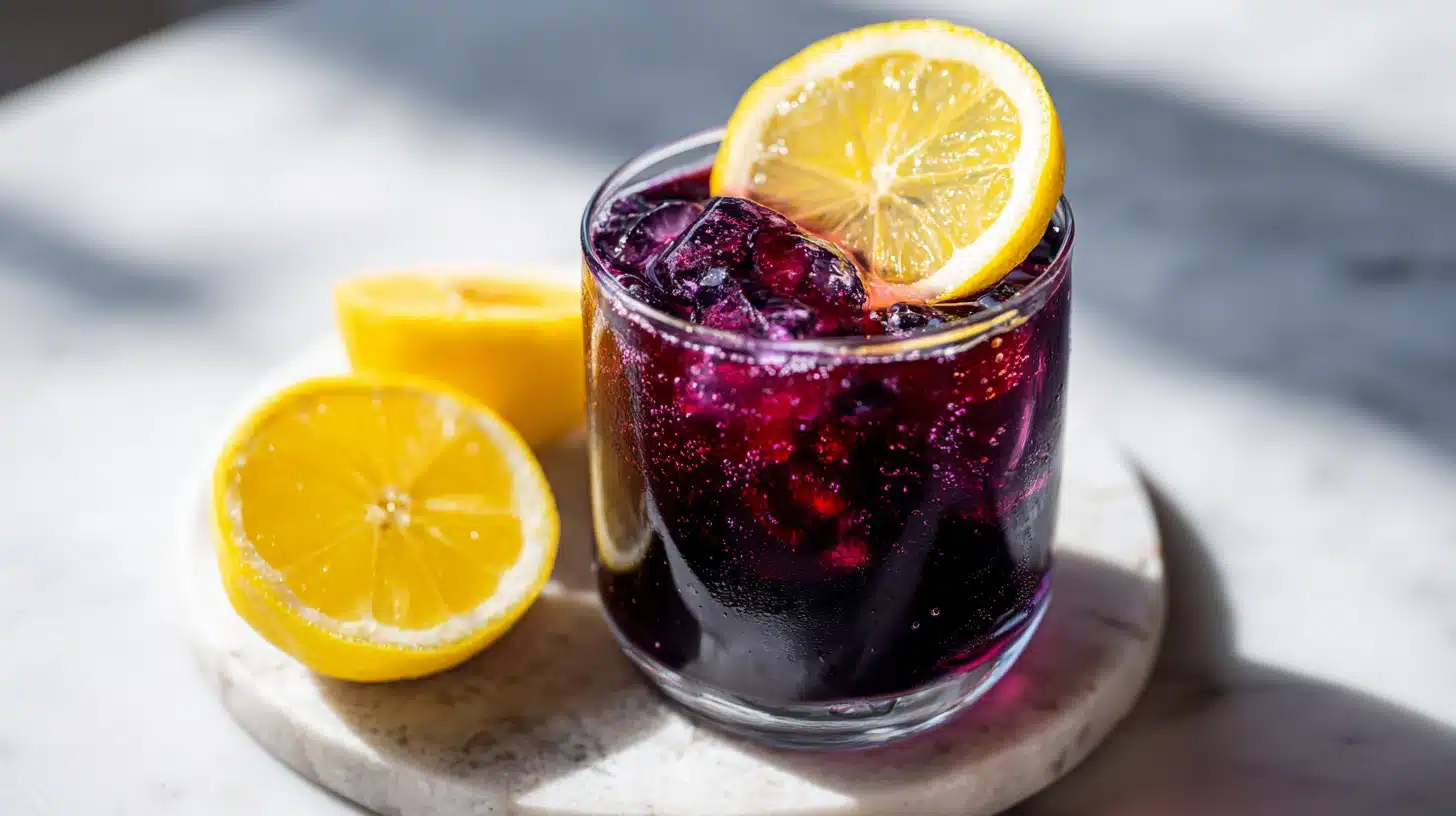
The first time I poured butterfly pea flower tea for a friend, she thought I was performing a magic trick. The deep sapphire liquid turned electric purple the second the lemon hit the glass.
Too many home brewers end up with a thin, bitter cup that lacks the smoothness and earthy depth this brew is known for. We’re fixing that with a simple steeping method that pulls out maximum color without the harshness.
Inside: the water temperature for vivid blue extraction, the science behind the color shift, and how to sweeten your blue pea tea without dulling its color.
Table of Contents
What Is Butterfly Pea Flower Tea?
Butterfly pea flower tea comes from the vivid blue petals of the clitoria ternatea plant, a climbing vine native to Southeast Asia. For centuries, drinkers in Thailand and neighboring countries have steeped these blossoms to create a caffeine-free herbal tea with a sapphire hue. The dried flowers look almost like dark, crinkled silk. But once they meet hot water, they release an intense oceanic blue pigment. I still remember the first time I saw it. You genuinely question whether you’re drinking a beverage or looking at a piece of art.
The flavor is distinctly earthy and mildly floral, often compared to a lighter, smoother green tea without the sharp astringency. Because it is completely caffeine-free, blue pea tea is an excellent afternoon or evening sip. You get the ritual of a warm drink without the jittery side effects of traditional teas or coffee. The taste is delicate, slightly woody, and soothing.
Beyond its color, butterfly pea flower herbal tea has a long history as a wellness drink. Traditional Ayurvedic medicine has long valued the blossoms for their anti-inflammatory properties and their ability to support cognitive function. Modern interest often centers on the tea’s high concentration of antioxidants, specifically anthocyanins, which give the petals their natural blue pigment. These compounds help the body fight off oxidative stress.
If you enjoy brewing functional beverages at home, you might appreciate how quickly this tea comes together, much like our simple lemon balm tea for sleep. Both drinks rely on a short steep time to extract delicate flavors without turning bitter. The butterfly pea flower is forgiving, but understanding the nuances of the bloom helps you get a smooth, flavorful cup every single time.
Print
Butterfly Pea Flower Tea: The Color-Changing Brew You Need
- Total Time: 7 min
- Yield: 1 serving 1x
- Diet: Gluten Free
Description
A caffeine-free herbal tea made from steeped butterfly pea blossoms, offering an earthy floral flavor and a stunning color change when lemon is added.
Ingredients
For the tea:
3 to 4 dried butterfly pea flowers (or 1 teaspoon crushed petals)
1 cup hot water (200 degrees Fahrenheit)
1 teaspoon fresh lemon juice
1 teaspoon honey (optional)
For serving:
Ice cubes (if serving cold)
1 slice fresh lemon (for garnish)
Instructions
1. Heat the water in a kettle or small pot until it reaches a gentle simmer, not a rolling boil, to avoid scorching the delicate petals.
2. Place the dried butterfly pea flowers into a tea strainer or directly into a heatproof glass.
3. Pour the hot water over the flowers and let them steep for exactly five minutes until the liquid turns a deep sapphire blue.
4. Remove the strainer or fish out the flowers promptly to prevent a bitter, woody flavor from developing.
5. Add the fresh lemon juice and watch the blue liquid instantly shift to a vivid electric purple.
6. Stir in the honey until fully dissolved, then add ice cubes if you prefer a cold beverage.
7. Garnish the glass with a fresh lemon slice and serve immediately while the colors are bright.
Notes
Store any leftover steeped tea in the refrigerator for up to 2 days in a sealed glass jar. Reheat gently on the stove or pour over fresh ice.
If you do not have honey, maple syrup or agave nectar are excellent clear sweeteners that will not dull the bright color of the tea.
For a stronger earthy flavor, add one extra dried petal, but do not extend the steep time past five minutes.
Try adding a splash of peach juice for a fruity variation that pairs perfectly with the floral notes.
- Prep Time: 2 min
- Cook Time: 5 min
- Category: Drink
- Method: Stovetop
- Cuisine: Asian
Nutrition
- Serving Size: 1 cup
- Calories: 10 kcal
- Sugar: 2 g
- Sodium: 5 mg
- Fat: 0 g
- Saturated Fat: 0 g
- Unsaturated Fat: 0 g
- Trans Fat: 0 g
- Carbohydrates: 3 g
- Fiber: 0 g
- Protein: 0 g
- Cholesterol: 0 mg
The Science of the Color Change
The most captivating feature of butterfly pea flower tea is its color transformation. When you add an acid like lemon juice to the steeped blue tea, the liquid instantly shifts from a deep sapphire blue to a vivid, electric purple. This is not a chemical trick or an illusion. It is pure kitchen chemistry at work, and serving this drink becomes an interactive experience.
The secret lies in the pH level of the liquid. The natural blue pigment in the clitoria ternatea tea is highly sensitive to acids and bases. In its neutral state, the tea sits at a higher pH, displaying that blue color. When you introduce lemon juice, which is highly acidic, you lower the pH of the liquid. This sudden shift in acidity forces the anthocyanin molecules to change their structure, which changes how they absorb and reflect light. The result is an immediate purple color. Depending on how much acid you add, you get anything from soft lavender to a deep royal violet.
You can use this pH sensitivity to your advantage when entertaining. Start your guests with a pitcher of the pure blue tea, then let them squeeze fresh lemon or lime into their individual glasses. The shift is instant. People always gasp. The flavor changes just as much as the color. The bright, tart citrus cuts through the earthy depth of the blue pea flower tea. The result is a balanced, refreshing drink that feels lively on the palate.
The color change is also why butterfly pea flower tea is a popular natural food coloring. Home bakers and mixologists use concentrated brews to dye doughs, glazes, and cocktails without relying on synthetic dyes. You can layer the tea over ice with a clear sweetener to create a gradient effect in a glass. The sharp aroma of citrus zest mixing with the floral, woody scent of the steeped petals hits you before you even take your first sip.
Health Benefits and Active Compounds
People drink butterfly pea flower tea for more than just its visual appeal. This herbal brew has a solid nutritional profile, starting with a high concentration of antioxidants. The same anthocyanins responsible for the blue pigment also help neutralize free radicals in the body. This supports overall cellular health and reduces the impacts of daily oxidative stress. Drinking a cup is an easy way to add a protective element to your afternoon routine.
One of the most discussed aspects of blue tea involves its impact on brain health. The flowers contain compounds that support the production of acetylcholine, a neurotransmitter essential for memory and learning. These compounds help maintain healthy acetylcholine levels, which may support cognitive function and mental clarity. While it is not a medical treatment, sipping this brew is a comforting habit if you want to support your focus naturally.
The anti-inflammatory properties of the clitoria ternatea plant also mean it is a popular wellness tonic. Drinkers often find it soothes minor digestive discomfort and promotes a sense of calm. Because it is completely caffeine-free, you can enjoy a warm mug after dinner without worrying about it disrupting your sleep cycle. If you are building an evening wind-down routine, this tea pairs well with a chamomile sleep tea for a layered, floral way to relax.
For those monitoring their sugar intake, butterfly pea flower tea is naturally zero-calorie and unsweetened. You control exactly what goes into your cup. A touch of raw honey adds trace enzymes and a rounded, floral sweetness that complements the earthy base notes. This clean profile means the tea is a good choice if you want a hydrating, functional beverage that actually tastes good.
How to Brew the Perfect Cup
Brewing butterfly pea flower tea at home takes only a few minutes, but the details matter. You want to use water that is hot but not boiling. A rolling boil can scorch the delicate petals and extract a bitter, muddy flavor that masks the floral sweetness. Bring your water to a gentle simmer, around 200 degrees Fahrenheit, and pour it directly over the dried blossoms. You will immediately see the water turn a light sky blue, then darken to a deep indigo as the steep continues.
You only need three or four dried petals per cup, or roughly one teaspoon if you are using a crushed blend. Let the flowers steep for exactly five minutes. If you leave the petals in the water for too long, the brew becomes thick and woody. Strain the flowers out promptly to keep the liquid clean and bright. The aroma will be mildly earthy, like a damp garden after a light spring rain, with a subtle floral sweetness rising from the glass.
Once strained, you can enjoy the tea hot or pour it over a tall glass of ice. To achieve the famous color change, add a squeeze of fresh lemon juice and watch the beverage transform. If you prefer a sweeter drink, stir in a teaspoon of honey or a clear simple syrup. For a layered look, pour the sweetener and lemon juice in first, then slowly pour the blue tea over the top. The layers will mix gradually. You get a sunset effect in your glass.
For a creative twist, try blending your blue tea with fruit infusions. The earthy base of the butterfly pea blossoms pairs well with stone fruits. A peach iced tea hybrid tastes as good as it looks. The floral notes of the petals anchor the bright sweetness of the fruit. Garnish your finished glass with a slice of lemon or a sprig of fresh mint to add a crisp, aromatic finish to every sip.
Frequently Asked Questions
What does butterfly pea flower tea good for?
Butterfly pea flower tea is rich in antioxidants, particularly anthocyanins, which help protect the body against cellular damage from free radicals. It also contains compounds that support the production of acetylcholine, which may aid memory and cognitive function. Its anti-inflammatory properties may also help soothe mild digestive discomfort and promote general wellness.
Who should not drink butterfly pea tea?
Pregnant or breastfeeding women should consult a healthcare provider before drinking blue pea tea, as its effects on pregnancy are not thoroughly studied. Individuals taking blood sugar medications or blood thinners should also exercise caution, as the tea can interact with these treatments. Always check with your doctor if you have specific medical concerns.
Does butterfly pea flower tea make you sleepy?
Butterfly pea flower tea is completely caffeine-free, so it will not keep you awake or cause jittery side effects. While it is not a traditional sedative, its warm, soothing nature and lack of stimulants mean it is a good choice for a relaxing evening beverage. Drinking it before bed will not disrupt your natural sleep cycle.
Can we drink blue pea tea daily?
Yes, you can drink butterfly pea flower tea daily in moderation. Most people enjoy one to two cups a day without any adverse effects. Drinking it regularly gives you a consistent intake of antioxidants and anti-inflammatory compounds. As with any herbal infusion, it is best to listen to your body and vary your beverages.
Conclusion
Brewing butterfly pea flower tea at home is genuinely fun. The color alone is worth the five minutes it takes to steep. Pour it for someone who has never seen it, squeeze in some lemon, and watch their face. That reaction is the real reward.
For more recipes like butterfly pea flower tea, follow us on Facebook and Pinterest for herbal beverage ideas.
More recipes in this series: