
Lemon balm tea for sleep was the last thing I expected to actually work, yet after one week of sipping a warm mug at 9 p.m., I stopped staring at the ceiling at midnight.
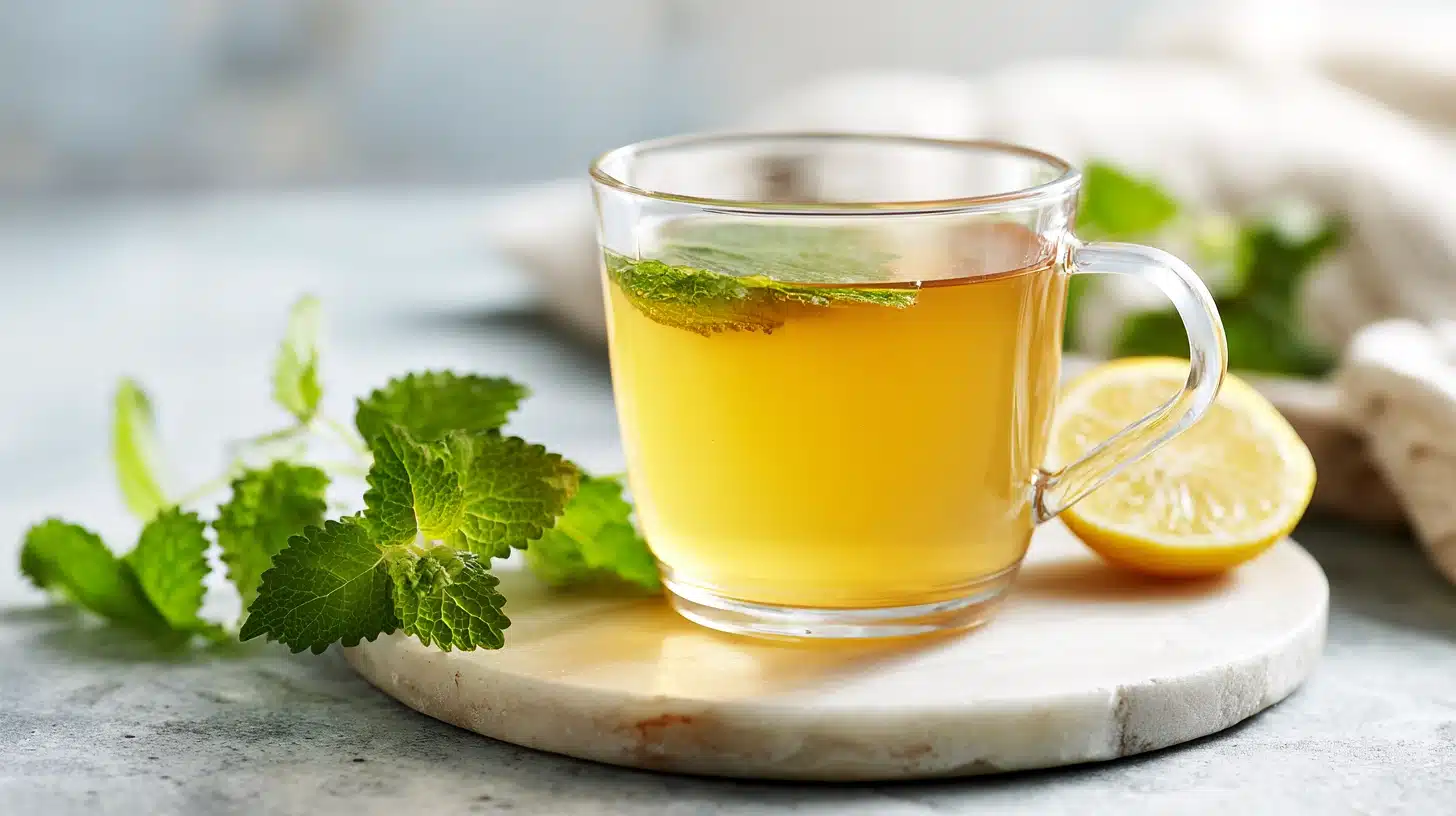
Most herbal teas taste like vague intentions. They promise calm but deliver little more than hot, grassy water that leaves you just as wired and restless as before. This recipe steeps at the right temperature for exactly the right amount of time so the active compounds release fully, turning a simple herb into a genuinely effective wind-down drink.
Inside: how lemon balm works in your body, which ingredients to pair it with for better results, and exactly how to brew a cup that tastes as good as it feels.
Table of Contents
What Is Lemon Balm and Why Does It Help You Sleep?
Lemon balm, known botanically as Melissa officinalis, is a leafy perennial in the mint family. It has been used as a nervine, meaning a plant that calms the nervous system, for over 2,000 years. Ancient Greeks and medieval European herbalists prescribed it for anxiety, restless sleep, and nervous indigestion. Today, modern research confirms what those early practitioners observed.
The Science Behind Lemon Balm Sleep Benefits
The plant contains two compounds worth knowing: rosmarinic acid and a group of terpenes that inhibit an enzyme called GABA transaminase. GABA (gamma-aminobutyric acid) is your brain’s primary “slow down” neurotransmitter. When GABA activity is low, your mind races. When it is high, you feel relaxed and ready for rest.
Rosmarinic acid blocks the breakdown of GABA, which means more of it stays active in your brain for longer. This is the same mechanism targeted by some prescription anti-anxiety medications, just in a gentler, food-safe form. A 2014 study published in Nutrients found that lemon balm extract significantly reduced anxiety and insomnia scores in participants after 15 days of use. A smaller pilot study showed that a single dose reduced stress markers within an hour.
What this means for your cup of tea: you are not just sipping something that might help you relax. You are consuming a plant with a documented reason for calming your nervous system before bed.
How Lemon Balm Compares to Other Herbal Sleep Remedies
The world of herbal sleep remedies is crowded. Chamomile is mild and pleasant. Valerian is potent but earthy to the point of being almost unpleasant for many people. Lemon balm sits between the two.
- Gentler than valerian with no next-morning grogginess
- More effective than plain chamomile for anxiety-driven insomnia
- Safe to combine with chamomile for a layered effect
- Naturally lemony and bright in flavor, making it easy to drink nightly
If your sleeplessness is driven by a busy, anxious mind rather than physical restlessness, lemon balm tea is particularly well matched to your needs.
If you are curious about other ways lemon balm supports your body, the lemon balm drink for weight loss recipe on Forkful Daily explores its digestive and metabolic benefits in a refreshing daytime format.
Print
Lemon Balm Tea for Sleep: Your New Nightly Ritual in 5 Minutes
- Total Time: 5 min
- Yield: 1 cup 1x
- Diet: Vegan
Description
A simple 5-minute herbal tea made with dried lemon balm leaves, chamomile flowers, fresh ginger, and raw honey. It is brewed at a gentle temperature to preserve the calming compounds in the herb, making it a reliable nightly drink for winding down before bed.
Ingredients
For the tea:
1 tablespoon dried lemon balm leaves (or 8 to 10 fresh leaves, gently torn)
1 teaspoon dried chamomile flowers
1 thin slice fresh ginger (about the size of a quarter)
8 ounces filtered water (heated to 185 to 195 degrees F, just below a full boil)
To finish:
1 teaspoon raw honey (stirred in after steeping)
Instructions
1. Warm your mug by pouring a small splash of hot water inside, swirling it around for 30 seconds, then discarding it. This keeps the water temperature stable during steeping.
2. Place the dried lemon balm leaves, chamomile flowers, and ginger slice into a reusable tea infuser or directly into your pre-warmed mug. If using fresh lemon balm, gently tear each leaf once before adding.
3. Heat filtered water to 185 to 195 degrees F. If you do not have a variable-temperature kettle, bring water to a full boil and let it rest off the heat for 90 seconds before pouring.
4. Pour the hot water slowly over the herbs, allowing them to bloom upward through the liquid. You should smell a bright, lemony-herbal aroma rising with the steam.
5. Cover the mug immediately with a small plate or saucer to trap the volatile aromatic compounds. Set a timer for 5 to 7 minutes. Five minutes gives a lighter, floral cup; 7 minutes gives a deeper, more concentrated brew.
6. Remove the infuser or strain the tea into a clean mug. Let it cool slightly until it is warm but comfortable to sip, around 150 degrees F.
7. Stir in the raw honey until fully dissolved. Take your first sip and notice the clean lemon-herbal flavor with a soft, sweet finish. Drink the full cup 30 to 45 minutes before your intended bedtime.
Notes
Store any leftover cold-steep concentrate (see article for method) in a sealed glass jar in the refrigerator for up to 4 days. Reheat gently in a small saucepan over low heat until steaming. Do not freeze.
For a stronger effect, increase dried lemon balm to 1.5 tablespoons and steep for the full 7 minutes. Do not exceed 8 minutes or the ginger can turn sharp.
To make a lavender variation, add half a teaspoon of dried culinary lavender to the infuser along with the other herbs.
If you prefer no sweetener, the tea is pleasant unsweetened. The honey is optional but does support sleep via its mild effect on tryptophan availability in the brain.
Consult your doctor before drinking nightly if you are pregnant, breastfeeding, or taking thyroid medication.
- Prep Time: 0 min
- Cook Time: 5 min
- Category: Drink
- Method: No-Cook
- Cuisine: American
Nutrition
- Serving Size: 1 cup
- Calories: 12 kcal
- Sugar: 4 g
- Sodium: 2 mg
- Fat: 0 g
- Saturated Fat: 0 g
- Unsaturated Fat: 0 g
- Trans Fat: 0 g
- Carbohydrates: 5 g
- Fiber: 0 g
- Protein: 0 g
- Cholesterol: 0 mg
Ingredients for the Best Lemon Balm Tea for Sleep
Getting the ingredients right is 80 percent of the battle. Lemon balm is a delicate herb. Its volatile aromatic oils, the ones responsible for both the lemony scent and the calming effect, evaporate quickly under high heat or prolonged steeping. Choosing quality ingredients and treating them correctly makes the difference between a cup that works and one that just smells nice.
Fresh vs. Dried Lemon Balm
Both fresh and dried leaves work, but they behave differently in the cup.
Fresh lemon balm leaves give a brighter, greener flavor with a pronounced lemon-citrus top note. The aroma is almost floral when you bruise the leaves between your fingers. For fresh leaves, you will want a generous handful, about 8 to 10 large leaves, per cup.
Dried lemon balm is more concentrated and convenient. One tablespoon of loose dried lemon balm is the right measure for a single 8-ounce mug. Look for dried lemon balm that is still a soft sage-green color. If your dried herbs have gone grey or dusty, they have lost most of their aromatic oils and will not deliver the calming effect you are after.
The Supporting Cast
A good lemon balm tea for sleep does not need to stand alone. These additions each pull their weight.
- 1 tablespoon dried lemon balm leaves (or 8 to 10 fresh leaves, gently torn)
- 1 teaspoon dried chamomile flowers (adds mild sedative support and a honey-like sweetness)
- 1 thin slice of fresh ginger, about the size of a quarter (settles digestion so your body is not distracted during sleep)
- 1 teaspoon raw honey, stirred in after steeping (honey gently raises insulin, which helps tryptophan cross the blood-brain barrier)
- 8 ounces of filtered water, heated to 185 to 195 degrees Fahrenheit, meaning just below a rolling boil
The water temperature matters more than most people realize. Boiling water at 212 degrees Fahrenheit can destroy some of the delicate terpenes in lemon balm. Pulling it off the heat just before it reaches a full boil, or letting boiled water rest for 90 seconds, keeps those calming compounds intact.
How to Make Lemon Balm Tea for Sleep: Step by Step
This recipe takes exactly 5 minutes from kettle to couch. There is no special equipment required beyond a mug and a small strainer or tea infuser. Here is how to get every detail right.
Step 1: Warm Your Mug
Pour a splash of hot water into your empty mug and let it sit for 30 seconds, then discard it. A pre-warmed mug holds temperature longer, which matters because lemon balm releases its oils gradually throughout the steep. A cold ceramic mug drops the water temperature too fast and cuts your steep short.
Step 2: Prepare the Herbs
If you are using fresh lemon balm, gently tear each leaf once or twice. You should immediately smell a clean, bright lemon scent with a faint herbal undertone, almost like lemon verbena crossed with mint. That aroma is your signal that the volatile oils are active and ready to steep.
Place your lemon balm and chamomile flowers directly into the mug, or load them into a reusable infuser. Add the ginger slice on top.
Step 3: Steep at the Right Temperature
Heat your water to 185 to 195 degrees Fahrenheit. If you do not have a variable-temperature kettle, bring water to a full boil and then wait 90 seconds before pouring. Pour the water slowly over the herbs, letting it bloom upward through the leaves.
Cover your mug immediately with a small plate or saucer. This traps the volatile aromatic steam, which would otherwise carry your active compounds straight into the air instead of into your drink.
Step 4: Steep for 5 to 7 Minutes
Set a timer. 5 minutes gives you a bright, floral cup with gentle calming action. 7 minutes deepens the herbal flavor and increases the concentration of rosmarinic acid in the brew. Do not steep longer than 8 minutes, as the ginger can turn sharp and overpowering.
While you wait, dim the lights, put your phone face-down, and start winding down for the evening. The ritual of making the tea is itself a sleep signal to your nervous system.
Step 5: Sweeten and Sip
Remove the infuser or strain the tea into a fresh mug. Stir in your raw honey while the tea is still warm but not scalding, around 150 degrees Fahrenheit, to preserve the honey’s natural enzymes. Take your first sip and notice the flavor: the lemon balm tea tastes bright and faintly sweet upfront, with a soft herbal warmth that lingers at the back of the throat.
Aim to drink this 30 to 45 minutes before your intended bedtime.
Lemon Balm Dosage for Sleep, Variations, and Storage Tips
One of the most common questions I receive is how much lemon balm is actually enough. The answer depends on your form and your body, but there are reliable starting points.
Lemon Balm Dosage for Sleep
For tea specifically, the therapeutic range most commonly studied sits between 300 and 600 milligrams of lemon balm extract. A well-steeped tablespoon of dried lemon balm falls in the lower end of that range, which is enough for most people to notice a calming effect without any sedative heaviness.
If you want a stronger effect, you can:
- Steep for the full 7 minutes rather than 5
- Use a rounded tablespoon (about 1.5 tablespoons) of dried lemon balm
- Combine with valerian root at a ratio of 2 parts lemon balm to 1 part valerian for deeper sleep support
If you are new to lemon balm, start with the single tablespoon recipe and assess how you feel after 3 to 5 nights before increasing.
Tasty Variations to Keep It Interesting
One of the best things about making lemon balm tea for sleep a nightly ritual is that you can vary the flavor while keeping the core ingredient constant.
- Lavender addition: add half a teaspoon of dried culinary lavender for a floral, spa-like flavor. If you enjoy lavender in drinks, the lavender lemon drop recipe is a fun daytime spin on similar flavors.
- Mint variation: add 3 to 4 fresh spearmint leaves for a cooling finish that is especially good in warmer months.
- Spiced version: add a small cinnamon stick alongside the ginger for a warming, chai-adjacent flavor profile.
Storage and Make-Ahead Tips
You can make a cold-steep concentrate in advance. Combine 4 tablespoons of dried lemon balm with 4 cups of cold filtered water and refrigerate overnight. In the morning, strain it and store the concentrate in a glass jar for up to 4 days. To use, warm one cup of concentrate gently in a small saucepan over low heat until it steams, then add honey and enjoy.
Do not microwave the concentrate if you can avoid it. Microwaves heat unevenly and can scorch the delicate herbal notes.
Frequently Asked Questions
Is lemon balm tea good for sleep?
Yes, and the evidence is stronger than for many popular herbal teas. Lemon balm contains rosmarinic acid, which inhibits the breakdown of GABA in the brain, helping your nervous system shift into a calmer state. Several small clinical studies have found that participants reported significantly reduced anxiety and improved sleep quality after using lemon balm consistently for one to two weeks.
Is it okay to drink lemon balm tea every night?
For most healthy adults, drinking lemon balm tea for sleep nightly is considered safe. Lemon balm has a long history of use as a food and herbal remedy with no documented toxicity at typical tea doses. If you are pregnant, breastfeeding, or taking thyroid medication, speak with your doctor before using lemon balm regularly, as it may interact with thyroid hormone levels at higher doses.
What is lemon balm?
Lemon balm (Melissa officinalis) is a perennial herb in the mint family native to Southern Europe and the Mediterranean. It has soft, slightly textured leaves with a bright lemon scent caused by volatile terpene compounds. It has been cultivated for at least 2,000 years and is used in cooking, herbal medicine, and aromatherapy. In the kitchen, its flavor pairs beautifully with fish, fruit desserts, and herbal teas.
What are the benefits of lemon balm?
Beyond lemon balm sleep benefits, the herb has well-studied effects on anxiety reduction, digestive calm (it eases gas and bloating), and mild antiviral activity. Some research suggests it may also support cognitive function and mood. As a nervine herb, it works on the nervous system broadly rather than targeting one specific symptom, which is why it is useful for the kind of stress-driven sleeplessness many people experience.
Conclusion
Lemon balm tea for sleep is one of those rare cases where something that tastes genuinely good also genuinely works. The same bright, lemony herb that has been tucked into monastery gardens since the Middle Ages is now backed by enough modern research to make a compelling nightly ritual, not just a hopeful one. You started reaching for hot, grassy teas that did nothing, and now you have a recipe with actual mechanism behind it.
Give it a try this week. Brew a cup tonight, 30 minutes before bed, cover it with a saucer, and notice how different your evening feels by day three.
For more recipes like lemon balm tea for sleep, follow us on Facebook and Pinterest for calming herbal drink ideas and cozy nightly ritual inspiration.