My grandmother kept a tin of dried chamomile flowers on her nightstand for her entire adult life, and I never understood why until the first time I made a proper chamomile sleep tea from scratch and felt my shoulders drop two inches the moment the steam hit my face.
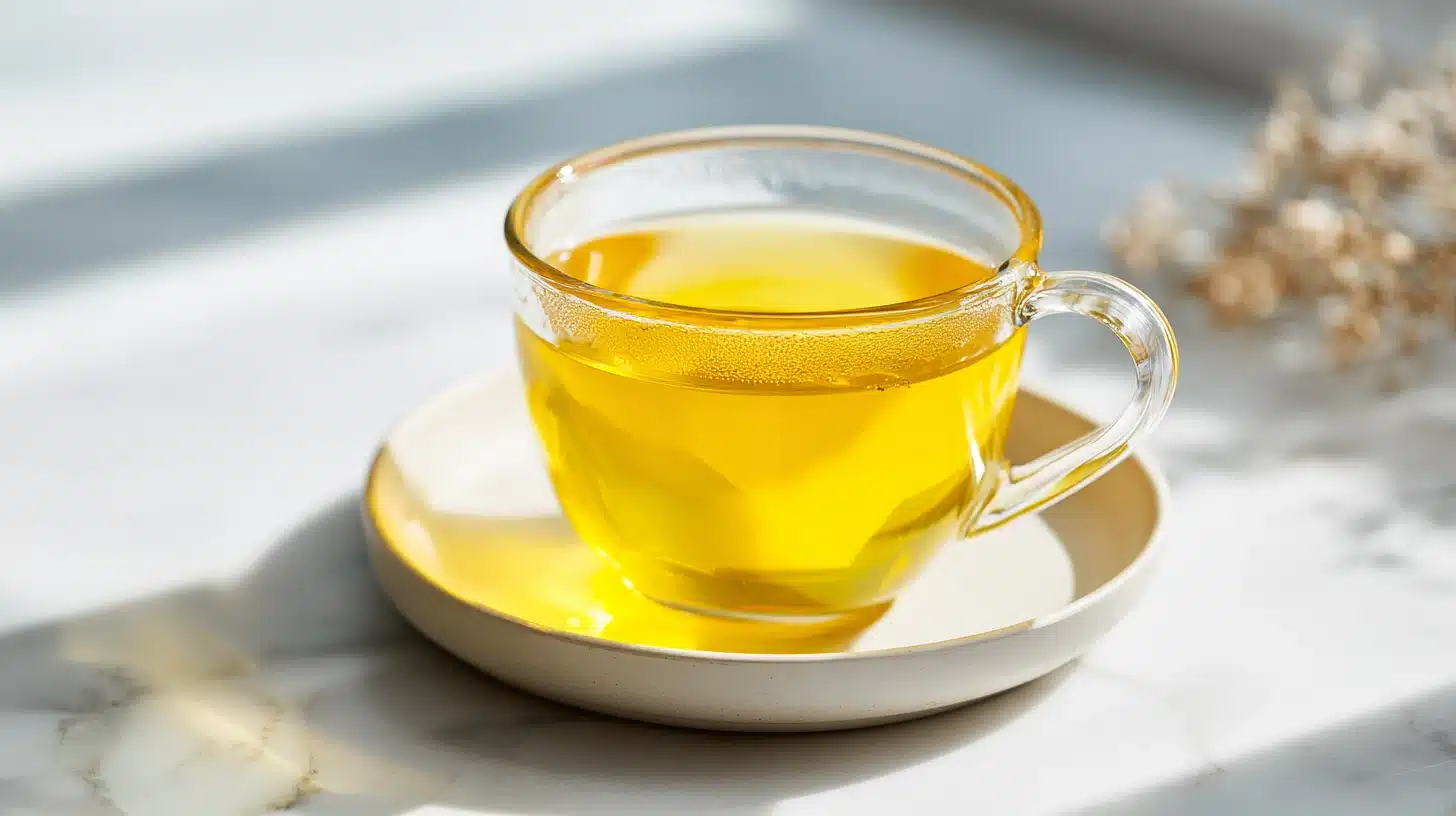
Too many people reach for a store-bought bag that tastes like warm nothing and then wonder why they’re still staring at the ceiling at midnight. This recipe layers chamomile with passionflower, lemon balm, and a whisper of lavender so the blend actually works, not just smells nice.
Inside: the science behind why chamomile helps you sleep, exactly which herbs amplify its effect, and a step-by-step blend you can make in bulk and reach for every single night.
Table of Contents
Why Chamomile Works as a Sleep Aid (and Why Most Teas Fall Short)
Walk down the tea aisle of any grocery store and you’ll find dozens of boxes shouting “calming” and “relaxing” at you. Most of them are chamomile blended with a little spearmint and a lot of marketing. To understand why a well-made chamomile sleep tea is genuinely different, you need to spend a few minutes with the chemistry.
The Apigenin Connection
German chamomile (the variety used in most herbal teas) contains a flavonoid called apigenin. Apigenin binds to benzodiazepine receptors in the brain, the same receptor sites targeted by prescription sleep medications, though with far gentler and shorter-lasting effects. When you steep chamomile flowers long enough, you extract a meaningful amount of this compound into your cup.
Here’s the catch: most people steep for two or three minutes, which pulls flavor but leaves a lot of apigenin behind in the soggy petals. A proper chamomile sleep tea needs a full five to seven minutes in water that is just off the boil, around 200°F to 205°F, to fully extract those calming compounds.
Roman vs. German Chamomile
You’ll see both Roman chamomile (Anthemis nobilis) and German chamomile (Matricaria chamomilla) at specialty tea shops. For sleep, German chamomile wins. It has a higher concentration of the essential oil bisabolol and higher apigenin content. Roman chamomile is still pleasant and mildly relaxing, but if your goal is a tea that genuinely helps you wind down, reach for German chamomile flowers every time.
Look for organic loose-leaf flowers when possible. The blossoms should be pale yellow-white with bright centers, dried at low temperature to preserve volatile oils.
Why Single-Herb Tea Often Disappoints
Here is the honest truth about chamomile alone: it is mild. For many people, especially those dealing with racing thoughts or stress-related insomnia, a single-herb chamomile brew is soothing but not quite enough.
The solution is synergy. Pairing chamomile with herbs that work through complementary pathways creates a blend that is noticeably more effective than any single herb on its own. Passionflower raises GABA levels in the brain, promoting relaxation through a different mechanism than apigenin. Lemon balm reduces cortisol and has been shown in small clinical studies to improve sleep quality. Valerian root deepens the sedative effect for people who are genuinely struggling. Lavender adds an aromatic dimension that engages the olfactory system, which itself has a calming loop into the nervous system.
If you enjoy other gentle herb-forward drinks before bed, this lemon balm drink for weight loss is another great recipe that features lemon balm in a surprisingly drinkable format.
Print
Chamomile Sleep Tea: Your New Bedtime Ritual in a Cup
- Total Time: 12 min
- Yield: 1 serving 1x
- Diet: Vegan
Description
A calming, caffeine-free herbal blend built around German chamomile flowers, passionflower, lemon balm, and lavender buds. Steeped for five to seven minutes, this tea is designed to help you unwind and fall asleep more easily as part of a consistent nightly routine.
Ingredients
For a single serving (8 oz cup):
1 tablespoon dried German chamomile flowers
1 teaspoon dried passionflower
1 teaspoon dried lemon balm leaves
3 to 4 dried culinary lavender buds (about 1/8 teaspoon)
8 oz water (heated to 200 to 205 degrees F)
1 teaspoon raw honey (optional, added after steeping)
1 small strip of lemon peel (optional)
For the bulk dry blend (about 20 servings):
1 cup dried German chamomile flowers
1/4 cup dried passionflower
1/4 cup dried lemon balm leaves
2 tablespoons dried culinary lavender buds
2 tablespoons dried spearmint leaves (optional)
Instructions
1. Heat water: Bring 8 oz of water to a boil, then remove from heat and let it rest for 60 seconds until it reaches 200 to 205 degrees F. This protects the delicate chamomile oils from scorching.
2. Measure the herbs: Add 1 tablespoon chamomile flowers, 1 teaspoon passionflower, 1 teaspoon lemon balm, and 3 to 4 lavender buds to a tea infuser or reusable muslin bag. The dried flowers should smell vivid and sweet straight from the container.
3. Place in mug: Set the filled infuser into a heatproof mug. If using a lemon peel strip, add it to the mug now.
4. Pour and cover: Pour the hot water directly over the infuser and immediately cover the mug with a small saucer or lid to trap the aromatic steam inside.
5. Steep: Let the herbs steep for 5 to 7 minutes. At 5 minutes the tea will be light gold and floral. At 7 minutes it deepens to amber with fuller flavor and stronger apigenin extraction.
6. Remove and sweeten: Lift out the infuser and gently press to release any remaining liquid. Stir in honey if using, only after steeping to preserve its natural enzymes.
7. Serve: Drink the tea warm, 30 to 45 minutes before you plan to sleep. Hold the mug with both hands and breathe in the steam before your first sip.
Notes
Store the bulk dry blend in an airtight glass jar away from light and heat for up to 6 months. Single-brewed tea should be consumed immediately and is not suitable for storing.
For a stronger sleep effect, add 1/4 teaspoon dried valerian root to the single-serving blend. Note that valerian has a pungent earthy flavor that some people find strong.
Use organic loose-leaf herbs when possible. Flowers should be pale yellow-white with bright golden centers and a clear sweet scent. Dusty or hay-like aroma means the herbs are past peak.
Do not use boiling water at a full 212 degrees F. The extra heat scorches chamomile’s delicate volatile oils and produces a slightly bitter, flat-tasting brew.
Consistent nightly use over 5 to 7 days gives the best results. Passionflower and lemon balm build their calming effect with repeated use.
- Prep Time: 5 min
- Cook Time: 7 min
- Category: Drink
- Method: No-Cook
- Cuisine: American
Nutrition
- Serving Size: 1 cup (8 oz)
- Calories: 5 kcal
- Sugar: 0 g
- Sodium: 2 mg
- Fat: 0 g
- Saturated Fat: 0 g
- Unsaturated Fat: 0 g
- Trans Fat: 0 g
- Carbohydrates: 1 g
- Fiber: 0 g
- Protein: 0 g
- Cholesterol: 0 mg
The Herb Lineup: What Goes Into the Best Chamomile Sleep Tea Blend
Building a house-made chamomile sleep tea blend is a bit like composing a chord. Every herb plays a role, and when you get the ratios right, the effect is harmonious and noticeably stronger than any single note on its own.
Chamomile Flowers (The Foundation)
Use two parts dried German chamomile flowers for every one part of everything else combined. This keeps chamomile front and center, both in flavor (light, apple-honey, slightly floral) and in function. A teaspoon per cup is the absolute minimum; a heaped tablespoon gives you a tea with real body and a pale golden-amber color that smells like a summer meadow just before sunset.
Passionflower (The Anxiolytic Herb)
Passionflower (Passiflora incarnata) is one of the most studied herbs for anxiety and sleep. It has a slightly green, grassy flavor that blends quietly into chamomile without overpowering it. Use one part passionflower to four parts chamomile in your blend. This is not a herb you will taste distinctly, which is actually the point. It does its work in the background.
Lemon Balm (The Mood Smoother)
Lemon balm smells bright and lemony straight out of the jar, but in the cup it softens into something gentler. It pairs beautifully with chamomile and helps address the “busy mind” type of sleeplessness. Use the same ratio as passionflower: one part lemon balm to four parts chamomile.
Lavender Buds (The Aromatherapy Boost)
A small amount of culinary-grade dried lavender goes a very long way. Too much and you’ll feel like you’re drinking soap. The right amount, about one part lavender to eight parts chamomile, adds a floral top note that makes the first sip smell like the most relaxing evening you’ve ever had. For another recipe that uses lavender beautifully in a drink, check out this lavender lemon drop recipe.
Optional Add-Ins
- Valerian root: adds a deeper sedative quality but has a pungent, earthy flavor. Use sparingly.
- Spearmint: one part to eight parts chamomile brightens the blend and makes it more palatable if you’re new to herbal tea.
- Linden (lime blossom): sweet and mildly sedating, a lovely addition.
- Catnip: yes, the kind your cat loves. In humans it is mildly calming and has a pleasant minty flavor.
- Hops: bitter and strongly sedating. A small pinch is enough for the blend.
- Rose petals: no sleep function, but they make the dry blend look beautiful and add a very faint floral sweetness.
A Note on Quality
Loose-leaf herbs should smell vivid and clear when you open the bag. If you open a jar of chamomile and smell mostly dust or hay, those flowers are past their peak. Buy from reputable herbal suppliers with high turnover. Frontier Co-op, Mountain Rose Herbs, and Starwest Botanicals are consistent choices available online.
How to Make Chamomile Sleep Tea: The Full Method
There are two ways to approach this recipe. The first is a quick single-serving brew for tonight. The second is making a bulk dry blend you store in a jar and scoop from every evening.
Single-Serving Method
This is for the night you want a cup right now without any prep.
What you need:
- 1 tablespoon dried German chamomile flowers
- 1 teaspoon dried passionflower
- 1 teaspoon dried lemon balm
- 3 to 4 dried lavender buds (not a full teaspoon, just a small pinch)
- 8 ounces of water, heated to 200°F to 205°F (just off the boil)
- Optional: a thin slice of fresh ginger, a small strip of lemon peel, or one teaspoon of honey
Method:
Add all of the herbs to a tea infuser, a reusable muslin bag, or directly into a heatproof mug if you plan to strain. Pour the hot water over the herbs and cover the mug immediately with a small saucer or lid. Covering is important: the volatile oils responsible for much of the calming aroma and flavor will escape with the steam if the mug is left open.
Steep for 5 to 7 minutes. Five minutes gives you a lighter, more floral cup. Seven minutes gives you a deeper, slightly more bitter brew with fuller extraction of apigenin. After your first batch, you’ll know which you prefer.
Strain into a clean mug if needed. The tea should be clear and amber-gold with a gentle haze from the flower oils. Stir in honey if using, and drink it warm while it’s still sending up a thread of fragrant steam. The smell alone, that low sweet bloom of chamomile hitting the air, is part of what signals your nervous system that it’s time to slow down.
Bulk Dry Blend Method
If you want a tin on your nightstand like my grandmother, this is the approach.
Bulk Blend Ratio (makes about 20 servings):
- 1 cup dried German chamomile flowers
- 1/4 cup dried passionflower
- 1/4 cup dried lemon balm
- 2 tablespoons dried culinary lavender buds
- 2 tablespoons dried spearmint (optional, for brightness)
Combine all ingredients in a bowl and gently toss with clean dry hands. Transfer to an airtight glass jar. Store away from light and heat. Properly stored, the blend stays fragrant and effective for up to six months. Each serving is approximately 1 heaped tablespoon steeped per 8-ounce cup.
Brewing Tips for Maximum Effect
- Always cover the mug while steeping. This single habit makes a noticeable difference in flavor depth and aroma.
- Do not use boiling water. A full rolling boil at 212°F can scorch delicate chamomile flowers and produce a faintly bitter, “cooked” flavor. Let the kettle rest for 60 seconds after it clicks off.
- Steep in the dark or dim light as part of your wind-down routine. Bright overhead lighting counteracts the calming cues you’re trying to build.
- Drink 30 to 45 minutes before you want to fall asleep. This gives the apigenin and lemon balm time to begin working before your head hits the pillow.
- Add honey after steeping, not before. Honey added to very hot water loses some of its beneficial enzymes.
Building a Nightly Ritual Around Your Sleep Tea
A cup of chamomile sleep tea is more effective when it’s part of a consistent signal sequence. Sleep scientists call this “sleep hygiene cues.” The body learns patterns remarkably fast. After two weeks of reaching for the same warm mug at the same time each evening, your brain starts releasing melatonin earlier in anticipation of sleep.
Setting the Scene
Brew your tea before you change into pajamas so it has time to cool to a drinkable temperature by the time you settle in. Dim the lights in your kitchen while the tea steeps. If you use a phone or tablet in the evening, lower the screen brightness to its minimum before your first sip. The goal is to create a consistent before-bed environment that your nervous system starts to associate with unwinding.
Place the mug somewhere comfortable, a reading chair, your bedside table, the corner of the couch away from the television. Hold it with both hands for a moment before you drink. The warmth against your palms, the rising steam, the smell of the chamomile: these are all physical signals landing in your nervous system before a single drop reaches your stomach.
Pairing the Tea With Other Calming Habits
- Reading (physical book, dim lamp): an excellent pairing. Chamomile sleep tea and a novel is one of the most underrated combinations in the wellness world.
- Gentle stretching or yoga: a short 10-minute floor stretch with the mug nearby works beautifully.
- Journaling: writing a brief “done list” (three things you accomplished today) has been shown to reduce intrusive thoughts at bedtime and pairs naturally with the ritual of a quiet cup.
- A warm bath taken 60 to 90 minutes before bed followed by the tea is one of the most research-supported sleep induction routines available without a prescription.
What to Avoid Pairing With
Bright screens on full brightness, energetic music, high-stakes conversations about finances or schedules, and any additional caffeinated drinks will all work against what the tea is doing. Chamomile sleep tea is gentle. It won’t overpower three espresso shots and a stressful email. Give it the conditions to work.
Consistency Is the Secret Ingredient
The biggest mistake people make with herbal sleep tea is trying it once, deciding it “didn’t work,” and giving up. The calming effects of passionflower and lemon balm build over consistent use. Most people notice a meaningful improvement in how quickly they fall asleep after five to seven consecutive nights of use. Think of it less like taking a sleeping pill and more like training a habit. The tea is the anchor, and the ritual is the boat.
If you find yourself curious about other nighttime nutrition habits, gelatin before bed for weight loss is a surprisingly interesting read about another simple before-bed ritual with a different kind of benefit.
Frequently Asked Questions
Is chamomile tea good for sleeping?
Yes, chamomile tea has genuine sleep-supporting properties rooted in its apigenin content. Apigenin is a flavonoid that binds to benzodiazepine receptors in the brain, producing mild sedative and anti-anxiety effects. Several small clinical studies have found that consistent chamomile consumption reduced the time it took participants to fall asleep and improved overall sleep quality scores, particularly in people with mild insomnia or generalized anxiety.
Does chamomile tea have caffeine in it?
Chamomile tea is completely caffeine-free. It’s an herbal infusion made from dried chamomile flowers, not from the Camellia sinensis plant that produces black, green, white, and oolong teas. This makes it safe to drink in the evening without disrupting your body’s natural melatonin production. The other herbs in this blend, including passionflower, lemon balm, and lavender, are also entirely free of caffeine.
Chamomile supplements or tea: which is better for sleep?
Both have merit, but they work differently. Chamomile extract capsules deliver a standardized dose of apigenin, which can be useful for people who dislike the flavor or want a more consistent therapeutic effect. Tea, on the other hand, delivers a gentler dose alongside the ritual and sensory experience of winding down, which is itself part of the mechanism. For most people without a clinical sleep disorder, a well-made chamomile herbal tea for sleep is a comfortable and effective starting point.
What makes Sleepytime tea so soothing?
Celestial Seasonings’ Sleepytime tea is soothing largely because it uses a blend of chamomile, spearmint, and linden (lime blossom), which are all gentle herbs associated with relaxation. The familiar scent and the warm mug ritual also play a significant role: the body learns to associate that specific smell with the quiet of bedtime. A house-made chamomile sleep tea blend can replicate and even improve on that effect by using higher-quality loose-leaf herbs and a more targeted combination of sleep-supporting plants like passionflower and lemon balm.
Conclusion
There’s something quietly powerful about having a ritual that signals the end of the day, and a well-made chamomile sleep tea is one of the simplest and most effective ones I know. Like my grandmother’s tin of dried flowers, it asks almost nothing of you: a kettle, a few pinches of herbs, five minutes, and the willingness to sit still for a moment.
Give this blend a try tonight. Mix a small batch of the dry herbs, steep a cup 45 minutes before bed, cover the mug, and let the steam do its work. You might be surprised how quickly your body starts looking forward to it.
For more recipes like chamomile sleep tea, follow us on Facebook and Pinterest for calming herbal drink ideas and cozy nighttime ritual inspiration.