My grandmother kept a jar of something very close to the best peach compote recipe on the bottom shelf of her fridge every August, and I spent years trying to reverse-engineer it from memory alone.
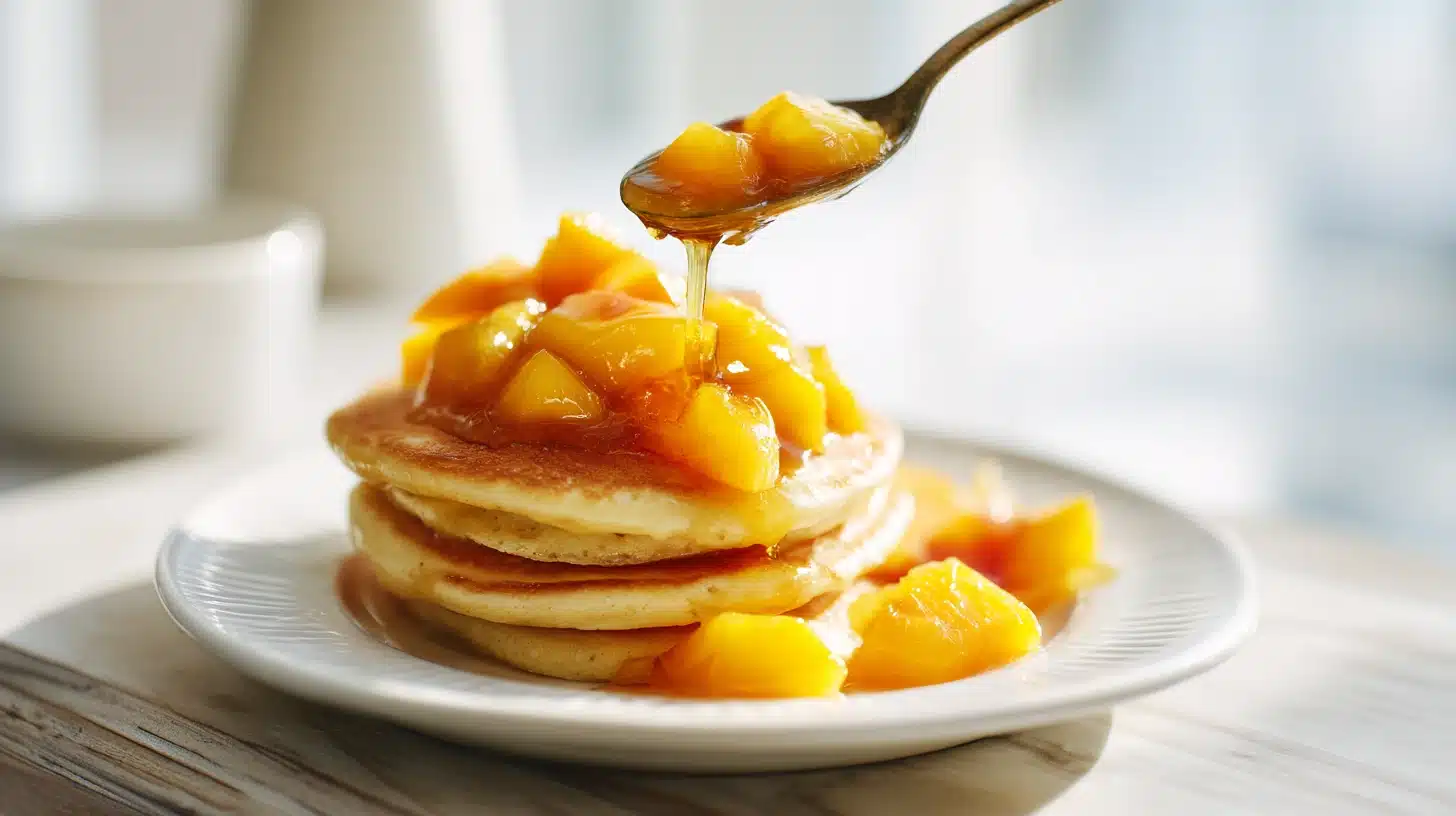
Most homemade peach toppings turn out either watery and thin or cloyingly sweet with a gluey, jam-like texture. This recipe hits the exact middle ground: a glossy, spoonable sauce with tender fruit chunks that hold their shape.
By the end, you’ll know which peach variety gives the deepest flavor, how one pantry spice transforms the whole pot, and exactly when to pull the compote off the heat so it sets to the perfect consistency.
Table of Contents
Why This Easy Peach Compote Works So Well
Understanding why a recipe works separates a cook who follows directions from one who can improvise confidently. Before we get to the stove, let’s talk about what actually happens inside the pot when you make this compote.
The science of the syrup
Peaches are roughly 85 percent water. When you apply heat and add sugar, osmosis pulls that moisture out of the fruit cells, creating a natural syrup right in the pan. That syrup thickens on its own without any cornstarch or pectin, as long as you give it enough time and the right amount of sugar. Too little sugar and the liquid stays watery. Too much and it turns into something closer to peach jam, which is wonderful but a different product entirely.
The goal here is a sauce that is pourable when warm and lightly gelled when cold, coating the back of a spoon with a shiny, amber glaze. That texture comes from cooking the fruit at a confident medium heat, not a timid low simmer, so the liquid reduces quickly while the fruit stays in recognizable pieces.
Why lemon juice is non-negotiable
A squeeze of fresh lemon juice does three things. First, it brightens the natural peach flavor and keeps the sauce from tasting flat. Second, the acidity slows the enzymatic browning that makes cut peaches turn an unappealing gray-brown. Third, the acid reacts with the natural pectin in the peach skin to help the syrup thicken slightly more than it would on its own.
Skip the bottled stuff here. Fresh lemon juice has a cleaner, sharper flavor, and in a recipe with so few ingredients, every single one matters.
The spice question
Vanilla extract is the obvious addition, and yes, it belongs in this recipe. But the move that makes this compote genuinely special is a pinch of cardamom alongside the cinnamon. Cardamom is floral and slightly citrusy, and it plays off the peach’s natural aroma in a way that makes people lean over the pot and ask what that smell is. You don’t need much, just a small pinch, enough to intrigue without dominating.
If cardamom is not your thing, ground ginger is an excellent substitute with a warmer, spicier edge.
Print
The Best Peach Compote Recipe You’ll Make All Summer Long
- Total Time: 15 min
- Yield: 5 servings 1x
- Diet: Vegan
Description
A quick, easy peach compote made with fresh peaches, sugar, lemon juice, vanilla, and warm spices. It cooks in about ten minutes on the stovetop and produces a glossy, spoonable fruit sauce that works over ice cream, yogurt, pancakes, and more.
Ingredients
For the compote:
1.5 lbs fresh yellow peaches (about 4 medium, peeled and diced into 3/4-inch chunks)
3 tablespoons granulated sugar
2 tablespoons water
1 tablespoon fresh lemon juice
1/2 teaspoon pure vanilla extract
1/4 teaspoon ground cinnamon
1 small pinch ground cardamom
Instructions
1. Combine peaches, sugar, water, and lemon juice in a medium saucepan over medium heat. Stir gently to coat the fruit and let the mixture sit undisturbed for about two minutes until the sugar begins to dissolve and the peaches start releasing their juice.
2. Bring the mixture to a low, active bubble, then reduce the heat to medium-low. Cook uncovered, stirring every two minutes, for eight to ten minutes. The syrup should transition from pale and watery to a deep golden amber color with slow, glossy bubbles forming at the edges.
3. Check the consistency by dragging a spoon through the syrup. It should coat the back of the spoon in a thin, shiny layer. If it still looks watery, cook for two to three more minutes.
4. Remove the pan from the heat. Stir in the vanilla extract, ground cinnamon, and cardamom. The residual heat will bloom the spices without burning off their aroma.
5. Taste the compote and adjust with a little more sugar if the peaches are tart or a splash more lemon juice if it tastes too sweet.
6. Let the compote cool in the pan for five minutes. It will thicken noticeably as it cools, reaching the perfect spooning consistency by the time it is at room temperature.
7. Transfer to a clean glass jar or airtight container. Serve warm, at room temperature, or cold. Store in the refrigerator for up to ten days.
Notes
Store in the refrigerator in a sealed jar for up to 10 days or freeze in an airtight container for up to 3 months. Reheat gently in a small saucepan over low heat, adding a splash of water if needed.
Frozen peaches work well as a substitute. Add them straight from frozen without thawing and increase cook time by about 3 minutes.
To reduce sugar, swap granulated sugar for 2 tablespoons of honey or maple syrup, stirring it in off the heat to preserve flavor.
White peaches can be used in place of yellow peaches. Add an extra teaspoon of lemon juice to compensate for their lower natural acidity.
- Prep Time: 5 min
- Cook Time: 10 min
- Category: Side Dishes
- Method: Stovetop
- Cuisine: American
Nutrition
- Serving Size: 1/2 cup
- Calories: 72 kcal
- Sugar: 16 g
- Sodium: 1 mg
- Fat: 0 g
- Saturated Fat: 0 g
- Unsaturated Fat: 0 g
- Trans Fat: 0 g
- Carbohydrates: 18 g
- Fiber: 1 g
- Protein: 1 g
- Cholesterol: 0 mg
Choosing the Right Peaches for Your Compote
The best peach compote recipe starts at the produce section, not the stove. The variety and ripeness of your peaches will determine more of the final flavor than any technique you apply.
Freestone vs. clingstone
There are two main categories of peaches you will encounter at the market: freestone and clingstone. Freestone peaches have a pit that separates cleanly from the flesh with a gentle twist. Clingstone peaches have flesh that grips the pit tightly, making them harder to cut but often richer and juicier in flavor.
For a fresh peach compote meant to be eaten as a sauce, either variety works beautifully. If you are using fresh summer peaches at peak ripeness, reach for whatever looks and smells best at the stand. The most important indicator is aroma: a ripe peach smells intensely peachy even before you cut into it. If you press your nose to it and smell nothing, put it back.
Yellow vs. white peaches
Yellow peaches have a classic sweet-tart flavor with firm flesh that holds its shape well during cooking, making them the top choice for this compote. White peaches are sweeter and more delicate, with lower acidity that can make the finished compote taste flat unless you compensate with an extra splash of lemon juice.
If you are shopping in off-season months and fresh peaches are not available, frozen sliced peaches are a completely legitimate substitute. Do not thaw them first. Add them straight to the pan from frozen and increase the cooking time by about three minutes. The result is nearly indistinguishable from fresh.
How many peaches do you need?
This recipe uses about 1.5 pounds of peaches, which translates to roughly four medium fruit. That yields approximately two and a half cups of finished compote, or five generous half-cup servings. If you want to scale up for a crowd or to store extra jars in the fridge, the recipe doubles and even triples without any adjustment to timing or ratios.
You might also love what a big batch of this peach sauce does when spooned over a warm peach cobbler, doubling down on the fruit flavor in the best possible way.
Step-by-step: How to make the best peach compote recipe
Now that you know the why behind each ingredient, here is the how. This quick compote comes together in about fifteen minutes start to finish, and it is the kind of recipe you will have memorized after making it twice.
What you’ll need
- 1.5 lbs fresh peaches (about 4 medium, peeled and diced into 3/4-inch chunks)
- 3 tablespoons granulated sugar (adjust to taste based on peach sweetness)
- 1 tablespoon fresh lemon juice
- 1/2 teaspoon pure vanilla extract
- 1/4 teaspoon ground cinnamon
- 1 small pinch ground cardamom (optional but recommended)
- 2 tablespoons water
The method
Add the diced peaches, sugar, water, and lemon juice to a medium saucepan over medium heat. Stir everything together gently and let it sit for about two minutes before touching it again. You will start to see the sugar begin to dissolve and the peaches release their juice, forming a pale pink liquid in the bottom of the pan.
Once the mixture comes to a low, active bubble, reduce the heat slightly to medium-low and let it cook uncovered for 8 to 10 minutes. Stir every two minutes or so. The liquid will go through a few stages: first it looks watery and loose, then it starts to foam slightly at the edges, then it turns a deeper golden amber color and the bubbles slow down and become glossy. That glossy bubble stage is your cue.
Remove the pan from the heat and stir in the vanilla extract, cinnamon, and cardamom. The residual heat from the pan will bloom the spices without cooking off their fragrance. Taste and add a little more sugar or lemon juice to balance.
The compote will look thinner than you expect right off the heat. Do not panic and keep cooking it. It thickens significantly as it cools, and by the time it reaches room temperature it will have the perfect spooning consistency.
Serving ideas and storage tips
A jar of this peach sauce in your fridge is one of those small luxuries that makes everything better. Here are the ways we use it most often at home, followed by everything you need to know about storing it properly.
How to serve peach compote
- Spoon it over vanilla ice cream and watch it melt into the cold cream in rivulets of gold.
- Swirl it into Greek yogurt or cottage cheese for a breakfast that feels indulgent.
- Layer it into overnight oats or peach cobbler muffins batter for concentrated peach flavor.
- Serve it warm alongside pancakes or waffles instead of maple syrup.
- Drizzle it over a wheel of baked brie for an easy, crowd-pleasing appetizer.
- Use it as a filling for crepes or a topping for pound cake.
- Stir a spoonful into a glass of sparkling water for a quick peach soda, or blend it into the base of a peach lemonade for something special.
The compote is good warm, at room temperature, and cold, which makes it one of the most versatile things you can keep in your fridge during summer.
Storage and shelf life
Transfer the finished compote to a clean glass jar or airtight container once it has cooled to room temperature. It keeps in the refrigerator for up to ten days. The color will deepen slightly as it sits, which is completely normal and actually signals that the flavors are concentrating.
For longer storage, this compote freezes beautifully. Ladle it into freezer-safe containers or zip-lock bags, leaving about half an inch of headspace for expansion, and freeze for up to three months. Thaw overnight in the fridge or gently warm it in a small saucepan over low heat.
If you want to can it for pantry storage, follow standard water-bath canning procedures for a high-acid fruit preserve, processing the sealed jars for ten minutes. Keep in mind that canning will soften the fruit chunks further, so the texture will be slightly more jam-like. If that appeals to you, the transition from this compote to a proper rhubarb compote style preserve is a natural next step.
Making it ahead
This homemade peach topping actually improves after a night in the fridge. The flavors meld, the spices deepen, and the texture becomes even more cohesive. If you are making it for a brunch or dinner party, preparing it a day or two in advance is genuinely the better move.
Frequently asked questions
Can I use canned peaches for this recipe?
You can, with a small adjustment. Drain the canned peaches thoroughly and reduce the sugar to one tablespoon, since canned peaches are already packed in syrup or juice that adds sweetness. The cooking time will also shorten to about 5 to 6 minutes since the fruit is already soft. The flavor will be milder than fresh, but still very good.
Why did my compote turn out watery?
The most common cause is pulling the compote off the heat too early. The liquid needs to cook down until it coats the back of a spoon and the bubbles look glossy and slow. Another possibility is that your peaches were very ripe and released more water than expected. If it is still thin after cooling completely, return it to the pan and simmer for another 3 to 4 minutes.
Can I make this compote without sugar?
Yes. Honey is a natural swap that adds a floral note which complements the peach well. Use two tablespoons in place of three tablespoons of sugar and add it off the heat rather than at the start to preserve its flavor. You can also use maple syrup for a warmer, slightly earthy sweetness. For a sugar-free version, a few drops of liquid stevia added at the end work reasonably well.
Does peach compote need to be refrigerated?
Yes, because it does not contain the preservative levels of sugar found in shelf-stable jams. Once cooled, store it in a sealed jar in the refrigerator and use within ten days. For parties or outdoor gatherings where it will sit out, keep it in a bowl set over a slightly larger bowl of ice to maintain food safety, and do not leave it at room temperature for more than two hours.
Conclusion
The best peach compote recipe is proof that the simplest things are often the most satisfying. A handful of ripe peaches, a bit of sugar, a splash of lemon juice, and about fifteen minutes on the stove produce something that makes every breakfast, dessert, and snack feel a little more considered.
Give this a try this week while summer peaches are at their peak. A small jar in your fridge will find its way onto everything.
For more recipes like this one, follow us on Facebook and Pinterest for seasonal fruit recipe ideas and easy homemade toppings.