My grandmother kept a cast-iron skillet on the back burner every summer, and this recipe for tomato and okra was the dish that lived in it longest, fragrant with bacon fat and sweet onion from July through September.
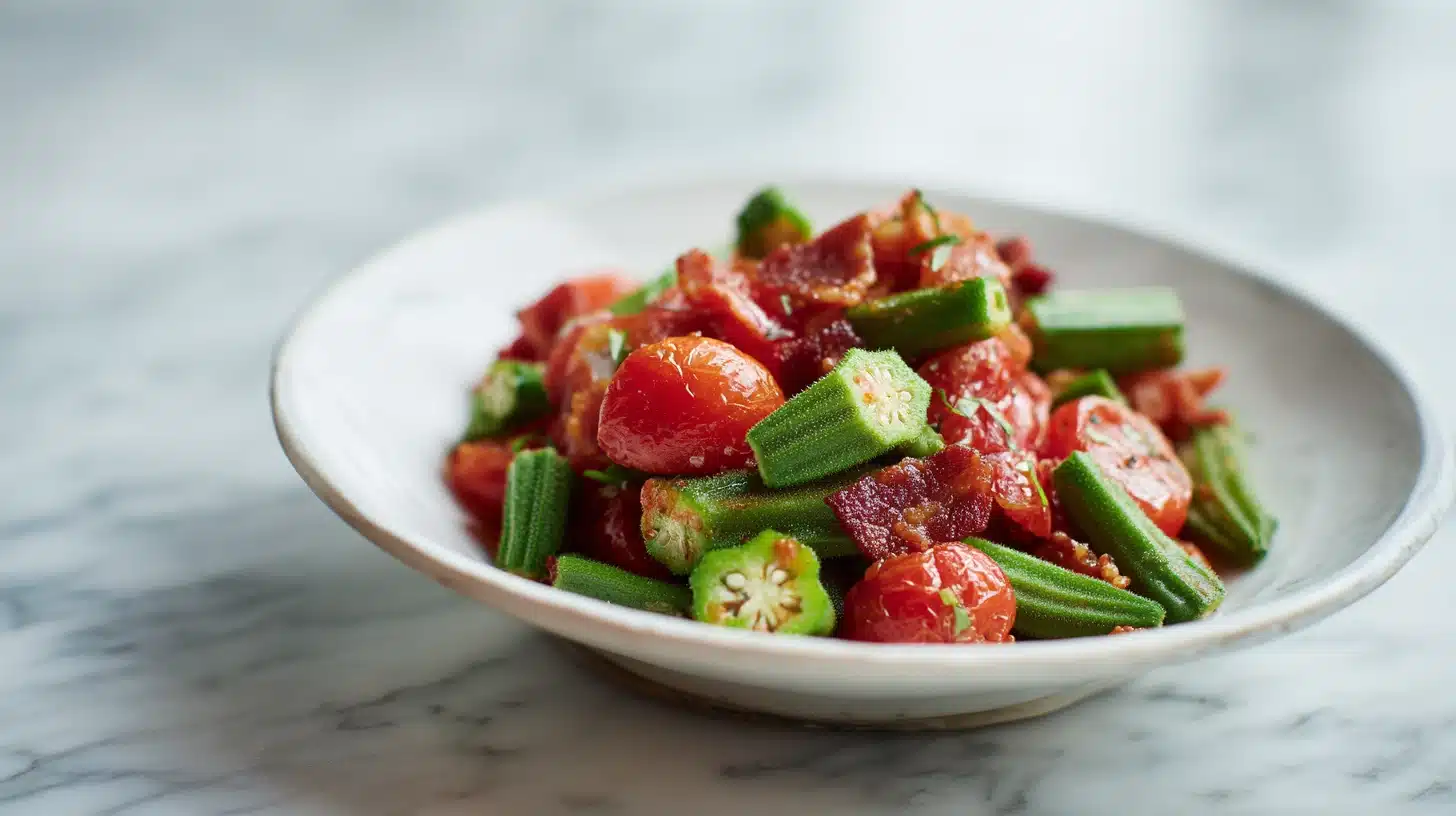
Most people abandon okra after one gummy, slippery batch. The fix is surprisingly simple: acid and heat management, two things this recipe handles for you.
By the end, you’ll know exactly how to stop the slime before it starts, why bacon is non-negotiable in a true southern stewed okra and tomatoes, and which pantry staple pulls the whole pot together.
Table of Contents
Why This Southern Tomato Okra Side Dish Works
Southern cooks have been pairing okra with tomatoes for generations. The combination is not accidental. It is chemistry dressed up as comfort food.
Okra contains mucilage, a naturally occurring soluble fiber that turns sticky and thick when the vegetable is cut and heated in liquid. This is the sliminess everyone complains about. But tomatoes are acidic, and acid breaks down that mucilage quickly, taming the texture while keeping the okra tender. Add a small splash of apple cider vinegar at the right moment, and you have a doubly effective approach that no amount of rinsing alone can match.
The Bacon Foundation
The dish starts with thick-cut bacon, and that choice matters more than you might expect. As the bacon renders in a wide skillet over medium heat, it releases fat that coats the bottom of the pan with deep, smoky flavor. You cook the onion, bell pepper, celery, and garlic right in that fat, and each vegetable softens slowly, picking up every bit of char and fond on the pan. By the time the tomatoes go in, the base of this stewed okra and tomatoes already smells like something your family will hover over the stove for.
A Vidalia or other sweet onion works best here. Its natural sugar caramelizes gently without turning cloying, and it balances the acidic tomatoes later in the cooking process.
The Tomato Question: Canned or Fresh?
Both work, and the choice depends entirely on your season. In peak summer, two pounds of ripe, deeply colored Roma or heirloom tomatoes, roughly chopped, will give you a brighter, slightly chunkier result. From October through May, a 28-ounce can of diced tomatoes with their liquid is the smarter call. The canning process concentrates flavor and the tomatoes are picked at peak ripeness, so you often get better results than out-of-season fresh ones.
One detail: do not drain the canned tomatoes. That liquid carries acidity and body that the sauce needs to cook the okra properly. Pour the whole can in, liquid and all.
If you enjoy exploring tomato-forward dishes, the white bean tomato skillet on Forkful Daily uses a similar technique for building a rich, quick pan sauce.
Salt, Spice, and the Sugar Secret
A small pinch of sugar, just half a teaspoon, is the detail that separates a flat, slightly harsh tomato stew from one that tastes rounded and full. It does not make the dish sweet. It simply softens the raw edge of the tomato acidity and lets the cumin and coriander read clearly on your palate. Both of those spices are warm and earthy rather than hot, and they give this tomato okra side dish subtle depth that people always notice but rarely identify.
Black pepper goes in generously. Salt goes in in two stages: once when the aromatics are softening, and once just before serving after you have tasted and adjusted.
Print
Southern Stewed Tomato and Okra: The Recipe That Finally Gets It Right
- Total Time: 35 min
- Yield: 5 servings 1x
Description
A simple southern stewed okra and tomatoes cooked with thick-cut bacon, sweet onion, bell pepper, and a splash of apple cider vinegar. The tomato base keeps the okra tender without any sliminess, and the whole dish comes together in one skillet in about 35 minutes.
Ingredients
For the base:
4 strips thick-cut bacon (cut into 1-inch pieces)
1 medium Vidalia sweet onion (medium dice, about 1 cup)
1 medium green bell pepper (medium dice, about 3/4 cup)
2 stalks celery (medium dice, about 1/2 cup)
3 cloves garlic (minced)
For the stew:
1 can (28 oz) diced tomatoes with liquid (or 2 lbs fresh Roma tomatoes, roughly chopped)
1 lb fresh okra (sliced into 1/2-inch rounds) or 12 oz frozen okra slices (do not thaw)
1 tablespoon apple cider vinegar
1/2 teaspoon sugar
3/4 teaspoon salt (plus more to taste)
1/2 teaspoon black pepper
1/2 teaspoon ground cumin
1/4 teaspoon ground coriander
Instructions
1. Place the bacon pieces in a cold wide skillet and set the heat to medium. Cook for 6 to 8 minutes, stirring occasionally, until the bacon is crisp and the fat is fully rendered. The kitchen should smell deeply smoky. Remove the bacon with a slotted spoon and set aside on a paper towel, leaving all the fat in the pan.
2. Add the diced onion, bell pepper, and celery to the hot bacon fat. Season with a pinch of salt and stir to coat. Cook for 5 to 6 minutes, stirring occasionally, until the onion is translucent and the edges of the pepper are lightly golden and sweet-smelling. Add the minced garlic and cook for 1 more minute, stirring constantly.
3. Pour in the diced tomatoes with all their liquid. Add the sugar, cumin, coriander, black pepper, and another pinch of salt. Stir everything together and bring the pan to an active, steady simmer. You should hear consistent gentle bubbling and the sauce will turn a rich, deep red-orange.
4. Add the okra rounds directly to the simmering tomato base. If using frozen okra, add it straight from the freezer without thawing. Stir to submerge the okra in the sauce. The liquid should bubble up around the okra immediately.
5. Cook uncovered for 15 to 18 minutes, stirring every few minutes, until the okra is completely tender and the sauce has reduced and thickened enough to cling to the vegetables rather than pool at the bottom of the pan.
6. Stir in the apple cider vinegar and cook for 2 more minutes. Taste and adjust salt and pepper as needed. The sauce should taste bright, smoky, and well-rounded.
7. Crumble the reserved crispy bacon over the top of the skillet. Remove the pan from the heat and let the dish rest for 2 minutes before serving. The sauce will tighten slightly as it cools and will cling to the okra beautifully.
Notes
Store leftovers in a covered container in the refrigerator for up to 4 days or freeze for up to 3 months. Reheat gently in a small saucepan over low heat with a splash of water to loosen the sauce if needed.
For a vegetarian version, omit the bacon and use 2 tablespoons of olive oil plus 1/4 teaspoon of smoked paprika to build a similar depth of flavor.
Do not thaw frozen okra before adding it to the pan. Adding it straight from the freezer helps it hold its shape and prevents mushiness.
A pinch of cayenne pepper or one small diced jalapeño added with the bell pepper gives this dish a slow, building heat that pairs well with the sweet onion and acidic tomatoes.
- Prep Time: 10 min
- Cook Time: 25 min
- Category: Side Dishes
- Method: Stovetop
- Cuisine: American
Nutrition
- Serving Size: 1 cup
- Calories: 145 kcal
- Sugar: 6 g
- Sodium: 480 mg
- Fat: 9 g
- Saturated Fat: 3 g
- Unsaturated Fat: 6 g
- Trans Fat: 0 g
- Carbohydrates: 12 g
- Fiber: 4 g
- Protein: 5 g
- Cholesterol: 18 mg
Choosing and Prepping Your Okra
Fresh okra and frozen okra both belong in this recipe for tomato and okra, and neither is a compromise.
Fresh okra should be small to medium in size, about two to four inches long. Larger pods tend to be fibrous and tough, and no amount of cooking fixes that. Look for firm, bright green pods with no soft spots or browning at the tips. Once you get them home, do not wash them until right before you cut them. Moisture on the exterior before cutting encourages slime. Dry pods, cut with a sharp knife, release far less mucilage than wet ones.
Cut the stem end off cleanly and slice each pod into rounds about half an inch thick. If you see a lot of seeds, the okra is probably older and may be tougher. Younger pods have small, pale seeds and a clean, grassy smell when cut.
Frozen okra is already blanched before freezing, which means some of the mucilage has already been neutralized. Add it directly from frozen into the hot skillet and do not thaw it first. Thawed okra turns mushy quickly because the ice crystals have already broken down the cell walls. Straight from the freezer, dropped into a hot, acidic tomato base, frozen okra holds its shape beautifully.
Sizing Your Cuts for Even Cooking
Uniformity matters. If your okra rounds vary from a quarter inch to a full inch, the thin pieces will dissolve into the sauce while the thick ones stay firm. Aim for consistent half-inch slices across the whole batch. The same rule applies to your onion and bell pepper: medium dice, roughly three-quarters of an inch, so everything finishes at roughly the same time.
A Note on the Apple Cider Vinegar
The recipe calls for one tablespoon of apple cider vinegar added about five minutes before the end of cooking. This is your insurance policy. The tomatoes provide the first round of acid, but the vinegar goes in late, just enough to brighten the whole pot and cut through the richness of the bacon fat. Do not skip it, and do not add it at the start. Early-added vinegar cooks off and loses its brightening effect. Late-added vinegar keeps its punch.
If you want to read more about how apple cider vinegar behaves in cooking, the apple cider vinegar and lemon juice guide on Forkful Daily covers its culinary uses in detail.
Step-by-step: How to make stewed okra and tomatoes
Getting this easy okra and tomatoes right is about sequencing. Each ingredient goes in at a specific point, and the order is what makes the texture work.
Step 1: Render the bacon. Place four strips of thick-cut bacon, cut into one-inch pieces, into a cold, wide skillet. Turn the heat to medium. Let the bacon render slowly for about 6 to 8 minutes, stirring occasionally, until the pieces are crisp and the fat is fully liquid. Remove the bacon with a slotted spoon and set it on a paper towel. Leave all the fat in the pan. Do not drain it. That fat is the flavor base for everything that follows.
Step 2: Soften the aromatics. Add your diced sweet onion, bell pepper, and celery to the hot bacon fat. Season lightly with salt and stir to coat. Cook for 5 to 6 minutes until the onion is translucent and soft, and the edges of the pepper have gone from raw and sharp-smelling to sweet and slightly golden. Add the minced garlic in the last minute, stirring constantly so it softens without burning.
Step 3: Build the tomato base. Pour in your tomatoes, either your roughly chopped fresh ones or the entire can of diced tomatoes with liquid. Add the sugar, cumin, coriander, black pepper, and another pinch of salt. Stir everything together. Bring the pan to a steady, active simmer. You should hear a consistent, gentle bubbling, not a rolling boil. This is the moment the kitchen starts to smell deeply savory.
Step 4: Add the okra. Stir in the okra rounds or frozen okra slices. The tomato base should bubble up around the okra immediately. Cook uncovered for 15 to 18 minutes, stirring every few minutes, until the okra is completely tender and the sauce has thickened. The liquid will reduce and cling to the vegetables rather than pooling at the bottom of the pan.
Step 5: Finish with vinegar and bacon. Add the tablespoon of apple cider vinegar, stir it in, and let it cook for 2 more minutes. Taste for salt and pepper. Crumble the reserved bacon back over the top. The contrast of the soft, saucy okra and the crisp bacon pieces is one of the best textural moments in southern cooking.
Step 6: Rest and serve. Pull the pan off the heat and let the dish sit for 2 minutes before serving. The sauce tightens as it cools slightly and clings even better to the okra.
Serving Ideas, Variations, and Make-Ahead Tips
This recipe for tomato and okra is a natural team player at the southern table. Spoon it over white rice for a simple one-bowl meal. Serve it alongside braised pork chops, fried chicken, or a slab of cornbread thick enough to absorb the sauce. It also works beautifully as a bed for poached or fried eggs at brunch, where the saucy, smoky base does everything a shakshuka does but with a distinctly southern personality.
Variations worth trying
Leave out the bacon entirely and use two tablespoons of olive oil to make a vegetarian version. Add a pinch of smoked paprika to compensate for the missing smoky depth.
Add half a pound of peeled shrimp in the last four minutes of cooking. The shrimp cook quickly in the hot sauce and turn this side dish into a complete, protein-rich main.
Stir in a drained can of white beans with the okra for a heartier, more filling variation. The beans soak up the tomato sauce and turn the dish into something closer to a stew.
A small diced jalapeño added with the bell pepper gives a slow, building heat that pairs beautifully with the sweet onion and acidic tomatoes.
Making it ahead
This is one of the best make-ahead side dishes in the southern repertoire. Cook the full recipe, cool it to room temperature, and refrigerate it in a covered container for up to 4 days. The flavor actually improves overnight as the okra absorbs the sauce and the spices meld. Reheat gently in a small saucepan over low heat, adding a splash of water if the sauce has thickened too much.
If you enjoy okra prepared in other creative ways, check out this okra salad recipe with japanese flavors for a completely different take on the vegetable.
For freezing: transfer cooled portions to freezer-safe bags or containers, press out the air, and freeze for up to 3 months. Thaw overnight in the refrigerator and reheat as described above. The texture of the okra will be slightly softer after freezing, but the flavor remains excellent.
What to serve alongside
| Pairing | Why It Works |
|---|---|
| Steamed white rice | Soaks up the rich tomato sauce perfectly |
| Skillet cornbread | Crumbly texture contrasts the soft stew |
| Fried chicken | Classic southern pairing, cuts the richness |
| Braised pork chops | The acidic sauce brightens fatty pork beautifully |
| Poached eggs | Turns the dish into a savory brunch centerpiece |
Frequently asked questions
How do you keep okra and tomatoes from being slimy?
The key is acid and heat. Cooking okra directly in a tomato-based sauce neutralizes the mucilage that causes sliminess. Adding a tablespoon of apple cider vinegar near the end of cooking provides a second round of acid that keeps the texture clean. Keeping the pan at a steady, active simmer rather than a low, slow temperature also helps the okra cook through without becoming gluey.
Can I make this southern stewed okra recipe ahead of time?
Yes, this dish is an excellent make-ahead option. Cook it fully, cool it to room temperature, and store it covered in the refrigerator for up to four days. The flavors deepen significantly overnight, making it taste even better reheated than it does fresh. Warm it gently over low heat and adjust the seasoning with a small pinch of salt before serving.
Can I freeze okra and tomatoes?
You can freeze this dish for up to three months in airtight containers or freezer bags. Thaw it overnight in the refrigerator and reheat slowly on the stovetop, adding a splash of water to loosen the sauce if needed. The okra will be slightly softer after freezing, but the overall flavor and richness of the tomato base hold up very well.
What pairs well with okra and tomatoes?
This dish is at home next to virtually any southern main. White rice is the classic choice because it soaks up the sauce. Cornbread, fried chicken, braised pork chops, and smothered pork all work beautifully. For a lighter meal, serve it alongside a simple green salad and crusty bread. At brunch, spoon it over poached eggs or alongside biscuits for a savory, deeply flavored plate.
Conclusion
This recipe for tomato and okra is the kind of dish that rewards patience and simplicity. Every step, from rendering the bacon slowly to adding the vinegar at exactly the right moment, exists for a reason. The result is a stew that is silky, smoky, and deeply satisfying without a trace of that gummy texture that gives okra its bad reputation.
Give it a try this week. Make a big batch on Sunday, and you will have a ready side dish that makes weeknight dinners feel like something special.
For more recipes like this, follow us on Facebook and Pinterest for southern comfort food ideas and easy weeknight dinner inspiration.
Love okra? Browse all 25 easy okra recipes in one place, or try okra succotash and quick okra soup next.