Learning how to poach an egg in the microwave feels like discovering a secret shortcut in your morning routine. I spent years avoiding poached eggs entirely because the traditional stovetop method seemed fussy and slow.
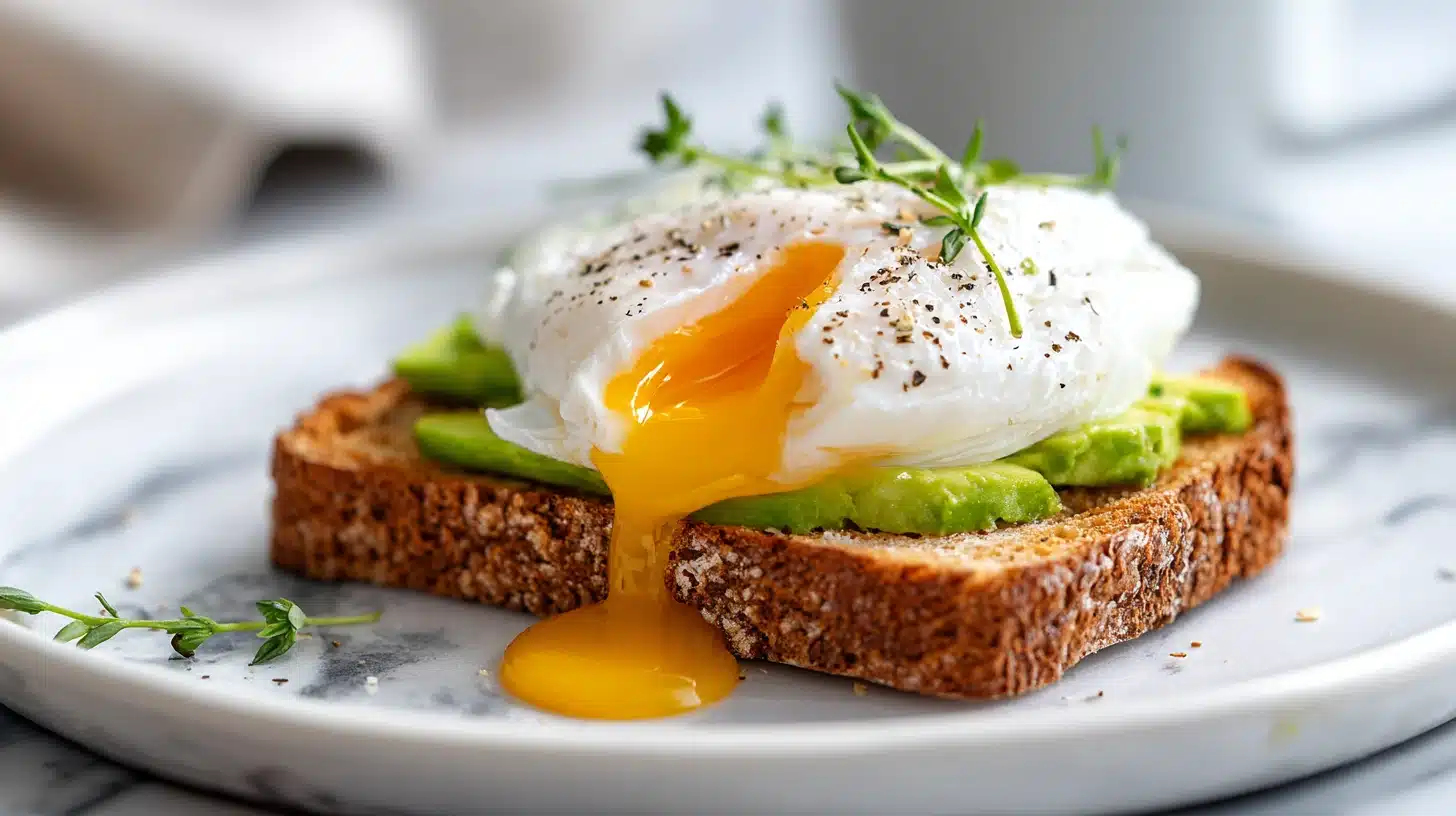
Nobody wants a rubbery white or a chalky yolk when they’re craving a classic breakfast. This fast method gives you a tender white and a perfectly runny yolk every time.
We will cover the specific water temperature, the exact timing for different microwave wattages, and how to avoid those annoying explosive popping sounds. Your mornings are about to get much easier.
Table of Contents
The science behind microwave egg poaching
Understanding how to poach an egg in the microwave requires a quick look at how microwaves heat our food. Microwaves agitate water molecules, generating heat rapidly from the outside in. When you place a raw egg in water and microwave it, the water heats quickly, gently cooking the proteins in the egg whites without subjecting them to the harsh, direct heat of a boiling stovetop pan.
The result is a surprisingly tender poached egg. The water is a temperature buffer. As the water heats the surrounding liquid, the egg white coagulates gently, giving you that clean texture. The yolk stays safely insulated inside the growing layer of white, remaining liquid and creamy.
You do need a splash of vinegar. Adding a half teaspoon of white vinegar to your water helps the egg whites set faster, keeping them tightly wrapped around the yolk instead of trailing off into wispy, undercooked strings. It is a tiny step that makes a big difference in the final texture. The acidity alters the protein structure just enough to encourage a neat, round shape.
If you want a savory start to your morning, this technique pairs beautifully with a quinoa breakfast bowl with egg and vegetables. The gentle cooking method means you must pay attention to time. We are talking mere seconds. Forty-five seconds in a standard microwave yields a soft yolk, while sixty seconds firms it up completely. The margin for error is small, which makes the visual cues essential to learn. You will see the water ripple and the white turn from translucent to opaque.
The vessel matters
Your choice of bowl matters more than you might think. You need a microwave-safe bowl or a deep mug with a wide mouth. A wider vessel gives the egg room to spread out naturally, mimicking the spacious environment of a skillet. This helps the egg white cook evenly and gives you that classic round shape. Deep, narrow mugs trap the egg in a tall column, leading to uneven cooking where the edges turn rubbery while the center stays raw.
Print
How to Poach an Egg in the Microwave for a Quick Breakfast
- Total Time: 2 min
- Yield: 1 serving 1x
Description
A quick and easy method for poaching a single egg in the microwave using water and vinegar, resulting in tender whites and a runny yolk in under a minute.
Ingredients
For the microwave poached egg:
1 large egg (fresh)
1/4 cup cold water
1/2 tsp white vinegar
1 pinch salt
1 pinch black pepper
Instructions
1. Combine the water and white vinegar in a microwave-safe bowl.
2. Stir the water vigorously in a circular motion to create a vortex.
3. Crack the fresh egg directly into the center of the swirling water.
4. Cover the bowl with a microwave-safe plate to prevent splattering.
5. Microwave on high for 45 seconds for a runny yolk or 60 seconds for a firm yolk.
6. Carefully remove the bowl from the microwave and use a slotted spoon to lift the egg out.
7. Rest the egg on a paper towel briefly to drain, then season with salt and pepper.
Notes
Store any leftover poached eggs in the refrigerator in cold water for up to 2 days. Reheat gently in warm water.
Use the freshest eggs possible for the best shape and tightest whites.
If your microwave is high wattage, start checking at 40 seconds to prevent overcooking.
Pierce the yolk with a toothpick before cooking to prevent explosion.
- Prep Time: 1 min
- Cook Time: 1 min
- Category: Breakfast
- Method: Microwave
- Cuisine: American
Nutrition
- Serving Size: 1 egg
- Calories: 72 kcal
- Sugar: 0 g
- Sodium: 147 mg
- Fat: 5 g
- Saturated Fat: 1 g
- Unsaturated Fat: 2 g
- Trans Fat: 0 g
- Carbohydrates: 0 g
- Fiber: 0 g
- Protein: 6 g
- Cholesterol: 186 mg
Essential tools and ingredients
Before you learn how to poach an egg in the microwave, you need to gather a few simple items. You do not need any special silicone egg poaching cups or expensive equipment. Everything you need is probably already sitting in your kitchen cabinets.
First, you need your egg. Use the freshest egg you can find. Fresh eggs have tighter, thicker whites that hold their shape in the water. Older eggs have thinner whites that spread out, leaving you with a messy, stringy result.
Next, you need water. You will need enough to completely submerge the egg in your chosen bowl. A quarter cup of water is usually perfect for a standard ramekin.
You also need a splash of vinegar. White vinegar is best because it does not alter the flavor or color of your egg. Apple cider vinegar works in a pinch, but it may add a slight tang. A pinch of salt is optional but recommended to season the cooking water.
Your tools are simple. You need a microwave-safe bowl or ramekin, a fork or whisk to create the water vortex, and a slotted spoon to remove the hot egg safely. You also need a paper towel or a clean dish towel to rest the egg on after cooking to drain away excess water.
Step by step: How to poach an egg in the microwave
Now we get to the main event. Here is exactly how to poach an egg in the microwave using my preferred method. This technique takes less than two minutes from start to finish and yields a poached egg that rivals anything you would get at a brunch spot.
1. Prep the water
Pour a quarter cup of water into your microwave-safe bowl. Add a half teaspoon of white vinegar and a pinch of salt. The vinegar helps the proteins in the egg whites coagulate properly. The salt flavors the egg gently from the inside out.
2. Create the vortex
Use your fork to vigorously stir the water in a circular motion until you form a small vortex in the center. You want the water to keep spinning when you remove the fork. This swirling motion helps wrap the egg whites around the yolk, mimicking the traditional stovetop poaching technique. Carefully crack your egg into the center of the spinning water.
3. The microwave timing
Place the bowl in the microwave. Cover it with a microwave-safe plate to contain any splatter. Microwave on high power. The exact time depends heavily on your microwave wattage. For a standard microwave, start with 45 seconds. This yields a runny yolk. For a fully set yolk, cook for 60 seconds. Keep a close eye on the egg through the door. If it puffs up dramatically, stop the microwave immediately. This microwave egg poaching method is fast, so do not walk away from the microwave.
4. Rest and drain
Use your slotted spoon to carefully lift the egg out of the hot water. Place it gently on a clean paper towel to drain any excess moisture. The egg will look clean, with a tender white and a soft, yielding yolk. Season with salt and pepper and serve immediately.
Common mistakes and pro tips for the best microwave poached egg
Mastering how to poach an egg in the microwave means understanding where things go wrong. Eggs cooked in the microwave have a notorious reputation for exploding. This happens because the water inside the egg heats past its boiling point but lacks the surface tension to release steam. The pressure builds until it violently bursts. You can prevent this entirely with a few smart adjustments.
Here are the most common mistakes people make:
- Skipping the cover: Microwaving the egg without a plate on top leads to splattered egg whites all over your microwave interior. Always cover the bowl with a microwave-safe plate or lid to contain the mess.
- Using boiling water: Starting with already boiling water from a kettle overcooks the egg before it even hits the microwave. Use cold tap water and let the microwave do all the work for even, gentle cooking.
- Overcooking the yolk: Leaving the egg in for 90 seconds or more will completely solidify the yolk and make the white rubbery. Stick to 45 to 60 seconds max for a soft yolk.
- Forgetting the vinegar: Without that acidic boost, the egg white spreads out into thin, unappetizing strings across the bowl. The vinegar is a binder to keep everything tight.
- Ignoring wattage differences: A 1200-watt microwave cooks much faster than an 800-watt model. Always do a test run with 45 seconds, then adjust in ten-second increments for your specific machine.
If you find you love this quick cooking method, you can easily adapt it for a the whole30 breakfast power bowl. The warm, tender egg pairs perfectly with grains and fresh vegetables.
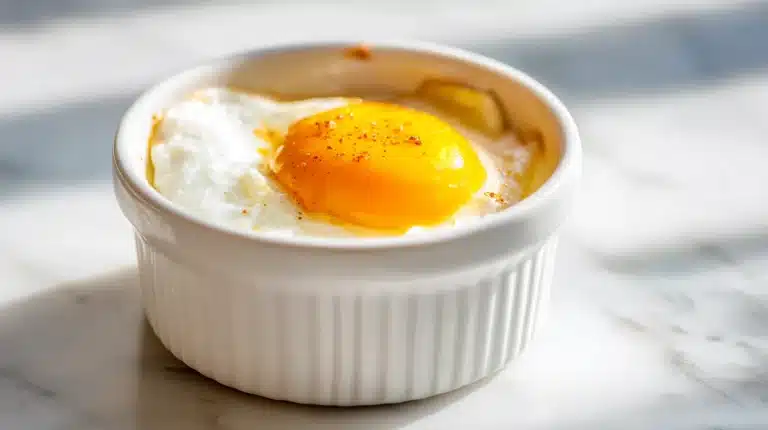
For the best presentation, trim away any ragged edges of the cooked egg white with kitchen scissors before serving. This gives your poached egg a clean, deliberate look. The yolk should wobble slightly when you nudge it. That wobble is your sign of a perfectly cooked, runny yolk ready to burst open over your meal.
Frequently asked questions
Do you use hot or cold water to poach egg in microwave?
You should use cold tap water. Starting with hot or boiling water can cause the egg to overcook instantly before the microwave even begins its cycle. Cold water allows the egg to heat gradually, resulting in a tender white and a soft yolk.
How long does it take to poach an egg in the microwave?
It takes about 45 to 60 seconds to poach an egg in a standard microwave. High-wattage microwaves may only need 40 seconds, while lower-wattage models might require a full minute. Always check the egg at the 45-second mark to avoid overcooking.
Why do eggs sometimes explode in the microwave?
Eggs explode in the microwave because the water inside the yolk heats past its boiling point. The trapped steam builds pressure rapidly. Since the membrane holds the steam in, the pressure eventually bursts violently, causing the egg to pop and splatter.
How do I prevent my poached egg from exploding in the microwave?
You can prevent explosions by covering the bowl with a microwave-safe plate to catch any splatter. Also, gently puncture the yolk with a toothpick before cooking. This allows steam to escape safely without ruining the shape of your poached egg.
Can I poach multiple eggs at once in the microwave?
It is best to poach one egg at a time. Microwaving multiple eggs at once leads to uneven cooking, where some eggs turn rubbery while others remain raw. Cooking them individually ensures perfect texture and timing for every egg.
How many calories are in a poached egg?
One large poached egg has about 72 calories, 6 grams of protein, and 5 grams of fat. Because poaching uses no oil or butter, it’s the lowest-calorie way to cook an egg, a fried egg in butter runs closer to 110 calories.
Conclusion
Learning how to poach an egg in the microwave is a kitchen shortcut worth keeping in your back pocket for busy mornings. It takes the stress out of breakfast and delivers a tender, runny yolk in under a minute.
Give this method a try the next time you want a hot breakfast without the fuss. Trust the timing and use the vinegar. You will have a perfect egg.
For more recipes like how to poach an egg in the microwave, follow us on Facebook and Pinterest for quick weeknight dinner ideas.
More recipes in this series: