
That first sip of a poorly made vegan iced coffee at a cafe taught me something: dairy-free chilled drinks demand respect. Handle the beans wrong and you end up with bitter, watery disappointment that separates the moment the ice hits the glass.
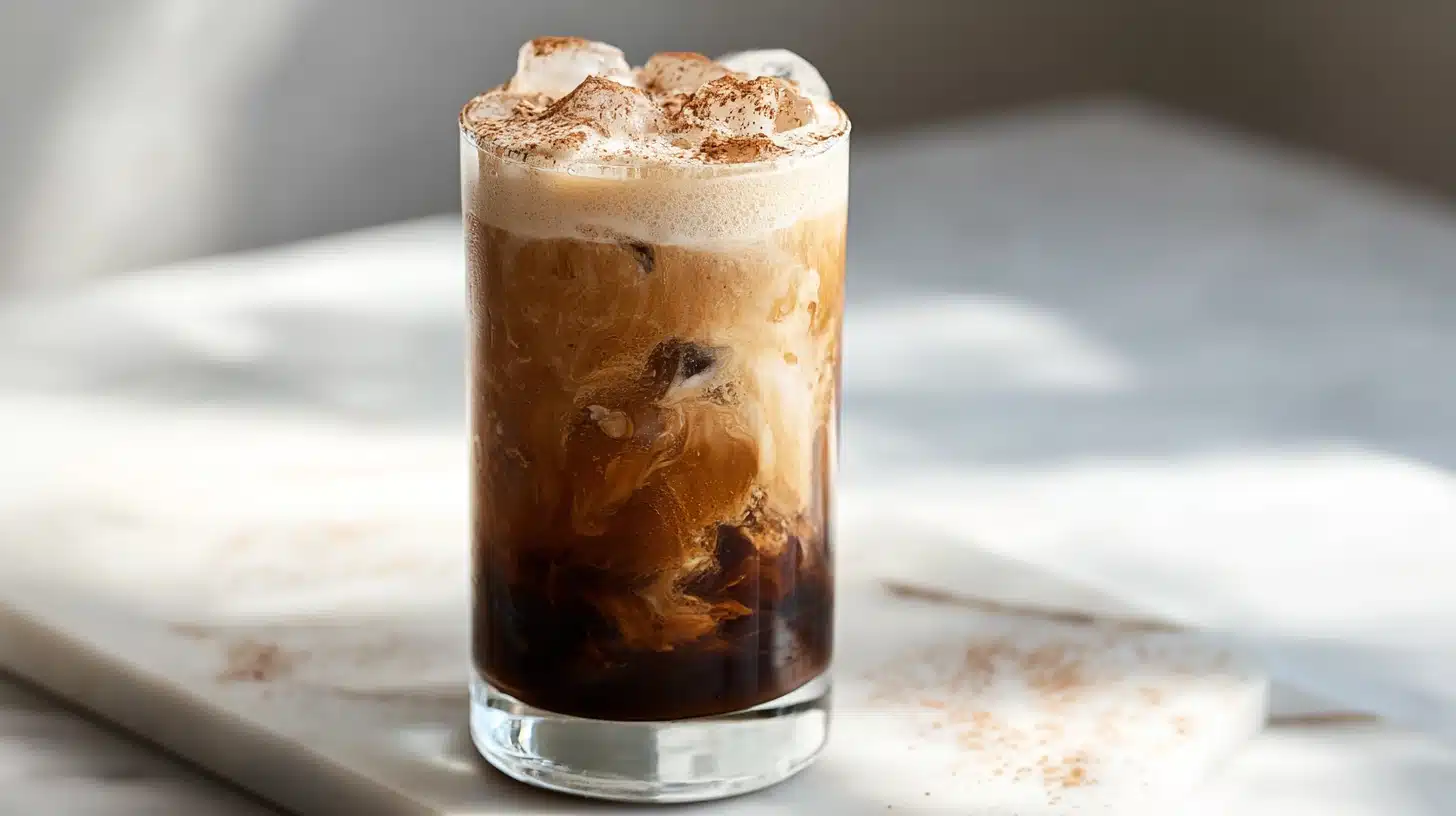
Too often, plant milk curdles on contact with hot espresso, or the ice melts instantly and dilutes your drink into a gray, bitter puddle before you even reach the sidewalk. We are fixing both problems today with a simple, barista-level method that keeps your drink rich, cold, and smooth.
This guide covers the best plant milk to prevent curdling, how to use frozen coffee cubes to banish dilution, and the exact sweetener ratios for a cafe-quality finish.
Table of Contents
Why This Vegan Iced Coffee Recipe Works
Creating a standout vegan iced coffee at home is all about outmaneuvering two relentless enemies: heat and dilution. When you pour hot coffee straight over ice, the rapid temperature drop shocks the brew. This abrupt chilling locks in highly astringent, acidic compounds, and you get a sharp, metallic taste that no amount of plant milk can mask. Standard ice cubes melt rapidly too, watering down your carefully measured drink into a sad, gray shadow of its former self within ten minutes.
Our method tackles these issues with a rapid cooling technique and a smart freezing strategy. By brewing your base as a highly concentrated shot, you actually welcome the melting of your frozen cubes. As those coffee cubes slowly melt, they intensify the roasted flavor rather than diluting it. You get a consistent, bold taste all the way down. It is a simple shift in preparation that completely changes the final texture and flavor of your dairy-free iced coffee.
The texture of your final drink depends heavily on the quality of your ingredients. You want a deep, dark roast that stands up to the chill. Cold temperatures naturally mute the perceived sweetness and complexity of coffee, so you need a bean with enough structural backbone to push through the cold plant milk and ice. We also incorporate a touch of coffee loophole recipe magic by using a specific blending technique that aerates the milk. It gives the drink a luxurious, velvety mouthfeel without a commercial steam wand. Your homemade iced coffee vegan drink rivals anything you would pay six dollars for at a local shop.
The Secret to Preventing Curdling
If you have ever watched almond milk separate into unappealing white specks when it hits hot espresso, you understand the frustration. I have been there, staring at a glass that looks like it has been sneezed in. The secret to a smooth vegan iced coffee is temperature control and choosing the right plant milk. High-acidity espresso combined with high-acidity, lower-protein plant milks like almond or cashew will almost always curdle on contact.
To prevent this, always chill your brewed coffee completely before combining it with milk. Alternatively, pour your cold plant milk over the ice first so the ice buffers the temperature shock, then slowly pour in your coffee concentrate. Oat milk and soy milk have higher protein contents and naturally lower acidity, so they are far more stable and blend seamlessly even if temperatures fluctuate slightly.
Print
The Ultimate 5-Minute Vegan Iced Coffee
- Total Time: 5 min
- Yield: 2 servings 1x
- Diet: Vegan
Description
A rich and creamy dairy-free iced coffee made with cold brew concentrate, oat milk, and frozen coffee cubes to prevent dilution. This five-minute recipe yields a perfectly balanced cold coffee drink with a velvety texture.
Ingredients
For the coffee base:
2 cups strongly brewed coffee, chilled (or cold brew concentrate)
1 cup ice cubes (preferably frozen coffee cubes)
For the dairy-free milk and sweetener:
1 cup oat milk (or soy milk)
2 tablespoons vegan condensed milk (or agave syrup)
1 tablespoon vanilla syrup
1 teaspoon cocoa powder (for garnish)
1 pinch ground cinnamon (for garnish)
Instructions
1. Fill two tall glasses completely to the top with frozen coffee cubes to ensure your drink stays cold and strong without getting watered down.
2. Drizzle one tablespoon of vegan condensed milk or agave syrup directly over the frozen coffee cubes in each glass, allowing the thick sweetener to settle into the gaps.
3. Pour the cold oat milk evenly between the two glasses, filling them about three-quarters full, letting the cold milk coat the ice cubes and mix slightly with the sweetener.
4. Slowly pour the chilled strong coffee or cold brew concentrate over the back of a spoon into each glass, creating a beautiful dark layer that floats on top of the white milk.
5. Dust the top of each glass with a pinch of cocoa powder and ground cinnamon for an aromatic finish that enhances the roasted coffee notes.
6. Serve immediately with a reusable straw, stirring vigorously right before drinking to combine the bitter coffee, sweet syrup, and creamy oat milk into a perfect vegan iced coffee.
Notes
Store any leftover cold brew concentrate in the refrigerator for up to 10 days in a sealed glass jar.
For an extra thick and creamy texture, blend the oat milk and ice cubes in a blender before adding the coffee.
If using almond milk, pour it over the ice first and let it chill for one minute before adding the coffee to prevent curdling.
To make frozen coffee cubes, simply pour leftover brewed coffee into an ice cube tray and freeze overnight.
- Prep Time: 5 min
- Cook Time: 0 min
- Category: Drink
- Method: No-Cook
- Cuisine: American
Nutrition
- Serving Size: 1 glass
- Calories: 90 kcal
- Sugar: 14 g
- Sodium: 45 mg
- Fat: 2 g
- Saturated Fat: 0 g
- Unsaturated Fat: 2 g
- Trans Fat: 0 g
- Carbohydrates: 16 g
- Fiber: 1 g
- Protein: 2 g
- Cholesterol: 0 mg
Choosing the Best Plant Milk for Iced Coffee
The plant milk you select dictates the body, sweetness, and overall mouthfeel of your vegan iced coffee. Not all dairy alternatives are created equal when it comes to mixing with cold brews and espresso. You need a milk that provides a creamy backdrop without overpowering the delicate roasted, chocolate, or caramel notes of your coffee beans. Let us break down the best options for your homemade iced coffee vegan drinks so you can choose the right one for your palate.
Oat milk is the reigning champion of the coffee shop world for good reason. It is naturally sweet, remarkably thick, and mimics the fat content of whole dairy milk better than almost any other plant alternative. When poured over ice, oat milk coats the tongue, softens the bitter edges of a dark roast, and creates a lush, velvety texture. It also steams and froths beautifully if you want to add a foam cap to your vegan iced latte.
Soy milk is the traditional workhorse of dairy-free coffee. It has a high protein content, so it blends smoothly without curdling, and it offers a neutral flavor that lets the coffee shine. While slightly thinner than oat milk, soy milk provides a clean, crisp canvas for bright, fruity roasts. If you want a richer experience, banana milk latte inspired creations using specialty plant milks can add a wonderful, subtle sweetness to your morning routine.
Almond milk and coconut milk sit at the thinner end of the spectrum. Almond milk has a distinct nutty flavor that pairs beautifully with medium roasts and chocolate syrup, but you must pour it carefully to avoid curdling. Coconut milk adds a wonderful tropical sweetness and a unique aroma, though its lighter body means your drink will taste less creamy. For a truly indulgent treat reminiscent of traditional Vietnamese coffee, seek out canned vegan condensed milk. This thick, sweet syrup transforms a simple plant-based iced coffee into a dessert-level delight. It cuts through the strongest roasts with a silky, sugary ribbon that I personally find addictive.
Upgrading Your Brew: Beans, Cold Brew, and Syrups
A spectacular vegan iced coffee begins long before the ice hits the glass. It starts with the bean and the brew method you choose. Because cold temperatures suppress flavor perception, the coffee you use for cold drinks needs to be significantly stronger and more robust than what you would brew for a hot mug. Using standard hot coffee for iced drinks is a one-way ticket to watered-down mediocrity.
You have three excellent paths for your coffee base. First, you can use a cold brew concentrate. Cold brew is steeped in cold water for twelve to twenty-four hours, which extracts the chocolatey, smooth notes of the bean while leaving behind the harsh, acidic compounds. It is the ultimate base for a dairy-free iced coffee. Second, you can pull a shot of instant espresso. Instant espresso dissolves instantly in cold water and gives you a powerful, bitter shot of caffeine without any heat. Third, you can use a French press to brew a double-strength hot concentrate, then chill it rapidly in the freezer before assembling your drink.
Once you have your base, sweeteners and syrups enter the picture. Standard granulated sugar will not dissolve properly in cold liquids, so you end up with a gritty texture at the bottom of your glass. Instead, use liquid sweeteners like agave syrup, maple syrup, or homemade vanilla syrup. These blend effortlessly into cold liquids and keep every sip balanced. You can even use a protein coffee recipe approach to add a nutritional boost to your morning cup. Just blend vanilla protein powder directly into your oat milk before pouring.
Flavor Variations to Try
Once you master the basic technique, the flavor combinations are endless. A squeeze of chocolate syrup turns your basic drink into a vegan iced mocha. A dash of cinnamon or cardamom adds warmth and aromatic complexity. If you love a sweet treat, try adding a pump of caramel syrup or a spoonful of vegan condensed milk. You can even blend the entire mixture with a handful of ice cubes for a frappe-style drink. For a completely different vibe, explore our iced creme brulee latte which uses a torched sugar top for a brilliant textural contrast.
Step-by-Step: Crafting the Perfect Vegan Iced Latte
Now we put the theory into practice. Building a flawless vegan iced latte requires a specific layering order to ensure maximum flavor and texture. You want to create a drink that looks beautiful in the glass, with distinct layers of dark coffee and creamy white milk, while tasting perfectly integrated all the way through.
Start by preparing your glass. A tall, clear glass shows off the beautiful gradient of your drink. Fill the glass entirely to the top with frozen coffee cubes. Using frozen coffee cubes instead of regular water ice is the single most important step in this entire process. It ensures that as your drink sits, it never loses its intense coffee punch. The cubes melt slowly and act as a flavor enhancer rather than a silent assassin of taste.
Next, add your sweetener directly over the cold coffee cubes. Pour a tablespoon of vanilla syrup or agave syrup right over the ice. The cold temperature of the cubes will help thicken the syrup slightly so it coats the cubes and distributes evenly as they melt. If you are using vegan condensed milk, drizzle it in at this stage so it settles into the nooks and crannies of the ice.
Now, pour your cold plant milk over the ice. Pour slowly and watch as the milk cascades down through the ice cubes. It cools instantly and picks up traces of the sweetener. Fill the glass until it is about three-quarters full. The cold milk lowers the overall temperature of the mixture without shocking the coffee, so you avoid any unwanted curdling.
Finally, add your coffee base. Whether you are using cold brew concentrate or chilled espresso, pour it slowly over the back of a spoon into the glass. This gentle pouring technique preserves the distinct layers. The dark coffee sits atop the white milk in a way that honestly never gets old for me. Hand your guest a straw and watch their eyes light up as they stir the layers together into a perfectly balanced, rich, and creamy vegan iced coffee. Serve it alongside a slice of strawberry rhubarb coffee cake for a truly spectacular afternoon break.
Frequently Asked Questions
How do coffee shops make iced coffee?
Coffee shops typically use a double-strength brew or a cold brew concentrate to combat ice dilution. They brew the coffee hot and immediately flash-chill it over ice, or they steep coarse grounds in cold water for twenty-four hours to create a smooth, low-acidity cold brew base.
What types of coffee can I use to make iced coffee?
You can use cold brew concentrate, instant espresso dissolved in a small amount of cold water, or a strongly brewed hot coffee that has been chilled completely. A French press works exceptionally well for making a robust concentrate that holds its flavor when poured over ice and plant milk.
How do you make iced coffee with hot coffee?
To make iced coffee with hot coffee, brew your coffee at double strength so the melting ice does not water it down. Pour the hot coffee directly over a glass filled completely with ice, which rapidly chills it and locks in the flavor, then add your cold plant milk and sweetener immediately.
What is the difference between iced coffee and an iced latte?
Iced coffee is brewed coffee served over ice, sometimes with a splash of milk. An iced latte is espresso-based, consisting primarily of cold milk poured over ice with a shot or two of espresso on top. The result is a much creamier, milk-forward beverage.
Conclusion
Mastering the vegan iced coffee at home changes your morning routine for the better. By swapping regular ice for frozen coffee cubes and controlling your pouring temperatures, you eliminate the watery, bitter pitfalls of cafe drinks. You are left with a rich, perfectly smooth plant-based iced coffee that brings out the best notes of your favorite beans.
Give this five-minute recipe a try this week and experiment with your favorite plant milk to find your perfect texture.
For more recipes like vegan iced coffee, follow us on Facebook and Pinterest for refreshing summer drink ideas.
More recipes in this series: