
Teriyaki Salmon Rice Bowls with Pickled Cucumbers were the first thing I ordered every single time I visited a tiny Japanese lunch counter near my old apartment, and it took me embarrassingly long to realize I could make them taste just as good at home.
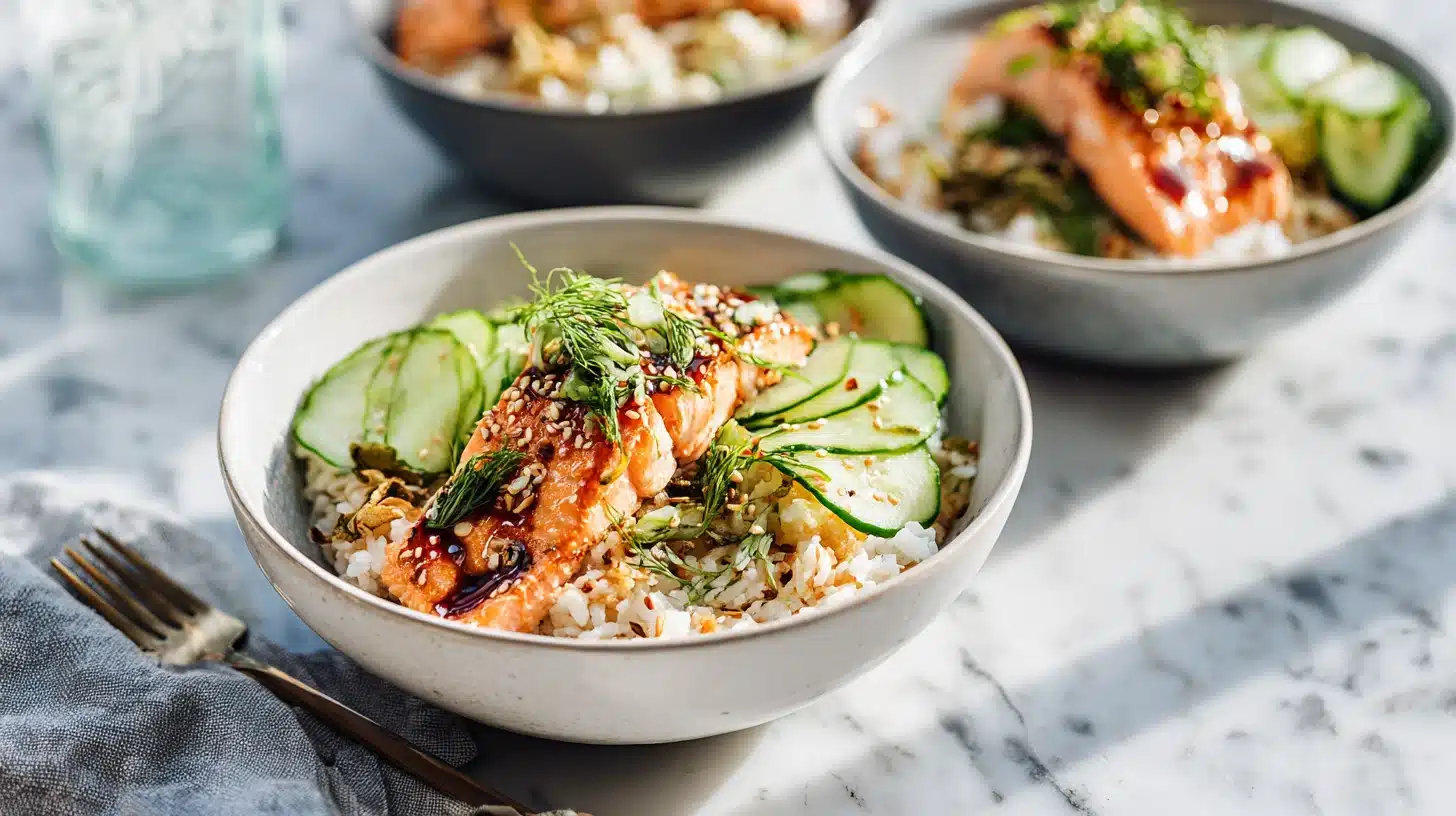
The biggest problem most people run into with a teriyaki salmon bowl is a glaze that either burns in the pan or slides right off the fish, leaving you with dry, sticky-bottomed fillets. The fix is a two-step sear-and-baste method that builds a lacquered, caramelized coat without scorching.
Inside: how to nail that glossy teriyaki glaze, a 30-minute quick pickle that stays crisp, and the rice trick that keeps every grain fluffy and separate.
Table of Contents
What makes this teriyaki salmon bowl so good
Walk into almost any Japanese-inspired fast-casual spot and the salmon rice bowl on the menu costs between fourteen and eighteen dollars. What you get here costs a fraction of that per serving, and because you control every element, the flavors are sharper and more balanced than most restaurant versions.
The teriyaki glaze
The backbone of any great teriyaki-glazed salmon bowl is the sauce, and this one keeps it honest. You need four things: soy sauce, mirin, sake (or dry sherry as a swap), and a touch of honey. Some recipes pile in garlic, ginger, and sesame oil all at once, and the result is muddy. Here, grated fresh ginger goes in at the end, off the heat, so its bright, slightly spicy note cuts through the sweetness rather than getting cooked into the background.
The ratio that works: 3 tablespoons soy sauce, 2 tablespoons mirin, 1 tablespoon sake, and 1 teaspoon honey. You reduce it in the pan until it coats the back of a spoon, roughly 2 minutes over medium heat. It should smell sweet and a little savory, like caramel meeting soy.
The salmon itself
Skin-on salmon fillets, about 6 ounces each, are the right call here. The skin crisps up during the sear and acts as a natural barrier, keeping the flesh moist while the top takes on that deep, amber-brown glaze. Pat the fillets completely dry before they hit the pan. This single step is the difference between a salmon that sears and one that steams. Press them skin-side down into a hot, lightly oiled oven-safe skillet and let them go untouched for 4 minutes. You should hear a steady sizzle, not a violent spatter. Flip, brush on the first coat of glaze, then finish in a 400°F oven for 6 to 8 minutes. The glaze firms up and turns glossy under the oven heat in a way the stovetop alone cannot replicate.
If you enjoy experimenting with different salmon preparations, the miso glazed salmon with coconut rice crispy on Forkful Daily uses a similar sear-then-oven approach with a very different flavor profile worth trying.
The rice base
Short-grain Japanese rice is the traditional choice, and for good reason. The slight stickiness holds the bowl together without turning gummy. Rinse it under cold water until the water runs clear, three to four washes minimum, then cook it using the absorption method: 1 cup rice to 1 1/4 cups water, covered, over low heat for 15 minutes, then 10 minutes off heat with the lid still on. The result is tender, slightly chewy grains with no wet, clumpy bottom layer.
Print
Teriyaki Salmon Rice Bowls with Pickled Cucumbers (Better Than Takeout)
- Total Time: 83 min
- Yield: 4 servings 1x
Description
Teriyaki Salmon Rice Bowls with Pickled Cucumbers bring together caramelized, glaze-coated salmon fillets and crisp quick-pickled cucumbers over fluffy short-grain rice. The two-step sear-and-baste method keeps the fish moist with a glossy, sticky glaze that does not burn. A bright rice vinegar pickle balances the sweet teriyaki sauce and makes every bite feel fresh.
Ingredients
For the quick pickled cucumbers:
3 Persian cucumbers (sliced into thin coins, about 1/8 inch thick)
1/4 cup rice vinegar
1 tablespoon granulated sugar
1/2 teaspoon fine sea salt
1 tablespoon water
For the teriyaki glaze:
3 tablespoons soy sauce
2 tablespoons mirin
1 tablespoon sake (or dry sherry)
1 teaspoon honey
1 teaspoon fresh ginger (finely grated)
For the rice:
2 cups short-grain Japanese white rice (rinsed until water runs clear)
2 1/2 cups water
For the salmon:
4 skin-on salmon fillets (about 6 ounces each, patted dry)
1/2 teaspoon fine sea salt
1 teaspoon neutral oil (such as avocado or canola)
For serving:
2 scallion stalks (thinly sliced)
1 tablespoon toasted sesame seeds (white and black mixed)
1 teaspoon sesame oil (divided among 4 bowls)
1 lime (cut into 4 wedges)
Instructions
1. Make the pickles. In a small bowl, whisk together the rice vinegar, sugar, salt, and water until the sugar and salt dissolve. Add the cucumber slices, press a piece of plastic wrap directly against the surface, and refrigerate for at least 30 minutes while you prepare the rest of the dish.
2. Cook the rice. Combine the rinsed rice and water in a medium saucepan. Bring to a boil over medium-high heat, then reduce to the lowest setting, cover tightly, and cook for 15 minutes. Remove from heat and let steam, covered, for 10 more minutes. Fluff with a rice paddle or fork before serving.
3. Make the teriyaki glaze. In a small saucepan over medium heat, combine soy sauce, mirin, sake, and honey. Stir and cook until the glaze thickens slightly and coats the back of a spoon, about 2 minutes. Remove from heat and stir in the grated ginger. Set aside to cool and thicken further.
4. Preheat the oven to 400 degrees F. Let the oven fully come to temperature before the salmon goes in.
5. Sear the salmon. Heat an oven-safe skillet, preferably cast iron, over medium-high heat with the neutral oil until the oil shimmers. Season the salmon lightly with salt on all sides. Place fillets skin-side down and cook undisturbed for 4 minutes until the skin is golden and releases cleanly. You should hear a steady sizzle throughout.
6. Glaze and bake. Flip the salmon, then brush the flesh side generously with the teriyaki glaze. Transfer the skillet to the preheated oven and bake for 6 to 8 minutes, until the glaze is caramelized and deep amber and the fish flakes easily at the thickest point. The center should look just barely opaque when you pull it out.
7. Assemble the bowls. Divide the cooked rice evenly among four bowls. Place one salmon fillet on top of each portion. Drain the pickled cucumbers and arrange a small pile alongside the salmon. Scatter scallions and sesame seeds over each bowl, drizzle with a small amount of sesame oil, and serve with a lime wedge on the side.
Notes
Store leftover components separately in airtight containers in the refrigerator for up to 2 days for the salmon and up to 3 days for the rice and pickles. Reheat salmon in a 300 degree F oven for 8 to 10 minutes. The dish is not recommended for freezing.
For gluten-free bowls, swap regular soy sauce for tamari in a 1:1 ratio.
To reduce sweetness in the glaze, cut the honey to 1/2 teaspoon and add 1/2 teaspoon white miso paste.
Cucumber tip: keep the cucumbers refrigerated during pickling rather than at room temperature to maintain maximum crunch. Pat them dry before adding to the brine for best flavor absorption.
- Prep Time: 25 min
- Rest Time: 30 min
- Cook Time: 28 min
- Category: Dinner, Main Course
- Method: Baking, Stovetop
- Cuisine: Japanese
Nutrition
- Serving Size: 1 bowl (1 salmon fillet with rice and pickles)
- Calories: 520 kcal
- Sugar: 8 g
- Sodium: 820 mg
- Fat: 18 g
- Saturated Fat: 3 g
- Unsaturated Fat: 13 g
- Trans Fat: 0 g
- Carbohydrates: 52 g
- Fiber: 2 g
- Protein: 38 g
- Cholesterol: 85 mg
How to make quick pickled cucumbers (and why they matter)
The pickled cucumbers are not a garnish. They are a structural part of the dish. Without them, the teriyaki salmon with pickled cucumbers concept collapses into something rich and one-note. The pickles add sharp acidity that cuts the glaze, a cool crunch that contrasts the warm fish, and a mild sweetness that ties the whole bowl together.
The pickle brine
The brine is rice vinegar-based, which keeps things light and clean rather than puckering. The formula: 1/4 cup rice vinegar, 1 tablespoon sugar, 1/2 teaspoon fine sea salt, and 1 tablespoon water, warmed just enough to dissolve the sugar and salt. No boiling required.
Persian cucumbers or English cucumbers both work beautifully. Persian cucumbers are crunchier and have thinner skin, which means you can skip peeling entirely. Slice them into thin coins, about 1/8 inch thick, or cut them on the bias for a nicer presentation. Toss them in the brine, press a piece of plastic wrap directly against the surface so they stay submerged, and refrigerate for at least 30 minutes. After 30 minutes they turn lightly translucent at the edges and smell bright and clean. After an hour they are even better.
If you love the idea of building a quick pickle habit, the quick pickled red onions recipe is worth bookmarking as another fast, versatile topping.
Texture is everything
The pickle brine should not make the cucumbers limp. The key is to start with cold, dry cucumbers and keep them refrigerated during the pickling time rather than leaving them on the counter. Room-temperature pickling softens the cell walls faster and leads to that mushy texture most people associate with bad quick pickles. Cold brine, cold cucumber, refrigerator: that’s the formula for maximum crunch at the 30-minute mark.
One more tip: do not skip drying the cucumbers after slicing. A quick blot with a paper towel removes excess surface moisture that would otherwise dilute the brine and slow down the flavor absorption.
What else goes in the bowl
The salmon and cucumbers are the stars, but the supporting cast matters. Here is what rounds out the Asian salmon rice bowl:
- Sliced scallions, about 2 stalks, for a mild onion bite
- Toasted sesame seeds, both white and black if you have them, for nuttiness and visual contrast
- A drizzle of sesame oil over the finished bowl, no more than 1/2 teaspoon per serving
- A wedge of lime on the side, squeezed right before eating
Avocado slices are an optional addition that many people love, and they make the bowl feel more substantial for bigger appetites.
Step-by-step: putting the bowl together
Building an Asian salmon rice bowl with these components is mostly a matter of timing. If you start the pickle first (it needs that 30-minute rest), everything else can happen while you wait, and the whole meal lands on the table in well under 90 minutes.
Step 1: Start the pickles
Slice your cucumbers and mix the brine. Combine, cover, and refrigerate. Set a timer for 30 minutes. This is the first thing you do, full stop.
Step 2: Cook the rice
Rinse the rice until the water runs clear, then start the absorption method described above. The rice takes about 25 minutes from start to finish including the resting period, so get it going shortly after the pickles go in.
Step 3: Make the glaze
In a small saucepan, combine soy sauce, mirin, sake, and honey. Cook over medium heat, stirring occasionally, until slightly thickened, about 2 minutes. Remove from heat, stir in 1 teaspoon freshly grated ginger, and set aside. The glaze will thicken further as it cools.
Step 4: Sear and bake the salmon
Preheat your oven to 400°F. Heat an oven-safe skillet (cast iron works perfectly here) over medium-high heat with 1 teaspoon neutral oil. Pat salmon fillets dry, season lightly with salt, and place skin-side down. Cook undisturbed for 4 minutes until the skin is golden and releases cleanly from the pan. Flip, brush the flesh side generously with glaze, and transfer the skillet to the oven. Bake for 6 to 8 minutes until the glaze is caramelized and the fish flakes easily at its thickest point. Pull it out when the center still looks just slightly translucent; residual heat finishes the job.
Step 5: Assemble
Fluff the rice and divide it among four bowls. Place one salmon fillet on top of each portion. Add a small pile of drained pickled cucumbers alongside. Scatter scallions and sesame seeds over everything. Finish with a tiny drizzle of sesame oil and a lime wedge. Serve immediately while the salmon is still warm.
For another bowl concept with bold flavors and great assembly, the blackened salmon bowl follows a similar build and is just as weeknight-friendly.
Variations, swaps, and make-ahead tips
One of the reasons this salmon bowl recipe works so well for busy households is how flexible it is. The core method stays the same, but almost every component has a practical substitute or make-ahead option.
Protein swaps
The teriyaki glaze works on more than salmon. Chicken thighs, tofu (extra-firm, pressed dry), and even shrimp take the same glaze beautifully. Tofu needs a longer sear and no oven time. Shrimp cooks in about 3 minutes total in the same skillet and gets brushed with glaze in the last minute over heat.
Rice alternatives
Short-grain white rice is traditional, but cauliflower rice, brown rice, or farro all work if you prefer them. Brown rice adds a nutty chew that pairs well with the sweet glaze. Farro takes longer to cook, about 25 to 30 minutes, so factor that into your timing. If you love grain bowls in general, the kimchi fried rice is a great way to use up any leftover rice the next day.
Make-ahead strategy
| Component | Make Ahead? | Storage |
|---|---|---|
| Pickled cucumbers | Yes, up to 3 days | Airtight container, refrigerator |
| Teriyaki glaze | Yes, up to 1 week | Jar or container, refrigerator |
| Cooked rice | Yes, up to 3 days | Airtight container, refrigerator |
| Cooked salmon | Yes, up to 2 days | Airtight container, refrigerator |
When reheating the salmon, use a 300°F oven for 8 to 10 minutes rather than the microwave. Microwaving salmon tends to dry it out and create a strong odor. Low-and-slow oven reheating keeps the texture close to fresh.
Adjusting the glaze sweetness
If you find teriyaki too sweet, reduce the honey to 1/2 teaspoon and add 1/2 teaspoon of white miso paste to the saucepan. The miso adds savory depth that balances the mirin and creates a slightly more complex, umami-forward glaze without straying far from the classic flavor.
For a gluten-free version, swap regular soy sauce for tamari in a 1:1 ratio. The flavor difference is minimal and the technique stays exactly the same.
Frequently asked questions
Can I use frozen salmon for Teriyaki Salmon Rice Bowls with Pickled Cucumbers?
Yes, frozen salmon works well here. Thaw it overnight in the refrigerator rather than on the counter or under running water. Once thawed, pat the fillets very dry because frozen fish tends to release more moisture, and excess moisture is the enemy of a good sear. The rest of the recipe proceeds exactly the same way.
How long do the quick pickled cucumbers last?
Stored in an airtight container in the refrigerator, the quick pickled cucumbers stay crisp and flavorful for up to 3 days. Beyond that, they start to soften and the brine gets a little flat. Make a fresh batch if you are planning meals for the week rather than making one large batch too far in advance.
What can I use instead of mirin?
If you do not have mirin, use 1 tablespoon of dry sherry or dry white wine mixed with 1/2 teaspoon of sugar. The flavor is slightly less rounded than mirin but works well in the glaze. Avoid sweet cooking wine or rice wine with salt added, as both will throw off the balance of the sauce.
Can I make this recipe with skin-off salmon?
You can, but the skin-off fillets need a bit more care. Without the skin acting as insulation, the flesh can overcook quickly. Reduce the oven time to 5 to 6 minutes and check for doneness at the 5-minute mark. The sear time on the flesh side stays at 3 to 4 minutes over medium-high heat before flipping.
Conclusion
Teriyaki Salmon Rice Bowls with Pickled Cucumbers prove that the best weeknight meals do not require a long ingredient list or hours in the kitchen. The two-step sear-and-baste method gives you a glossy, caramelized glaze without burning, the quick pickle stays genuinely crisp, and the whole bowl comes together in under 90 minutes start to finish.
Give this one a try this week, even on a busy Tuesday night. Set the pickles first, start the rice, and by the time the salmon hits the oven, dinner is practically done.
For more recipes like Teriyaki Salmon Rice Bowls with Pickled Cucumbers, follow us on Facebook and Pinterest for easy weeknight dinner ideas.