A steak caesar salad should be the most satisfying thing on your dinner table, but it often falls flat with chewy meat and soggy greens. I remember ordering one at a bistro years ago, excited for that perfect contrast of warm beef and cold, crisp lettuce. What I got was a pile of wet romaine with grey, cold steak strips on top. I’ve been trying to fix that experience ever since.
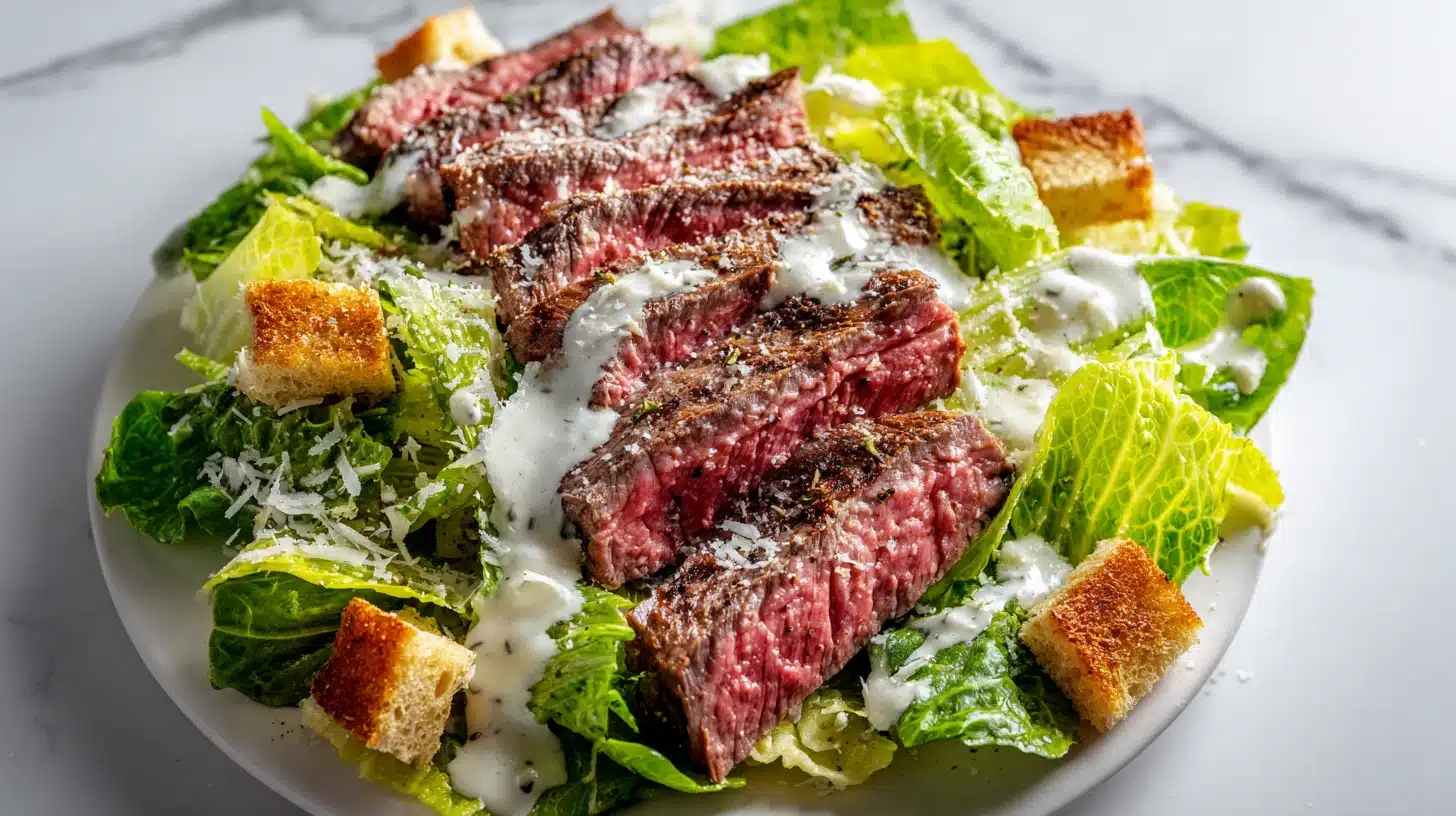
Most versions disappoint because they use cold, tough steak over wet lettuce drowning in bottled dressing. We are going to sear a juicy ribeye, build a rich anchovy dressing, and keep the greens bone dry and crunchy.
We’ll get into the exact timing for resting your meat so the juices stay inside, plus how to make a velvety dressing without raw eggs. You will also learn the trick for toasted sourdough crumbs that stay crispy even under a heavy pour of dressing.
Table of Contents
Selecting the Best Steak for Your Caesar Salad
The foundation of any great steak caesar salad is, obviously, the steak. You need a cut that can develop a deeply caramelized crust while maintaining a juicy, tender interior. Ribeye is my top choice. The heavy marbling renders into the meat during a quick, high-heat sear, so you get a rich, buttery flavor that holds its own against the garlic and Parmesan in the dressing.
If you prefer something leaner, flank steak or sirloin are good alternatives. The trick with leaner cuts is slicing them paper thin against the grain. Every bite of your caesar salad with steak will be tender. Strip steak is a good middle ground too. It has a robust beefy flavor and a satisfying chew. For a detailed look at how different cuts interact with bold seasonings, check out our guide to steak in creamy cajun shrimp sauce.
Temperature matters just as much as the cut. Pull your steak from the refrigerator about thirty minutes before cooking. A cold steak hitting a screaming hot pan lowers the surface temperature, so the meat steams rather than sears. You want that aggressive sizzle the moment the beef touches the cast iron. That Maillard reaction is what creates the dark, crusty exterior that gives you textural contrast against the crisp romaine and creamy dressing.
Season generously. A heavy pinch of flaky sea salt and freshly cracked black pepper is all you need. The salt draws out surface moisture, which actually helps that crust form faster. Do not add oil to the steak itself. Instead, coat your cast iron skillet with a thin layer of a high smoke point oil like avocado oil. Heat the pan until the oil just begins to smoke, then lay the steak away from you to avoid splashing. Sear for three to four minutes per side for medium rare, depending on thickness.
After searing, the most important step begins. Transfer the steak to a cutting board and let it rest for at least five minutes. I know it is hard to wait when the whole kitchen smells like seared beef, but those five minutes matter. If you slice immediately, the juices will pool on the board instead of staying locked inside the meat fibers. Resting allows the muscle fibers to relax and reabsorb the moisture. When you finally cut into it, the juice stays in the steak, which means it stays in your grilled steak caesar salad rather than making a puddle at the bottom of your bowl.
Print
The Ultimate Steak Caesar Salad: Sear, Toss, devour
- Total Time: 30 min
- Yield: 4 servings 1x
Description
A hearty steak caesar salad featuring seared ribeye, crisp romaine, toasted sourdough crumbs, and a creamy egg free dressing with anchovies and Parmesan.
Ingredients
For the steak:
1 lb ribeye steak
1 tsp kosher salt
1/2 tsp black pepper
1 tbsp avocado oil
For the dressing:
2 garlic cloves, minced
3 anchovy fillets, oil packed
2 tbsp fresh lemon juice
1 tsp Dijon mustard
1/2 cup extra virgin olive oil
1/4 cup Parmesan cheese, grated
1 tbsp mayonnaise
1 tsp Worcestershire sauce
For the salad:
2 heads romaine lettuce
2 slices sourdough bread
2 tbsp olive oil
1/4 cup Parmesan cheese, shaved
Instructions
1. Pull the steak from the fridge thirty minutes before cooking and season heavily with salt and pepper.
2. Heat a cast iron skillet with avocado oil until smoking, then sear the steak for four minutes per side until a dark crust forms.
3. Transfer the steak to a cutting board and let it rest for five minutes so the juices redistribute.
4. Tear the sourdough bread into chunks, toss with olive oil and salt, and toast in a four hundred degree oven for ten minutes until golden and crunchy.
5. Mash the garlic and anchovies into a paste, then whisk in the lemon juice, Dijon, and mayonnaise.
6. Slowly stream in the olive oil while whisking vigorously to create a thick emulsion, then fold in the grated Parmesan and Worcestershire sauce.
7. Wash, dry, and chop the romaine into bite sized pieces, then toss it with enough dressing to coat the leaves lightly.
8. Slice the rested steak against the grain, arrange it over the dressed lettuce, and top with toasted sourdough crumbs and shaved Parmesan.
Notes
Store the dressing in an airtight jar in the refrigerator for up to five days.
Keep the toasted sourdough crumbs in a separate bag at room temperature so they stay crunchy.
For a leaner option, swap ribeye for flank steak and slice it paper thin against the grain.
Add a dash of hot sauce over the final plated salad for an acidic kick.
- Prep Time: 15 min
- Rest Time: 5 min
- Cook Time: 10 min
- Category: Main Course, Salads
- Method: Stovetop
- Cuisine: American
Nutrition
- Serving Size: 1 bowl
- Calories: 520 kcal
- Sugar: 3 g
- Sodium: 820 mg
- Fat: 42 g
- Saturated Fat: 11 g
- Unsaturated Fat: 28 g
- Trans Fat: 0 g
- Carbohydrates: 12 g
- Fiber: 3 g
- Protein: 32 g
- Cholesterol: 85 mg
Building the Perfect Caesar Dressing from Scratch
You cannot have a great steak caesar salad without a dressing that bites back. The classic Caesar dressing relies on raw egg yolks for emulsification, but I prefer a method that uses a touch of mayonnaise instead. This gives you a stable, thick emulsion that coats the lettuce evenly without the risk of breaking, and it keeps the dressing safe for everyone at the table.
Start with the flavor base. Mince two cloves of garlic and mash them into a paste with a pinch of salt using the flat of your chef knife. Add three oil packed anchovy fillets and chop them finely until they dissolve into the garlic. You will smell the savory, salty aroma immediately. Do not skip the anchovies. They do not make the dressing taste fishy. They dissolve entirely and give the dressing a deep umami backbone that mimics the aged Parmesan.
Whisk in two tablespoons of fresh lemon juice. The acid matters because it cuts through the heavy fat of the olive oil and the richness of the seared steak. Whisk in a teaspoon of Dijon mustard, which is a secondary emulsifier to bind the water and oil together. Slowly stream in half a cup of extra virgin olive oil while whisking vigorously. The mixture will thicken into a glossy, pale yellow cream. Finally, fold in a quarter cup of finely grated Parmesan cheese and a few dashes of Worcestershire sauce. For another take on creamy dressings, you might explore our avocado salad which uses a similar emulsion technique.
The texture should be pourable but thick enough to cling to the back of a spoon. If it is too tight, loosen it with a splash of warm water. Taste and adjust the salt and lemon. The dressing should taste highly seasoned on its own, because it will be diluted by the relatively bland romaine and the rich steak. When I say highly seasoned, I mean it should almost make you pucker a little. That intensity is what you want.
Tested Substitutions for Your Dressing
Sometimes you need to swap things based on what is in your pantry or who is eating. I have tested all of these personally.
| Swap | Use Instead | What Changes |
|---|---|---|
| Anchovies | 1 tbsp white miso paste | Adds the same umami depth; flavor is slightly less briny and more earthy. |
| Parmesan | 1/4 cup nutritional yeast | Makes the dressing dairy free; tastes nuttier and slightly less salty. |
| Mayonnaise | 2 raw egg yolks | Creates a traditional, lighter texture; dressing is glossier and more perishable. |
| Olive oil | Avocado oil | Flavor is more neutral; the dressing tastes sharper and less grassy. |
| Lemon juice | 2 tbsp champagne vinegar | Acidity is brighter and less fruity; pairs well with sirloin. |
Nailing the Crunch: Croutons, Breadcrumbs, and Lettuce
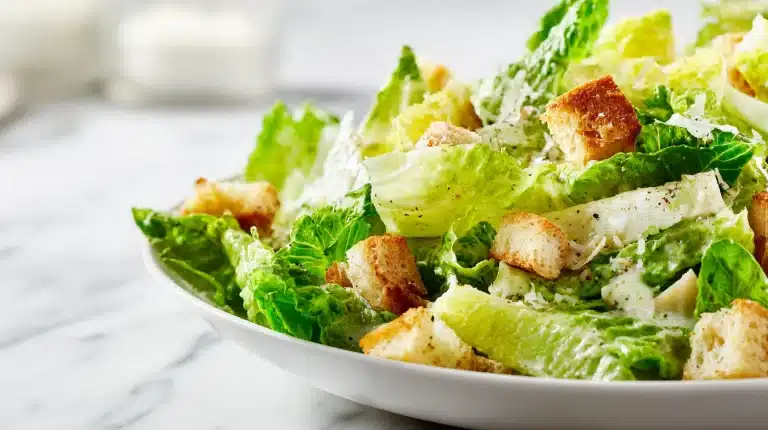
The texture of a steak caesar salad is just as important as the flavor. You need serious crunch to contrast the tender, chewy beef and the velvety dressing. Store bought croutons often taste stale or too hard, risking injury to your teeth. Making your own toasted sourdough crumbs takes five minutes and changes the entire dish.
Take two thick slices of day old sourdough bread and tear them into irregular chunks. Toss them in two tablespoons of olive oil, a pinch of salt, and a dash of garlic powder. Spread them on a sheet pan and toast in a four hundred degree oven for eight to ten minutes until they are deep golden brown and shatter when you press them. Let them cool completely. They stay crunchy even when coated in dressing. This technique also works well in our garlic steak tortellini.
Now, the lettuce. Romaine is the traditional choice for good reason. Its sturdy, fibrous ribs hold up under the weight of the steak and the heavy dressing without collapsing into a soggy mess. You must dry the leaves thoroughly. Wash the romaine, separate the leaves, and spin them completely dry in a salad spinner. Any residual water will slide off the leaves and pool at the bottom of the bowl, thinning out your dressing and ruining the texture.
For the best presentation, chop the romaine into bite sized pieces. You do not want your guests struggling to cut through giant lettuce leaves while chasing a piece of steak. Toss the dried romaine with just enough dressing to lightly coat each leaf. You can always add more dressing, but you cannot take it away. Overdressing makes the salad heavy and cloying. Toss the greens gently using your hands or large tongs, lifting from the bottom so everything gets coated evenly.
Some people like to grill the romaine for a charred flavor. If you want a grilled steak caesar salad, halve the heads of romaine lengthwise, brush with oil, and sear them cut side down on the hot grill for thirty seconds. The outer leaves wilt slightly and take on a smoky char that pairs well with the beef. Just be careful not to overcook the lettuce, or it will become completely limp. There is a fine line between lightly charred and sad.
Assembling and Serving Your Steak Caesar Salad
The final assembly of your steak caesar salad happens quickly, so everything must be prepped and ready before you start plating. This is a composed dish where temperature contrasts matter. The steak should be warm. The romaine and dressing should be cold from the refrigerator.
Place your dressed greens in a wide, shallow bowl. A shallow bowl prevents the salad from compressing under its own weight, so the lettuce stays airy and crisp. Slice your rested steak into half inch strips. If you are using flank or skirt steak, slice it thinly against the grain. Arrange the steak slices over the top of the dressed romaine. The residual heat from the meat will slightly warm the leaves it touches, and that contrast is what makes this salad worth making.
Pour any resting juices from the cutting board over the sliced steak. This liquid is pure flavor and is basically extra seasoning for the beef. Sprinkle your freshly toasted sourdough croutons generously over the top. Use a vegetable peeler to shave large, fluffy flakes of Parmesan cheese over the salad. These large shavings give you pockets of salty, crystalline bite that are different from the finely grated cheese in the dressing.
Finish with a heavy crack of black pepper. If you like heat, a few dashes of hot sauce or a sprinkle of red pepper flakes add a nice acidic bite that cuts through the fat. Serve immediately. The steak caesar salad recipe waits for no one. Once the dressing hits the lettuce, the clock starts ticking on that perfect crunch. Eat it right away. The bread stays shattered, the lettuce snaps, and the steak stays juicy.
If you have extra components, store them separately. Keep the dressing in a jar, the lettuce in a bag with a paper towel, and the steak in an airtight container. This way, you can assemble a fresh bowl the next day without sacrificing the texture that makes this recipe so satisfying. It makes a great lunch that beats any takeout option.
Frequently Asked Questions
Can you put steak in a Caesar salad?
Yes, steak is an excellent protein addition to a Caesar salad. The rich, savory flavor of seared beef pairs well with the salty, umami heavy Parmesan and anchovy dressing, so you get a filling, balanced meal.
Is there a particular kind of steak I should use?
Ribeye is the best choice because its high fat content keeps the meat juicy and flavorful under the heavy dressing. Flank steak or sirloin are great leaner options, provided you slice them very thinly against the grain.
Do I have to use romaine lettuce for this recipe?
While romaine is traditional for its sturdy crunch, you can use other firm greens. Grilled radicchio or Little Gem lettuce work well, but avoid delicate greens like spring mix, as they will wilt under the thick dressing and heavy steak.
What meat goes with Caesar salad?
Grilled chicken is the most common pairing, but shrimp and sliced steak are also popular. Choose a meat that can hold up to the bold garlic and anchovy flavors without overpowering the salad.
Conclusion
A great steak caesar salad sits somewhere between a light side and a hearty main course, and honestly, it is usually the only thing I want for dinner. By searing a well rested ribeye, building a creamy dressing with umami depth, and keeping your greens bone dry, you solve the soggy, chewy problems that plague lesser versions. You get warm beef, cold crisp lettuce, and a satisfying crunch in every bite.
Make this recipe tonight, then tell me how yours turned out. I love hearing about the cuts of steak you choose and how you adjust the lemon and garlic to your taste.
For more recipes like steak caesar salad, follow us on Facebook and Pinterest for weeknight dinner ideas.
More recipes in this series: