The first time I tasted a truly great kale caesar salad, I was shocked that raw kale could taste so tender and luxurious. It was at a tiny bistro where the waiter massaged the leaves right at the table. I sat there thinking, how is this the same vegetable I’ve been choking down for years?
Most people hate making this dish at home because the leaves turn out tough, bitter, and completely coated in a heavy, gloppy dressing that puddles at the bottom of the bowl. I’m going to show you the exact techniques to fix that.
This guide covers the science of massaging kale for perfect texture, how to build a deeply savory anchovy dressing, and the trick to golden, crunchy sourdough croutons.
Table of Contents
Why this kale caesar salad works
A traditional caesar salad relies on delicate romaine lettuce for its signature crunch. When you swap in brassica leaves, the dynamics change completely. Kale is sturdy and fibrous, and it holds up beautifully under heavy dressings. But that same toughness is exactly what ruins most home attempts. The secret to a perfect kale caesar salad is breaking down those tough cell walls before the dressing ever touches the leaves.
The magic of massaged kale
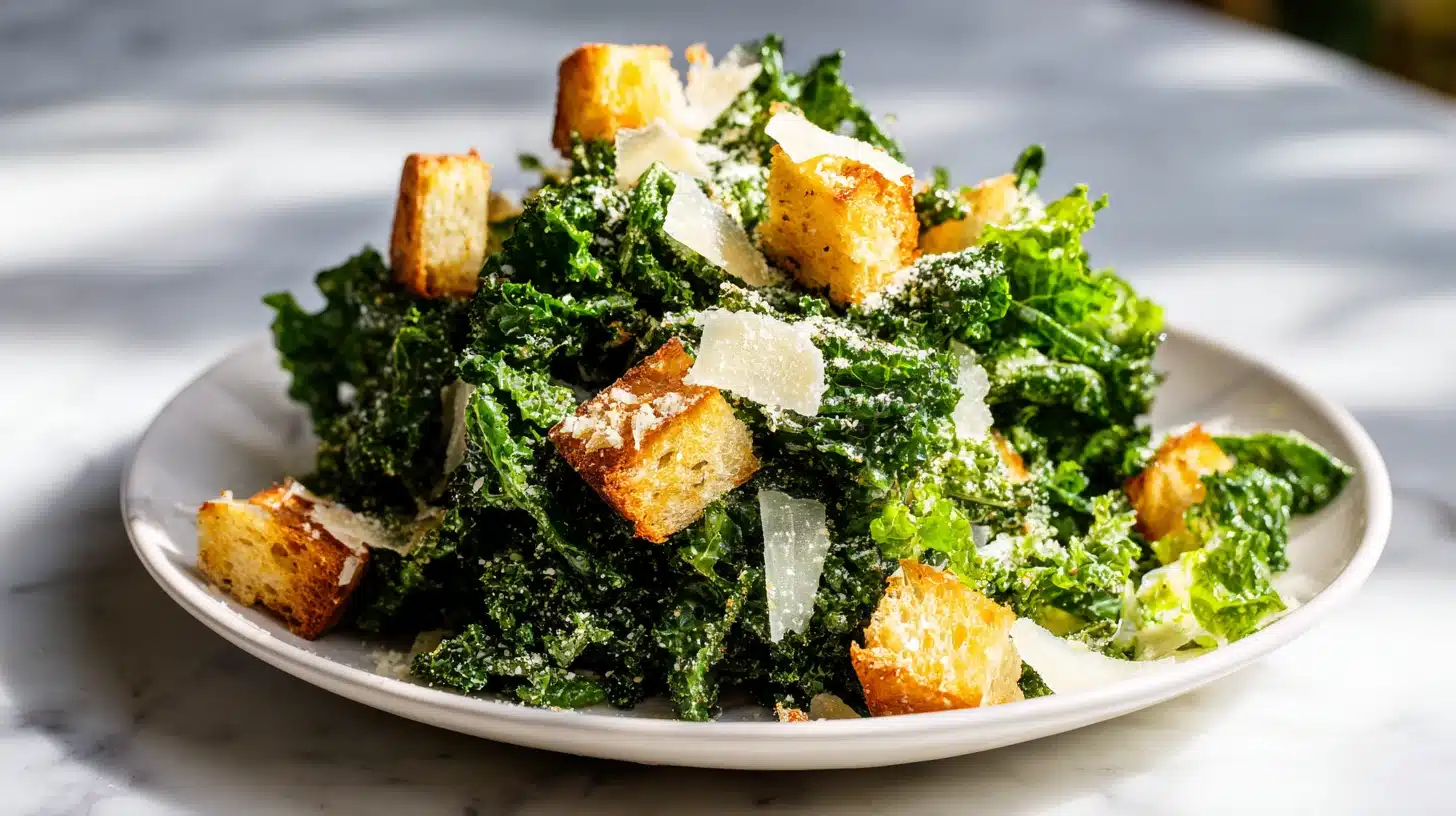
Massaging kale sounds like a trendy spa technique, but it is pure food science. When you rub coarse sea salt and a drizzle of extra virgin olive oil into chopped lacinato kale, you are manually rupturing the plant fibers. The leaves change right before your eyes. They go from a rigid, dull green to a glossy, deep forest green. The texture becomes silky, and the volume shrinks by almost half. If you have ever chewed through a woody, bitter bowl of greens, this single step changes everything.
Lacinato versus curly kale
Choosing the right variety matters immensely. I strongly prefer lacinato kale, also known as dinosaur kale, for a kale caesar salad. The leaves are flat, dark, and naturally more tender than their curly cousins. Their smooth surface catches the creamy dressing perfectly. Curly kale works in a pinch, but those tight ruffles trap pooling dressing, leading to a soggy bottom layer. If you must use curly kale, strip the leaves from the woody stems entirely and chop the pieces slightly smaller to encourage even tenderizing.
Building a flavor base
A great healthy caesar salad with kale needs a foundation of umami. The raw leaves have an earthy, slightly bitter edge that demands an aggressive punch of salt and fat. This is where the marinating process begins. By pulling the leaves apart with your hands, you make sure every single fold gets coated in the eventual dressing. The kale acts like a sponge, absorbing the sharp lemon juice and rich olive oil without ever collapsing into mush. It stays resilient and satisfyingly chewy, and it sits heavy in the best way possible.
Print
The Last Kale Caesar Salad Recipe You Will Ever Make
- Total Time: 30 min
- Yield: 4 servings 1x
Description
A hearty kale caesar salad made with massaged lacinato kale, a creamy homemade anchovy and Parmesan dressing, and crispy golden sourdough croutons.
Ingredients
For the salad:
1 large bunch lacinato kale (stems removed, leaves chopped)
1 tablespoon extra virgin olive oil
1/2 teaspoon coarse sea salt
1/2 cup sourdough bread (cut into 1-inch cubes)
1 tablespoon extra virgin olive oil (for croutons)
1/4 cup Parmesan cheese (shaved, for garnish)
1 ripe avocado (sliced, optional)
For the Caesar dressing:
3 anchovy fillets (minced into a paste)
1 large garlic clove (grated)
2 tablespoons fresh lemon juice
1 teaspoon Dijon mustard
1/2 teaspoon Worcestershire sauce
1/3 cup extra virgin olive oil
1/4 cup Parmesan cheese (finely grated)
1/4 teaspoon black pepper
Instructions
1. Preheat your oven to 375 degrees Fahrenheit. Toss the sourdough bread cubes with one tablespoon of olive oil and a pinch of salt. Spread them on a baking sheet and bake for 10 minutes until golden and crunchy.
2. Place the chopped kale in a large bowl. Drizzle with one tablespoon of olive oil and sprinkle with coarse sea salt. Use your hands to massage the leaves for 60 seconds until they darken, soften, and reduce in volume.
3. In a small bowl, whisk together the minced anchovy paste, grated garlic, fresh lemon juice, Dijon mustard, and Worcestershire sauce until smooth.
4. Slowly stream in the one third cup of extra virgin olive oil while whisking constantly to create a thick, creamy emulsion.
5. Stir the finely grated Parmesan cheese and black pepper into the dressing, mixing until the cheese dissolves into the liquid.
6. Pour half of the dressing over the massaged kale and toss thoroughly with tongs to coat every leaf. Add more dressing as needed.
7. Top the dressed greens with the crispy sourdough croutons, shaved Parmesan cheese, and sliced avocado if using. Serve immediately.
Notes
Store leftover dressed greens in an airtight container in the refrigerator for up to 2 days. Keep extra croutons in a separate bag at room temperature so they stay crunchy.
If you prefer a milder garlic flavor, rub the whole garlic clove around the inside of the salad bowl before massaging the kale, then discard the clove.
Substitute anchovy paste by using one half teaspoon of paste per fillet if you do not have whole anchovies on hand.
- Prep Time: 20 min
- Cook Time: 10 min
- Category: Salads
- Method: Baking, No-Cook
- Cuisine: American
Nutrition
- Serving Size: 1 cup
- Calories: 280 kcal
- Sugar: 2 g
- Sodium: 520 mg
- Fat: 22 g
- Saturated Fat: 4 g
- Unsaturated Fat: 16 g
- Trans Fat: 0 g
- Carbohydrates: 18 g
- Fiber: 4 g
- Protein: 8 g
- Cholesterol: 15 mg
Crafting the perfect creamy dressing
The dressing is the heart of any kale caesar salad recipe. A common shortcut is reaching for a bottle of store bought caesar, but homemade dressing takes five minutes and tastes so much better. The goal is an emulsion that is creamy, sharp, and deeply savory without being cloying.
The umami trinity
Traditional caesar dressing relies on three ingredients that people often try to skip: anchovies, garlic, and Parmesan cheese. Do not skip the anchovies. You will not taste fish. Instead, the anchovies melt into the olive oil and provide a salty, funky depth that makes the dressing taste undeniably rich. If you only have anchovy paste, use a half teaspoon of paste to replace one whole fillet. Fresh garlic adds a sharp, spicy bite that cuts through the heavy fat. You want to mince it so finely that it almost becomes a paste, or grate it on a microplane. Parmesan cheese brings the salt and the lactic tang. Grate it fresh on the fine side of a box grater so it dissolves seamlessly into the liquid.
Achieving the right emulsion
A broken dressing ruins a kale salad with caesar dressing. To keep your oil and lemon juice from separating, you need an emulsifier. Dijon mustard is the secret weapon here. When you whisk the Dijon with the mashed anchovies, garlic, and a splash of Worcestershire sauce, you create a thick paste. Whisking the extra virgin olive oil into this paste drop by drop forces the oil to suspend in the water. You can do this in a bowl with a whisk, or simply throw everything into a blender for a foolproof, thick, and luscious cream. A squeeze of fresh lemon juice at the very end brightens the heavy fats and balances the sharpness of the garlic.
Common mistakes and quick fixes
- Skipping the massage step and ending up with chewy, bitter leaves that fight back when you bite into them. Spend sixty seconds rubbing the chopped kale with olive oil and salt until it softens and darkens in color.
- Drowning the greens in dressing, which creates a heavy, oily puddle at the bottom of the bowl. Start with half the dressing, toss thoroughly with tongs, and add more only if the leaves look dry.
- Using pre grated Parmesan from a tub, which contains anti caking agents that prevent it from melting into the dressing. Grate a wedge of Parmigiano Reggiano on the fine holes of a box grater for a smooth, cohesive sauce.
- Tearing the leaves into pieces that are too large to eat gracefully. Aim for bite sized pieces, roughly one inch across, so you do not need a knife to eat your massaged kale caesar.
- Letting the dressed salad sit for hours before serving, which makes the croutons dissolve into a gummy paste. Dress the leaves up to an hour ahead but add the crunchy elements right before serving.
Golden sourdough croutons and crunchy toppings
The contrast between the soft, creamy leaves and a hard, crunchy element is what makes this recipe sing. A bowl of dressed greens is good. A bowl of dressed greens loaded with crispy textures is something else entirely. While you can use any stale bread, sourdough brings a subtle tang that pairs beautifully with the savory dressing.
Baking the best croutons
To make croutons that stay crunchy inside a heavily dressed massaged kale caesar, you need to control the moisture. Start with day old sourdough bread. Fresh bread is too soft and will turn to paste when baked. Cut the bread into generous one inch cubes, leaving the crust on for extra chew. Toss the cubes in a bowl with a generous pour of extra virgin olive oil, a pinch of sea salt, and a few grinds of black pepper. Spread them in a single layer on a sheet pan and bake at 375 degrees Fahrenheit for about twelve minutes. You want them deep golden brown and crusty on the outside, but with just a tiny bit of give in the center. The heat dries out the moisture and creates a rigid sponge that will absorb the caesar dressing without immediately collapsing.
Alternative crunch elements
Bread is not your only option. If you are avoiding gluten or just want to mix things up, there are great alternatives that provide that necessary textural contrast. Roasted chickpeas are a fantastic addition. Toss a can of drained chickpeas with olive oil and smoked paprika, then roast them until they shatter when you bite them. They bring a nutty, earthy crunch that works wonders with the Parmesan.
Another option is making crispy bread crumbs. Toast panko breadcrumbs in a skillet with olive oil and a smashed garlic clove until they are the color of toasted almonds. Sprinkle these heavily over the finished salad. They stick to the dressed leaves, so you get crunch in every single bite. You can even serve this salad alongside a warm bowl of tomato soup and a garlic bread grilled cheese for the ultimate comfort food lunch.
Adding creamy avocado
For a modern twist, sliced avocado is a great addition to a kale caesar salad. The rich, fatty texture of a ripe Hass avocado mimics the creaminess of the dressing and amplifies the luxurious mouthfeel. Slice the avocado just before serving to prevent browning, and fan the slices across the top of the bowl. The buttery fruit creates a cool contrast against the sharp garlic and bright lemon. It makes the whole dish feel more like a hearty entree than a side dish.
Pairing and serving suggestions
A kale caesar salad is hearty enough to stand alone as a main course, but it plays incredibly well with other dishes. The bitter, earthy notes of the greens and the rich, salty dressing make it a versatile companion for a wide variety of proteins and sides.
Making it a main course
To turn this side dish into a filling dinner, add a protein. Grilled chicken breast is the classic choice, and the smoky char from the grill complements the savory dressing perfectly. If you are looking for something different, try serving it alongside a chicken caesar pasta salad for a double caesar theme, or top the bowl with crispy baked salmon. The rich omega three fats in the salmon melt into the dressing and create an incredibly satisfying meal. For a lighter but equally filling option, soft boil an egg and let the runny yolk act as an extra layer of sauce when you break it open.
What to serve alongside
If you are serving the salad as a starter, think about contrasting textures and temperatures. A bowl of hot, creamy soup is a wonderful partner. The cold, crunchy greens balance out a warm, smooth bisque. You can also lean into the savory profile by serving the salad next to a platter of crispy garlic parmesan fries. The salty fries pick up the leftover dressing on your plate, which is honestly one of the best bites of the whole meal.
For a bright, refreshing contrast, pair the heavy caesar flavors with something acidic and crisp. A sharp greek orzo salad with lemon herb dressing or a vibrant avocado salad cuts through the richness and resets your palate. The trick is balancing the heavy, salty caesar with something light and acidic.
Storing leftovers
Because kale is so sturdy, a massaged kale caesar actually holds up better in the refrigerator than a romaine based salad. If you have leftovers, store them in an airtight container for up to two days. The leaves will soften slightly but will not turn into a watery mess. Keep any remaining croutons in a separate bag at room temperature so they stay rigid, and toss them in right before you eat the next day.
Frequently asked questions
How do you prep kale for a Caesar salad?
Start by stripping the leaves away from the thick, woody central stem. Chop the leaves into bite sized pieces, wash them thoroughly, and dry them completely. Place the damp leaves in a bowl, drizzle with a teaspoon of olive oil and a pinch of salt, and massage with your hands for sixty seconds until the leaves darken and soften.
How do you use kale for salad?
Kale is a tough green, so it requires physical tenderizing before eating raw. Massaging the leaves with oil and salt breaks down the fibrous cell walls, reducing bitterness and making the texture silky. Always remove the stems, as they remain chewy and unpleasant even after aggressive massaging or marinating.
What to serve with kale salad?
Kale caesar salad pairs beautifully with grilled proteins like chicken, steak, or salmon. You can also serve it alongside warm comfort foods like tomato soup, grilled cheese sandwiches, or roasted vegetables. The sturdy leaves stand up well to heavy, rich main courses without wilting on the plate.
Is Caesar salad good for diabetics type 2?
Traditional Caesar dressing is high in fat and carbohydrates, which can impact blood sugar. To make a diabetic friendly version, use less bread for croutons, increase the lemon juice to reduce the need for salt, and rely heavily on the kale which is packed with fiber. Always consult a physician for specific dietary needs.
Conclusion
A properly made kale caesar salad is all about texture and balance. Massaging the leaves, building a deeply savory emulsion, and adding crunchy sourdough croutons turns a stubborn winter green into a luxurious meal. This recipe takes the frustration out of raw kale and replaces it with a satisfying chew that holds up under a heavy dressing.
This hearty bowl has earned a permanent spot in my weeknight rotation. It is substantial enough to stand alone, yet versatile enough to pair with your favorite proteins and sides. Once you master the massage technique, raw kale stops being a punishment and starts being something you actually crave.
For more recipes like kale caesar salad, follow us on Facebook and Pinterest for weeknight dinner ideas.
More recipes in this series: