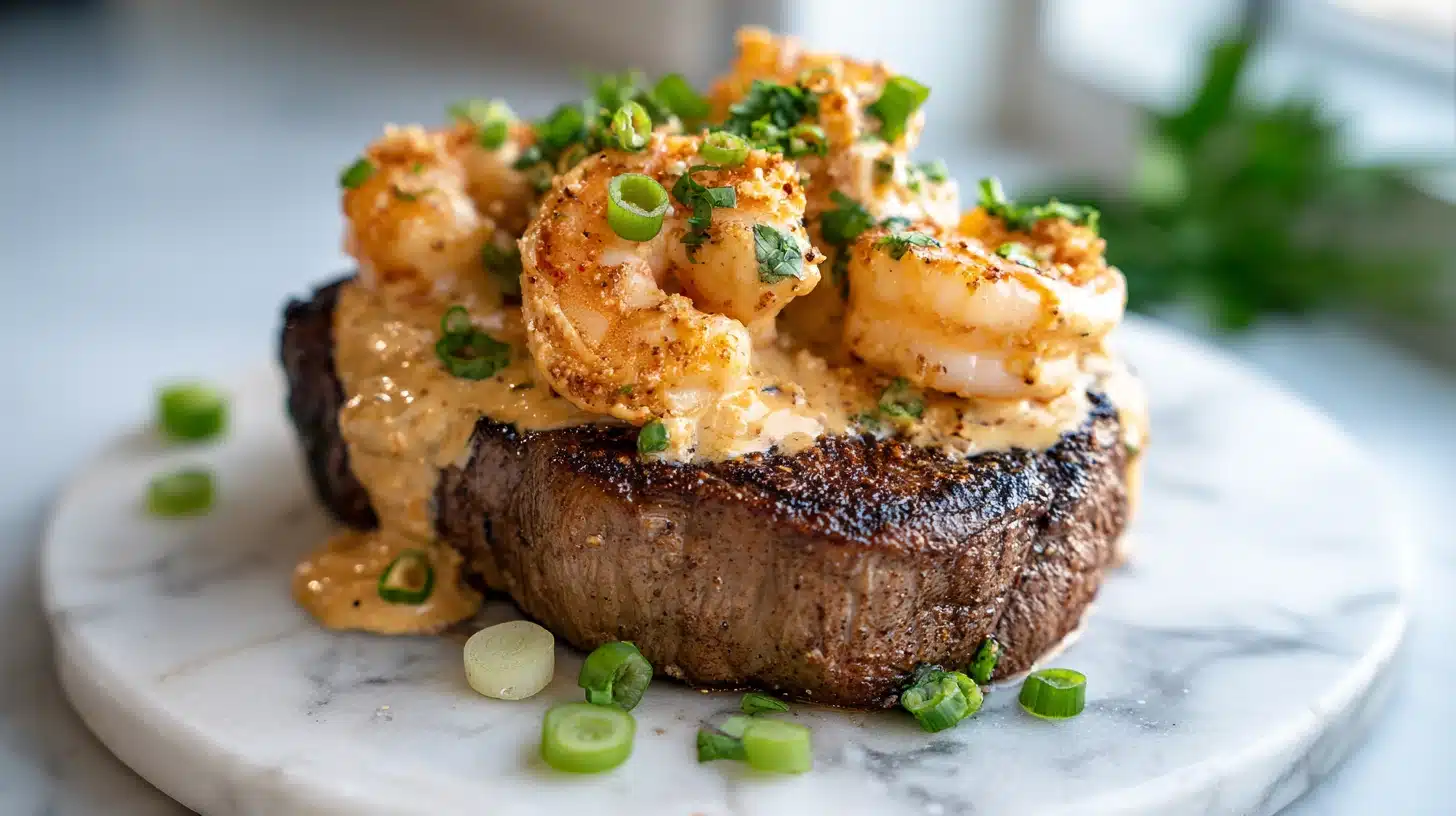
Steak in creamy cajun shrimp sauce was born on a rainy Tuesday when I wanted surf and turf without the steakhouse bill. The first bite, with its peppery crust giving way to a silky, spiced cream, became my new weeknight default.
The frustration with most steak and shrimp recipes is that the sauce ends up thin, the steak overcooks while the shrimp finishes, and you are left with rubbery protein swimming in bland liquid. This method fixes both problems by searing the steak first, then building the sauce in the same pan.
Here’s what you’ll get: a reverse-sear technique that keeps your steak perfectly pink, a built-in fond-based sauce that thickens itself, and a timing system so shrimp and steak hit the plate hot together.
Table of Contents
Why This Steak in Creamy Cajun Shrimp Sauce Works
This dish works because of one thing: using the same cast iron skillet for every component. When you sear a ribeye or New York strip in a screaming hot pan, the surface of the meat caramelizes and leaves behind hundreds of tiny browned bits stuck to the metal. Chefs call this the fond, and most home cooks wash it down the drain without realizing they are throwing away the best part of the pan.
When you deglaze that same pan with chicken broth, the fond dissolves into the liquid and becomes the backbone of your sauce. You can taste the difference immediately. The sauce has a deep, roasted, almost smoky quality that you simply cannot get from starting with a clean pan. This is why a steak in creamy cajun shrimp sauce made at home can rival anything you would order at a restaurant for forty dollars a plate.
The Cajun seasoning does double duty here. You use it to crust the steak before searing, which gives you that rusty, paprika-flecked bark on the outside. Then you add more into the sauce itself, where it blooms in hot butter and garlic. The spice mix typically includes paprika, cayenne, garlic powder, onion powder, oregano, and thyme. When those dried herbs hit warm butter, they wake up and release their oils into the fat. Your kitchen will smell like a Louisiana kitchen within thirty seconds.
The cream component is heavy cream combined with grated parmesan cheese. Heavy cream has enough fat to coat the palate and carry the spices without curdling at high heat. Parmesan adds salt, umami, and a slight thickness that helps the sauce cling to both the steak and the shrimp. If you have ever tried making a cream sauce with milk instead of heavy cream, you know it comes out watery and breaks when it hits the hot pan. Stick with heavy cream here.
If you enjoy this style of cooking, you might also like our creamy cajun garlic pasta which uses a similar technique for building a spiced cream sauce from scratch.
The other reason this recipe works so well is the built-in timing. By cooking the steak first and letting it rest while you make the sauce and cook the shrimp, every component reaches the plate at its ideal temperature. The steak relaxes and redistributes its juices. The shrimp cook quickly in the finished sauce and stay tender. Nothing sits around getting cold, and nothing gets overcooked while you wait for something else to finish.
Print
Cast Iron Steak in Creamy Cajun Shrimp Sauce
- Total Time: 50 min
- Yield: 4 servings 1x
Description
A cast iron skillet surf and turf dinner with Cajun-crusted ribeye steak and large shrimp in a creamy parmesan sauce built from pan fond, heavy cream, and Cajun seasoning.
Ingredients
For the steak:
2 ribeye or New York strip steaks (1 inch thick, about 12 ounces each)
1 tablespoon Cajun seasoning
1 teaspoon kosher salt
1 teaspoon black pepper
1 tablespoon avocado oil or canola oil
For the shrimp and sauce:
1 pound large shrimp (16 to 20 count, peeled and deveined)
1 tablespoon butter
4 cloves garlic (minced)
1/2 cup chicken broth
1/2 cup heavy cream
1/2 cup parmesan cheese (freshly grated)
1 teaspoon Cajun seasoning
1/2 teaspoon salt
1/4 teaspoon black pepper
2 tablespoons fresh parsley (chopped, for garnish)
2 tablespoons green onions (sliced, for garnish)
Instructions
1. Pat the steaks dry with paper towels and season both sides with kosher salt and 1 tablespoon Cajun seasoning. Let them sit at room temperature for 30 minutes.
2. Heat a cast iron skillet over high heat for 5 minutes. Add the oil and let it shimmer. Sear the steaks for 3 to 4 minutes per side until a dark crust forms and the internal temperature reaches 130 degrees Fahrenheit.
3. Transfer the steaks to a cutting board and tent loosely with foil. Let them rest for 10 minutes while you build the sauce.
4. Reduce the heat to medium and add the butter to the same skillet. When it foams, add the minced garlic and stir for 30 seconds until fragrant.
5. Pour in the chicken broth and scrape the bottom of the pan with a wooden spoon to lift all the browned fond. Simmer for 2 minutes until the liquid reduces by half.
6. Add the heavy cream and whisk to combine. Add the grated parmesan in small handfuls, whisking after each addition until melted and smooth.
7. Season the sauce with 1 teaspoon Cajun seasoning, salt, and pepper. Taste and adjust heat level if needed.
8. Add the shrimp to the simmering sauce and cook for 2 to 3 minutes per side until they turn opaque pink and curl into a loose C shape.
9. Slice the rested steak against the grain into half-inch strips. Arrange on plates and spoon the shrimp and sauce generously over the top. Garnish with chopped parsley and sliced green onions.
Notes
Store leftovers in the refrigerator for up to 2 days. Reheat gently in a skillet over low heat to avoid overcooking the shrimp.
Substitute half and half for heavy cream if you want a lighter sauce, but the texture will be thinner.
For less heat, reduce the Cajun seasoning to 1 teaspoon total and add an extra splash of cream.
Serve with crusty bread, over white rice, or alongside roasted vegetables to complete the meal.
- Prep Time: 10 min
- Rest Time: 10 min
- Cook Time: 30 min
- Category: Main Course
- Method: Stovetop
- Cuisine: American
Nutrition
- Serving Size: 1 steak with shrimp and sauce
- Calories: 620 kcal
- Sugar: 3 g
- Sodium: 1240 mg
- Fat: 42 g
- Saturated Fat: 22 g
- Unsaturated Fat: 18 g
- Trans Fat: 0 g
- Carbohydrates: 6 g
- Fiber: 1 g
- Protein: 48 g
- Cholesterol: 285 mg
Choosing the Right Steak and Shrimp
The protein you select makes or breaks this dish. For the steak, you want a cut that is at least one inch thick with good fat marbling running through the meat. Ribeye is my first choice because the intramuscular fat renders during searing and bastes the steak from the inside out. New York strip is a close second if you prefer a leaner bite with a tighter texture. Both cuts develop a killer crust when they hit a hot cast iron skillet.
Avoid filet mignon for this recipe. It lacks the fat content needed to create good fond in the pan, and the mild flavor gets overpowered by the Cajun spice. You want a steak that can stand up to a bold sauce without disappearing underneath it. Look for steaks that are USDA Choice or Prime grade, and let them sit at room temperature for thirty minutes before cooking. Cold steak hitting a hot pan steams instead of sears, and you lose that critical brown crust.
The shrimp should be large or extra large, which means you are looking for a count of 16 to 20 per pound or 21 to 25 per pound. Smaller shrimp cook too fast and turn rubbery before the sauce has time to coat them. Larger shrimp stay juicy and have a satisfying snap when you bite into them. Buy shrimp that are peeled and deveined but leave the tails on if you can. The tails add flavor to the sauce as they simmer, and they look great on the plate.
Fresh versus frozen shrimp is a question I get often. Unless you live near a coast where you can buy truly fresh shrimp, frozen is actually better. Shrimp are frozen within hours of being caught, which locks in their sweetness. Most “fresh” shrimp at the grocery store are simply thawed frozen shrimp sitting on ice. Buy frozen, thaw them in cold water for twenty minutes, and pat them completely dry before cooking. Dry shrimp sear properly. Wet shrimp boil in their own moisture.
For another great way to use a good cut of beef, check out our ribeye steak sandwich recipe which walks through the same searing technique in a different context.
The Cajun seasoning you choose matters too. Store-bought blends are convenient and work perfectly fine. If you want to make your own, combine two tablespoons paprika, one tablespoon garlic powder, one tablespoon onion powder, one teaspoon cayenne pepper, one teaspoon dried oregano, one teaspoon dried thyme, and one teaspoon black pepper. This gives you a balanced heat that complements the cream without turning the sauce into a fire hazard.
Building the Creamy Cajun Sauce
The sauce is where this recipe matters most. A steak in creamy cajun shrimp sauce lives or dies by the texture and flavor balance of the cream component. The technique is straightforward once you understand the sequence.
Start by removing the seared steak from the pan and loosely tenting it with foil. Do not wash the pan. Lower the heat to medium and add a tablespoon of butter. When the butter foams and begins to smell nutty, add your minced garlic. Stir it constantly for about thirty seconds until you can smell the garlic bloom but before it browns. Burnt garlic turns bitter and will ruin the entire sauce.
Now pour in half a cup of chicken broth to deglaze. Use a wooden spoon to scrape the bottom of the pan and lift all that fond off the surface. The liquid will turn a deep amber color as the browned bits dissolve. Let it simmer for about two minutes until the broth reduces by roughly half. This concentration step is what gives the sauce its backbone. If you skip it, the sauce will taste watered down no matter how much cream you add.
Next, pour in half a cup of heavy cream and whisk to combine. The cream will take on a warm tan color from the Cajun spices and the fond. Add half a cup of grated parmesan cheese in small handfuls, whisking after each addition so it melts smoothly into the liquid. The parmesan is your thickener here. As it melts, the sauce will tighten up and coat the back of a spoon. You are looking for a consistency that falls somewhere between heavy cream and yogurt.
Season the sauce with another teaspoon of Cajun seasoning, a pinch of salt, and a grind of black pepper. Taste it. You should get heat from the cayenne, earthiness from the paprika, and richness from the cream and cheese. If the sauce feels too spicy, add another splash of cream. If it feels too mild, add more Cajun seasoning a quarter teaspoon at a time.
If you love shrimp in creamy sauces, our lemon garlic butter shrimp uses a similar approach with a brighter, citrus-forward profile.
Once the sauce is seasoned and thickened, drop the shrimp in. They need only two to three minutes per side in the simmering sauce. You will know they are done when they curl into a loose C shape and turn opaque pink. Overcooked shrimp curl tight and get mealy, so pull them as soon as the color changes. The residual heat of the sauce will finish cooking them on the plate.
Step-by-Step Method and Timing
Timing is everything in a steak in creamy cajun shrimp sauce recipe. The goal is to have the steak rested, the sauce thickened, and the shrimp cooked all at the same moment so you can plate everything while it is hot. Here is the exact sequence that makes it happen.
First, take your steaks out of the refrigerator thirty minutes before cooking. Pat them dry with paper towels and season both sides generously with salt and Cajun seasoning. The salt draws out surface moisture, which helps the steak sear instead of steam. Letting it sit at room temperature means the meat cooks more evenly from edge to center.
Preheat your cast iron skillet over high heat for five full minutes. Add a tablespoon of oil with a high smoke point, like canola or avocado oil. When the oil shimmers and just begins to smoke, lay the steaks in the pan. Do not move them. Press down gently with tongs to ensure full contact with the pan. Sear for three to four minutes per side for medium rare, or until a meat thermometer reads 130 degrees Fahrenheit in the thickest part.
Transfer the steaks to a cutting board and tent loosely with foil. They need to rest for at least ten minutes. This is your window to build the sauce and cook the shrimp, which takes exactly the right amount of time. The resting period allows the muscle fibers to relax and the juices to redistribute. If you cut into a steak immediately after cooking, all the juice runs onto the board and the meat tastes dry.
While the steak rests, build the sauce following the method in the previous section. Deglaze, reduce, add cream, add parmesan, season, and cook the shrimp. By the time the shrimp are done, the steak will have rested perfectly. Slice the steak against the grain into half-inch strips and arrange them on plates. Spoon the shrimp and sauce generously over and around the steak.
For a simpler weeknight alternative that uses the same one-pan approach, try our one pan garlic butter chicken recipe which follows a similar cook-then-sauce sequence.
The final dish should look like a steakhouse plate. Rusty, spice-crusted steak slices fanned across the plate, shrimp sitting in a pool of golden cream sauce, and a sprinkle of fresh parsley or green onion on top. The sauce should cling to the steak slices and pool slightly at the bottom of the plate. Serve it with crusty bread to soak up every last drop, or over a bed of rice if you want something more filling.
Frequently Asked Questions
What is a good sauce for steak and shrimp?
A cream-based sauce with Cajun seasoning is a great option because the fat in heavy cream carries the spice evenly across both proteins. The Cajun blend adds heat and earthiness that complements the richness of steak and the sweetness of shrimp without overpowering either one. A garlic butter sauce is another good choice if you prefer a lighter finish.
What is a creamy Cajun sauce?
A creamy Cajun sauce is a combination of heavy cream, aromatics like garlic and onion, Cajun seasoning, and usually a hard cheese like parmesan for thickening and salt. The Cajun seasoning contributes paprika, cayenne, and dried herbs. The sauce is typically built in the same pan used to cook the main protein so it absorbs the fond for extra depth of flavor.
How to make a Cajun shrimp sauce?
Start by melting butter in a skillet and sauteing garlic until fragrant. Deglaze the pan with chicken broth, scraping up any browned bits. Add heavy cream and bring it to a gentle simmer. Whisk in grated parmesan until melted, then season with Cajun seasoning, salt, and pepper. Add the shrimp and cook until they turn pink and opaque, about two to three minutes per side.
Does Cajun spice go with steak?
Yes, Cajun seasoning works well with steak. The paprika in the blend helps create a dark crust during searing, while the cayenne adds a subtle heat that cuts through the fat of a ribeye or strip steak. The dried herbs in the mix, like oregano and thyme, add an earthy layer that pairs naturally with beef cooked in a cast iron skillet.
Conclusion
A steak in creamy cajun shrimp sauce brings the steakhouse home. The fond from the seared beef gives the cream sauce a depth you cannot fake, the Cajun seasoning adds heat that wakes up every bite, and the timing system means nothing sits around getting cold. This is surf and turf built for a Tuesday night but impressive enough for Saturday company.
Give this recipe a try this week. It takes fifty minutes from start to finish, uses one pan, and delivers a meal that tastes like you spent hours in the kitchen. Save it for Sunday dinner if you want to slow down and enjoy the process.
For more recipes like steak in creamy cajun shrimp sauce, follow us on Facebook and Pinterest for weeknight dinner ideas.