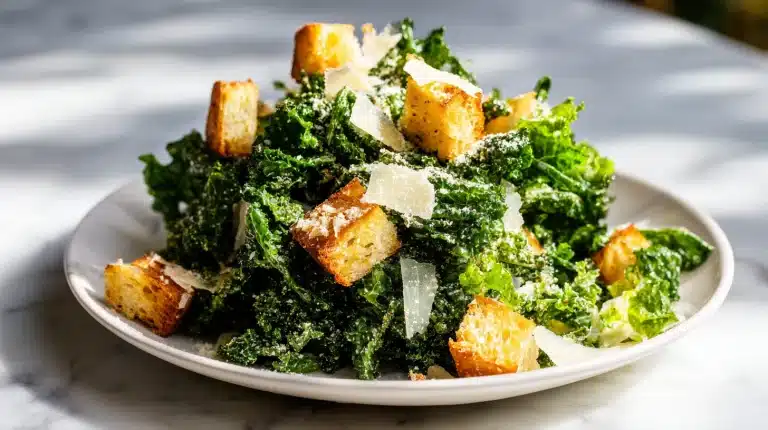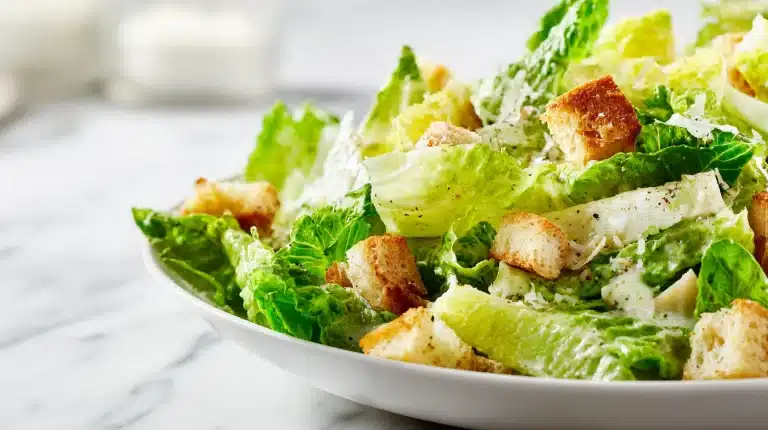
This caesar pasta salad recipe was born from a potluck disaster. My beautiful greens turned into a watery, gummy mess within twenty minutes of hitting the buffet table. The heartbreak of watching a gorgeous bowl of food wilt into soup was all it took to rethink everything. Now, this dish is my most requested backyard barbecue side.
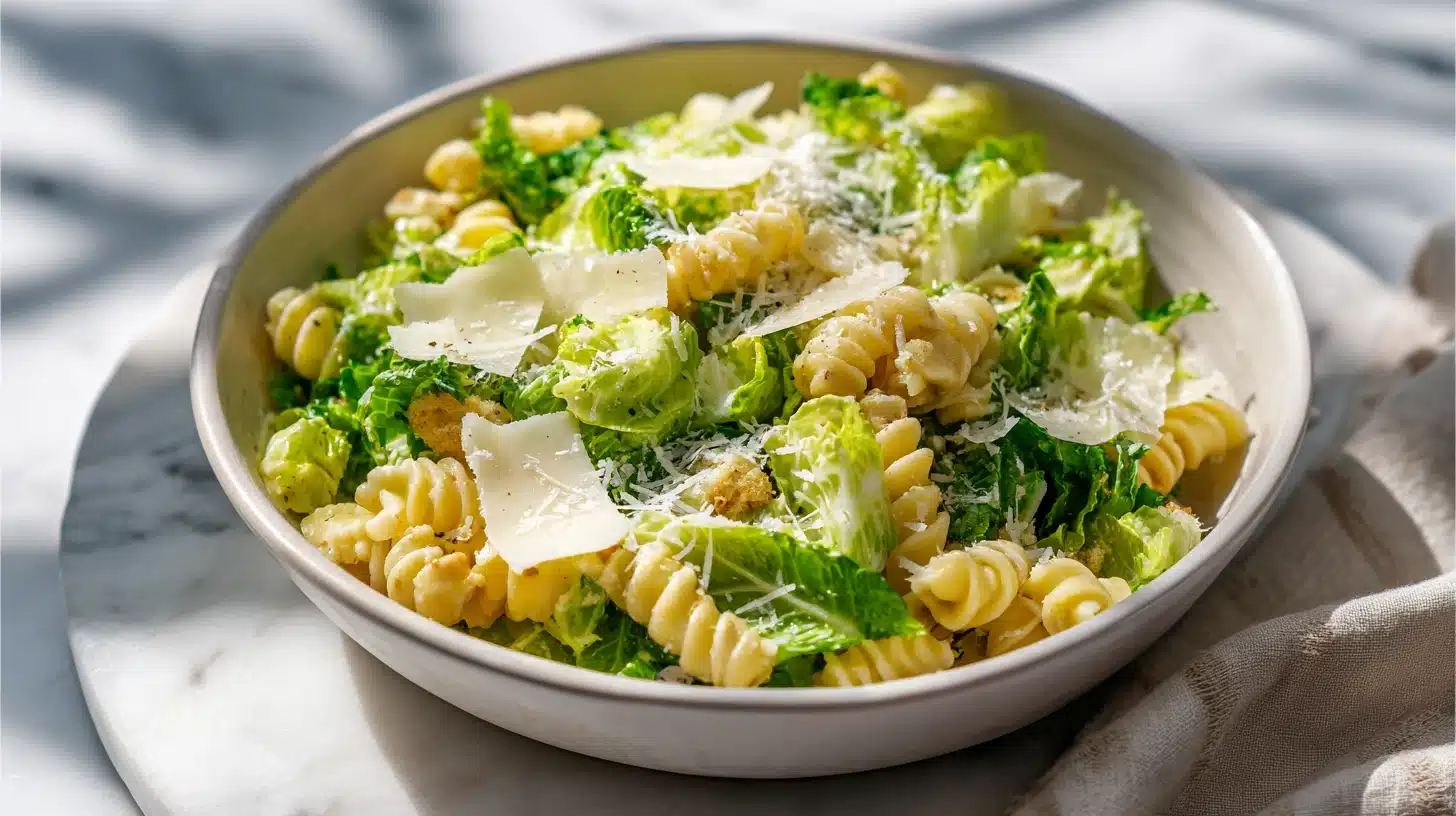
Most creamy caesar pasta salad recipes fail because they combine warm pasta with raw vegetables. The condensation dilutes the dressing and drowns the crunch. I promise this method fixes that by treating the pasta and the greens as two completely separate building blocks that only meet at the very end.
You’ll walk away with a rapid cooling technique that prevents sticky noodles, a stabilizer trick for the dressing, and the exact sequence for assembling everything so the final bowl stays crisp for hours.
Table of Contents
The Anatomy of a Perfect Caesar Pasta Salad
A truly great caesar pasta salad recipe relies on three structural pillars: the bite of the noodle, the snap of the lettuce, and the cling of the dressing. If any one of these falters, the whole bowl collapses into a sad, wet side dish. We are going to build each component independently so they maintain their distinct textures until the moment they hit your serving spoon. First, you need to choose the right pasta shape. Short, sturdy shapes with plenty of surface area are ideal. Radiatori, cavatappi, or fusilli hold onto the creamy caesar dressing in their nooks and crannies. I prefer using a bow tie pasta salad approach with farfalle because the pinched centers turn slightly chewy and trap the parmesan flecks beautifully. Avoid long strands like spaghetti or linguine, as they clump together and refuse to cooperate with a thick dressing.
Next, consider the romaine. Traditional caesar salad relies on tightly packed, dark green inner leaves. For a pasta caesar salad, you actually want a mix of the lighter, crunchier outer ribs and the tender hearts. The thick outer ribs provide a structural lattice that withstands the weight of the noodles and the moisture of the caesar dressing pasta salad. Slice them into pieces roughly the same size as your cooked pasta so every bite delivers a balanced ratio of starch and vegetable. Wash and thoroughly dry the leaves before chilling them in the refrigerator. Cold, dry leaves are your best defense against premature wilting.
Finally, the parmesan. Pre-grated parmesan in a green canister will dissolve into a salty paste when mixed with the acidic dressing, leaving you with an unappealing, gritty residue. You must buy a solid wedge of Parmigiano Reggiano. Use a vegetable peeler to shave large, thick flakes. These shards act as salty punctuation marks throughout the dish. They retain their crystalline texture against the creamy dressing, melting slowly on the tongue rather than disappearing into the sauce.
The Science of Pasta Cooling
The biggest mistake people make with a homemade caesar pasta salad is pouring warm noodles over cold greens. Warm pasta releases steam, which condenses on the cold lettuce leaves and creates a watery slick at the bottom of the bowl. You must cool the pasta completely. Spread the drained, cooked noodles on a rimmed baking sheet lined with parchment paper. Drizzle with a tiny splash of olive oil and toss gently. The oil prevents the noodles from sticking together in a solid mass while they rapidly drop to room temperature in the refrigerator. Once the pasta is cold to the touch, it is ready to join the rest of the ingredients.
Print
The Ultimate Caesar Pasta Salad Recipe (No Soggy Noodles)
- Total Time: 25 min
- Yield: 8 servings 1x
Description
This caesar pasta salad recipe combines cooled cavatappi noodles with crisp romaine lettuce and a thick, homemade caesar dressing. Shaved parmesan adds a salty crunch to the creamy, tangy base.
Ingredients
1 lb cavatappi pasta (or farfalle)
2 large heads romaine lettuce (chopped into bite-size pieces)
1 cup Parmigiano Reggiano (shaved into thick flakes with a peeler)
1 tsp extra virgin olive oil (for tossing the pasta)
1 cup whole milk mayonnaise
3 tbsp fresh lemon juice (about 1 large lemon)
2 tbsp Dijon mustard
2 cloves garlic (minced into a fine paste)
1 tbsp extra virgin olive oil
1 tbsp whole milk Greek yogurt
1/2 tsp freshly cracked black pepper
1/4 tsp kosher salt
Instructions
1. Bring a large pot of salted water to a rolling boil and cook the cavatappi for one minute less than the package instructions so it is al dente and slightly firm to the bite.
2. Drain the pasta completely and spread it in a single layer on a rimmed baking sheet lined with parchment paper.
3. Drizzle the warm pasta with a teaspoon of olive oil and toss gently to coat, then place the baking sheet in the refrigerator for 10 minutes until the noodles are completely cold to the touch.
4. In a medium bowl, whisk together the mayonnaise, fresh lemon juice, Dijon mustard, and garlic paste until smooth and pale yellow.
5. Slowly stream in the tablespoon of extra virgin olive oil while whisking vigorously to create a thick, glossy emulsion.
6. Stir the Greek yogurt, black pepper, and kosher salt into the dressing until well combined and pourable.
7. Place the cooled cavatappi in a large mixing bowl and pour half of the dressing over the noodles, folding gently with a rubber spatula until every piece is coated, then let it sit for five minutes so the starch absorbs the flavor.
8. Place the chopped romaine in a large serving bowl and pour the remaining dressing over the leaves, tossing to coat.
9. Pour the dressed, marinated pasta directly over the dressed romaine and fold gently from the bottom up to combine without bruising the lettuce.
10. Scatter the thick parmesan shavings over the top and serve immediately.
Notes
Store leftover salad in an airtight container in the refrigerator for up to 2 days. The lettuce will soften but the flavor will deepen.
To revive leftovers, toss in a handful of fresh chopped romaine right before serving to restore the crunch.
You can substitute the cavatappi with radiatori or fusilli if you need a different sturdy shape.
Make the dressing up to 3 days in advance and store it in a jar in the refrigerator.
- Prep Time: 15 min
- Cook Time: 10 min
- Category: Salads
- Method: Stovetop
- Cuisine: American
Nutrition
- Serving Size: 1 cup
- Calories: 290 kcal
- Sugar: 2 g
- Sodium: 410 mg
- Fat: 21 g
- Saturated Fat: 4 g
- Unsaturated Fat: 15 g
- Trans Fat: 0 g
- Carbohydrates: 22 g
- Fiber: 2 g
- Protein: 7 g
- Cholesterol: 15 mg
Building a Stable Homemade Dressing
The dressing is the lifeblood of this caesar pasta salad recipe. A standard, thin dressing will pool at the bottom of the bowl, leaving the top noodles dry and the bottom ones drowning. For a creamy caesar pasta salad that coats every noodle evenly, we need to emulsify the dressing with a specific stabilizer: a spoonful of whole milk Greek yogurt. This addition thins the heavy mayonnaise base just enough to make it pourable, while the yogurt proteins prevent the dressing from breaking when they meet the cold pasta. Whisking the dressing by hand takes exactly two minutes and creates a glossy, thick sauce that clings like velvet.
Start with high quality mayonnaise as your base. Add a generous squeeze of fresh lemon juice, a spoonful of Dijon mustard, and two minced garlic cloves. The acid from the lemon juice brightens the heavy fat, while the mustard acts as an emulsifier to bind the oil and water together. Slowly stream in a tablespoon of extra virgin olive oil while whisking vigorously. This creates a tight, stable emulsion that will not separate. The garlic should be minced into a fine paste so it distributes its sharp bite without leaving chunks that burn the palate.
If you want to add protein to this dish, a chicken caesar pasta salad is a natural extension. Grilled chicken breasts sliced into strips work beautifully. However, the dressing here is strong enough to stand entirely on its own as a vegetarian side dish.
Troubleshooting Your Pasta Salad
Even with a reliable caesar pasta salad recipe, small variables can cause big texture problems. Use this table to identify and fix the most common issues that plague this specific dish.
| Problem | Cause | Fix |
|---|---|---|
| Lettuce wilts immediately | Warm pasta met cold greens | Spread cooked pasta on a baking sheet and chill for 10 minutes before combining. |
| Dressing tastes too sour | Lemon juice overwhelmed the fat | Add an extra tablespoon of mayonnaise or a pinch of sugar to round out the acid. |
| Pasta clumps into a ball | Noodles were not tossed with oil post-cooking | Drain and immediately toss with a light drizzle of olive oil before cooling. |
| Salad is dry after an hour | Dressing was too thick to penetrate the pasta folds | Whisk a splash of pasta water or milk into the dressing before tossing. |
| Parmesan dissolves into paste | Pre-grated cheese was used | Buy a wedge of Parmigiano Reggiano and shave large flakes with a vegetable peeler. |
| Bottom of the bowl is watery | Condensation formed on the serving bowl | Toss the dressing and pasta first, then fold in the dry greens right before serving. |
Step-by-Step Mixing and Assembly
The assembly sequence is what separates a watery disappointment from a crisp dish. You cannot dump everything into a single bowl and stir. The order of operations matters. First, place your completely cooled pasta in a large mixing bowl. Pour half of your prepared dressing over the cold noodles. Using a rubber spatula, fold the dressing into the pasta until every piece is coated. Let this sit for five minutes. The starch on the surface of the pasta will absorb the dressing, creating a tacky layer that holds onto the rest of the ingredients. This resting period is what makes a caesar salad with pasta taste deeply seasoned rather than merely coated.
While the pasta absorbs the dressing, take your chilled, chopped romaine and place it in a separate, very large serving bowl. Add the remaining half of the dressing to the lettuce and toss gently. This ensures the lettuce is completely coated and the dressing clings to the crunchy leaves. If you are adding extra textures, a crispy pasta salad approach works well here. You can fold in homemade croutons or even roasted chickpeas for extra snap. The goal is to create distinct layers of texture so the bite is never one note.
The Final Fold
Now, the magic happens. Pour the dressed, marinated pasta directly over the dressed romaine. Using your spatula, fold the two components together with gentle, sweeping motions from the bottom of the bowl to the top. Do not stir aggressively. Aggressive stirring bruises the lettuce and breaks the noodles. Finish by scattering your thick parmesan shavings over the top. The cheese will catch in the folds of the pasta and the curls of the lettuce. Serve immediately. The salad will maintain its crisp texture and balanced flavor for up to two hours at room temperature.
Make-Ahead Strategies and Storage
Potlucks, barbecues, and weekday lunches demand a caesar pasta salad recipe that holds up over time. The make ahead strategy for this dish relies entirely on component separation. You can cook the pasta, make the dressing, and chop the romaine up to two days in advance. Store the cooled pasta in an airtight container. Keep the dressing in a jar with a tight lid. Store the chopped, washed romaine wrapped in clean paper towels inside a zip top bag. The paper towels absorb excess moisture, keeping the leaves crisp and snappy.
When you are ready to serve, the assembly takes less than five minutes. Toss the cold pasta with the dressing, let it sit briefly, and fold in the crisp greens. This method guarantees you never serve a soggy bowl. If you are looking for other dishes that travel well, a bacon ranch pasta salad uses a similar sturdy noodle base that survives long car rides to family gatherings.
If you have leftovers, they will keep in the refrigerator for up to two days. The lettuce will lose some of its initial crunch, but the flavor remains excellent. To revive leftover creamy caesar pasta salad, add a handful of fresh, chopped romaine to the bowl before serving. The fresh greens will absorb the remaining dressing and restore the textural contrast. The pasta itself will continue to absorb flavors overnight, making the leftovers taste incredibly rich and savory. This is a fantastic option for packed lunches. If you enjoy grain based variations, a high protein quinoa salad follows a similar storage principle.
Scaling for a Crowd
This caesar pasta salad recipe yields eight generous side dish servings. If you are hosting a large group, you can easily double or triple the quantities. Use the largest bowl you own for the final mix. When scaling up, resist the urge to dress the entire batch of pasta at once. Work in batches to ensure every noodle gets an even coating of the caesar dressing. Serve in a wide, shallow platter rather than a deep bowl. A shallow platter prevents the weight of the pasta from crushing the delicate romaine at the bottom. Garnish with extra black pepper and a final dusting of parmesan right before guests dig in.
Frequently Asked Questions
Can I use bottled Caesar dressing instead of homemade?
You can use bottled dressing to save time, but the texture will be thinner and the flavor more acidic. If you go this route, look for a refrigerated, high quality brand, and add a spoonful of mayonnaise to help it cling to the noodles properly.
What is the best pasta shape for this recipe?
Short, sturdy shapes with ridges or holes are best. Cavatappi, radiatori, fusilli, and farfalle are excellent choices. The ridges grab the creamy dressing, and the holes trap the parmesan flakes. Avoid long, smooth noodles like spaghetti or linguine.
How do I keep the lettuce from getting soggy?
You must cool the pasta completely before combining it with the greens. Spread the warm, drained pasta on a baking sheet and refrigerate it for ten minutes. Warm pasta releases steam that condenses on the cold lettuce, creating a watery mess at the bottom of the bowl.
Can I make this recipe gluten free?
Yes, you can easily adapt this dish. Use your favorite brand of gluten free pasta, ensuring it is a short shape with ridges. Also, swap the Dijon mustard for a certified gluten free brand, as some mustards use wheat as a thickener or processing aid.
Does this salad travel well for potlucks?
It travels beautifully if you pack it correctly. Keep the dressing, the cooked pasta, and the chopped romaine in separate containers. Transport them chilled, then toss everything together in a large bowl right before serving to maintain maximum crunch.
Can I add protein to make it a main course?
Absolutely. Grilled chicken breast, sliced steak, or even crispy baked tofu turn this side dish into a hearty meal. Marinate the protein in a little extra lemon juice and olive oil before cooking so it blends seamlessly with the dressing.
Conclusion
This caesar pasta salad recipe proves that a watery, gummy bowl of greens and noodles is completely avoidable. By treating the pasta and the lettuce as separate building blocks, cooling the noodles rapidly, and building a stable emulsified dressing, you guarantee a crisp, textured dish every single time. The contrast between the cold, snappy romaine and the tender, deeply seasoned pasta is exactly what makes this version stand out.
Trust the assembly sequence and take the extra five minutes to rest the dressed noodles. Once you see how perfectly the dressing clings to the cold pasta, you will never dump everything into one bowl again.
For more recipes like caesar pasta salad recipe, follow us on Facebook and Pinterest for easy potluck side dishes.
More recipes in this series: