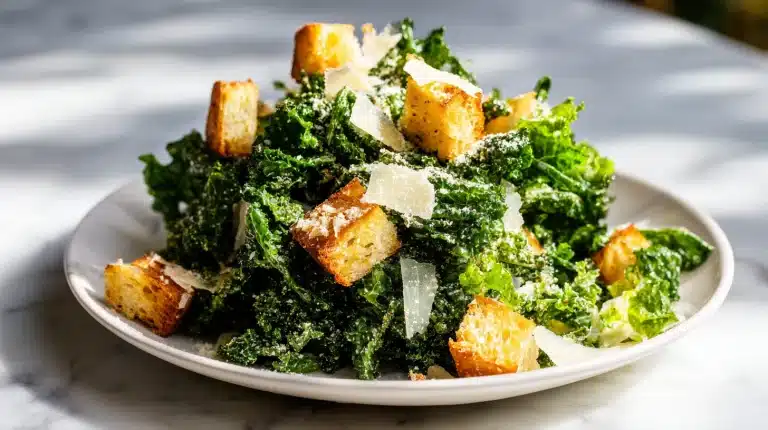
This easy caesar salad recipe completely changed my mind about making Caesar dressing from scratch after I spent years settling for watery, bottled alternatives that tasted distinctly like mayonnaise and regret.
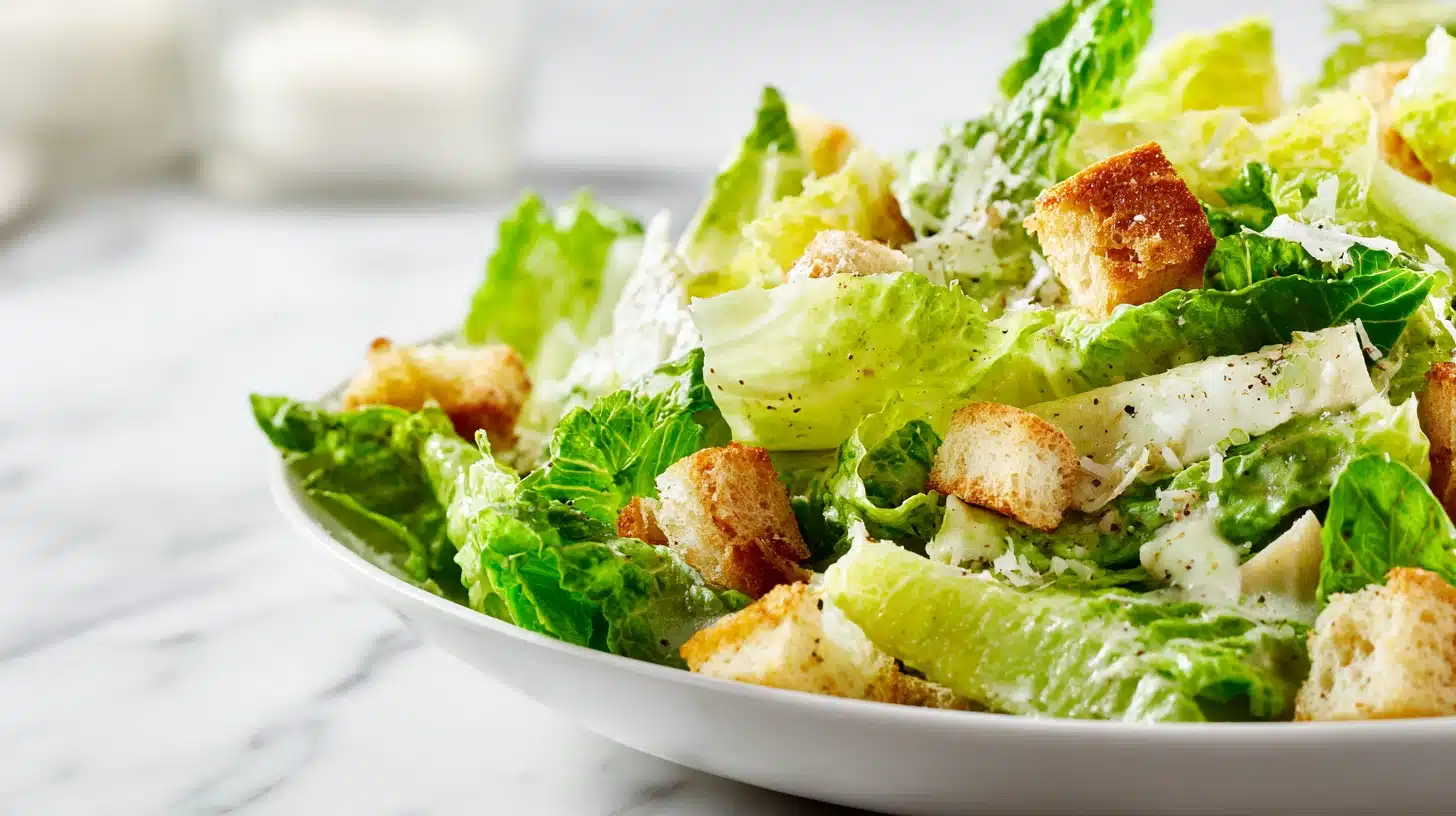
Most homemade versions drown the crisp romaine in a heavy, oily dressing that pools at the bottom of the bowl, leaving you with soggy leaves and zero crunch. I solved this by using a rapid emulsion technique that clings to the lettuce, plus a high-heat stovetop crouton method.
Inside: how to build a stable, creamy emulsion in two minutes, the secret to croutons that stay crunchy for hours, and the exact substitution matrix for when you are missing anchovies or fresh lemons.
Table of Contents
The anatomy of a classic Caesar salad
To truly master an easy caesar salad recipe, you need to understand what separates a forgettable bowl of lettuce from a truly memorable one. The magic lies in the tension between the ingredients. You want the aggressive crunch of stale bread against the tender snap of cold romaine. You want the salty, umami punch of Parmigiano Reggiano mellowed by a rich, creamy dressing. When you get this balance right, you have a classic caesar salad that rivals any steakhouse version. If you want to explore a different take on greens, try this avocado salad for a refreshing contrast.
The foundation of any caesar salad is the romaine lettuce. You must use crisp, cold romaine. The structural integrity of romaine is what allows it to stand up to a heavy dressing without collapsing into a mushy pile. I recommend using hearts of romaine, chopping them into bite-sized pieces, and soaking them in ice water for ten minutes before spinning them completely dry. Water is the enemy of your caesar dressing. If your leaves are wet, the oil-based emulsion will slide right off the leaves and pool at the bottom of your serving bowl.
Next comes the cheese. Do not buy pre-grated parmesan. It is coated with anti-caking agents that prevent it from melting properly into the dressing. Buy a solid wedge of Parmigiano Reggiano and grate it yourself on a microplane. The fine, fluffy texture of freshly grated cheese incorporates seamlessly into the dressing, thickening it naturally while adding a sharp, nutty bite. You will use half of the cheese in the dressing itself and the other half to shower over the finished salad.
Finally, the croutons. A quick caesar salad deserves better than rock-hard, store-bought cubes. The best croutons are made from bread that is slightly stale but still has a tender crumb. When you bite into them, they should offer resistance but ultimately yield and dissolve into the dressing. The bread acts as a sponge, soaking up the garlic and anchovy flavors of the dressing. When all these elements come together, you understand why this combination has lasted nearly a hundred years.
Print
The Last Easy Caesar Salad Recipe You Will Ever Need
- Total Time: 30 min
- Yield: 4 servings 1x
Description
A quick and easy caesar salad recipe featuring crisp romaine, golden sourdough croutons, and a creamy, blender-made dressing with garlic, lemon, and parmesan.
Ingredients
For the croutons:
4 cups sourdough bread, cut into 3/4-inch cubes
3 tbsp extra virgin olive oil
1/4 tsp kosher salt
For the dressing:
2 oil-packed anchovy fillets
1 clove garlic, smashed
1 tsp Dijon mustard
1 large egg yolk
1 tbsp fresh lemon juice
1 tsp red wine vinegar
1/2 cup mild extra virgin olive oil
1/4 cup Parmigiano Reggiano, finely grated
1 tsp warm water
For the salad:
2 large heads romaine lettuce, chopped
1/4 cup Parmigiano Reggiano, finely grated
Freshly cracked black pepper
Instructions
1. Preheat oven to 400 degrees Fahrenheit. Toss the sourdough cubes with olive oil and salt on a baking sheet.
2. Bake for 12 to 15 minutes until golden and crunchy, tossing halfway through. Let cool completely.
3. In a blender, combine the anchovies, garlic, Dijon, egg yolk, lemon juice, and red wine vinegar. Blend until smooth.
4. With the motor running, slowly drizzle in the olive oil. Blend until the dressing is thick and creamy.
5. Add the grated Parmigiano Reggiano and warm water. Blend for 5 seconds to combine.
6. Place the chopped romaine in a large bowl. Add a small amount of dressing and toss to coat the leaves.
7. Add half of the remaining cheese and toss again. Fold in the cooled croutons gently.
8. Mound the salad high in a serving bowl. Top with the rest of the cheese and a generous crack of black pepper.
Notes
Store the dressing in an airtight jar in the refrigerator for up to 4 days. Store cooled croutons at room temperature for up to 3 days.
For a vegetarian version, swap the anchovies for 1 tablespoon of white miso paste.
If the dressing is too thick after refrigerating, whisk in a teaspoon of warm water before tossing.
- Prep Time: 20 min
- Cook Time: 10 min
- Category: Side Dishes
- Method: Baking, No-Cook
- Cuisine: American
Nutrition
- Serving Size: 1 cup
- Calories: 320 kcal
- Sugar: 2 g
- Sodium: 580 mg
- Fat: 28 g
- Saturated Fat: 5 g
- Unsaturated Fat: 22 g
- Trans Fat: 0 g
- Carbohydrates: 12 g
- Fiber: 3 g
- Protein: 7 g
- Cholesterol: 55 mg
Building a stable emulsion: the dressing
The dressing is where most home cooks abandon their easy caesar salad recipe. It looks complicated. You have to whisk oil into egg yolks drop by drop. If you pour too fast, the mixture breaks, and you end up with a greasy, separated mess. I am here to tell you that you can skip the frantic whisking. By using a blender or an immersion blender, you can force the oil and egg yolk to bond securely, creating a thick, stable emulsion in under two minutes. This is a technique similar to the rapid blending used in our cottage cheese egg salad sandwich, where dairy acts as the primary binder.
Start with the flavor base. In your blender, combine a single mashed garlic clove, a generous teaspoon of Dijon mustard, and two oil-packed anchovy fillets. The anchovies are non-negotiable for a classic caesar salad. They do not make the dressing taste fishy. Instead, they melt into the liquid and bring a deep, savory saltiness that regular table salt cannot replicate. If you have Worcestershire sauce on hand, add a few dashes. It contains fermented anchovies and tamarind, which deepens the umami profile of the dressing.
Add the egg yolk and a tablespoon of fresh lemon juice. The acid in the lemon juice does two things. It cuts through the richness of the olive oil and egg yolk, giving you a bright, tangy contrast. It also helps the emulsion form by altering the pH of the mixture, making it easier for the proteins in the egg yolk to encase the fat molecules. If you prefer a sharper bite, you can add a tiny splash of red wine vinegar.
Now, turn the blender on. With the motor running, slowly drizzle in a half cup of mild extra virgin olive oil. Do not use a robust, peppery olive oil here, as it will overpower the delicate flavors of the garlic and lemon. Within seconds, you will hear the motor pitch change. The sound will go from watery to a thick, slapping noise. That sound means your emulsion has formed. Stop the blender, add a quarter cup of freshly grated Parmigiano Reggiano, and blend for five more seconds. The dressing should be thick enough to coat the back of a spoon. If it is too thick, thin it with a teaspoon of warm water until it reaches the perfect pouring consistency.
Tested substitutions for your easy Caesar salad
Even the best easy caesar salad recipe needs to adapt to what you have in your kitchen. Over the years, I have tested dozens of swaps for this dressing. Some work beautifully, while others completely ruin the texture. Below is a table of my most successful substitutions so you can make this salad work no matter what your pantry looks like.
| Swap | Use Instead | What Changes |
|---|---|---|
| Anchovies | 1 tbsp miso paste | Dressing loses its marine edge but gains a deep, earthy umami. The texture stays perfectly creamy. |
| Egg Yolk | 2 tbsp plain Greek yogurt | Dressing becomes tangier and slightly denser. It will not have the same melt-in-your-mouth fat coating. |
| Sourdough Bread | Brioche bread | Croutons become softer, sweeter, and more cake-like. They absorb the dressing faster, so serve immediately. |
| Fresh Lemon Juice | 1.5 tbsp white wine vinegar | The brightness shifts from citrusy to sharp. You lose the floral lemon oils, so add fresh lemon zest. |
| Parmigiano Reggiano | Pecorino Romano | The salad becomes significantly sharper and saltier. Use slightly less cheese to avoid overpowering the garlic. |
These swaps are particularly useful if you are cooking for someone with dietary restrictions. The Greek yogurt swap is my favorite for a high-protein, lower-fat version of the dressing. If you are looking for another protein-packed lunch idea, this high protein quinoa salad uses similar substitution logic to boost nutrition.
If you avoid raw eggs entirely due to health concerns, the yogurt substitution is your best path forward. You get the creamy consistency without any food safety worries. Another option is to use a tablespoon of mayonnaise instead of the egg yolk. Mayonnaise is already an emulsion, so you can whisk the dressing by hand in a bowl without worrying about it breaking. Just remember that mayonnaise brings its own flavor profile, often containing vinegar and mustard, so adjust your Dijon and lemon juice amounts accordingly. If you love bold garlic and vinegar combos, you might appreciate the punchy flavors in our spiced cucumber salad with whipped yogurt.
Crafting crunchy sourdough croutons
Croutons are not an afterthought in an easy caesar salad recipe. They are a structural component that adds textural contrast. The goal is a crouton with a deeply golden, crunchy exterior and a slightly chewy, tender interior. If you bake them too long, they turn into hard rocks that will hurt your teeth. If you do not bake them long enough, they turn into soggy sponges the moment they hit the dressing.
You must start with the right bread. A dense, rustic sourdough bread is ideal. The natural acidity of the sourdough complements the lemon juice in the dressing. Avoid fluffy sandwich bread. It has too much air and will disintegrate. Cut the bread into uniform three-quarter inch cubes. Uniformity matters here. If some cubes are smaller than others, the small ones will burn while the large ones remain doughy.
Preheat your oven to 400 degrees Fahrenheit. Place the bread cubes on a rimmed baking sheet. Drizzle them generously with olive oil. I use about three tablespoons for a half loaf of bread. Toss them with your hands to ensure every cube is coated. This oil is what creates the crispy crust. Sprinkle them with a pinch of salt and a few cracks of black pepper.
Spread the cubes in a single layer. Do not crowd the pan. If the cubes are touching, they will steam instead of toast. Bake them for ten minutes, then use a spatula to toss them. Rotate the pan and bake for another five minutes. Keep a close eye on them during the last few minutes. They go from golden brown to burnt very quickly. When they come out of the oven, they should smell intensely nutty and feel hard to the touch.
Let them cool completely on the baking sheet. As they cool, they will crisp up completely. If you are making this easy caesar salad recipe ahead of time, store the cooled croutons in an airtight container at room temperature for up to three days. Never store them in the refrigerator, as the moisture will ruin their crunch. If you are looking for another great use for leftover bread, our garlic bread grilled cheese is a crowd favorite.
Perfect assembly and plating techniques
Assembling your easy caesar salad recipe requires patience and attention to detail. You cannot just dump everything into a bowl and hope for the best. The order of operations matters. You want to coat every single leaf of romaine with a thin layer of dressing so each bite is flavorful without drowning the lettuce.
Start with a large, wide bowl. Add your dried, chopped romaine. Add a small amount of dressing. Use tongs to toss the lettuce, lifting it from the bottom of the bowl and letting it fall back down. Keep tossing until every leaf is lightly coated. You can always add more dressing, but you cannot take it away. If you add too much, the salad becomes heavy and unappetizing.
Once the lettuce is coated, add half of your freshly grated Parmigiano Reggiano and toss again. The cheese will stick to the dressed leaves, creating a salty, nutty layer of flavor. Now, add the croutons. Gently fold them in at the very end. If you toss them too aggressively, they will break apart. Serve the salad immediately. If you let it sit, the acid in the dressing will break down the cell walls of the romaine, and your crisp lettuce will become limp.
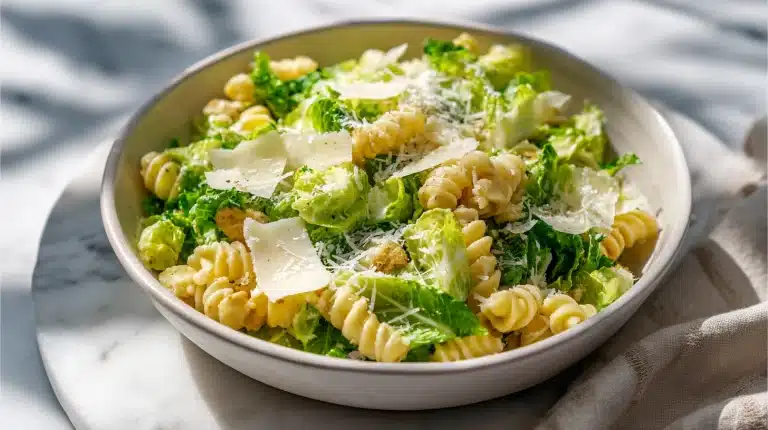
For the final plating, use a large, shallow serving bowl or individual plates. Mound the salad high. It looks better when it has some height. Sprinkle the remaining cheese over the top. Finish with a generous crack of black pepper. If you want to turn this side dish into a full meal, you can top it with grilled chicken or shrimp. For a different protein-packed meal, try our smashed burger salad. I like the way the white cheese and golden croutons play against the green lettuce. If you are looking for more hearty salad options, the chicken caesar pasta salad adds carbohydrates for a filling lunch.
Variations and dietary modifications
An easy caesar salad recipe is a template, not a strict rulebook. Once you master the basic technique, you can modify it to suit any dietary need or flavor preference. What matters is keeping the balance of creamy, crunchy, salty, and acidic.
For a vegetarian version, replace the anchovies with a tablespoon of white miso paste. The miso brings the same fermented, salty umami as the anchovies. You will also need to ensure your cheese does not contain animal rennet. Many vegetarian parmesan alternatives work beautifully. If you want a fully plant-based caesar dressing, replace the egg yolk with soaked cashews. Blend a quarter cup of raw cashews soaked in hot water for thirty minutes with the miso, garlic, mustard, lemon juice, and oil. The cashews create a rich, creamy base that mimics the fat content of the egg yolk.
If you are watching your carbohydrates, you can skip the croutons entirely. Replace them with toasted almonds or pumpkin seeds. They add the crunch you need without the bread. You can also use a mixture of kale and romaine. Kale holds up to dressing much longer than romaine, making it ideal for meal prep. If you want to pack in more vegetables, add roasted asparagus or green peas. Our asparagus pea salad recipe shows how well these spring vegetables pair with rich dressings.
For a heartier meal, turn the salad into a main course. Add a bed of quinoa or farro at the bottom of the bowl before adding the lettuce. The grains will soak up the dressing. You can also top the salad with a piece of crispy salmon or sliced flank steak. If you are looking for a completely different flavor profile but want the same satisfying crunch, the viral ribbon carrot salad offers a great texture contrast. Finally, if you want to skip the croutons and use a different starchy element, try serving the salad alongside a bowl of soup. The cucumber salad recipe pairs beautifully with a warm bowl of tomato soup.
Frequently asked questions
What are the basic ingredients of a Caesar salad?
The basic ingredients are chopped romaine lettuce, crunchy croutons, grated Parmigiano Reggiano, and a creamy caesar dressing. The dressing itself is made from garlic, anchovies, Dijon mustard, egg yolk, lemon juice, and olive oil. Some variations include Worcestershire sauce or red wine vinegar for extra acidity.
How to make a simple caesar?
To make a simple caesar, blend garlic, anchovies, Dijon, lemon juice, and an egg yolk. Slowly stream in olive oil while blending until thick. Toss chopped romaine with the dressing, add grated parmesan, and top with sourdough croutons. The whole process takes about fifteen minutes using a blender.
Is Caesar salad good for diabetics type 2?
Traditional Caesar salad can be high in fat and carbohydrates due to the oil, croutons, and cheese. To make it diabetes-friendly, use a yogurt-based dressing, reduce the cheese, and replace bread croutons with toasted nuts. This lowers the glycemic load while keeping the salad satisfying.
What is the best salad for heart patients?
For heart health, focus on leafy greens and healthy fats. A modified Caesar using extra virgin olive oil, lots of romaine, and unsalted nuts instead of croutons is a good choice. Olive oil contains heart-healthy monounsaturated fats, and reducing the sodium from cheese and anchovies helps manage blood pressure.
Conclusion
Mastering this easy caesar salad recipe comes down to respecting the ingredients. The anchovies bring the umami. The sourdough handles the crunch. And the blender method gives you a rich, creamy texture without the stress of whisking by hand. Once you make the dressing this way, you will never go back to the bottle.
For more recipes like easy caesar salad recipe, follow us on Facebook and Pinterest for weeknight dinner ideas.
More recipes in this series: